

Traditional Oak Monks Bench
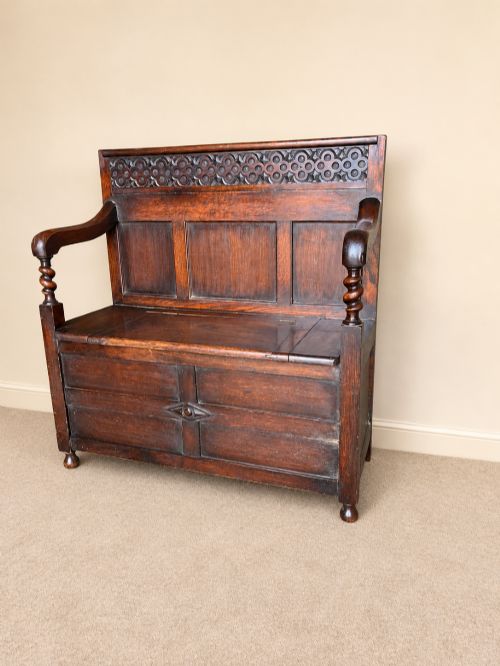
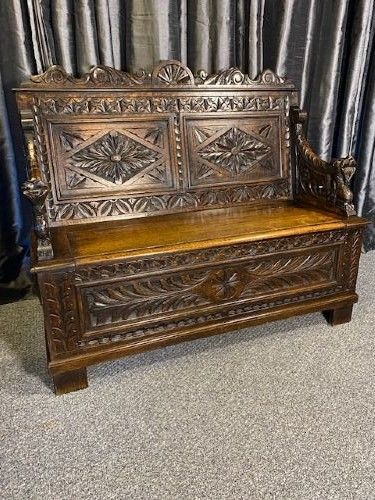
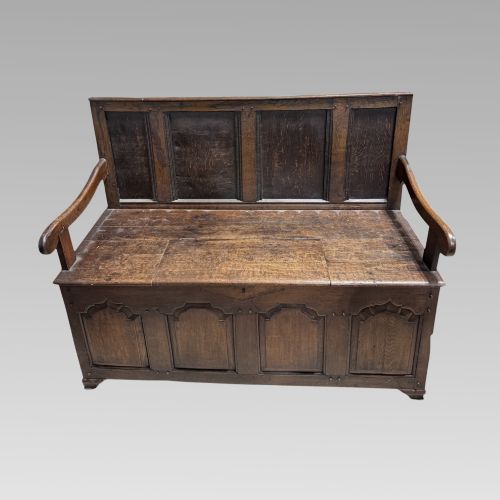
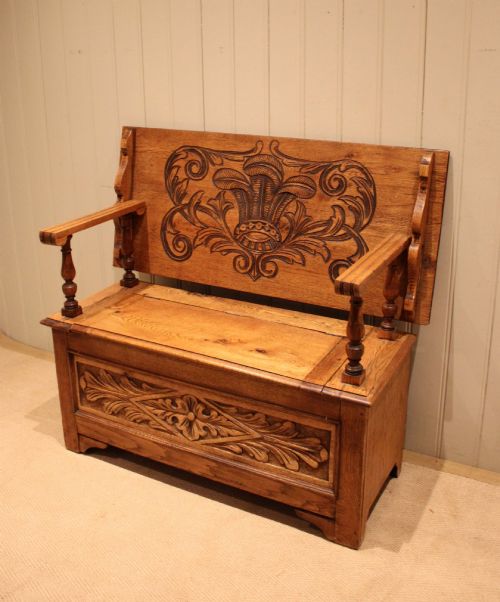
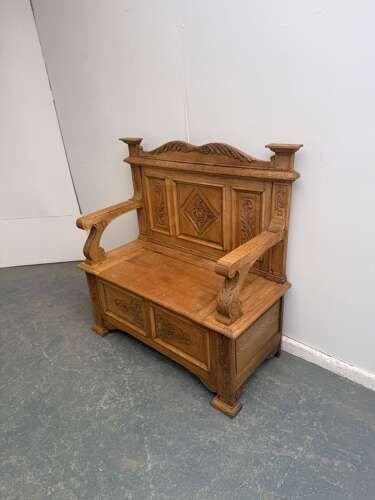
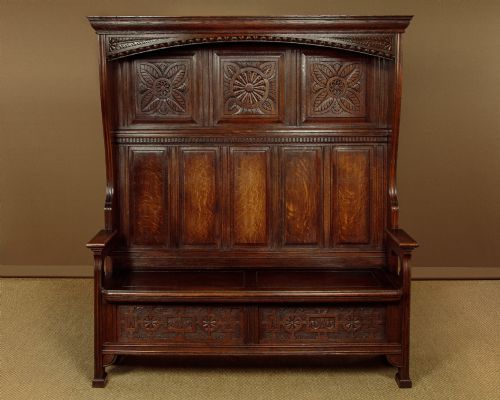
A traditional oak monks bench brings centuries of practical domestic utility and sturdy timber construction into an entrance hall.
Traditional Oak Monks Bench
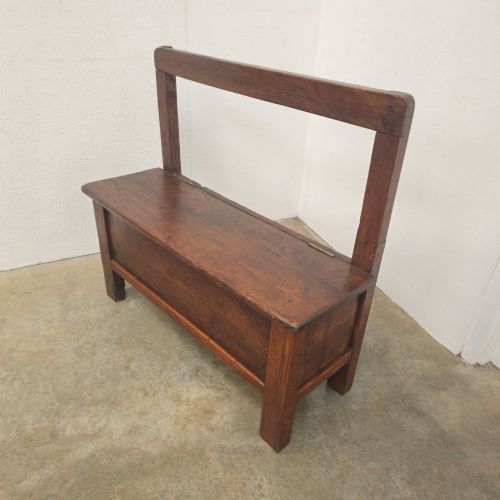
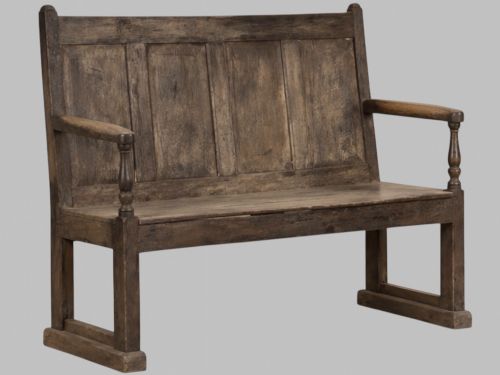
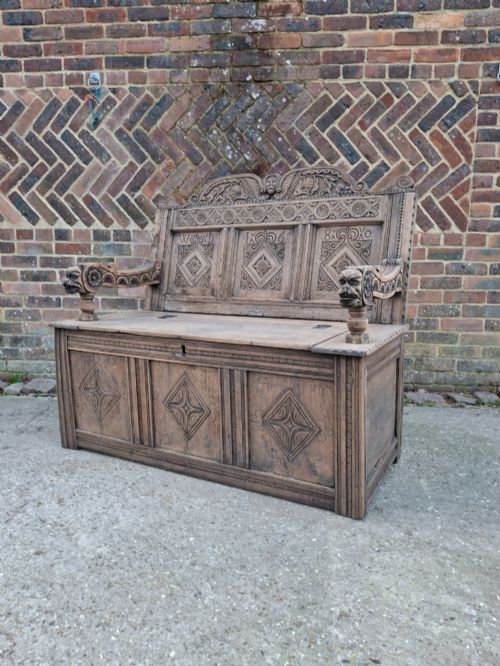
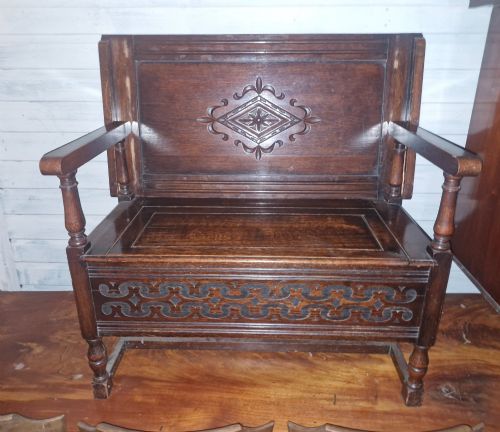
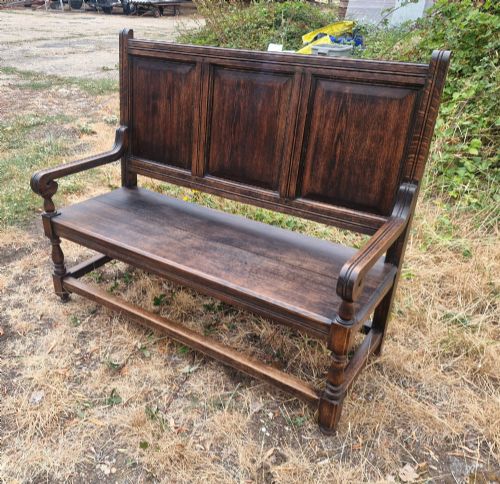
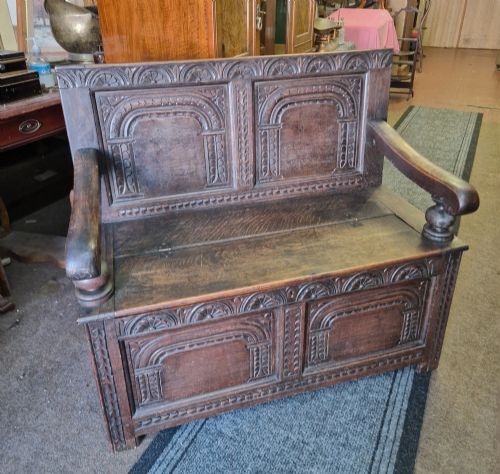
When you search for a traditional oak monks bench, you encounter multi-functional seating forms that double as tables or storage containers, often known by regional names such as settles or hall benches.
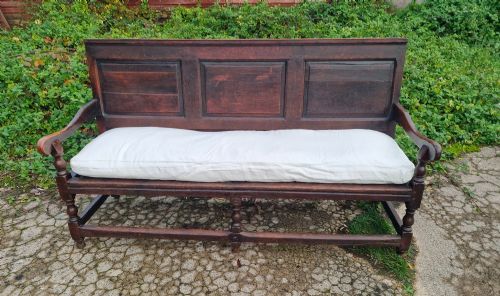
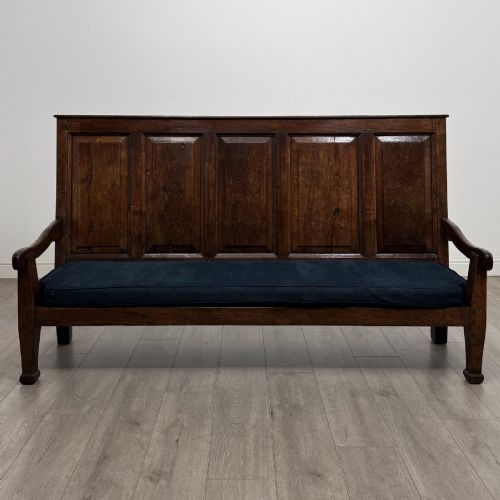
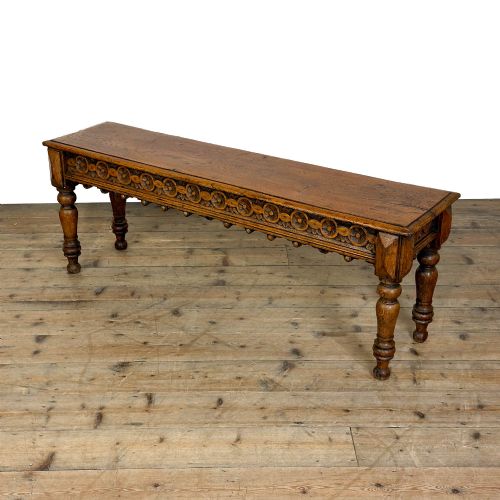
The selections span from robust eighteenth-century country pieces with panelled backs down to early twentieth-century revival items featuring fold-over tops and lift-up lids.
Most examples originate from British provincial workshops, showing deep regional traditions in panel construction and timber framing.
Materials and construction techniques
Cabinet makers relied primarily on solid oak, frequently augmented with secondary pine or structural iron hinges and brass fittings.
Joinery methods involved heavy framing with pegged mortise and tenon joints, complemented by hand-carved panels and fielded surfaces.
Finishes range from historic waxed patinas to bleached grain and dark polishes developed over generations of use.
Traditional Oak Monks Bench Retail Price Guide 2026
Typical asking prices for traditional oak monks bench among the pieces listed under this phrase on Sellingantiques today, from the lower quarter to the upper quarter. They describe what is for sale here now, not the wider market.
Some provincial makers incorporated secret compartments into their box settles to keep tavern tokens safely hidden from prying eyes.
Distinctions in quality
The caliber of a piece rests upon the crispness of the hand-carving and the structural integrity of the original timber framing.
Earlier eighteenth-century examples display superior depth of grain and authentic patination compared to later mass-produced revival pieces.
The preservation of original lift mechanisms, folding tabletops, and untampered panel backs distinguishes finer specimens from heavily altered items.
The Traditional Oak Monks Bench Glossary
- Settle
- A wooden bench with a high solid back, arms, and a closed base that often served as a chest. This form kept draughts away from the sitter in communal halls.
- Panelling
- Framework composed of stiles and rails enclosing thin wooden inserts. It provided strength and prevented the timber from warping.
- Box settle
- A bench featuring a hinged seat opening to a storage compartment underneath. It maximised utility in smaller domestic spaces.
- Monks bench
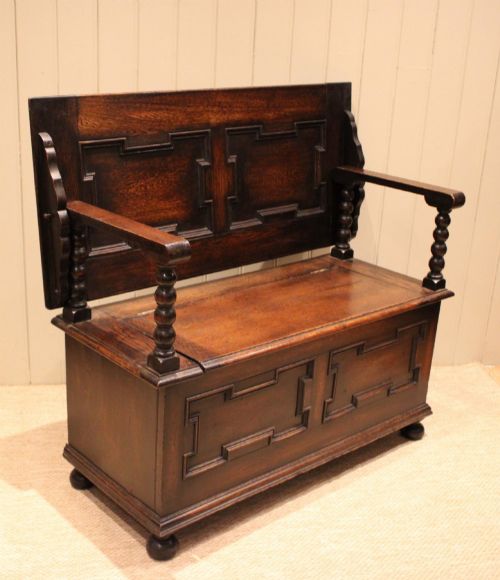
- A seat with a hinged back that folds down flat to form a table top. It combined two essential items of furniture into one footprint.
- Fielded panel
- A wooden insert with bevelled edges set into a surrounding frame. This technique created shadow lines and visual depth.
Traditional Oak Monks Bench: Frequently Asked Questions
What is a traditional oak monks bench?
A traditional oak monks bench is a dual-purpose seating unit featuring a back that converts into a table top, accompanied by a box storage base.
These items date from the eighteenth century through to the early twentieth century, reflecting various revival styles and country workshop traditions.
How were monks benches used historically?
They served as practical hall seating during the day and were converted into tables for dining or working as needed.
The integrated box compartment provided secure storage for blankets, cushions, or household goods in busy entryways.
How do I date an antique oak settle?
Dating relies on examining the construction methods, tool marks, and style of the wood panelling, such as Jacobean carvings or Georgian proportions.
Earlier pieces from the eighteenth century exhibit hand-rived timber and pegged joinery, whereas twentieth-century examples show more uniform machine finishing.
Where should I place a hall bench?
An entrance hall or boot room provides an ideal setting for these sturdy pieces, offering a practical spot for sitting while removing shoes.
The enclosed box seat allows for concealing everyday clutter out of sight.