
Brown Oak Settle Bench
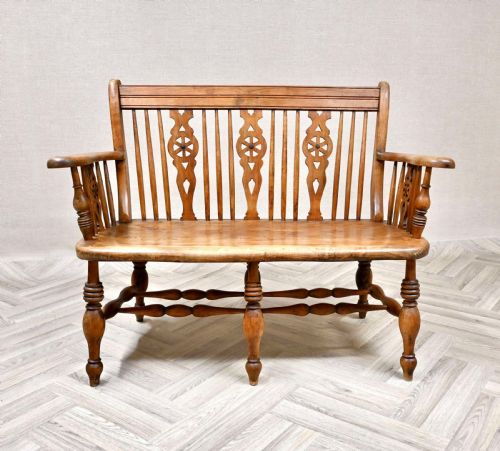
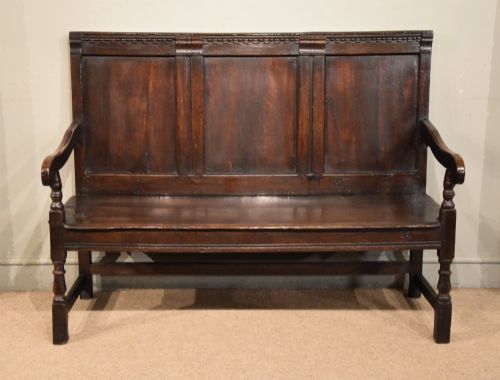
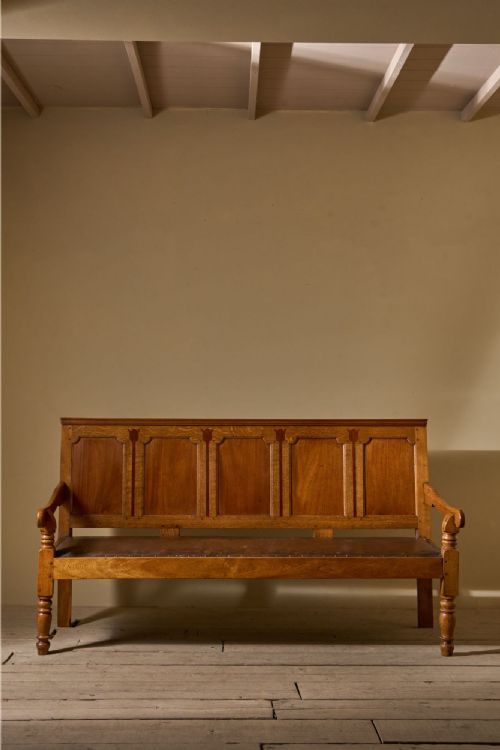
A brown oak settle bench offers traditional timber seating with high panelled backs, originating from periods spanning the seventeenth to nineteenth centuries.
Brown Oak Settle Bench
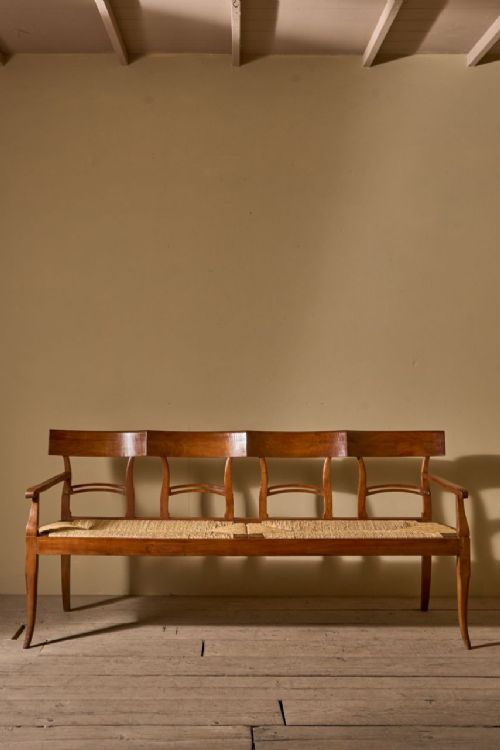
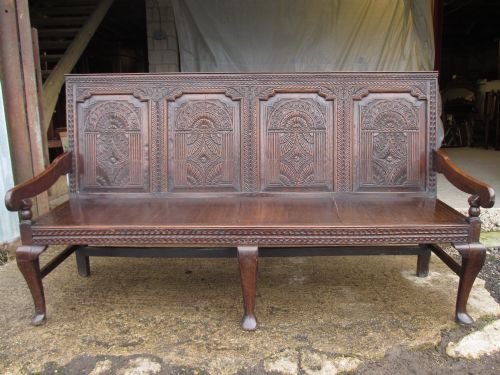
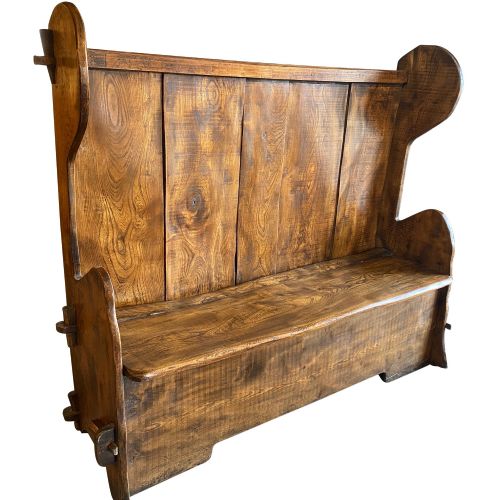
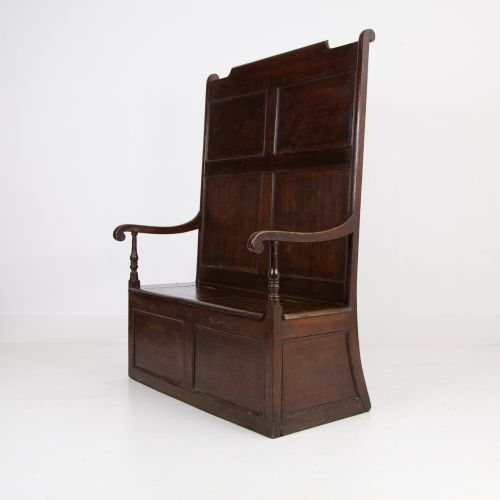
A brown oak settle bench provides high-backed timber seating designed historically to block draughts in hallways and living spaces. These pieces appear frequently in eighteenth-century Georgian and nineteenth-century Victorian forms, alongside earlier seventeenth-century examples.
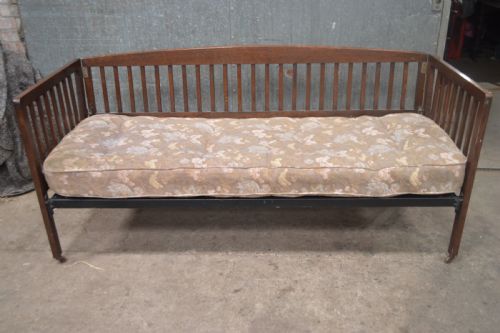
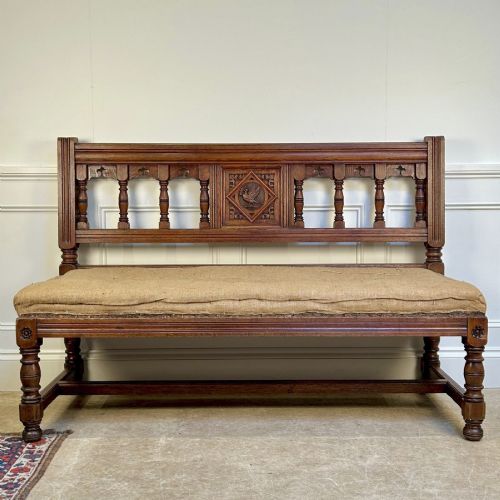
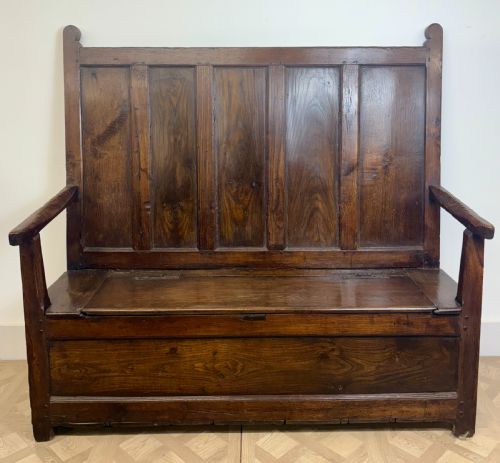
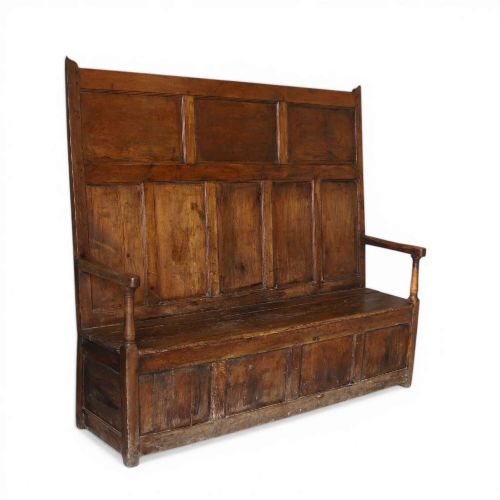
The selection here includes standard settles, box settles with integrated storage beneath the seat, and related variants such as monk's benches and hall benches. Oak dominates the construction, accompanied occasionally by secondary timbers like ash, elm, and cherrywood.
Materials and construction
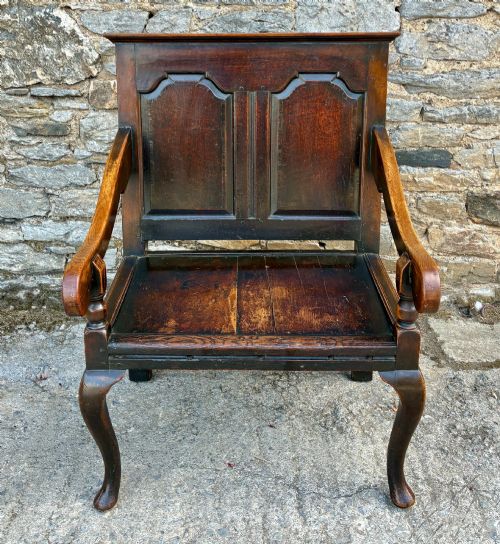
Makers utilised solid oak boards joined with traditional pegged mortise and tenon construction to form the sturdy frames of these benches. Panel-back designs employ multiple fitted timber panels held within grooved framing to allow for natural wood movement.
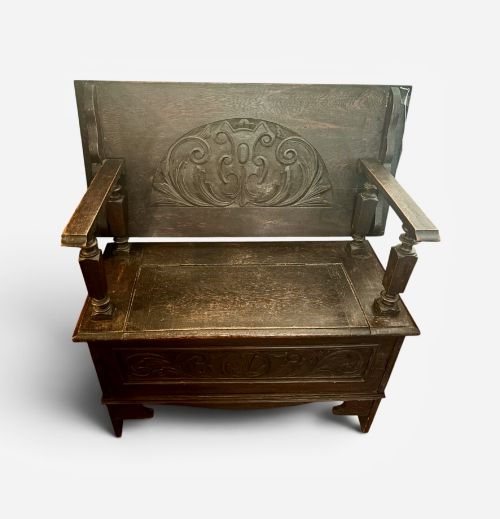
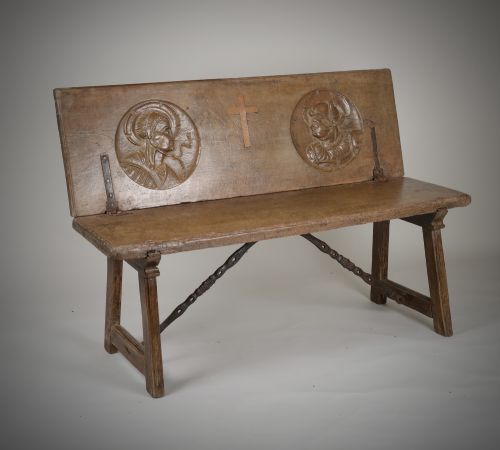
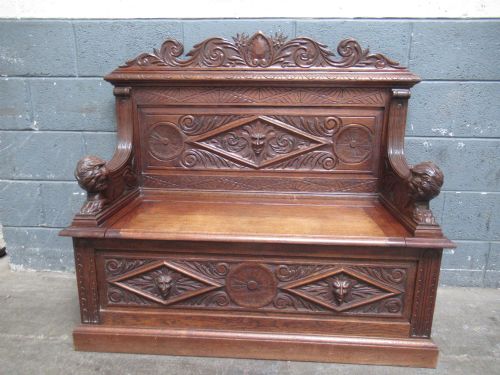
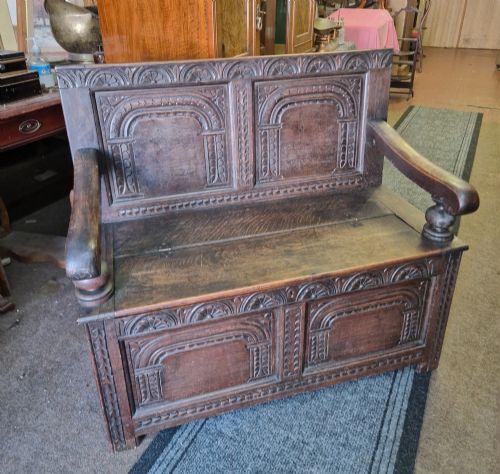
Box settles incorporate lidded seat bases utilising simple iron hinges, creating integrated storage compartments. Surface enrichment on regional examples ranges from plain fielded panels to carved motifs executed in styles such as Gothic Revival and Jacobean Revival.
Box settles doubled as indoor storage for blankets, grain, or tweed, keeping family valuables safely locked away from wandering livestock.
Assessing craftsmanship
Quality rests upon the integrity of the timber framing and the proportion of original components retained throughout the structure. Pieces retaining their primary oak patina and unaltered panel construction demonstrate superior manufacture compared to those with extensive timber replacement.
The depth and execution of carved ornamentation distinguish standard regional production from more ambitious workshop pieces. Structural soundness in the arm supports and box bases dictates the longevity of each bench.
GIllows·Liberty·Wylie Lockhead Manufacturers
The Brown Oak Settle Bench Glossary
- Box settle
- A timber bench featuring an enclosed storage compartment beneath the hinged seat. This form provided both seating and utility in early domestic interiors.
- Panel-back
- A seat back constructed from multiple wooden boards fitted into a grooved framework. This method prevents warping in large expanses of timber.
- Monk's bench
- A convertible furniture form featuring a hinged back that folds down to create a table surface. These typically date from the Victorian period onwards.
- Gothic Revival
- A design style drawing inspiration from medieval architecture, characterised by pointed arches and tracery carving. This aesthetic appears on nineteenth-century seating.
- Ash
- A tough, flexible hardwood utilised alongside oak in country furniture construction. Makers selected it for structural components requiring resilience.
Brown Oak Settle Bench: Frequently Asked Questions
What is a brown oak settle bench?
A brown oak settle bench is a high-backed wooden seat designed to keep out draughts in traditional hallways and communal rooms. They feature solid timber construction and often incorporate panelled backs or storage boxes beneath the seat.
These pieces reflect centuries of woodworking traditions, ranging from seventeenth-century country workshops to nineteenth-century revival styles. Their substantial form makes them a striking focal point in modern entrance halls.
How do I date a wooden settle?
Dating relies on examining the construction methods, tool marks, and overall joinery style of the timber frame. Pegged joints, hand-planed surfaces, and specific panel configurations point towards distinct historical periods.
Earlier pieces from the seventeenth and eighteenth centuries display simpler, heavier framing, while nineteenth-century examples frequently incorporate revival ornamentation like Gothic tracery or elaborate carving.
Where should I place a settle in my home?
Settles suit entrance halls, boot rooms, and large kitchens where their high backs can anchor a seating area. Their solid presence provides a practical spot for removing shoes or coats.
In living spaces, they work well against plain walls, allowing the timber grain and panel details to stand out. Adding a simple squab cushion to the seat enhances comfort for daily use.
How do I care for antique oak furniture?
Maintaining antique oak involves keeping the timber away from direct heat sources and sudden temperature fluctuations. Regular dusting with a dry cloth prevents dirt build-up on the carved surfaces.
Applying a traditional beeswax polish occasionally helps nourish the wood and preserve the natural patina. Avoid modern silicone-based sprays, which can damage the historic finish over time.