
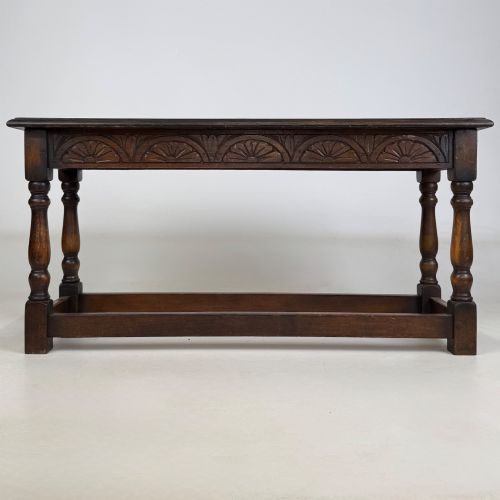
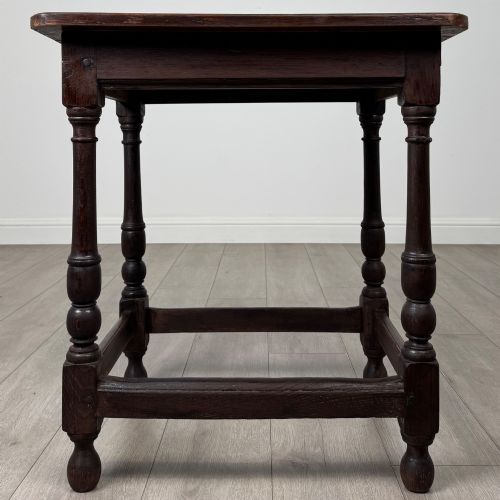
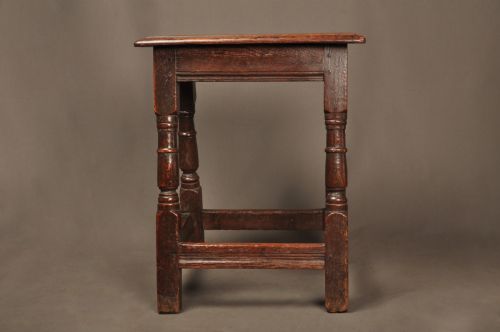
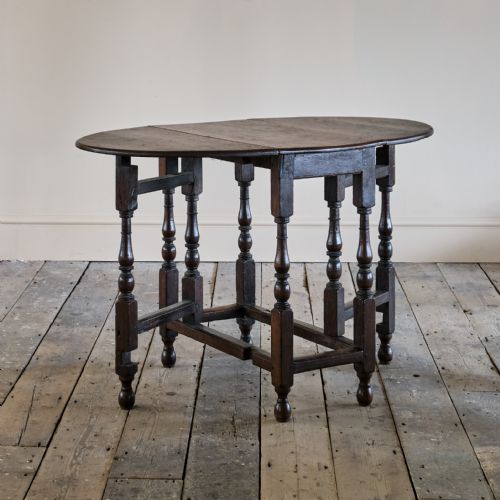



Traditional Oak Joint Stool
A traditional oak joint stool brings sturdy historical character to a room, offering practical seating built with pegged timber joinery.
Traditional Oak Joint Stool
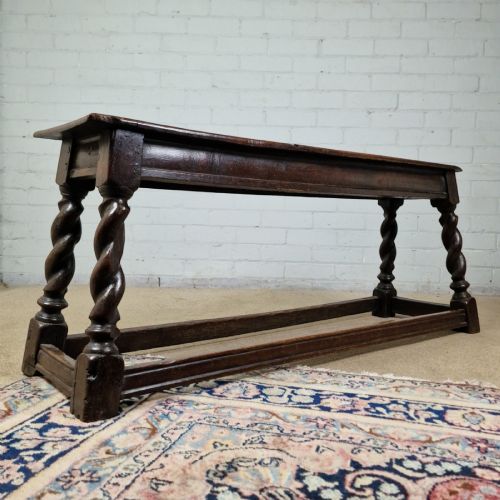
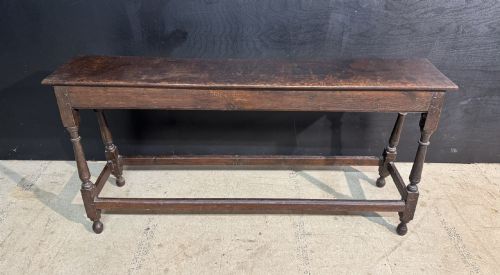
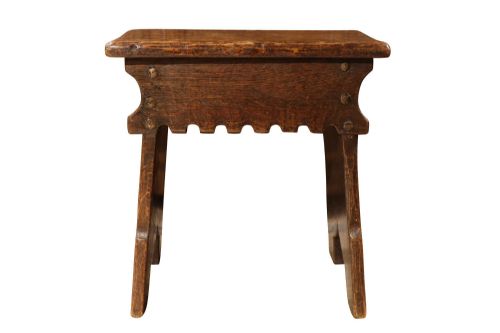
A traditional oak joint stool is a solid wooden seat constructed with pegged joinery rather than glued joints, originating as sturdy seating for domestic use. The pieces found on this page span several centuries, reaching from the seventeenth century through to the twentieth century.
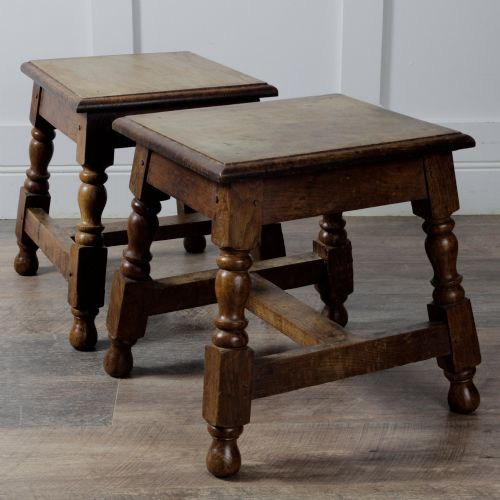
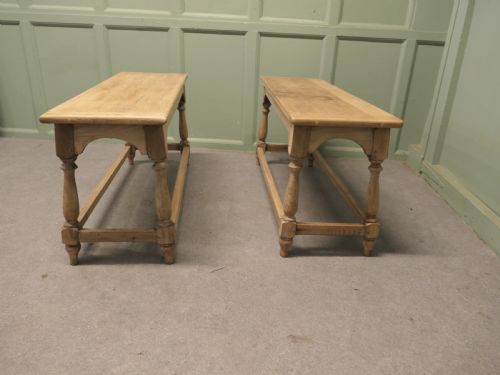
Stylistic influences range from plain English country vernacular to Jacobean Revival and English Baroque. Pieces often display turned legs, carved rails, and pegged construction methods that define the traditional joint stool appearance.
How they were made
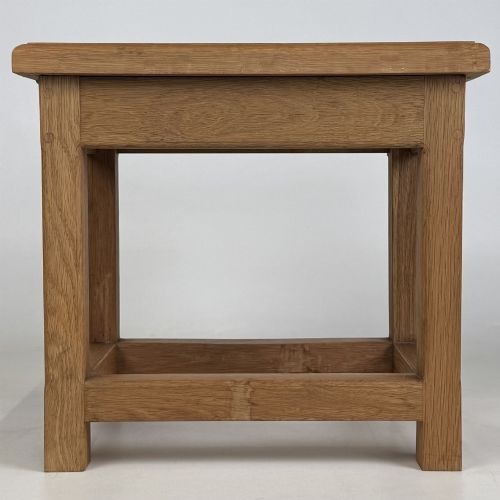
Traditional oak joint stools rely principally on solid English oak and bleached oak, sometimes accompanied by yew wood, brass, or leather elements. Carpenters shaped these dense timbers using hand tools to create sturdy frames.
Construction centres on pegged joinery, where wooden dowels secure the mortise and tenon joints without relying on modern adhesives. Some examples incorporate five-plank construction methods or integrated box compartments for storage.
Traditional Oak Joint Stool Retail Price Guide 2026
Typical asking prices for traditional oak joint stool among the pieces listed under this phrase on Sellingantiques today, from the lower quarter to the upper quarter. They describe what is for sale here now, not the wider market.
Some nineteenth-century makers clearly enjoyed creating miniature architectural marvels, packing heavy turnings and carved box storage into stools barely taller than a hearth cat.
What varies in quality
Quality in a traditional oak joint stool rests on the integrity of the timber selection and the tightness of the pegged construction. Heavier, more substantial planks and well-preserved original surfaces distinguish superior examples from simpler utilitarian pieces.
The sophistication of the carving and turning on the legs dictates the refinement of the piece. Crisp detailing on the rails and balanced proportions elevate an item from a basic rural utility object to a notable piece of craftsmanship.
David Oakleafman Langstaff
The Traditional Oak Joint Stool Glossary
- Joint stool
- A solid wooden stool constructed using pegged joints by a joiner rather than a general carpenter. These pieces were historically used for seating at the table or as a support for coffins during services.
- Pegged construction
- A method of securing mortise and tenon joints using cylindrical wooden pins or pegs instead of metal nails or screws. This technique allows the timber to expand and contract naturally with changes in humidity.
- Jacobean Revival
- A nineteenth-century and twentieth-century design style that copies the heavy, dark-toned furniture of the early seventeenth century. Pieces in this style often feature bold turnings and flat geometric carvings.
- Box stool
- A variant of the joint stool featuring a lidded compartment beneath the seat for storage. These multi-purpose items served domestic needs in early homes.
- Five-plank stool
- A form constructed from five distinct boards joined to form the top, sides, and stretchers. It represents a simpler, robust style of early English seating.
Traditional Oak Joint Stool: Frequently Asked Questions
What is a joint stool?
A joint stool is a sturdy wooden seat built with mortise and tenon joints secured by wooden pegs. The name derives from the word joiner, denoting an item made by a skilled craftsman rather than a basic carpenter.
These pieces served many domestic purposes in early households, functioning as seating, small side tables, or stands for household objects.
How are periods told apart?
Periods are identified through a combination of timber characteristics, construction methods, and decorative styles such as Jacobean turning or later revival motifs. Seventeenth and eighteenth-century pieces typically show hand-worked tool marks and patinated surfaces developed over centuries.
Nineteenth and twentieth-century pieces often reflect revival movements, utilising similar pegged construction while displaying the cleaner milling techniques of later workshops.
Were these used just for seating?
While primarily designed as seats, traditional joint stools easily doubled as small side tables, stands, or even auxiliary surfaces in busy rooms. Box variants provided concealed storage beneath the top board for household items.
Their robust timber construction allowed them to withstand heavy daily use in various domestic roles.
How do I live with oak furniture?
Oak furniture benefits from stable indoor environments away from direct heat sources and dramatic humidity swings. Regular dusting and occasional gentle cleaning preserve the natural finish and historical patina of the timber.
The sturdy nature of joint construction means these pieces handle everyday placement as side tables or occasional seats quite comfortably.