



Traditional Oak Grandmother Clock
A traditional oak grandmother clock brings slender vertical proportion and mechanical timekeeping into a room, offering the presence of a longcase without the towering height.
Traditional Oak Grandmother Clock
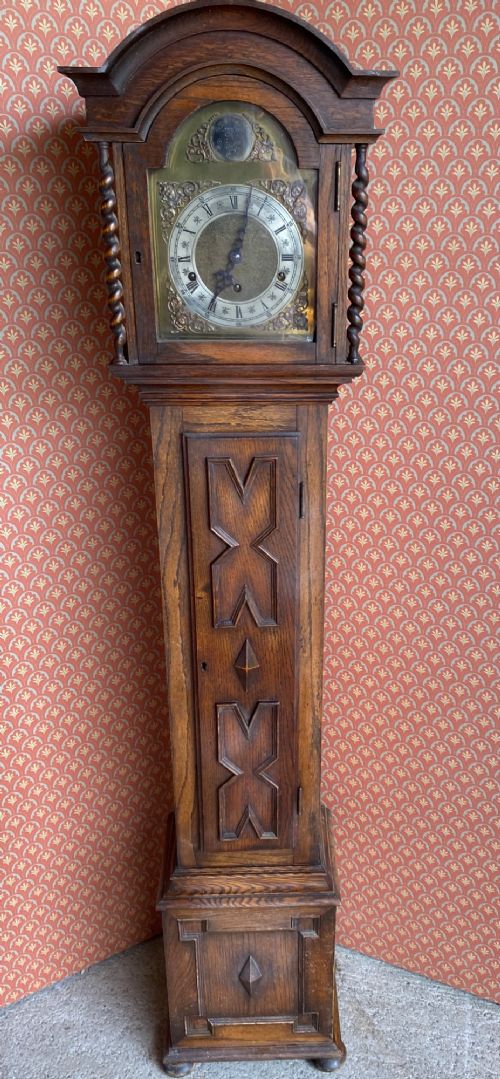
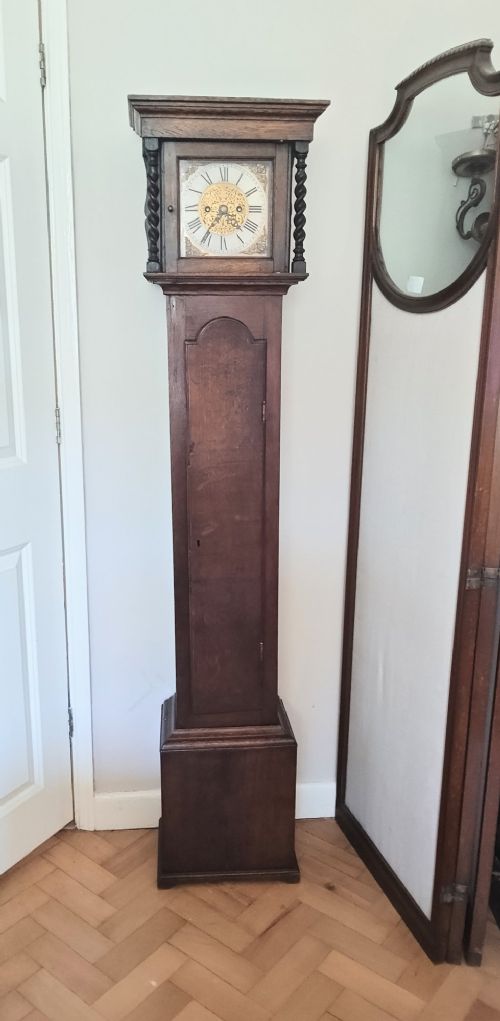
A traditional oak grandmother clock is a scaled-down floor clock, combining the timber case of a longcase with a more compact stature suited to domestic spaces. Buyers searching for this phrase encounter pieces predominantly from the Edwardian period and the early twentieth century, alongside revivals referencing Georgian and Jacobean styles.
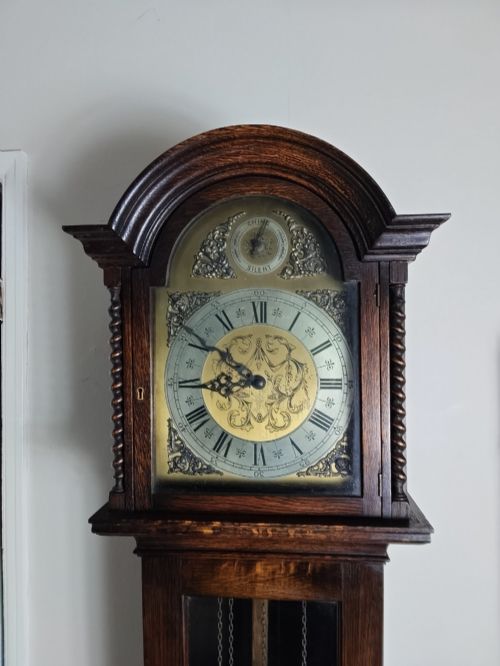
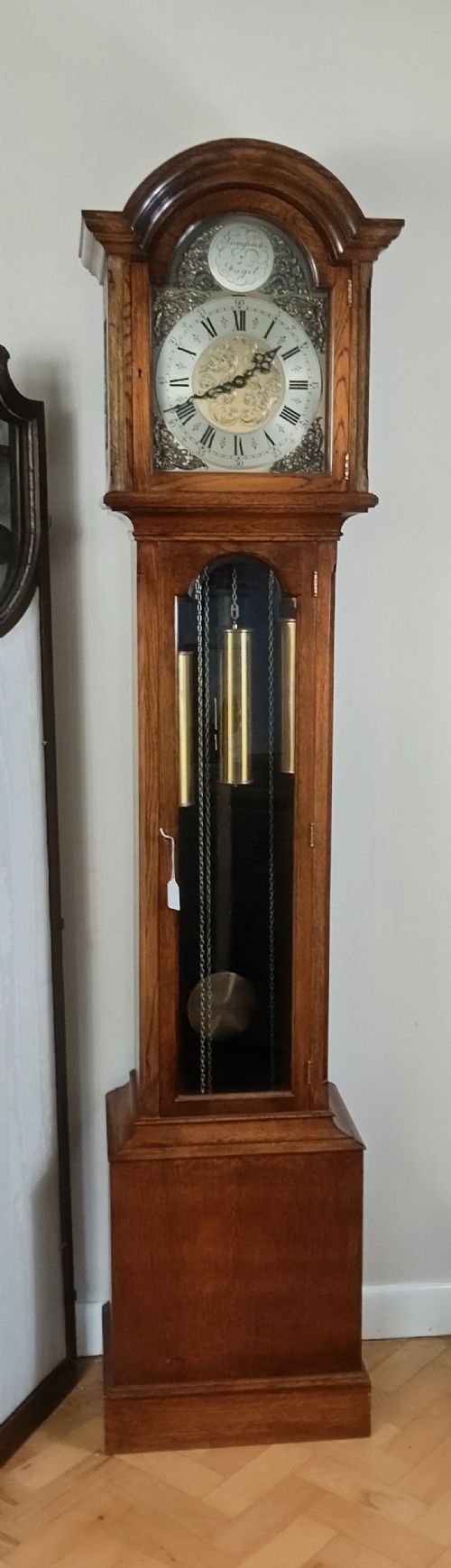
The forms span small longcases and musical clocks housing movements capable of chiming quarters or striking hours. These floor clocks utilise oak throughout their construction, often paired with brass dials and glazed trunk doors that reveal the pendulum and weights within.
What varies in quality
The refinement of the movement largely dictates the standing of a traditional oak grandmother clock, moving from standard striking mechanisms to complex quarter-chiming and musical systems. The sophistication of the brass dial work and the presence of retail provenance further separate standard examples from finer pieces.
Cabinetwork quality shows in the selection of oak timber, the crispness of any revival carving, and the balanced proportions of the hood, trunk, and base. Pieces exhibiting twin fusee movements or retail pedigree by firms such as Harrods represent the upper tier of this horological form.
Traditional Oak Grandmother Clock Retail Price Guide 2026
Typical asking prices for traditional oak grandmother clock among the pieces listed under this phrase on Sellingantiques today, from the lower quarter to the upper quarter. They describe what is for sale here now, not the wider market.
Listings for traditional oak grandmother clocks span the Edwardian era through the 1930s, utilising oak, brass, and glass across various revival styles.
The Traditional Oak Grandmother Clock Glossary
- Grandmother clock
- A floor-standing clock resembling a longcase but built to a smaller, more slender scale. These pieces generally measure shorter than standard grandfather clocks while retaining similar mechanical complexity.
- Longcase clock
- A tall pendulum clock enclosed in a wooden case consisting of a base, trunk, and hood. This traditional housing protects the weights and pendulum of the timepiece.
- Fusee
- A conical pulley used in mechanical clocks to maintain even drive force as the mainspring unwinds. This mechanism improves timekeeping accuracy across the duration of the wind.
- Chiming movement
- A clock mechanism designed to sound the quarters or hours using gongs, bells, or chimes. These systems require additional trains of gears within the movement.
- Edwardian
- The architectural and decorative period dating from the reign of King Edward VII, spanning the early twentieth century. Pieces from this era often lighter interpretations of earlier historic styles.
Traditional Oak Grandmother Clock: Frequently Asked Questions
How tall is a traditional oak grandmother clock?
These clocks are built to a reduced scale compared to standard longcase timepieces, typically standing lower while maintaining classic floor-standing proportions. Their compact stature allows them to fit comfortably beneath standard ceiling heights.
Buyers often select them specifically for rooms where a full-sized grandfather clock would overwhelm the available floor space.
What is the difference between a grandmother and grandfather clock?
The primary distinction lies in the overall height and proportion of the wooden case, with grandmother clocks offering a more slender and shorter silhouette. Both utilise similar mechanical longcase movements.
Grandfather clocks generally measure taller and possess a heavier visual presence in a room.
How do eight-day movements work?
An eight-day movement requires winding approximately once a week using a key inserted into the dial face. This system drives the going train and any striking or chiming trains.
Weight-driven versions utilise suspended iron or brass weights within the trunk that descend slowly as the clock operates.
Where should I place a grandmother clock?
These floor clocks require a stable, level surface against a wall to ensure the pendulum swings evenly and the movement keeps accurate time. Hallways, living rooms, and landings are traditional locations.
Avoiding direct sunlight and damp environments helps preserve the oak timber and the polished brass components.