

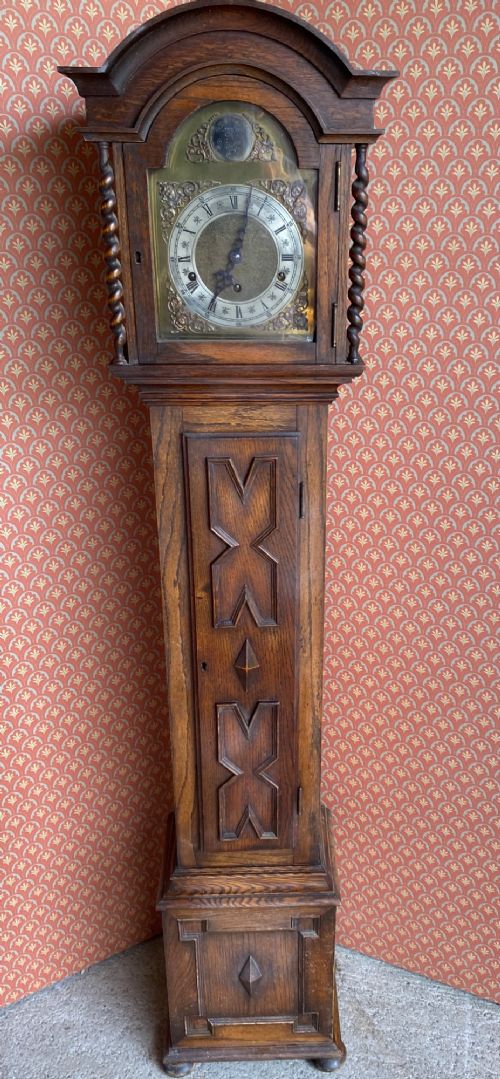
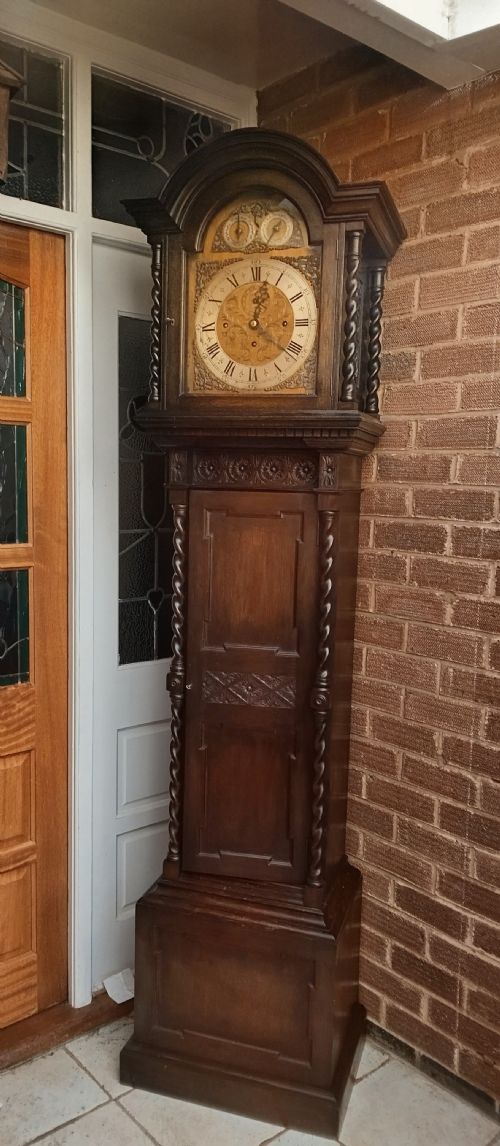


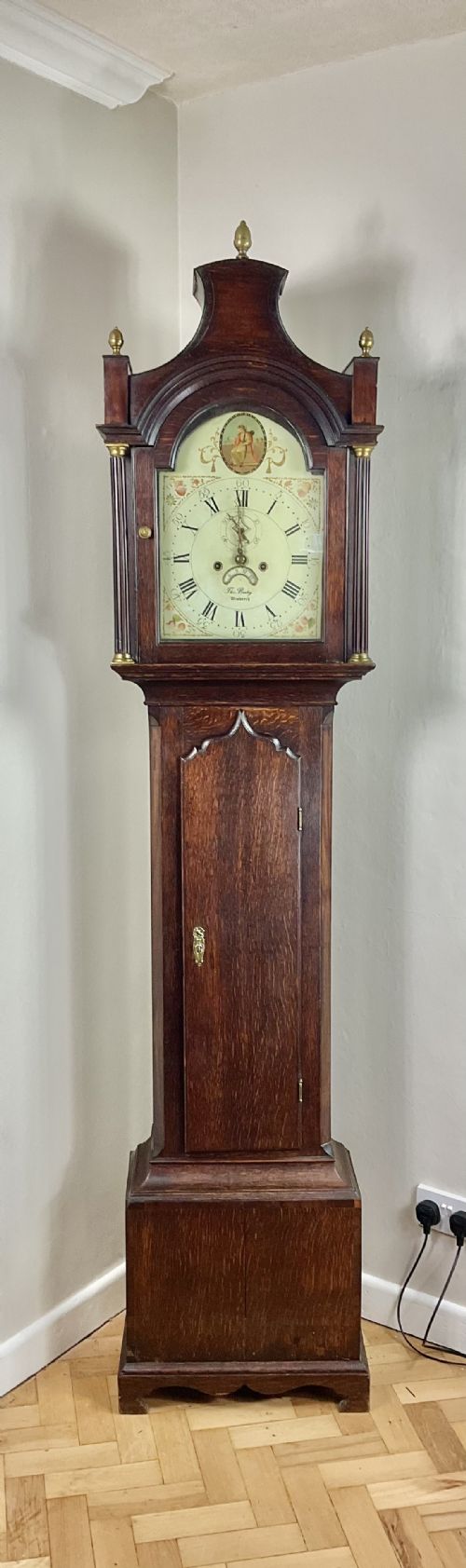


Carved Oak Hall Clock
These carved oak hall clock examples bring presence to an interior through substantial timber and measured timekeeping.
Carved Oak Hall Clock
A carved oak hall clock stands as a floor-standing timekeeper, historically positioned in the main entrance or hallway of a residence to regulate household routines. These upright instruments combine functional dials with protective timber cabinetry designed to shelter weights, pendulums, and striking trains.
The selections available here span from compact grandmother clocks up to grander longcase formats. Examples originate across multiple periods, including the Georgian era, Victorian times, and early twentieth-century revivals.
Buyers frequently encounter traditional British styles alongside Jacobean and Victorian revivals, sometimes featuring brass-faced dials and chiming movements. Each piece relies on substantial case construction to house the internal mechanisms securely.
How they were made
Makers utilised solid timber frames, principally oak, supplemented by mahogany highlights in specific eighteenth-century instances. The wood was seasoned, joined, and shaped to withstand the environmental shifts typical of unheated hallways.
Dials incorporate brass components, while glass panels protect the moving hands and pendulum face. Internal weights and chimes require precise alignment within the tall wooden trunk to function accurately over extended periods.
Carved Oak Hall Clock Retail Price Guide 2026
Typical asking prices for carved oak hall clock among the pieces listed under this phrase on Sellingantiques today, from the lower quarter to the upper quarter. They describe what is for sale here now, not the wider market.
Some tall clocks include silent levers so residents could sleep undisturbed while the weights kept pulling.
What varies in quality
The refinement of the surface carving and the crispness of the dial metalwork establish the visual distinction between standard production and superior craftsmanship. Deeper relief work on the wooden panels indicates greater artisan effort during construction.
Mechanical complexity also dictates the tier of the piece, ranging from simple hour strikes to triple-weight chiming movements and multi-tune musical cylinders. Original proportions and intact movement components hold greater weight among collectors.
The Carved Oak Hall Clock Glossary
- Longcase clock
- An upright, floor-standing timekeeper enclosed in a tall wooden case that protects the pendulum and weights. These instruments are frequently termed grandfather clocks.
- Grandmother clock
- A smaller, more compact version of the traditional longcase clock, typically standing under six feet in height. This scale suited more modest domestic spaces while retaining the mechanical complexity of larger examples.
- Fusee
- A conical pulley connected to the mainspring by a cord or chain that ensures even tension as the spring unwinds. This mechanism improves the timekeeping accuracy of the clock across its running cycle.
- Quarter chiming
- A movement capability that plays a melodic sequence every fifteen minutes in addition to striking the full hour. Such mechanisms require intricate gear trains and multiple weights or springs.
- Dial
- The visible face of the clock where the hours and minutes are displayed, often constructed from brass and accompanied by engraved chapters or subsidiary hands.
Carved Oak Hall Clock: Frequently Asked Questions
Where should a carved oak hall clock go?
These tall pieces require a stable, level floor away from direct sunlight and heating vents to protect the timber case and internal mechanism.
Placing the instrument in a hallway or landing allows the sound of the chimes to carry clearly through the residence.
How do I wind the clock?
Most examples use hanging weights suspended by cords or chains that must be drawn up periodically using a specialised winding key.
The frequency depends on whether the movement is an eight-day or a thirty-hour design, requiring steady handling to avoid disturbing the pendulum.
How do I tell Georgian periods apart from later revivals?
Eighteenth-century examples often display simpler, hand-built cabinet proportions and timber patination developed over centuries of exposure.
Later Victorian and Edwardian revivals frequently incorporate heavier machine-carved motifs inspired by earlier styles, alongside different dial technologies.
Why do some clocks chime multiple tunes?
More elaborate movements incorporate musical cylinders that rotate to select different melodies before sounding the hour.
These mechanisms require careful adjustment by specialists to maintain correct timing and musical sequence.