

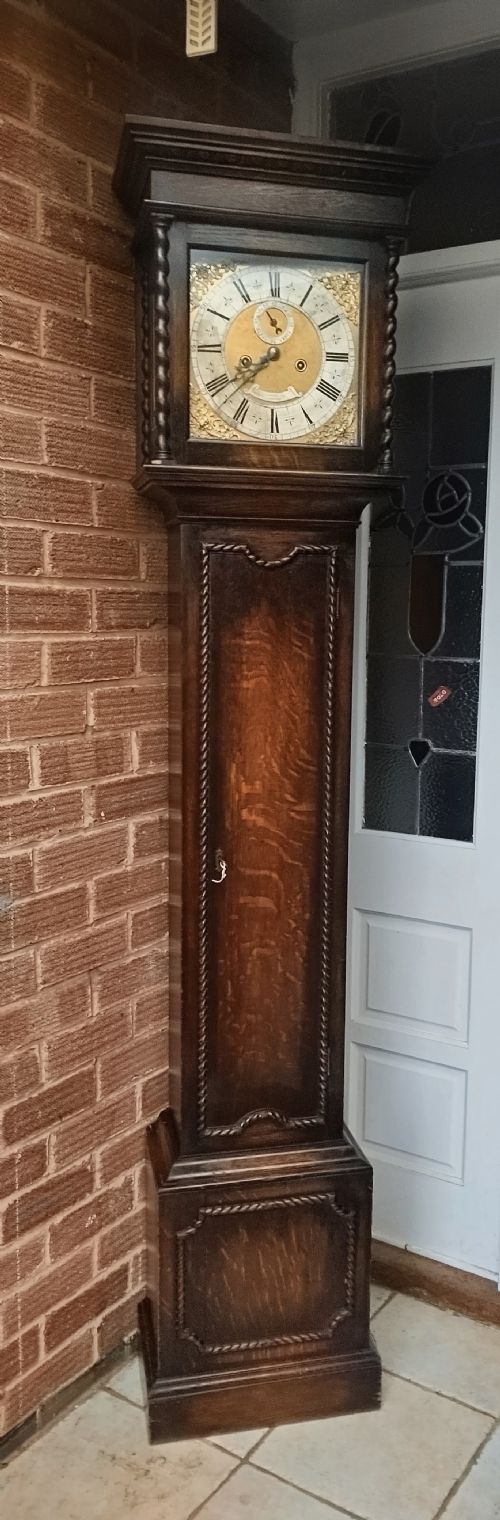


Barley Twist Oak Clock
These barley twist oak clocks combine substantial timber cases with helical turning, offering a traditional timekeeper that anchors a room.
Barley Twist Oak Clock
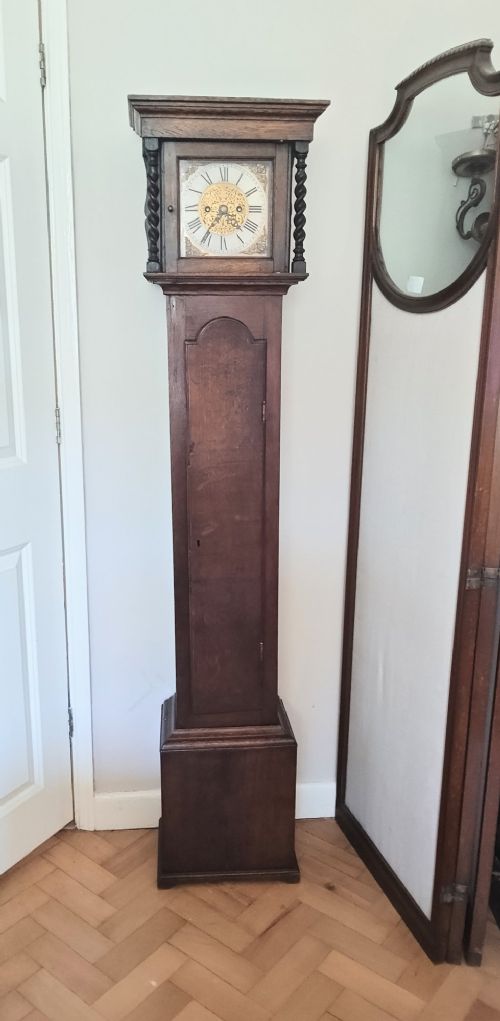
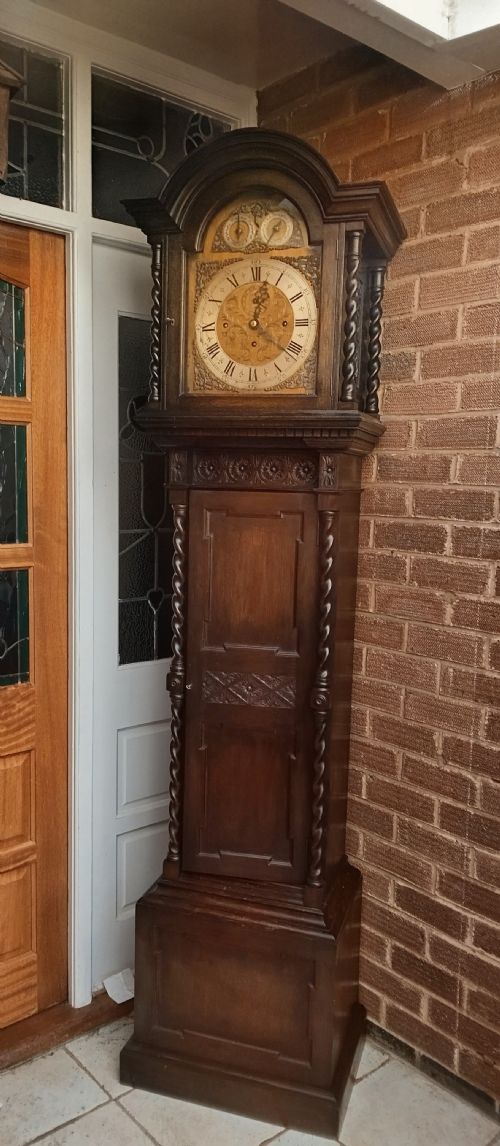
When you search for a barley twist oak clock, you encounter upright timekeepers primarily built as tall floor models. These range from substantial longcase clocks down to more compact grandmother clocks housed in timber cases.
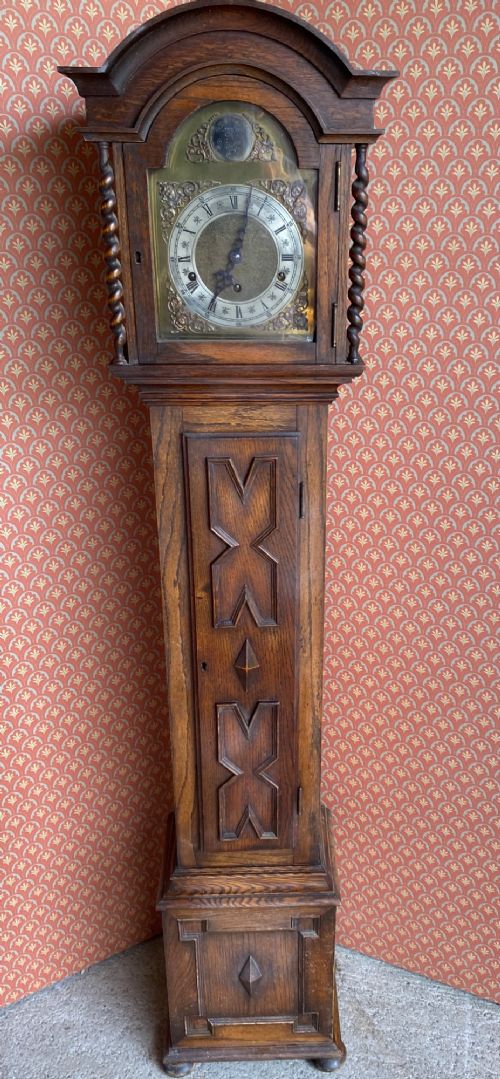
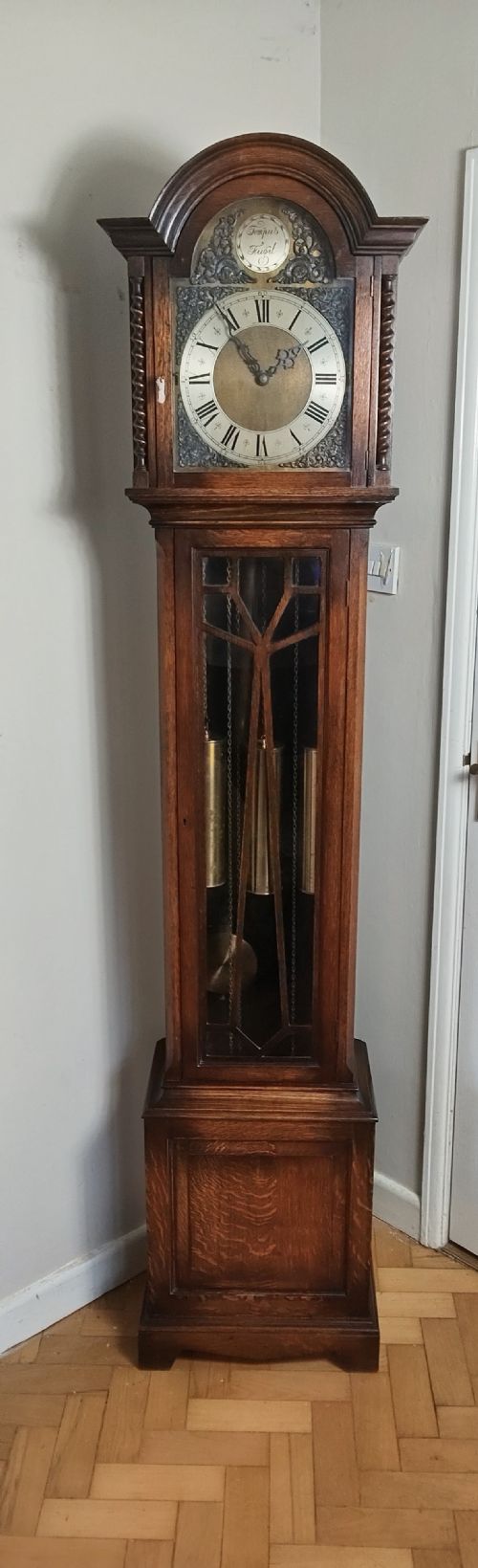
The version you meet most often on this page is the Edwardian or early twentieth-century grandmother clock, frequently featuring triple weight movements and Westminster chimes inside an oak case fitted with barley twist columns.
Earlier examples reach back into the seventeenth century with thirty-hour movements, while revival pieces adopt Jacobean or Victorian styles alongside floor clocks and hanging wall clocks.
How they were made
Makers constructed these clock cases from oak, frequently pairing the timber with brass dials, glass door panels, and internal metal weights and movements.
The characteristic barley twist columns were turned on the lathe to form helical spirals, which were then applied to the hood or trunk of the clock case alongside glazed doors and silvered dials.
Barley Twist Oak Clock Retail Price Guide 2026
Typical asking prices for barley twist oak clock among the pieces listed under this phrase on Sellingantiques today, from the lower quarter to the upper quarter. They describe what is for sale here now, not the wider market.
Listings span periods from the seventeenth century through the Victorian era and the Edwardian period into the twentieth century, utilising oak, brass, glass, and metal.
What varies in quality
The distinction between ordinary examples and superior pieces rests on the complexity of the internal movement, such as triple weight chiming mechanisms and multiple bells, compared to basic thirty-hour movements.
Case execution also separates the range, where crisp, deep timber turning and balanced proportions on grandmother and longcase clocks indicate superior craftsmanship.
William Noke
The Barley Twist Oak Clock Glossary
- Barley twist
- A decorative turning technique forming a helical spiral resembling a twisted rope. It appears frequently on the columns flanking the hood or trunk of these clocks.
- Grandmother clock
- A smaller version of the traditional longcase clock, standing lower to the ground. These compact floor clocks became popular during the Edwardian period.
- Longcase clock
- A tall freestanding pendulum clock enclosed in a wooden case, also known as a grandfather clock. These vertical timekeepers house weights suspended within the trunk.
- Triple weight
- A movement driven by three separate weights operating the timekeeping, the hour strike, and the musical chimes. This system powers Westminster chimes in many Edwardian examples.
- Jacobean style
- An aesthetic revival drawing on seventeenth-century English design characteristics. It informs the heavy oak framing and dark finishes seen on several pieces.
Barley Twist Oak Clock: Frequently Asked Questions
What is a grandmother clock?
A grandmother clock is a scaled-down version of the traditional longcase grandfather clock, standing noticeably shorter while retaining a full pendulum and weight-driven movement.
These pieces emerged strongly in the Edwardian period, offering collectors a floor-standing clock that fits comfortably within rooms with lower ceilings.
How do barley twist columns differ from straight ones?
Barley twist columns feature a helical, rope-like turned design rather than a plain cylindrical or fluted shaft. This sculptural form catches the light and adds depth to the hood of the clock case.
Craftsmen turned these spirals by hand or on specialised lathes, making them a defining decorative element of the style.
What are Westminster chimes?
Westminster chimes comprise a four-note melody played on gongs or bells before the hour strikes. The tune originates from the clock tower at the Palace of Westminster.
Triple weight movements usually power this musical sequence alongside the timekeeping and hourly strike.
How should I care for an oak clock case?
Oak cases require stable indoor humidity away from direct heat sources and sunlight to prevent timber movement or cracking. Gentle dusting with a dry cloth maintains the surface.
Mechanical movements also benefit from professional servicing every few years to keep the gears running accurately.