

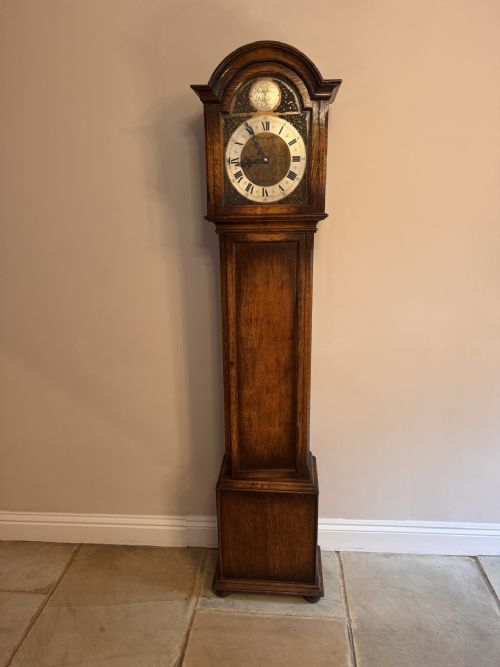
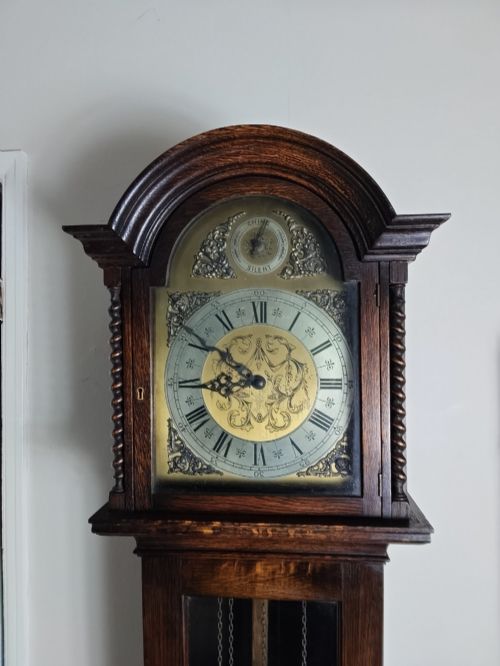
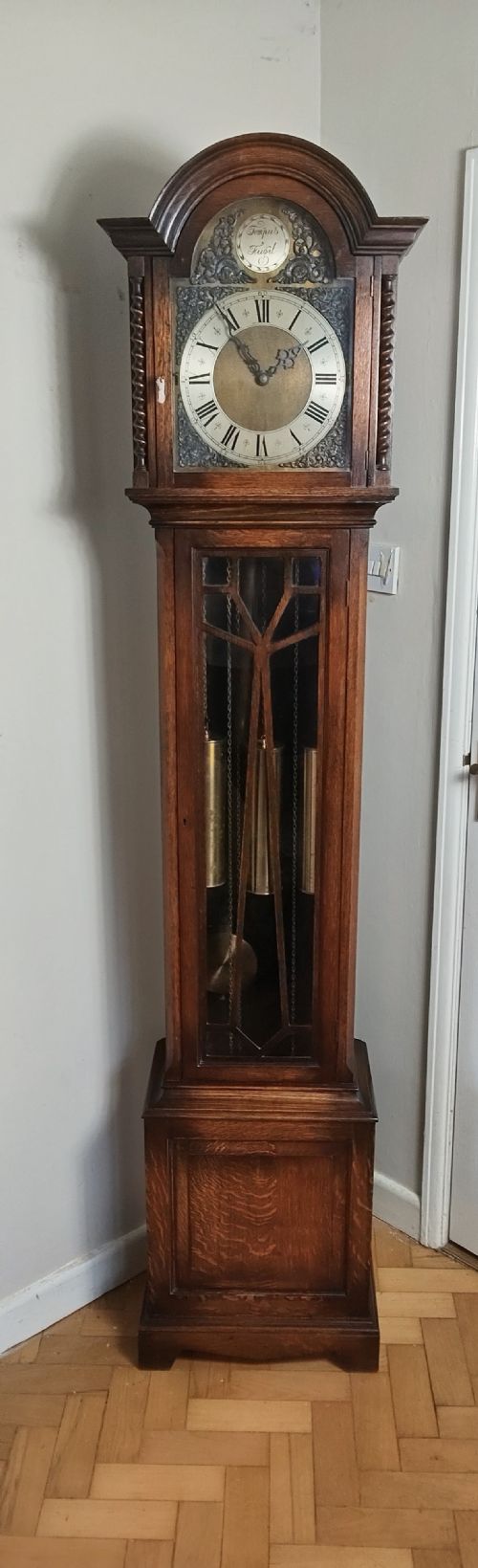
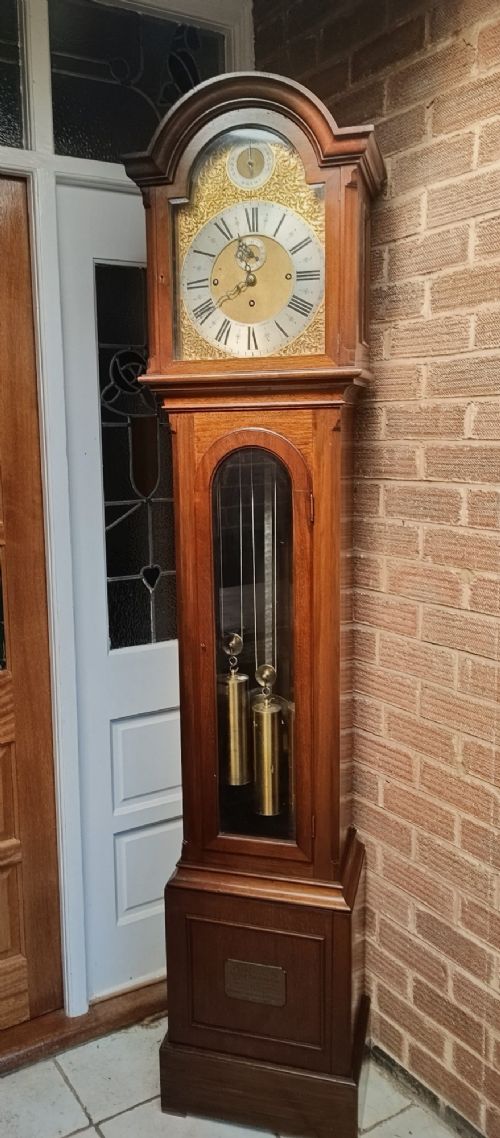


Oak Chiming Floor Clock
An oak chiming floor clock brings deep wooden presence and resonant hourly chimes into a room.
Oak Chiming Floor Clock
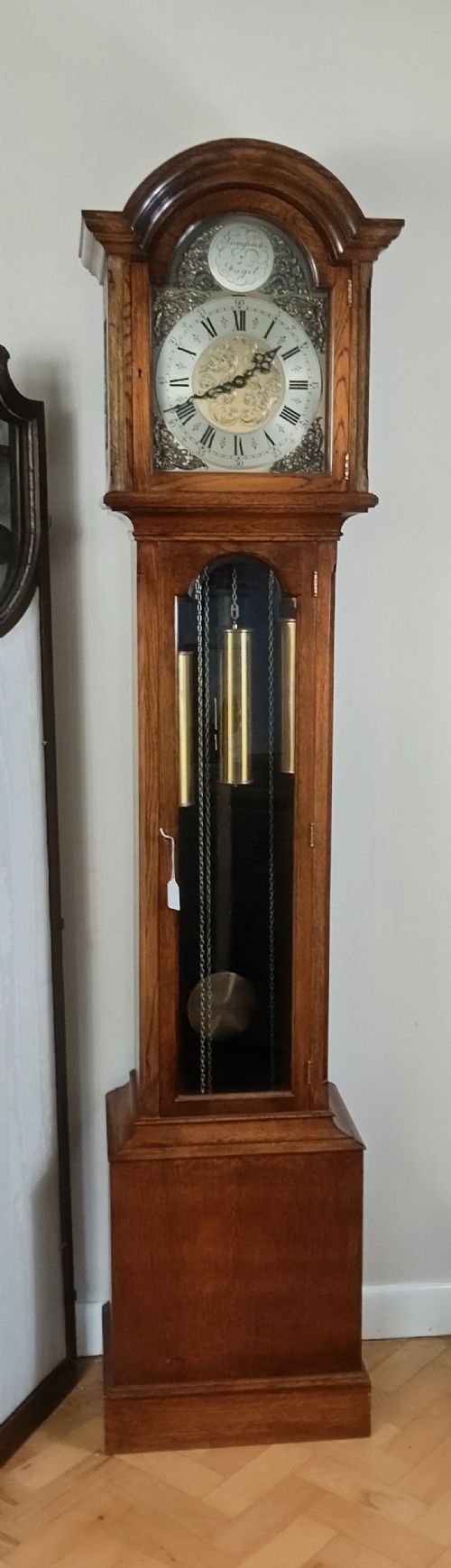
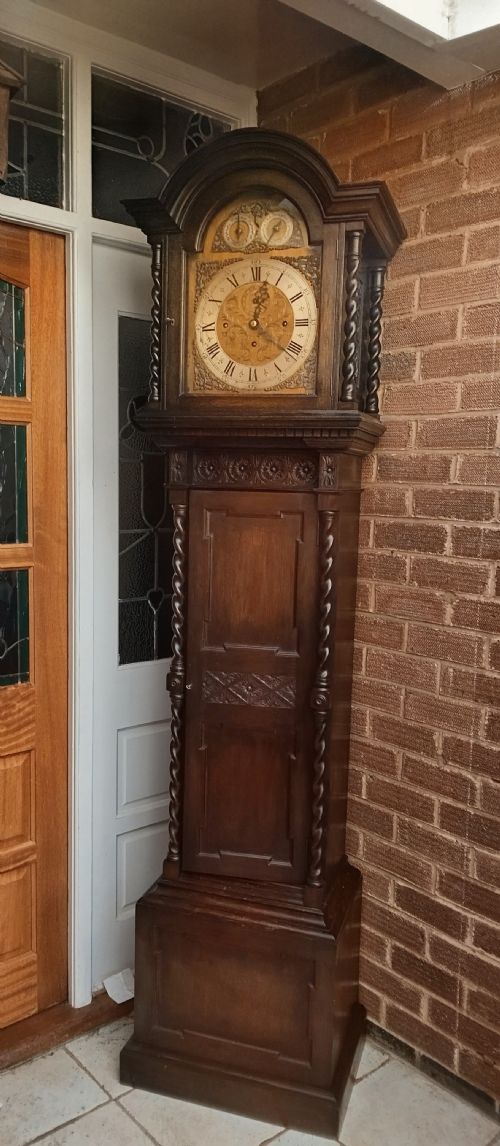
When you search for an oak chiming floor clock, you are looking at substantial tallcase timepieces housed in wooden cabinetry. These range from full-sized grandfathers to more compact grandmother clocks designed for smaller rooms.
The examples gathered here span from the late Victorian period through the Edwardian era and into the nineteen twenties and thirties. You will encounter revival styles including Jacobean, Gothic, and Georgian alongside early twentieth-century English designs.
Most pieces encountered on this page rely on oak construction, often displaying the grain through traditional medium or dark finishes. They combine timekeeping with acoustic chime mechanisms playing multiple tunes on bells or gongs.
Materials and construction methods
Internal movements are built from brass and steel components, engineered to drive gear trains for timekeeping, striking, and chiming. Glass panels protect the dial face and provide a view of the swinging pendulum within the trunk door.
Oak Chiming Floor Clock Retail Price Guide 2026
Typical asking prices for oak chiming floor clock among the pieces listed under this phrase on Sellingantiques today, from the lower quarter to the upper quarter. They describe what is for sale here now, not the wider market.
Some musical models let you select between multiple tunes, turning the hallway into a private concert hall every quarter hour.
Judging the quality of these timepieces
The standard of carving and timber selection sets the better examples apart from standard production pieces. Deeply carved cases and well-figured oak indicate superior craftsmanship during the construction process.
Complexity of the movement also defines the tier of the clock, with triple-weight systems, multiple bells, and musical tune selections representing higher mechanical ambition than simple hour-striking mechanisms.
Elliott·Bravingtons·Enfield·Harrods·W Prior Skipton
The Oak Chiming Floor Clock Glossary
- Grandfather clock
- A tall floor-standing pendulum clock, typically exceeding six feet in height. These large timepieces dominate the room they occupy.
- Grandmother clock
- A smaller, scaled-down version of the traditional tallcase clock. They offer the presence of a floor clock in a more compact footprint.
- Longcase clock
- An alternative term for a tall pendulum clock enclosed in a wooden case. The weight-driven movement hangs protected inside the main trunk.
- Regulator clock
- A precision pendulum clock designed for high accuracy. These movements often incorporate fine adjustments to maintain exact time.
- Quarter chiming
- A mechanical system that sounds a sequence of notes at each quarter hour. This precedes the full hour strike.
Oak Chiming Floor Clock: Frequently Asked Questions
How do I wind an oak chiming floor clock?
Winding involves using a specialised key inserted into holes on the dial face to draw up the internal weights. Care must be taken not to overwind the mechanism.
Most eight-day movements require this attention on a weekly schedule to maintain continuous operation and chime functions.
Where should I place a tall floor clock?
Position the piece against a sturdy interior wall away from direct sunlight and heavy draughts. A stable floor surface ensures the pendulum swings evenly.
Avoid exterior walls where temperature fluctuations might affect the wooden case and internal mechanical timing.
What is the difference between a grandfather and a grandmother clock?
The primary distinction lies in overall height and proportion. Grandfather clocks stand tall, whereas grandmother clocks are significantly shorter.
Both utilise similar weight-driven pendulum movements housed in upright wooden cases, but the smaller variant suits domestic spaces with lower ceilings.