
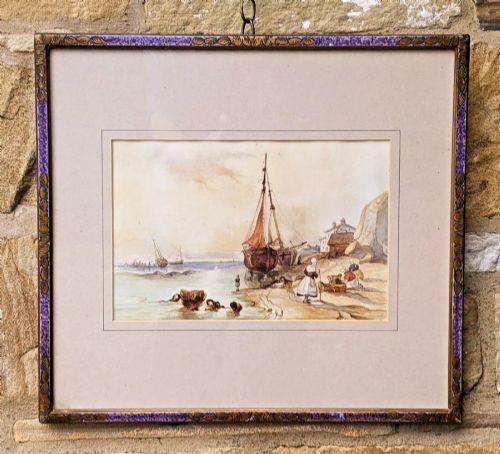


Traditional Nautical Wall Art
Traditional nautical wall art brings maritime history into rooms through paintings of ships, harbours and coastal views.
Traditional Nautical Wall Art
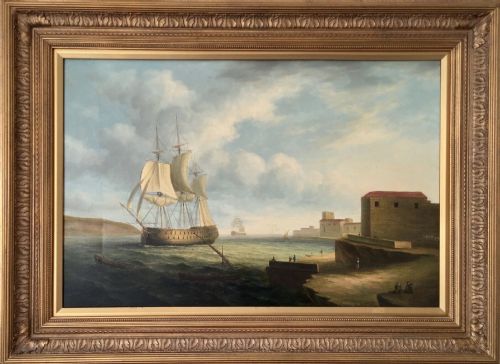
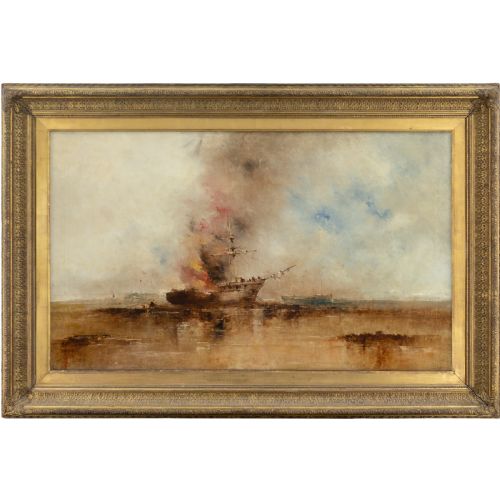
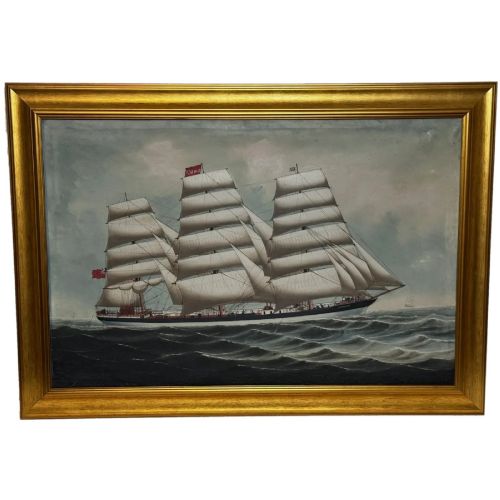
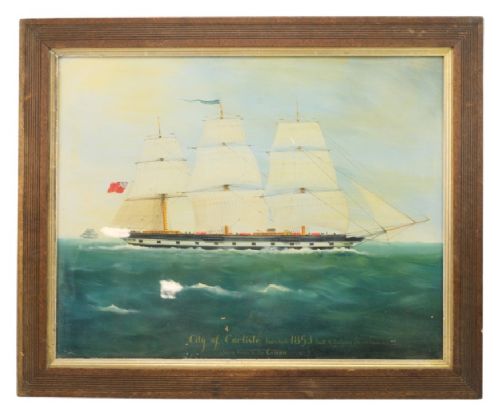
Traditional nautical wall art covers oil paintings, watercolours and framed marine scenes depicting ships, coastal harbours and naval actions. Buyers seeking these pieces encounter works spanning the nineteenth century through the mid twentieth century, including Victorian marine art and maritime realism.
The subjects range from warships and galleons anchored off foreign harbours to local fishing trawlers off Brixham or Cornish coasts, alongside specific vessels such as the clipper ship Garthpool. Watercolours and oils on canvas or board dominate the selection, often presented in wood or gilt wood frames.
Materials and construction
Artists relied primarily on oil paint applied to canvas, wood panels or board, as well as watercolour on paper, capturing maritime scenes with pigment and brush. Frames utilise wood, gilded wood and gilt wood, occasionally incorporating hand enamelled polychrome decoration.
Carpenters constructed functional objects such as ships wheels from oak, sometimes finished with paint such as deep red paint originating from workshops in places like Carmarthenshire, Wales.
Listings feature works from the nineteenth century and twentieth century, executed in oil on canvas, wood, paper and glass.
Assessing quality in marine works
Quality rests upon the artist's ability to render marine atmosphere, water movement and rigging detail with precision. Works by established named painters demonstrate superior handling of light, turbulent water and vessel architecture compared to anonymous school pieces.
The execution of the framing also dictates overall standard, where period gilt wood frames complement the painting and preserve the visual integrity of the maritime subject.
James Hardy·William McAlpine·Reginald Arthur Borstel·Thomas Bush Hardy·Dion Pears·George Henry Knight·John Callow·Ebeneezer Colls·William Edward Webb·Robert Leslie Howey·Pieter Cornelis Dommersen·Edward Fletcher·Alfred Montague·Hubert Thornley
The Traditional Nautical Wall Art Glossary
- Marine Art
- Depictions of ships, sea views and coastal scenes. This genre encompasses both naval battles and quiet harbour watercolours.
- Gilt Wood
- Wood treated with gold leaf or gold paint. This finish frequently appears on frames surrounding nineteenth century oil paintings.
- Seascape
- A painting representing the sea. These works frequently feature fishing boats, barques or coastal shorelines.
- Watercolour
- A paint method using water soluble pigments on paper. Many marine watercolours from the nineteenth century depict sailing vessels and harbour scenes.
- Ships Wheel
- A steering device used on vessels. Oak examples from the nineteenth century appear as three dimensional wall pieces.
Traditional Nautical Wall Art: Frequently Asked Questions
What subjects appear in traditional nautical wall art?
Paintings show warships, galleons, fishing trawlers, barques and coastal harbours. Scenes include sea battles, shipwrecks and quiet estuary views.
Artists recorded specific vessels and locations across Britain and Europe, ranging from Portsmouth harbour to Dutch shores.
How do I date a marine painting?
Dating relies on stylistic evidence, artist signatures and the type of vessel depicted. Nineteenth century works often show rigid rigging and specific naval uniforms.
Materials such as wood panels, canvas supports and original gilt frames also indicate the era of production.
What is the difference between an oil and a watercolour?
Oils use pigment suspended in drying oil on canvas or wood board, offering rich textures and deep colour layering. Watercolours use water soluble pigments on paper, creating lighter and more translucent maritime scenes.
Both mediums were widely used by marine artists throughout the nineteenth and twentieth centuries.
How were ships wheels used on walls?
Original wooden steering wheels from vessels are salvaged and adapted for interior display. Oak or painted wheels function as three dimensional wall decorations.
These pieces originate from nineteenth century ships and carry authentic maritime history into domestic spaces.