

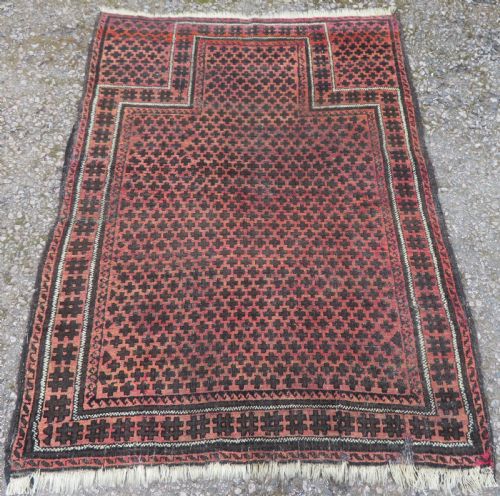


Traditional Mihrab Rug
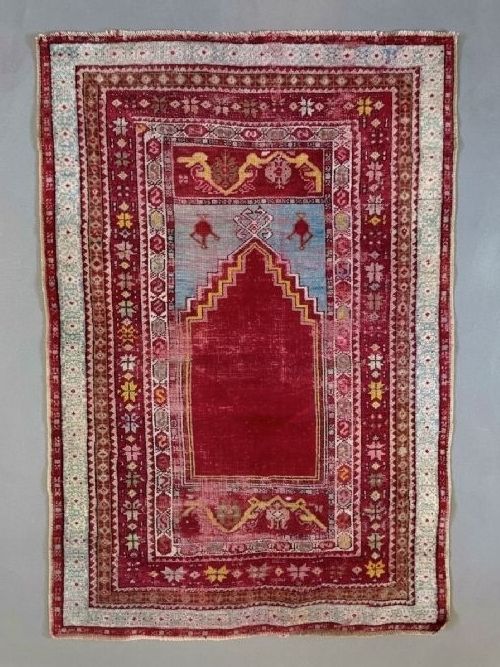
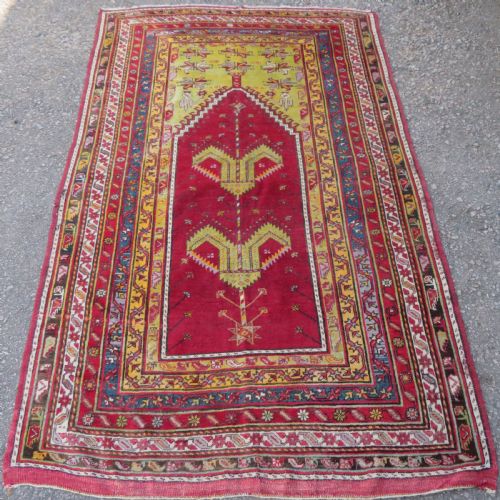
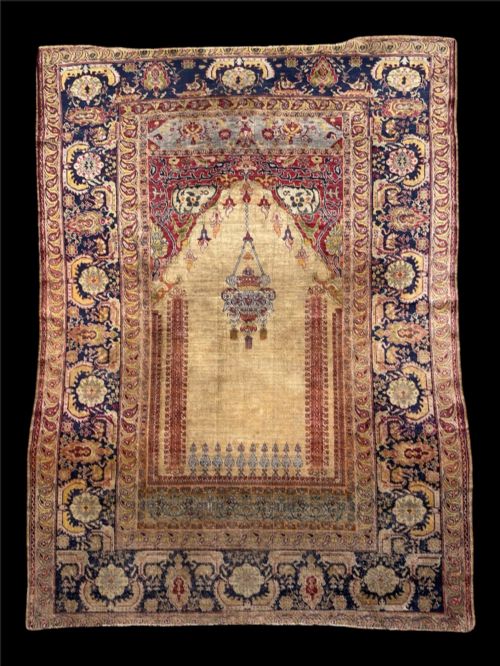
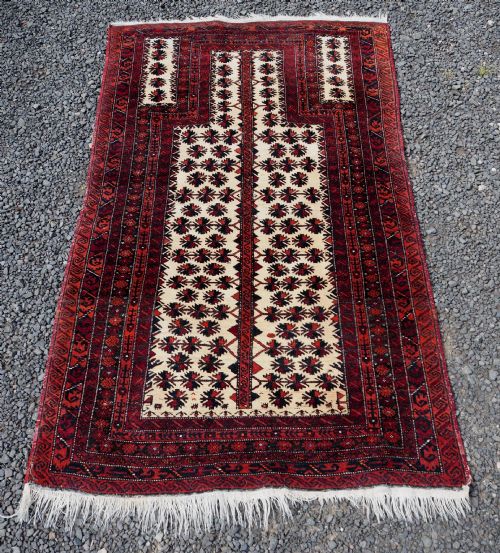
When you choose a traditional mihrab rug, you select a woven textile featuring the iconic arch motif designed for prayer.
Traditional Mihrab Rug
A traditional mihrab rug centres on the architectural arch design that symbolises a gateway or prayer niche, orienting the worshipper towards Mecca. These textiles draw on centuries of weaving heritage from Anatolia, Persia, the Caucasus and Central Asia.
You will encounter pieces originating from village workshops, nomadic tribes and town manufactories, spanning the eighteenth, nineteenth and early twentieth centuries. The format frequently appears in regional variations such as single, double or triple arches, often incorporating lamps, floral vases or symbolic borders.
Materials and Construction
Weavers utilised natural fibres including wool, hand-spun wool, cotton and silk to construct these textiles. Foundation threads of cotton or wool support dense pile knots or flat embroidered surfaces.
Silk threads and hand-spun wool bring varying texture and lustre to the surface designs, while natural dye palettes define the traditional appearance of regional types like Ghiordes, Kirsehir and Baluch weaves.
Traditional Mihrab Rug Retail Price Guide 2026
Typical asking prices for traditional mihrab rug among the pieces listed under this phrase on Sellingantiques today, from the lower quarter to the upper quarter. They describe what is for sale here now, not the wider market.
Certain prayer rugs incorporate subtle irregularities within their central arch, pointing gently towards Mecca with human warmth rather than rigid geometry.
Distinctions in Quality
Quality rests in the precision of the knotting, the crispness of the architectural arch drawing and the saturation of the colour palette. Finer examples display intricate border geometries and balanced proportions within the niche.
The choice of materials also dictates the calibre of the piece, with finely spun wool or pure silk enhancing the durability and visual depth of the woven design.
The Traditional Mihrab Rug Glossary
- Mihrab
- The arched niche in a prayer rug that mimics the architectural feature in a mosque indicating the direction of prayer. This motif forms the focal point of the composition.
- Suzani
- An embroidered textile created in Central Asia, often worked in silk on a cotton ground. Pieces in prayer format adopt the arch design.
- Ghiordes
- A historic town in Western Anatolia renowned for distinctive prayer rugs featuring tiered arches and characteristic floral elements. These weaves often date to the eighteenth and nineteenth centuries.
- Baluch
- A nomadic or village weaving tradition associated with tribal groups in regions spanning Afghanistan and Persia. Their prayer rugs frequently incorporate dark, rich wool palettes and geometric motifs.
Traditional Mihrab Rug: Frequently Asked Questions
What is a traditional mihrab rug?
A traditional mihrab rug is a textile featuring a distinct pointed arch motif that represents a prayer niche. These pieces served a devotional purpose by indicating the direction of prayer.
Originating from regions such as Anatolia, Persia and Central Asia, they combine traditional iconography with local weaving techniques passed down through generations.
How were these prayer rugs used?
These rugs were primarily utilised for daily personal prayer, providing a clean and defined space for prostration. The arch motif was oriented towards Mecca during worship.
Beyond their religious function, many examples served as portable furnishings within nomadic tents, village homes and urban residences.
How do I live with a antique rug?
Living with an antique textile involves balancing appreciation with careful placement in low-traffic areas of your home. Using a suitable underlay helps prevent slipping and reduces fibre wear.
Protecting the wool or silk from prolonged direct sunlight preserves the natural dyes and structural integrity of the weave over time.
How do I tell regional styles apart?
Regional styles differ through specific arch shapes, border geometries and colour combinations unique to weaving centres like Kirsehir, Ladik or Ghiordes. Anatolian examples often feature stepped or floral arches, while tribal pieces lean towards geometric repetition.
Examining the materials, such as hand-spun wool versus cotton foundations, further aids in identifying the geographical origin of the textile.