



Traditional Maritime Art
Traditional maritime art encompasses painted coastal scenes, harbour views and ship portraits spanning the nineteenth century onwards.
Traditional Maritime Art
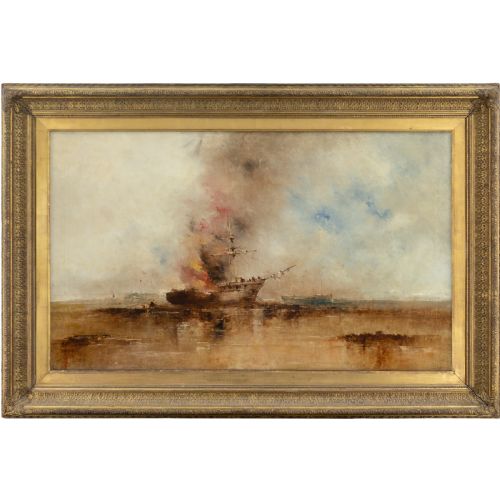
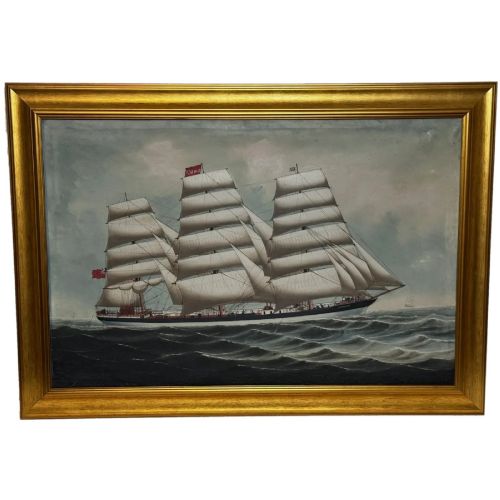
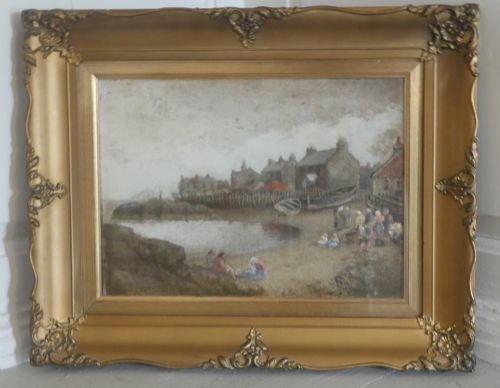
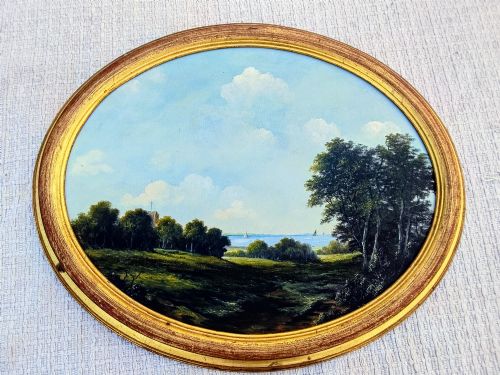
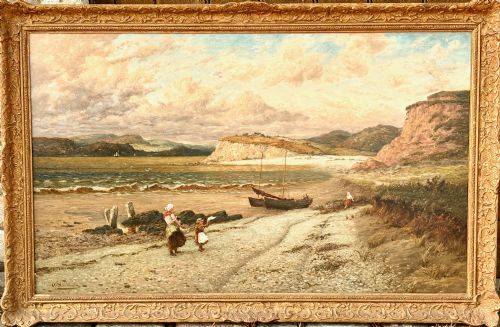
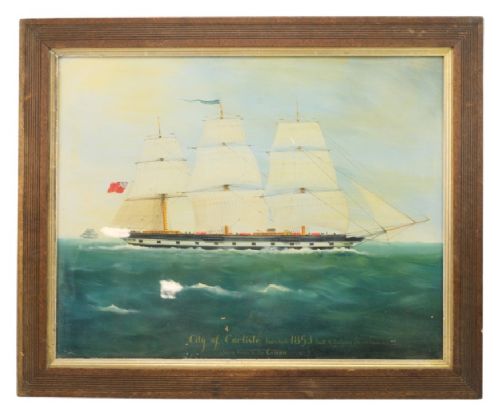
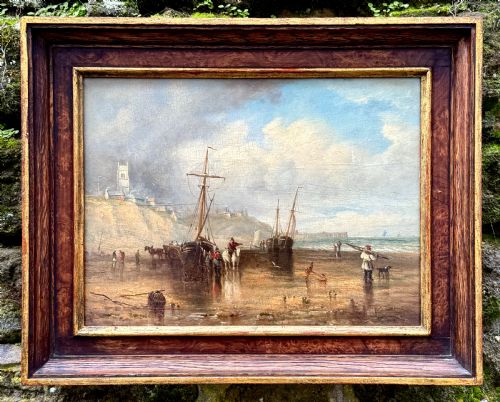
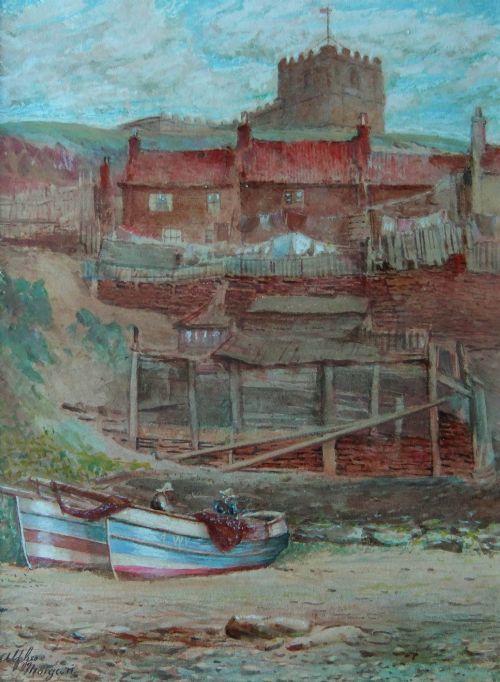
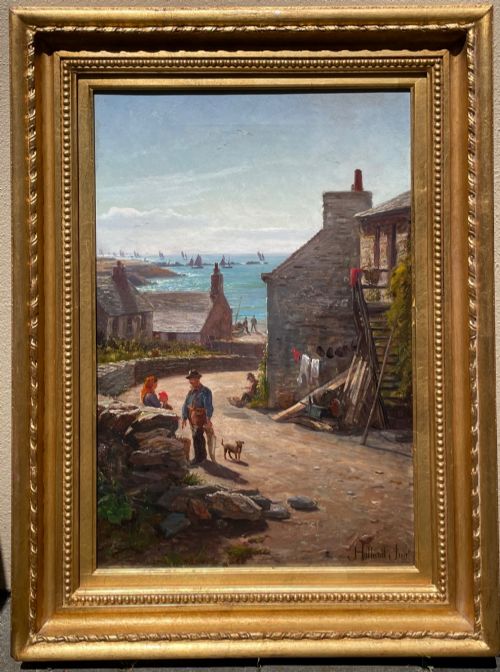
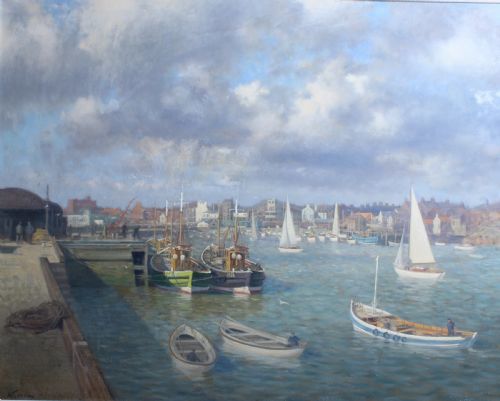
Traditional maritime art centres upon oil paintings and watercolours depicting coastal views, harbour scenes, and specific vessels at sea. These works frequently record named locations such as St Ives, Whitby, and foreign harbours alongside historical vessels.
The objects span from the nineteenth century into the mid-twentieth century, capturing the working life of coastal communities and naval subjects. Works appear on canvas, panel, paper, and occasionally within dimensional forms such as cradle boat hulls.
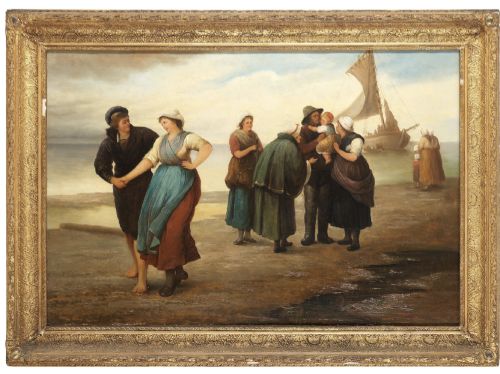
Buyers encounter British and European schools, ranging from detailed depictions of shipping to atmospheric seascapes executed by named regional artists and continental painters.
Materials and execution
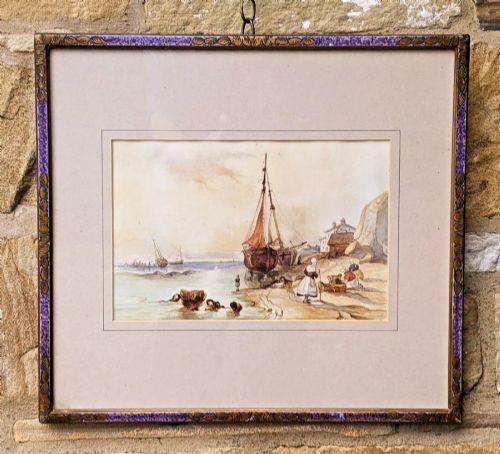
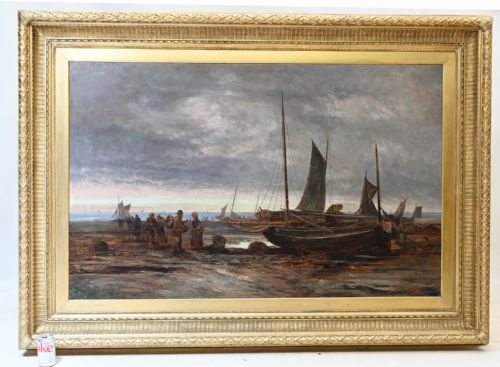
Painters utilised oil paint on canvas, wood panel, or board to build layered coastal scenes, often applying rich pigment to capture choppy seas and atmospheric skies. Watercolours on paper provide lighter, more immediate renderings of harbours and fishing boats.
Framing forms an integral part of the presentation, with original or period giltwood and gilded wood frames enclosing the paintings to complement the maritime subject matter.
Listings feature works spanning the nineteenth century to the mid-twentieth century, executed in oil and watercolour on canvas, panel, and paper.
Distinctions in quality
Quality rests upon the artist's handling of light, water movement, and atmospheric depth, distinguishing accomplished works from generic or formulaic coastal views. The precision shown in rigging, vessel architecture, and coastal topography marks out superior examples.
Condition of the canvas or paper surface, along with the preservation of original pigment and the presence of a sympathetic period giltwood frame, influences the standing of an individual piece.
James Hardy·William McAlpine·Reginald Arthur Borstel·Edward Mills·William Banks Fortescue·Thomas Creswick·Alfred G Morgan·John Holland·Walter Goodin·Henry Barlow Carter·William Edward Webb·James Kyd·Thomas Bush Hardy·Stanley Leader·George Shaw·George Hamilton Constantine·John Bell·William Pitt·James Webb·Hendrik Willebrord Jansen
The Traditional Maritime Art Glossary
- Seascape
- A painting depicting the sea, ships, or coastal views. These works often focus on the movement of water and atmospheric weather conditions.
- Oil on Canvas
- Pigment mixed with drying oil applied to a stretched woven fabric support. This medium allows for deep colour saturation and textured brushwork.
- Giltwood
- Wood carved and coated with gold leaf or gold paint. Frames in this material frequently accompany nineteenth-century oil paintings.
- Watercolour
- Paint consisting of water-soluble pigment suspended in a water-based solution applied to paper. It yields transparent washes suitable for capturing light on coastal water.
Traditional Maritime Art: Frequently Asked Questions
What subjects appear in traditional maritime art?
These works depict coastal harbours, fishing boats, merchant shipping, and named warships in various weather conditions. Scenes often record specific British and European coastal towns alongside open sea views.
Artists frequently documented the working vessels of the nineteenth and early twentieth centuries, capturing maritime trades and naval history on canvas and paper.
How do I date a maritime painting?
Dating relies on stylistic evidence, artist working periods, and the rig or design of the depicted vessels. Costume of figures on the shore or deck also provides chronological markers.
Framing materials and methods, such as nineteenth-century giltwood mouldings, offer further clues to the period of creation.
How were these paintings displayed originally?
Period oil paintings and watercolours were framed in carved and gilded wood to enhance the visual impact of the seascape. They hung in domestic interiors and maritime offices.
Many retain their period frames, which reflect the interior aesthetic of the Victorian era and subsequent decades.
Are watercolours as durable as oil paintings?
Watercolours on paper require protection from direct sunlight to prevent fading of pigments. They are typically framed under glass with conservation mountings to ensure longevity.
Oil paintings on canvas or panel offer greater resilience to environmental factors but still benefit from stable indoor humidity and temperature.