




Traditional Marine Canvas Art
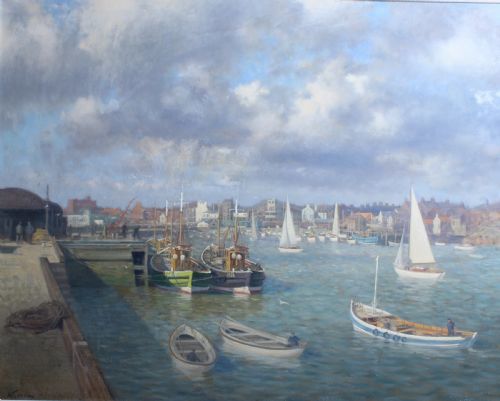
Traditional marine canvas art captures coastal scenes and maritime history on woven fabric using oil paint.
Traditional Marine Canvas Art
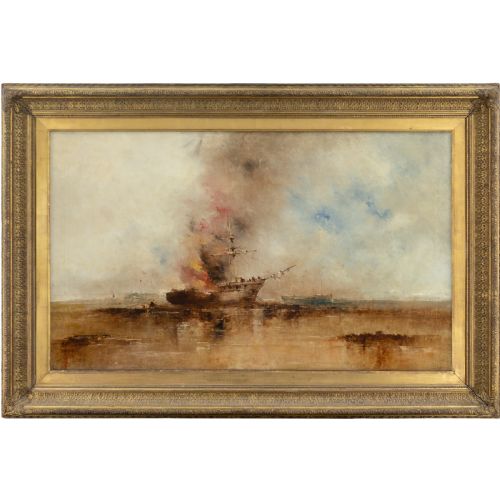
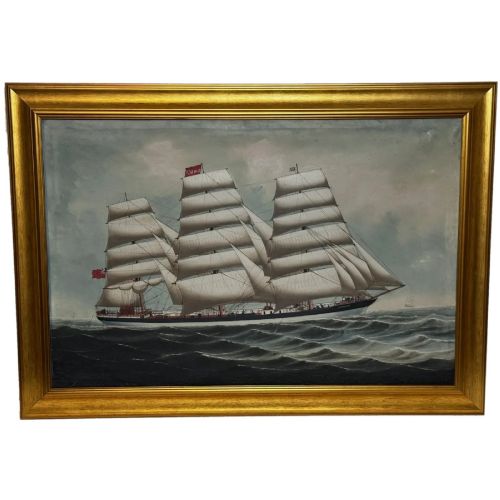
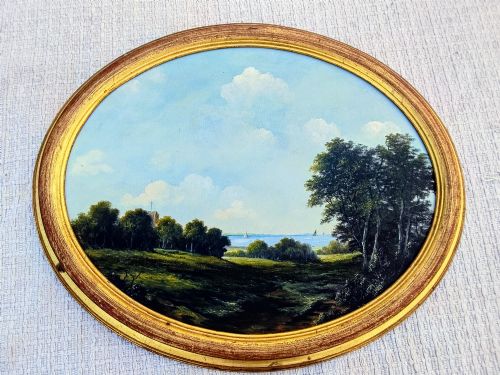
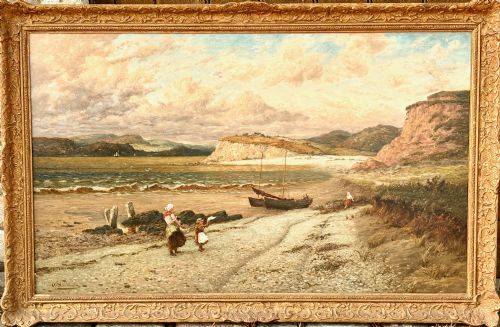
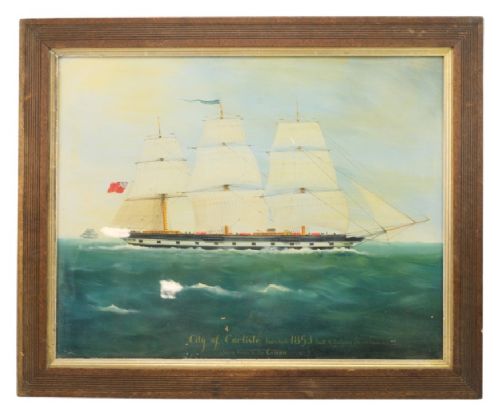
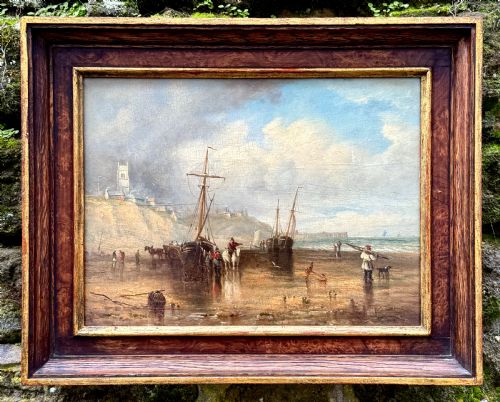
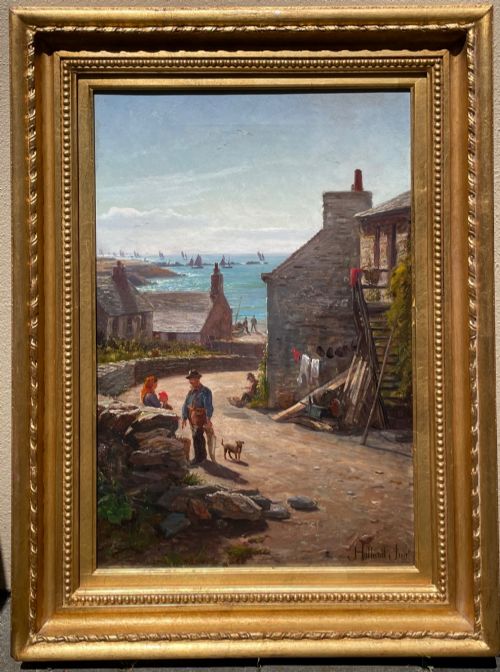
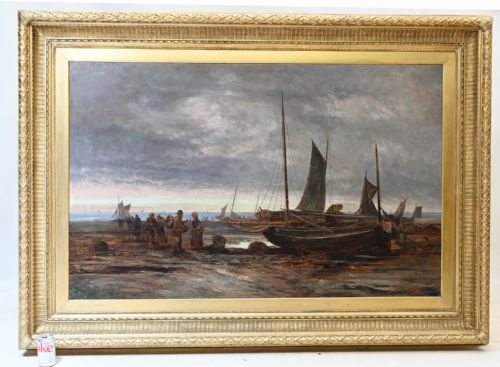
Traditional marine canvas art comprises oil paintings depicting harbours, coastal views, shipping vessels, and open seas. These works range from small oval canvases to large framed pieces spanning several feet across.
The selections on this page originate from the Georgian era, the Victorian period, and subsequent decades up to the mid-20th century. Maritime scenes span British, French, and Dutch locations, alongside imagined nautical compositions.
Subject matter varies from serene sunsets and calm canals to turbulent sea battles and ships navigating choppy waters. Many canvases record specific vessels, lighthouses, and coastal towns such as the Isle of Man or Brixham harbour.
Materials and construction
Artists painted these works using oil paint applied to woven canvas stretched over wooden frames. Gesso provided a prepared surface on the canvas foundation to hold the pigment layers.
Many surviving pieces retain their period frames constructed from wood, often finished with giltwood or gilded elements. The combination of oil on canvas within a wooden housing defines the physical structure of these works.
Listings feature oil paintings on canvas from the 18th, 19th, and 20th centuries, housed in wood and giltwood frames.
Factors of quality
Quality rests in the handling of light, water movement, and atmospheric perspective across the canvas. Skilled painters captured the weight of waves and the rigging of ships with precise brushwork.
Provenance and attribution elevate certain pieces, particularly those signed by recorded painters or linked to distinct schools of art. The preservation of the original oil surface and the suitability of the accompanying frame also influence the standing of a work.
William McAlpine·Reginald Arthur Borstel·Thomas Creswick·John Holland·Walter Goodin·William Edward Webb·Stanley Leader·Hendrik Willebrord Jansen·Alfred Henry Vickers·George Henry Knight·Thomas Rose Miles·Marie-Edouard Adam·John Callow·Ebeneezer Colls·Owen Bowen
The Traditional Marine Canvas Art Glossary
- Canvas
- A heavy woven fabric used as a surface for oil painting. It provides the flexible base stretched across wooden frames for maritime scenes.
- Gesso
- A plaster mixture applied to canvas to prepare a smooth absorbent surface for oil paint. It seals the fabric before the artist begins painting.
- Giltwood
- Wood carved and covered with a thin layer of gold leaf or gold paint. This material forms the decorative frames enclosing many period paintings.
- Seascape
- A work of art depicting the sea, coastal views, or marine activity. These subjects form the core of traditional maritime painting.
- Provenance
- The documented history of ownership associated with an artwork. It establishes the authenticity and past location of a painting.
Traditional Marine Canvas Art: Frequently Asked Questions
What periods do these paintings come from?
The listings on this page span the 18th, 19th, and early-to-mid 20th centuries. Pieces date from around 1800 through the Victorian era up to the 1960s.
Most works emerge from the 19th century, reflecting the height of maritime painting and coastal commerce during that period.
Are these paintings signed by the artists?
Some canvases feature signatures, monograms, or inscriptions naming the painter or the depicted vessel. Other works remain unsigned but are attributed to specific art schools or known painters based on style.
Documentation and framing often provide additional context regarding the origin of unsigned pieces.
What subjects appear most often in maritime art?
Common subjects include fishing trawlers, lighthouses, merchant vessels, and naval ships navigating harbours or open seas. Coastal scenes feature specific locations like the Isle of Man, Cornwall, and Venetian lagoons.
Artists also depicted historic naval events, shipwrecks, and quiet coastal towns with shipping figures.