

Traditional Mantle Mirror
A traditional mantle mirror anchors a chimney breast, bringing depth and period character to a room.
Traditional Mantle Mirror
A traditional mantle mirror sits directly above a fireplace, designed specifically to reflect light and fill the expanse of a chimney breast. These pieces span from the eighteenth century through to the early twentieth century, encompassing Georgian, Victorian, and Edwardian eras.
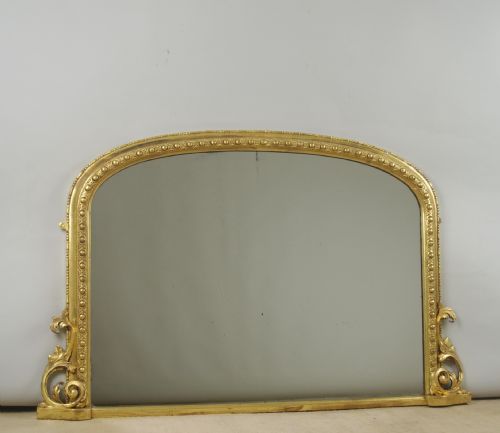
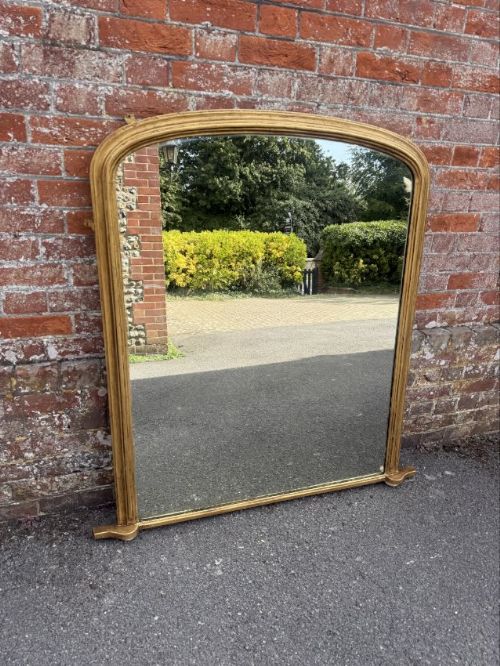
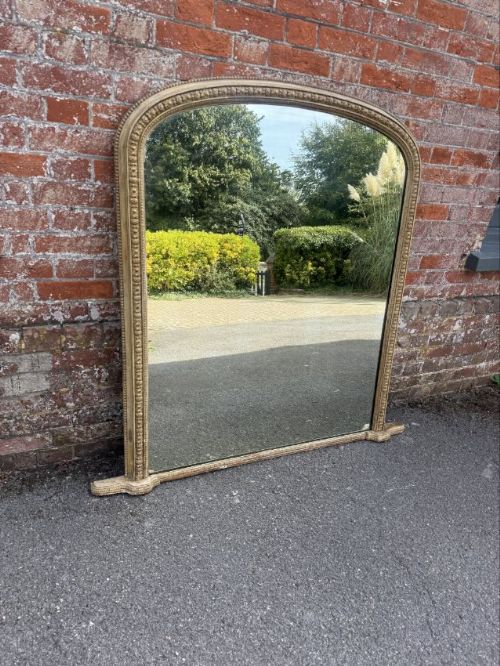
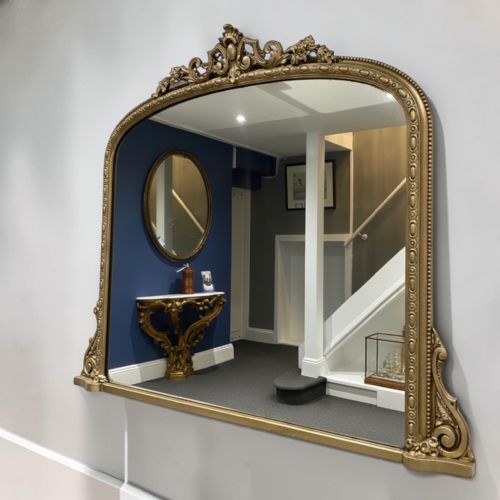
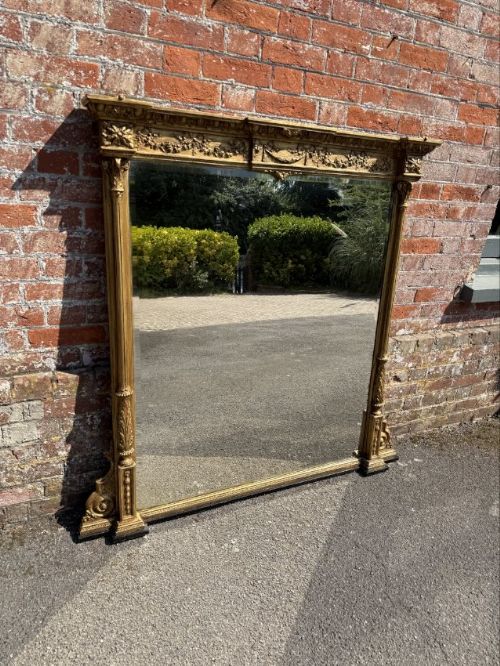
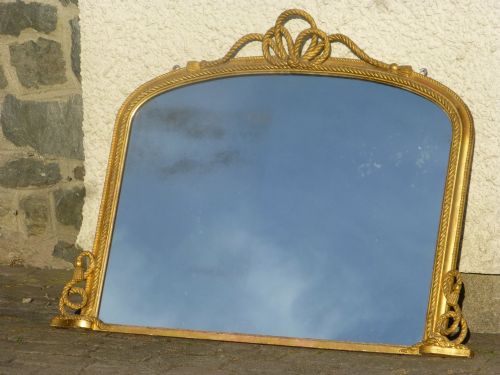
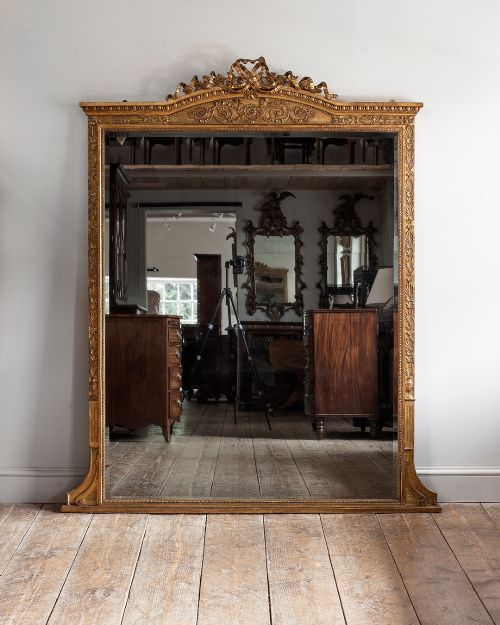
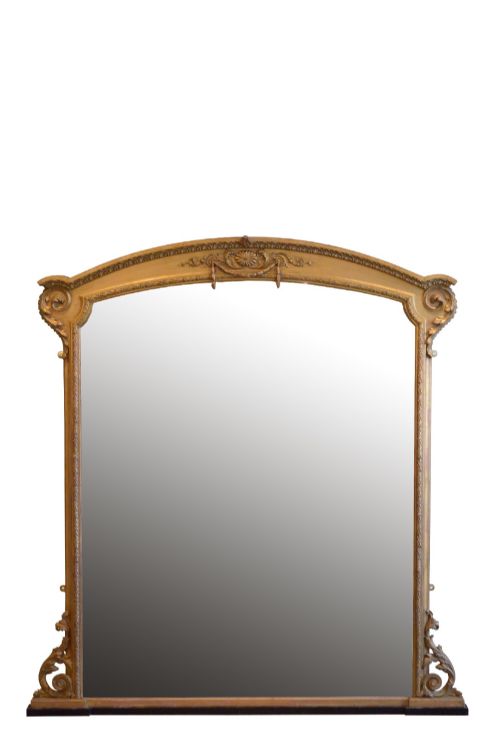
The most common version met on this page is the nineteenth-century overmantel mirror, frequently fashioned with an arched top and gilded gesso. These large mirrors balance proportions carefully so they sit comfortably upon a fireplace surround without overwhelming the hearth.
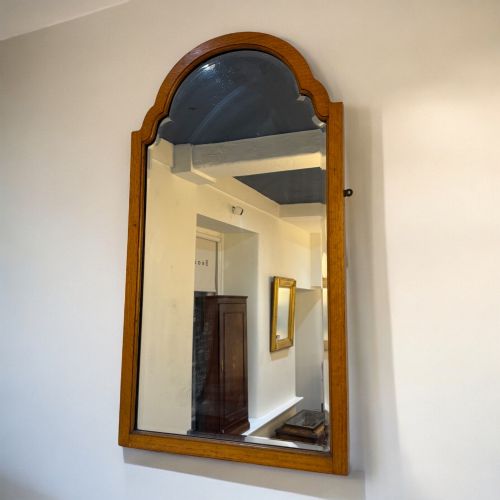
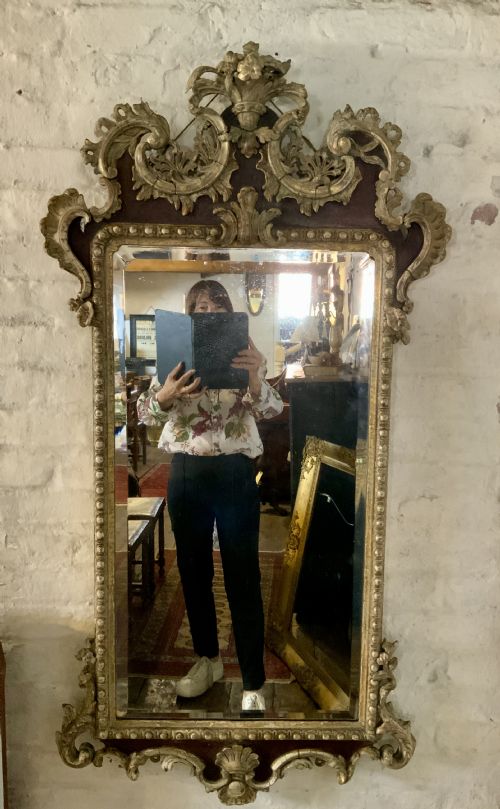
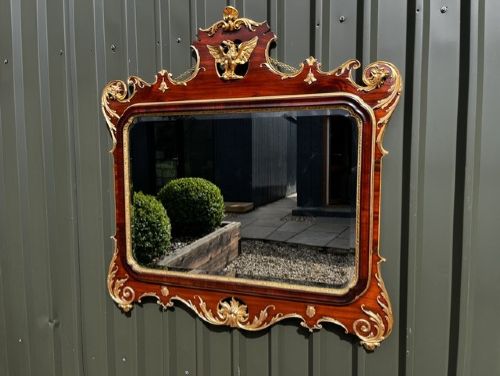
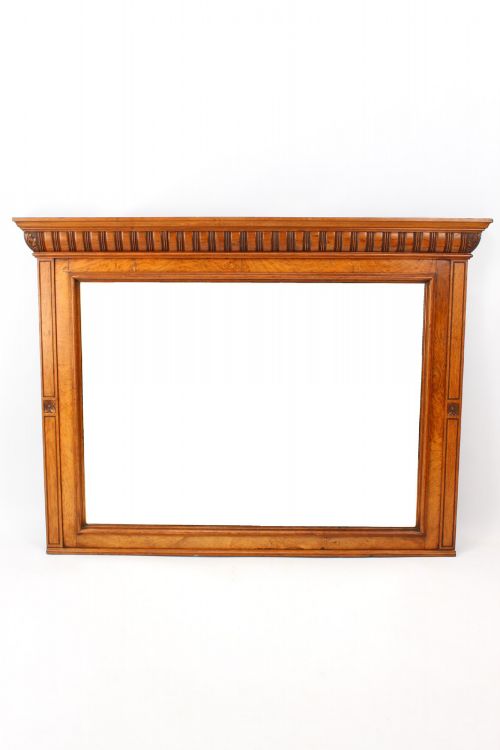
Alongside gilded nineteenth-century overmantels, the selection includes walnut and oak wall mirrors, mahogany frames, and occasional fire surrounds. Origins range across English workshops, French influences like rococo revival, and simpler regional pieces.
How They Were Made
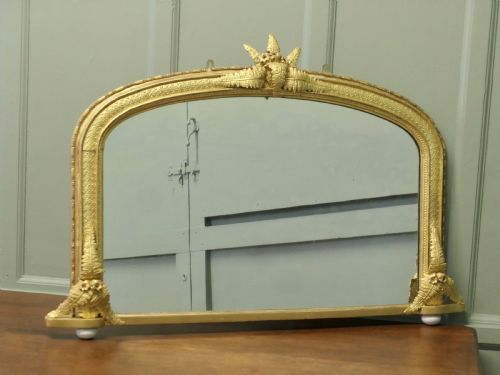
Carved wood and gesso form the foundation for many nineteenth-century gilt frames, where plaster of Paris or chalk is built up over a wooden base to take crisp decorative details. Gold leaf or gilding is then applied to the prepared gesso surface to create a brilliant metallic finish.
Cabinetmakers utilised solid timbers such as walnut, oak, and mahogany for earlier and later framed mirrors, employing traditional joinery and parcel gilding techniques. Glass plates are set securely within the rebates, sometimes retaining original mirror glass with natural foxing and age.
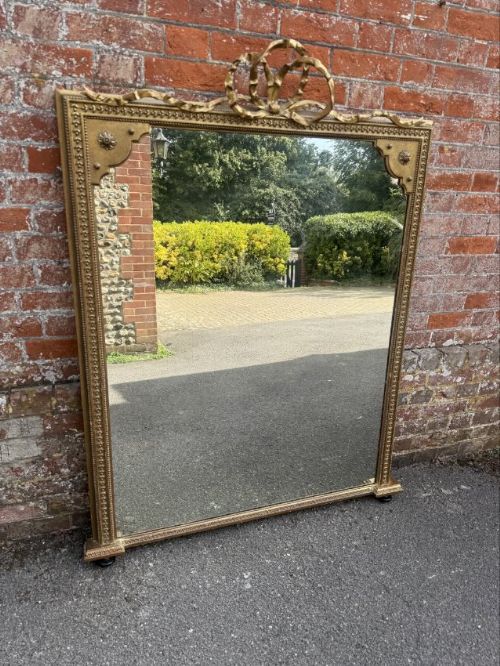
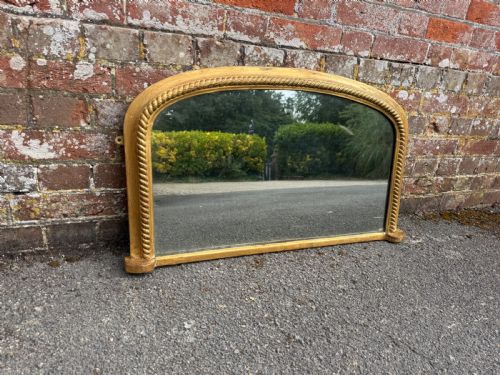
Decorative motifs include rope twists, columns, ribbed framing, and ornate arched crests. These elements are carved directly into the wood or moulded in gesso before finishing.
Traditional Mantle Mirror Retail Price Guide 2026
Typical asking prices for traditional mantle mirror among the pieces listed under this phrase on Sellingantiques today, from the lower quarter to the upper quarter. They describe what is for sale here now, not the wider market.
Several mirrors feature nautical rope twist details, proving that even formal Victorian parlours appreciated a subtle maritime nod.
What Varies in Quality
The depth and crispness of the carved wood and moulded gesso separate standard production from finer work. Superior examples display sharp relief in their ornamentation and careful hand-finishing across the crests and framing.
The quality of the gilding and the preservation of original materials heavily influence the character of a mirror. Rich gold leaf applications and intact original mirror plates hold greater visual authority than later repainting or replaced glass.
The Traditional Mantle Mirror Glossary
- Gesso
- A plaster-like mixture applied to a wooden frame to create a smooth surface for gilding. It allows intricate decorative reliefs to be moulded before applying gold leaf.
- Overmantel Mirror
- A large mirror specifically designed to hang or stand on the mantlepiece above a fireplace. They often feature horizontal or arched proportions suited to the width of a hearth.
- Parcel Gilt
- A decoration technique where parts of an object are gilded with gold leaf while other areas reveal the natural wood grain, such as walnut or mahogany.
- Giltwood
- Wood that has been coated with gold leaf or a gold-coloured finish. It provides a reflective, luxurious frame that catches ambient room light.
Traditional Mantle Mirror: Frequently Asked Questions
How do I hang a heavy overmantel mirror?
Heavy overmantel mirrors require secure wall fixings tied directly into structural studs or masonry. Many traditional examples are also designed to rest safely on the mantlepiece itself while anchored lightly to the wall for stability.
Professional installation is recommended for larger nineteenth-century giltwood pieces due to their substantial weight and size.
Are these mirrors suitable for modern rooms?
Traditional mantle mirrors work exceptionally well in modern interiors by introducing warmth, historical contrast, and reflected light. Their classic proportions help anchor minimalist or contemporary spaces with a distinct focal point.
Pairing an ornate nineteenth-century gilt frame with clean walls creates a balanced interior scheme.
How do I identify a Victorian overmantel mirror?
Victorian overmantel mirrors frequently feature arched tops, carved wood and gesso frames, and bright gilding designed to brighten nineteenth-century parlours. They often showcase styles like rococo revival or simple architectural columns.
Examining the construction methods on the reverse and the thickness of the frame helps confirm the period.
What is the difference between a wall mirror and an overmantel mirror?
Overmantel mirrors are traditionally proportioned to sit above a fireplace opening, often possessing a wide base and an arched or shaped top. Wall mirrors are designed for general room placement and vary widely in shape from oval to rectangular.
Overmantels are specifically scaled to match the width of standard chimney breasts.