
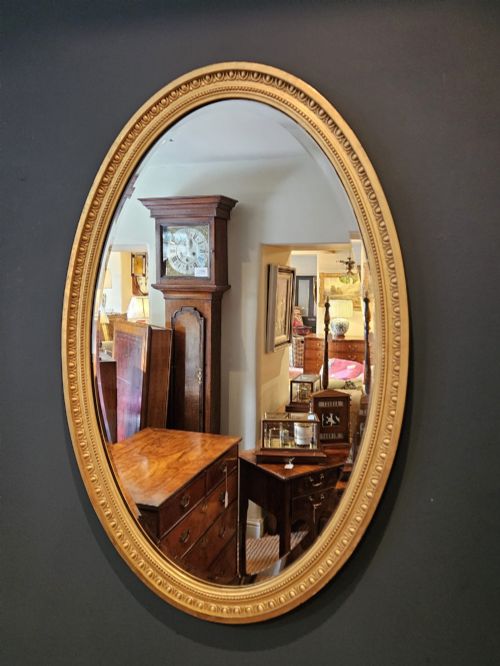
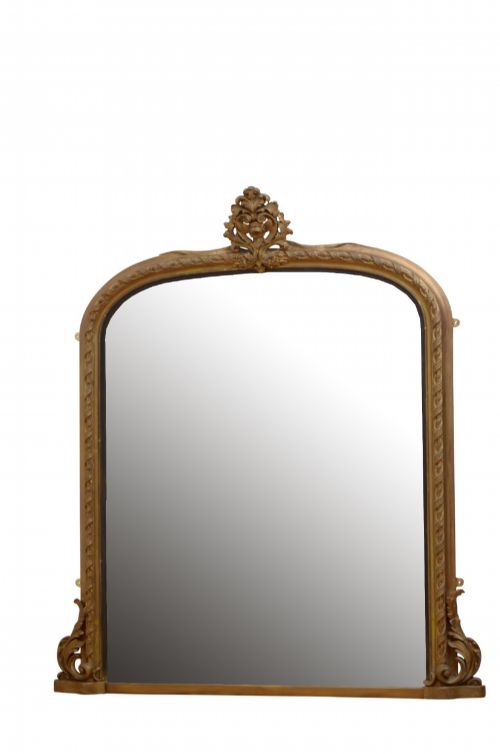


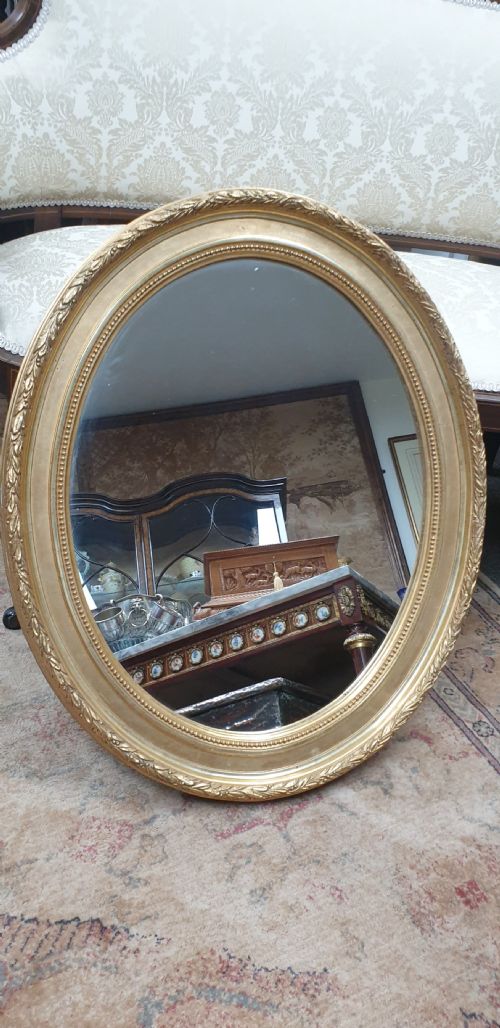
Gilded Plaster Wall Mirror
A gilded plaster wall mirror brings instant depth and reflective light to a room, drawing the eye with its ornate metallic surface.
Gilded Plaster Wall Mirror
When you search for a gilded plaster wall mirror, you are looking at decorative looking glasses framed in moulded plaster, gesso, composition, and wood that have been covered in gold leaf or gilt finish. These pieces serve both a practical reflective purpose and a grand decorative function within an interior scheme. The versions most commonly met on this page span the nineteenth century, including Victorian, Edwardian, and French nineteenth-century examples.
The physical forms vary considerably between domestic wall mirrors, large overmantels designed to sit above a fireplace, and smaller oval shapes. You will encounter styles ranging from restrained neoclassical designs and ornate rococo revivals to flowing art nouveau curves and French chateau aesthetics. Each piece uses its metallic finish to catch and multiply the natural light in a hallway, reception room, or bedroom.
Origin and period heavily influence the character of these mirrors, with nineteenth-century pieces dominating the selection in both rectangular and oval formats. Some items present grand proportions suitable for statement placement, while others offer compact dimensions for smaller wall spaces. The combination of a wooden structural base, plaster enrichment, and gilt surface defines the physical reality of every item in this category.
How they were made
Makers constructed the foundational structure using timber to build a sturdy frame, upon which they applied layers of plaster or gesso to create intricate moulded ornamentation. Composition material, often known as compo, was frequently pressed into moulds and applied over the wooden carcass to form complex decorative motifs like scrolls, floral garlands, and classical details. This layered preparation created a solid, textured relief surface ready to receive the metallic finish.
The finishing process involved applying gold leaf or liquid gilt directly onto the prepared plaster and gesso base, often over a coloured bole that added depth to the metallic sheen. Artisans then burnished parts of the surface while leaving other areas matte to create tonal contrast and highlight the carved or moulded details. Finally, mirror glass was fitted into the rebate, secured at the back, and protected with backing boards.
Gilded Plaster Wall Mirror Retail Price Guide 2026
Typical asking prices for gilded plaster wall mirror among the pieces listed under this phrase on Sellingantiques today, from the lower quarter to the upper quarter. They describe what is for sale here now, not the wider market.
Common forms found across the inventory include large overmantel mirrors, oval wall mirrors, and picture frames with ornate gold leaf finishes.
What varies in quality
The crispness and depth of the moulded or carved ornament dictate much of the visual success of a piece, with finer examples showing sharp relief rather than softened, shallow details. Artisans who took greater care during the gesso and composition application produced richer, more convincing decorative flourishes that held their definition over generations. Lesser pieces often display blunt or muddy moulding where the underlying detail has been lost beneath thick layers of later paint or careless regilding.
The quality of the gilding itself creates a distinct hierarchy, as genuine gold leaf ages with a soft, warm lustre compared to the flat, brassy appearance of inferior metallic paints. The underlying glass also plays a role, with original mirror plates showing subtle oxidisation, foxing, and imperfections that reflect age rather than modern mechanical perfection. Finally, the structural integrity of the heavy wooden frame and its ability to support the weight of the glass safely separates superior craftsmanship from hurried workshop production.
The Gilded Plaster Wall Mirror Glossary
- Gesso
- A traditional white paint mixture consisting of a binder mixed with chalk, gypsum, or pigment, used to prepare surfaces for gilding. It provides a smooth, absorbent base that can be carved or sanded before gold leaf is applied.
- Composition
- A pliable mixture of whiting, resin, linseed oil, and glue that is heated and pressed into moulds to create decorative ornaments. These moulded details are then applied directly to the wooden frame before gilding.
- Overmantel mirror
- A large wall mirror specifically designed to be hung on the chimney breast directly above a fireplace mantelpiece. They often feature horizontal proportions or grand vertical arches to fit the architectural space.
- Giltwood
- Timber that has been gilded with gold leaf or metal leaf on its surface. The term denotes that the primary visible material beneath the gold is wood rather than plaster or composition alone.
- Rococo Revival
- A nineteenth-century design style characterised by asymmetrical scrolling, naturalistic plant motifs, and exuberant ornamentation. It draws inspiration from the eighteenth-century French rococo movement.
- Foxing
- The age-related spots, speckles, and brownish discolouration that develop within the silver backing of antique mirror glass. This natural oxidisation process is often valued by collectors as proof of age.
Gilded Plaster Wall Mirror: Frequently Asked Questions
How do I hang a heavy antique wall mirror safely?
Heavy antique mirrors require robust fixings secured directly into the wall studs or masonry rather than relying on standard plasterboard plugs. It is essential to use appropriate mirror brackets or a sturdy hanging wire rated well above the weight of the frame.
Professional framing or installation help ensures the weight distributes evenly across the structure without stressing the original wooden joints or plaster ornaments.
Can I clean the original mirror glass?
You can clean the glass surface using a soft, lint-free cloth and a mild glass cleaner sprayed onto the cloth rather than directly onto the mirror. This prevents moisture from seeping behind the plate and damaging the old silvering or the plaster frame.
Avoid using harsh chemical sprays or abrasive pads, as these can permanently scratch the delicate glass and erode the surrounding gilt finish.
How do I identify a Victorian piece?
Victorian mirrors often display characteristic heavy proportions, dense plaster ornamentation, and specific stylistic revivals such as rococo or neoclassical motifs. Examining the construction methods at the back of the frame, including timber types and screw or nail types, helps confirm the nineteenth-century origin.
Consulting the listed period details alongside stylistic markers provides a reliable guide to dating the object accurately.
Where should I place an overmantel mirror?
An overmantel mirror traditionally sits above a fireplace, where its grand scale and reflective surface amplify light from windows across the room. You can also mount one low down against a wall above a sideboard or console table to create a similar focal point.
Ensure the hanging height suits eye level and complements the surrounding furniture proportions.