



Traditional Mahogany Storage Unit
Traditional mahogany storage unit examples span Georgian, Regency, and Victorian periods, offering classic timber vessels that bring warmth and practical organisation to any room.
Traditional Mahogany Storage Unit
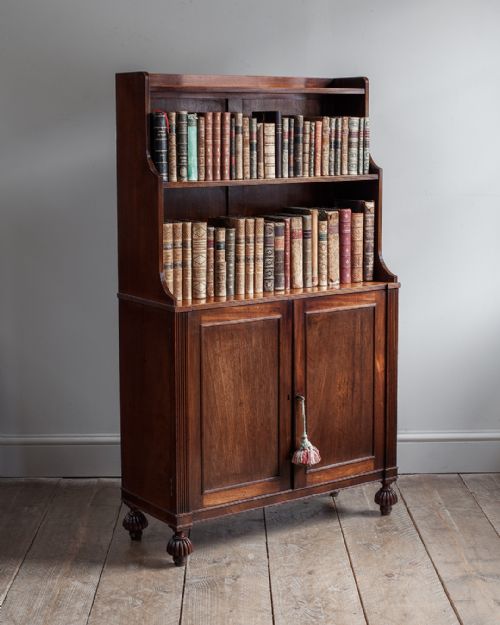
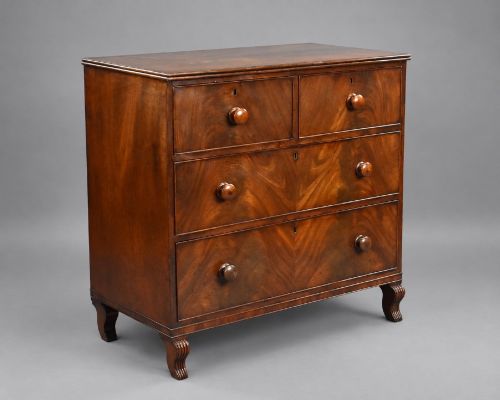
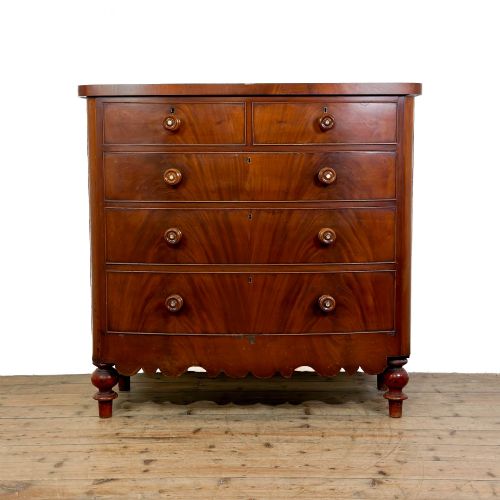
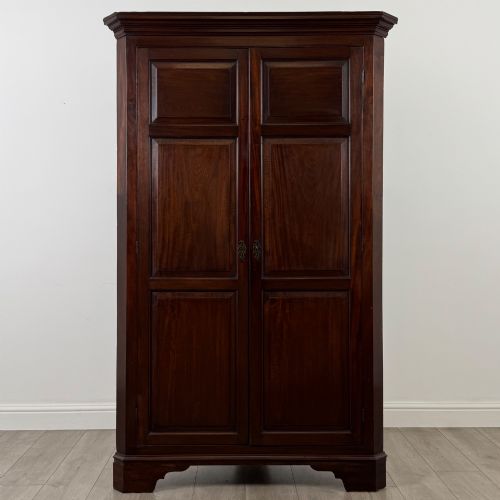
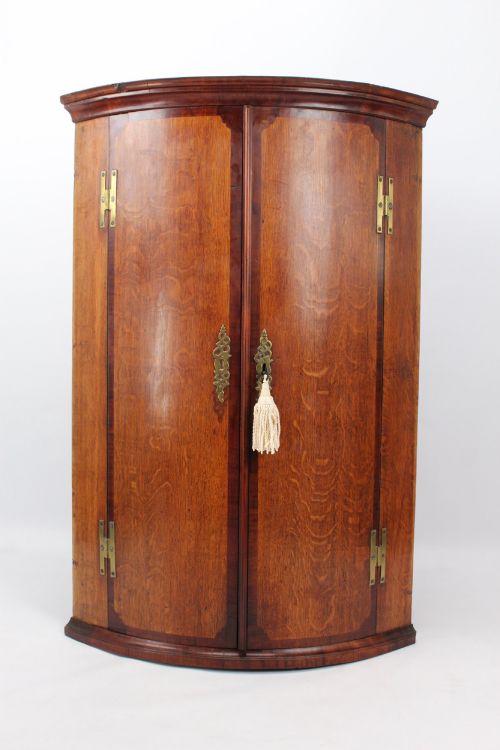
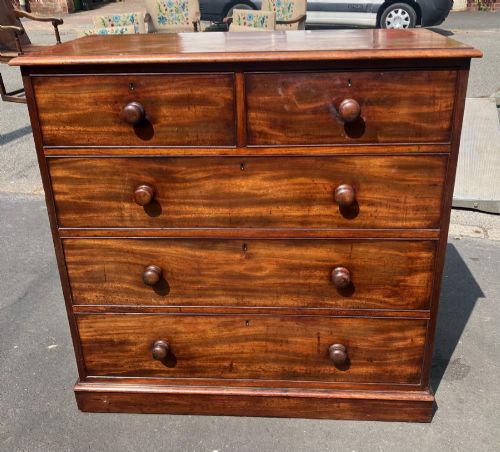
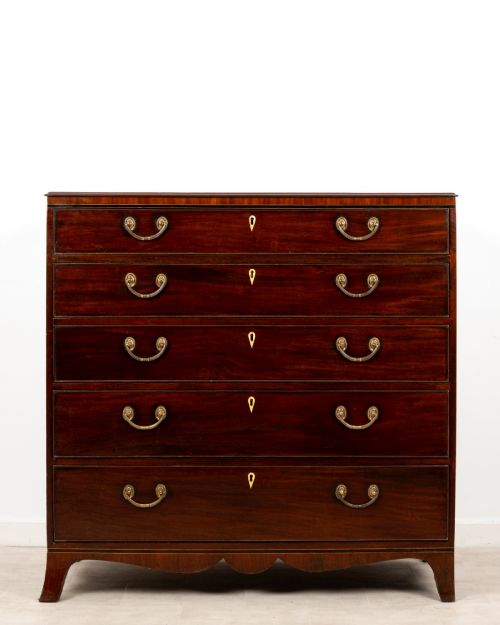
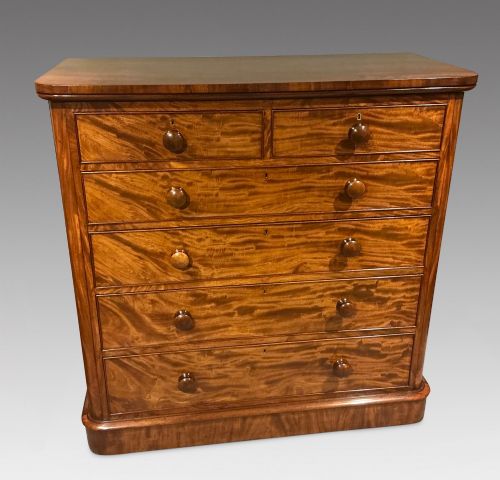
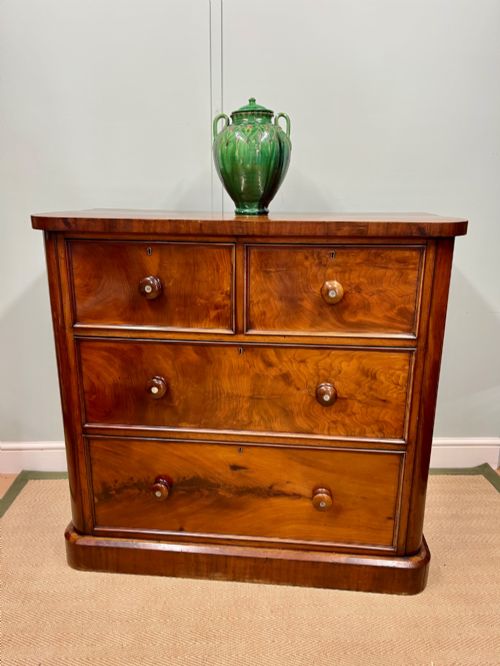
A traditional mahogany storage unit is primarily represented on this page by chests of drawers, corner cabinets, and bookcases dating from the Georgian, Regency, and Victorian eras. These pieces formed the backbone of domestic storage before modern fitted furniture, utilising deep drawers and tall cupboards to house household goods.
The selection ranges from grand George III tallboys and two-part chests to narrow Edwardian cabinets and freestanding waterfall display shelves. Most examples rely on solid mahogany or flame mahogany veneer, occasionally incorporating secondary woods such as oak and pine within their internal carcases.
How they were made
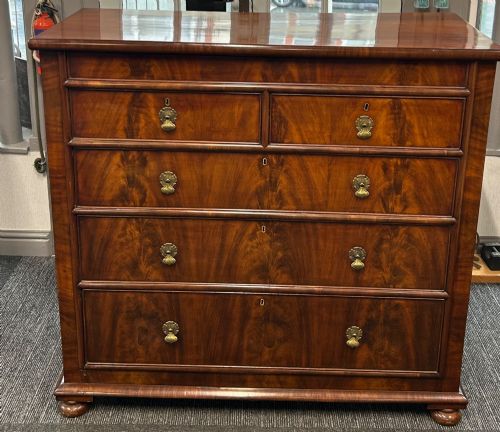
Cabinet makers constructed these storage pieces using dense mahogany timbers, frequently applying figured flame mahogany veneers to primary drawer fronts and cabinet doors to create striking visual movement. Secondary woods like oak and pine appear inside drawer linings and backboards, reflecting period construction hierarchies.
Hardware such as brass handles, escutcheons, and occasional mother-of-pearl inlay punctuate the dark timber surfaces. Joinery relied on traditional hand-cut dovetails for drawer construction and pegged mortise and tenon joints for structural frames.
Some narrow Edwardian chests whisper secrets of cramped Victorian hallways, proving that compact living spaces existed long before modern apartments.
What varies in quality
Quality in a traditional mahogany storage unit rests on the selection of the timber veneers and the crispness of the cabinetmaker's joinery. Heavily figured flame mahogany arranged in symmetrical book-matched patterns marks out superior pieces from plain stock.
Proportion and detailing dictate the tier of a piece, from simple functional cupboards to sophisticated Sheraton style chests with inlaid borders. Smooth drawer operation and well-fitted doors reflect the original precision of the workshop.
The Traditional Mahogany Storage Unit Glossary
- Flame mahogany
- A veneer cut from timber where the branch meets the trunk, producing a rippling, flame-like pattern. This decorative grain was highly prized for principal drawer fronts.
- Tallboy
- A tall chest of drawers consisting of one chest stacked on top of another, maximising vertical storage floor space. They became popular during the Georgian period.
- Waterfall bookcase
- A set of open shelves where each successive shelf steps back from the one below it, creating a cascading profile. Regency makers popularised this distinct open form.
- Bow front
- A convex, curved cabinet or chest front that swells outward in the centre. This styling softens the rigid geometry typical of rectangular case furniture.
- Escutcheon
- A protective brass plate fitted around a keyhole to prevent the timber from wearing away through repeated use. They often feature decorative engraving.
Traditional Mahogany Storage Unit: Frequently Asked Questions
How do I date a mahogany chest?
Examine the construction methods visible inside the drawers, particularly the hand-cut dovetails and the choice of secondary woods like oak or pine. Drawer linings and backboards often reveal the age more accurately than the external polished surfaces.
Style indicators such as bracket feet, Chippendale or Sheraton influences, and brass hardware types further help narrow down whether a piece originates from the Georgian or Victorian eras.
Where should I place a corner cabinet?
A corner cupboard or standing corner cabinet is specifically designed to fit snugly into unused room junctions, making them ideal for dining rooms or living spaces. They utilise awkward angles to provide display or enclosed storage without obstructing floor space.
Ensure the door swing has adequate clearance from nearby furniture or walls before positioning tall or wide standing units into a corner.
How do I care for antique mahogany?
Keep wooden storage furniture away from direct sunlight and strong heat sources to prevent the timber from drying out and the veneer from lifting. Maintaining stable room humidity protects both the solid mahogany structure and delicate internal carcases.
Apply a gentle wax polish periodically to nourish the surface, avoiding silicone-based sprays that can penetrate old finishes and attract dust.
What is the difference between Georgian and Victorian pieces?
Georgian storage units generally exhibit restrained classical proportions, architectural cornices, and refined mahogany or figured veneers. They emphasise structural harmony and understated elegance derived from prevailing eighteenth-century design rules.
Victorian pieces often display heavier proportions, bolder flame mahogany figuring, and sometimes revivalist detailing like rococo curves. Industrial developments during the nineteenth century also shifted how workshops produced these items in volume.