



Traditional Mahogany Buffet Table
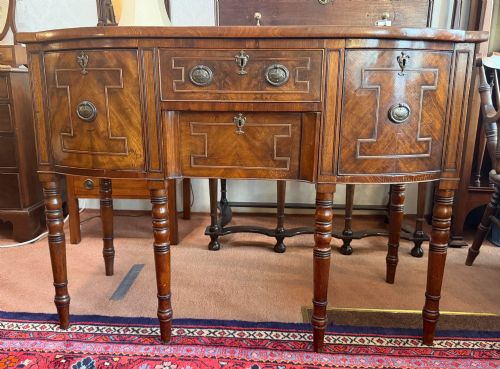
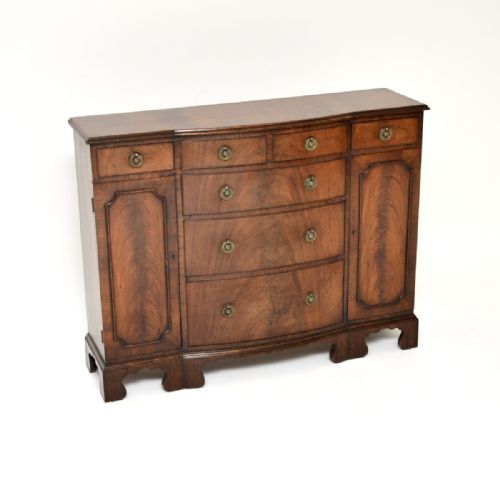
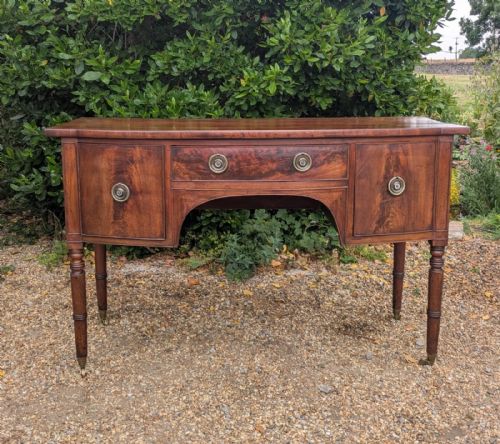
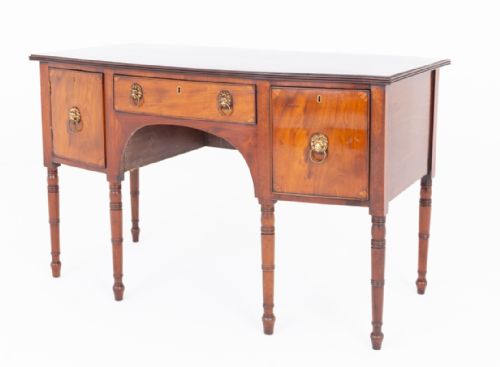
A traditional mahogany buffet table anchors a formal dining room with ample surface space and deep storage.
Traditional Mahogany Buffet Table
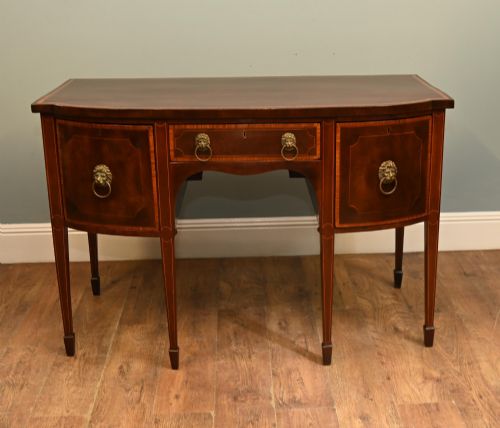
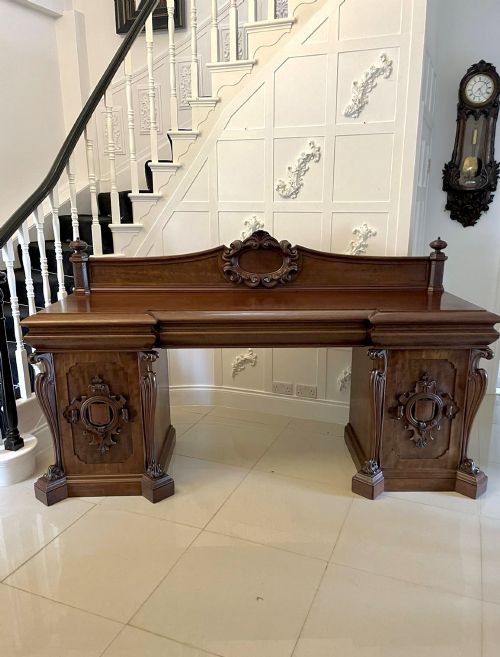
A traditional mahogany buffet table serves as a substantial dining room furnishing designed for food presentation and tableware storage. These pieces appear across several periods, including the Georgian, Regency, Victorian, and Edwardian eras.
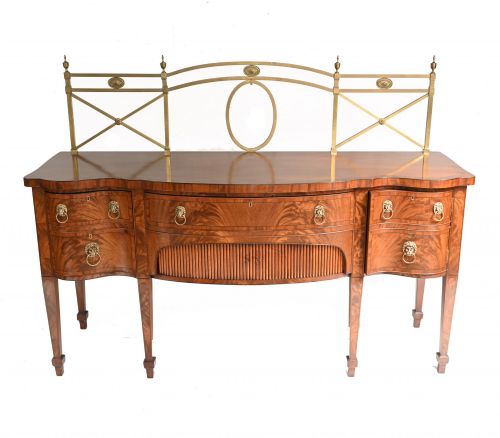
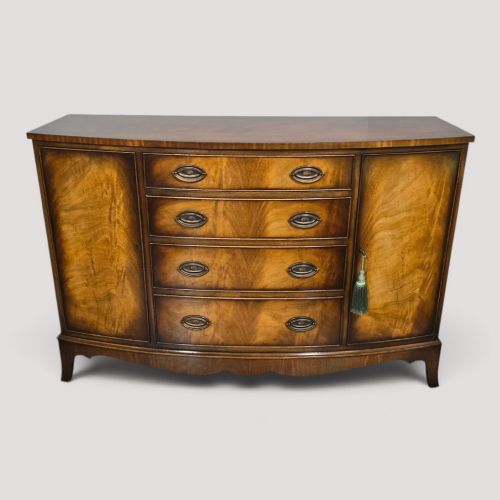
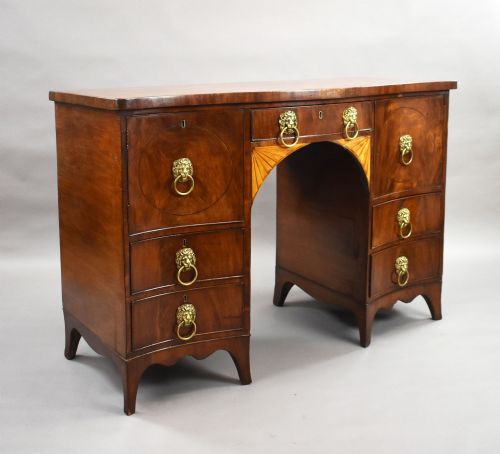
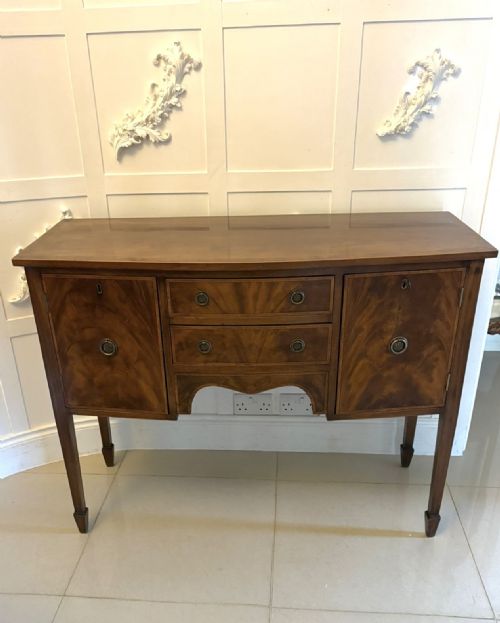
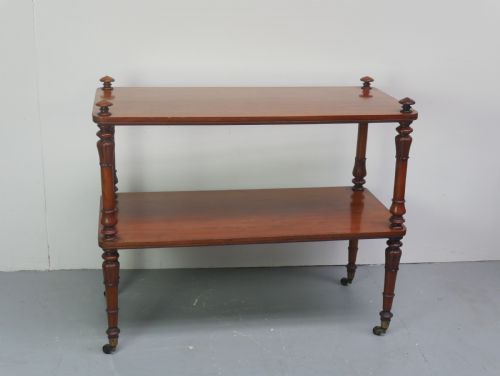
The selections on this page encompass various forms such as sideboards, console tables, serving tables, and multi-tiered dumb waiters. Bow-front and breakfront configurations predominate among the larger cabinet pieces.
Origins trace primarily to English and Scottish workshops, spanning pieces built in the eighteenth, nineteenth, and early twentieth centuries alongside later revival models.
Materials and construction
Solid mahogany and flame mahogany veneer provide the primary structural timber and surface figuring across these items. Cabinetmakers utilised dense hardwoods to achieve sturdy frames and durable serving surfaces.
Decorative elements incorporate contrasting timbers such as boxwood and satinwood inlay, alongside brass fittings for handles and rails. Certain serving tables and servers feature carved neoclassical details or mirror glass backs.
Traditional Mahogany Buffet Table Retail Price Guide 2026
Typical asking prices for traditional mahogany buffet table among the pieces listed under this phrase on Sellingantiques today, from the lower quarter to the upper quarter. They describe what is for sale here now, not the wider market.
Listings span the eighteenth, nineteenth, and early twentieth centuries, incorporating Georgian, Regency, Victorian, and Edwardian styles.
Assessing quality
The refinement of timber selection dictates visual appeal, where richly figured flame mahogany veneer or well-chosen solid mahogany distinguishes superior examples from plain builds. Crisp execution of boxwood inlay and carved neoclassical details adds further distinction.
Structural integrity relies on traditional joinery within the drawers and carcase, ensuring smooth operation of doors and drawers over generations of use. Original brass hardware and stable, well-proportioned legs contribute to overall coherence.
Maple & Co
The Traditional Mahogany Buffet Table Glossary
- Mahogany
- A dense tropical hardwood prized for its reddish-brown colour and durability in cabinetmaking. It forms the primary material for the majority of these dining room pieces.
- Bow-front
- A cabinet front that curves outward in a convex arc. This shape softens the profile of large sideboards and servers.
- Breakfront
- A piece of furniture where the central section projects forward from the flanking outer sections. This arrangement creates visual depth and varied storage compartments.
- Dumb waiter
- A tiered stand fitted with revolving circular trays on a central pillar. These served dining rooms by holding dishes and glassware close to the table.
- Inlay
- A decorative technique of inserting contrasting woods like boxwood or satinwood into depressions within the primary timber. It creates geometric patterns or delicate border lines.
Traditional Mahogany Buffet Table: Frequently Asked Questions
Where should I place a buffet table?
A buffet table traditionally stands against the dining room wall to hold serving dishes during meals. It provides convenient access to plates and cutlery while keeping the main dining table clear.
In modern rooms, these pieces also function well in hallways or large living spaces as general console storage. Their depth requires sufficient clearance from surrounding furniture for comfortable access to drawers and cabinets.
What is the difference between a sideboard and a buffet?
Sideboards and buffets both provide storage and surface space for dining rooms, though their historical proportions can differ. Sideboards often feature longer legs and a more architectural presence, while traditional buffets lean toward lower, deeper cabinetry designed specifically for food service.
Modern usage frequently treats the terms as interchangeable when describing dining room servers. The listings here reflect this overlap across various periods and regional naming conventions.
How do I date a mahogany sideboard?
Dating a piece involves examining the construction methods, timber characteristics, and stylistic details. Georgian and Regency pieces often display hand-cut dovetails and simpler interior secondary woods, whereas Victorian and Edwardian examples may show machine assistance and different veneer thicknesses.
Hardware styles and secondary wood types also offer clues to the era of manufacture. Comparing the overall silhouette to documented period forms helps narrow down the decade.