




Mahogany Gallery Back Table
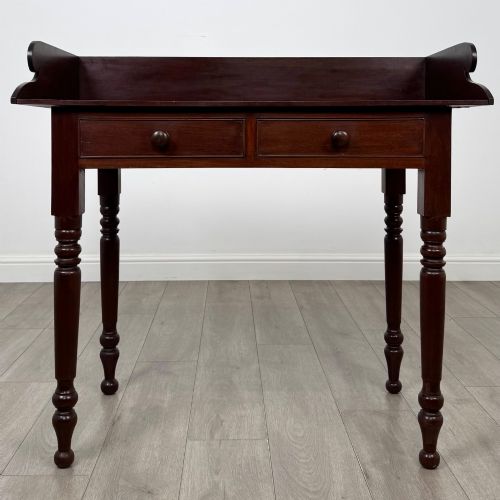
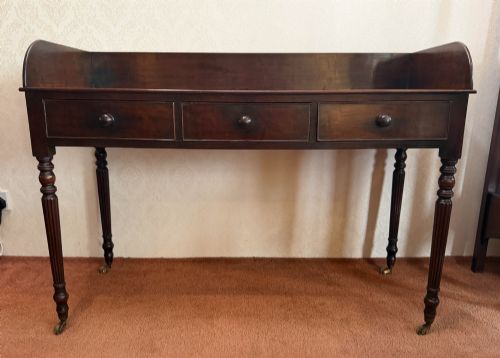
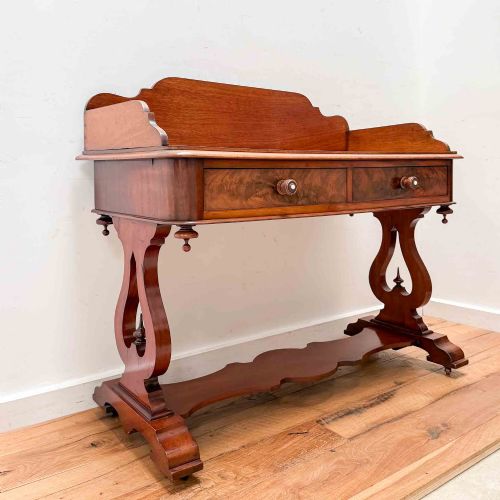
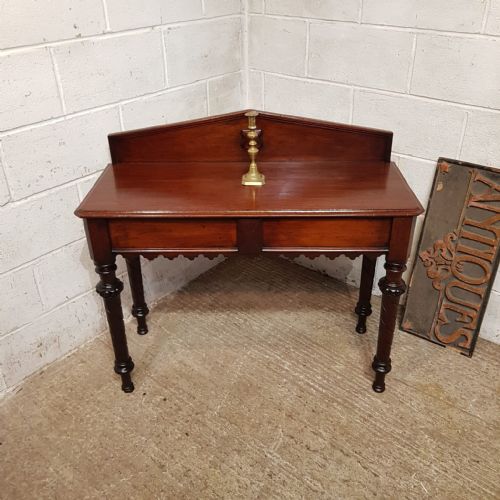
These mahogany gallery back table pieces unite practical surface space with raised wooden surrounds, keeping items secure while displaying rich timber grain.
Mahogany Gallery Back Table
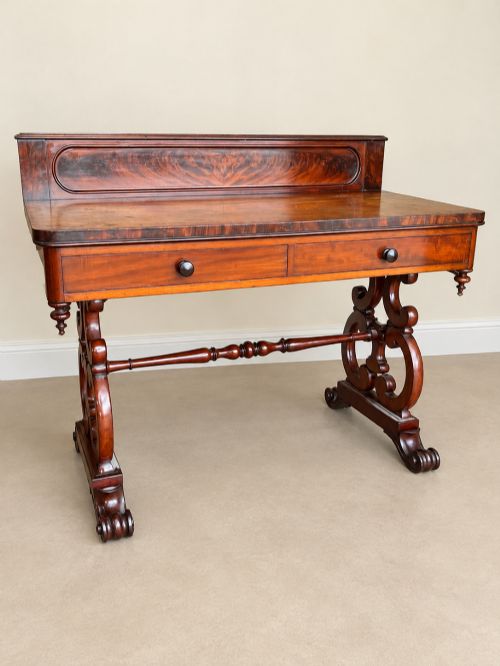
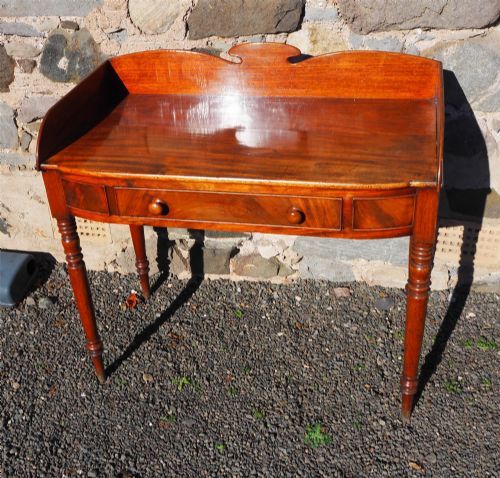
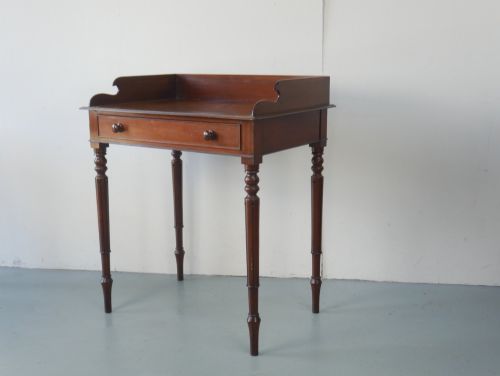
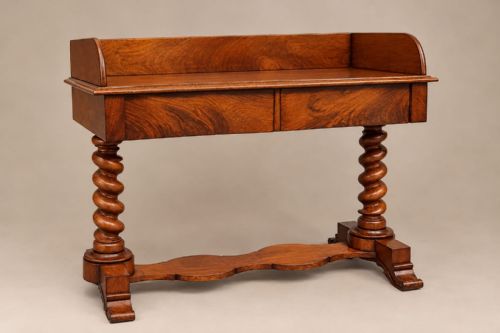
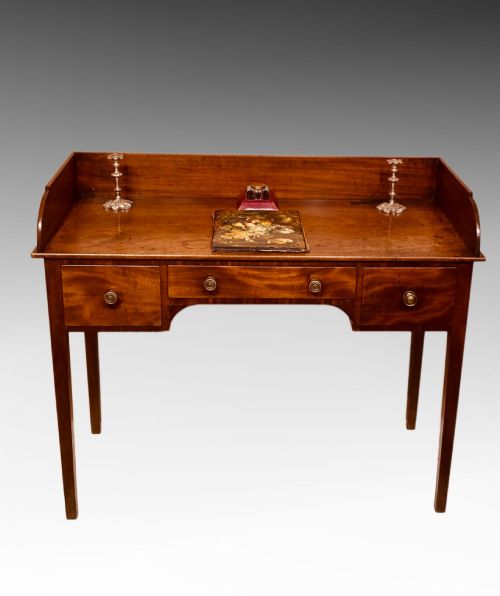
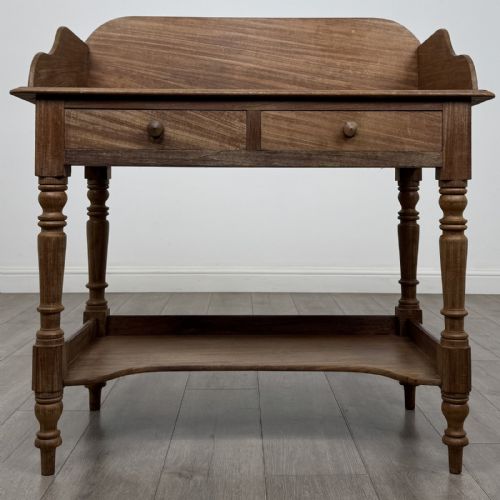
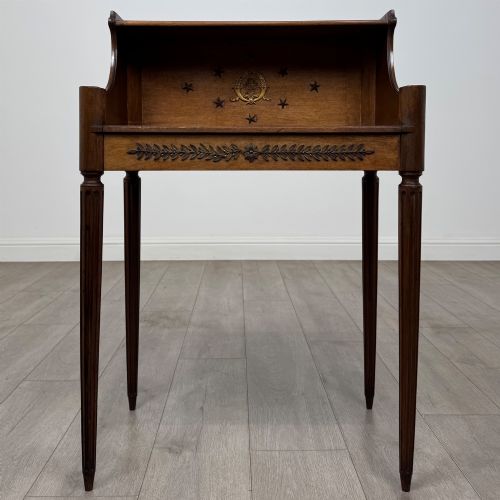
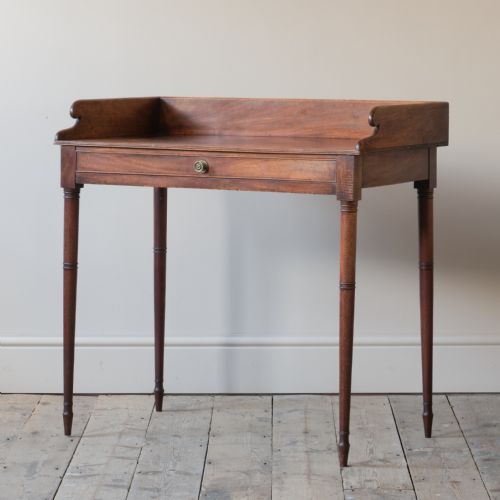
A mahogany gallery back table brings together sturdy timber construction and raised upright borders designed to stop items rolling off the top. When searching for a mahogany gallery back table, buyers encounter formats spanning compact washstands, side tables, serving tables, and fitted writing desks.
The periods represented stretch across the Georgian, Regency, William IV, Victorian, and Edwardian eras. Pieces take the form of side tables, serving buffets, console tables, and kneehole dressing tables equipped with protective three-quarter gallery upstands.
How they were made
Cabinetmakers built these tables primarily using solid mahogany and flame mahogany veneer over secondary timbers, often accentuating drawer fronts and borders with boxwood stringing or brass handles. Selected pieces incorporate contrasting rosewood, leather writing inserts, and fitted marble tops.
Structural joints rely on traditional dovetailing for drawers and mortise and tenon construction for frames. Gallery upstands are securely fixed to the rear and side edges of the tabletop, utilising matching timber or turned spindles.
Mahogany Gallery Back Table Retail Price Guide 2026
Typical asking prices for mahogany gallery back table among the pieces listed under this phrase on Sellingantiques today, from the lower quarter to the upper quarter. They describe what is for sale here now, not the wider market.
Listings feature mahogany, flame mahogany veneer, rosewood, boxwood, and marble across Georgian, Regency, Victorian, and Edwardian periods.
What varies in quality
Quality reveals itself in the depth of the mahogany timber grain, the precision of flame veneer matching, and the crispness of inlaid boxwood details. Superior examples exhibit well-figured surfaces and patination developed over centuries of use.
Construction standards differentiate standard utility furniture from finer commissions, visible in the thickness of drawer linings, hand-cut dovetails, and the structural integrity of the raised gallery back.
Maples
The Mahogany Gallery Back Table Glossary
- Gallery back
- A raised wooden or brass border fitted to the rear and sides of a tabletop. It prevents objects from sliding off the edge while adding a decorative architectural finish.
- Flame mahogany
- A veneer cut from timber where the branches join the trunk, producing a distinctive flickering flame pattern. Cabinetmakers prized this figure for principal drawer fronts and tabletops.
- Kneehole
- A recessed central space beneath a desk or dressing table designed to accommodate the user's legs. It typically sits between banks of supporting drawers.
- Stringing
- Thin inlaid lines of contrasting wood, such as boxwood, used to outline panels, drawers, and tabletops. This technique defines geometric boundaries on classical furniture.
- Upstand
- Another term for the vertical gallery border rising above the surface of a washstand, desk, or serving table. It protects wall surfaces from splashes and items from falling.
Mahogany Gallery Back Table: Frequently Asked Questions
What is a gallery back table?
A gallery back table is a piece of furniture featuring a raised wooden or brass surround along the back and side edges of the surface. This protective border stops items from sliding off the top.
These tables appear in various forms throughout the Georgian and Victorian eras, including side tables, washstands, and writing desks.
How were these tables used?
These tables served multiple domestic purposes depending on their specific form, functioning as washstands in bedrooms, serving tables in dining rooms, and writing desks in studies.
The raised gallery back kept washbasins, silverware, or writing equipment securely positioned during daily household tasks.
How do I identify a Georgian table?
Georgian tables generally display restrained classical proportions, solid mahogany construction, and precise hand-cut joinery. Details often include subtle boxwood stringing and elegant tapered legs.
These pieces emphasise structural balance and timber quality without excessive ornamentation.
Where should I place a gallery back table?
These tables fit well against walls in hallways, living rooms, and dining areas where the raised back protects wallpaper and frames the surface. Side tables and serving consoles provide practical display space.
Writing tables and desks suit studies or bedrooms, offering a stable surface for daily tasks.