


Traditional Mahogany Beds
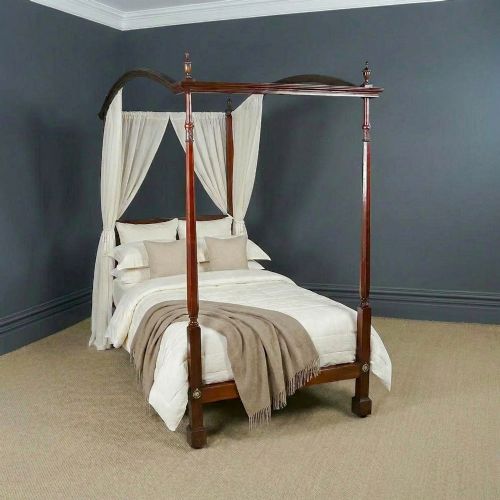
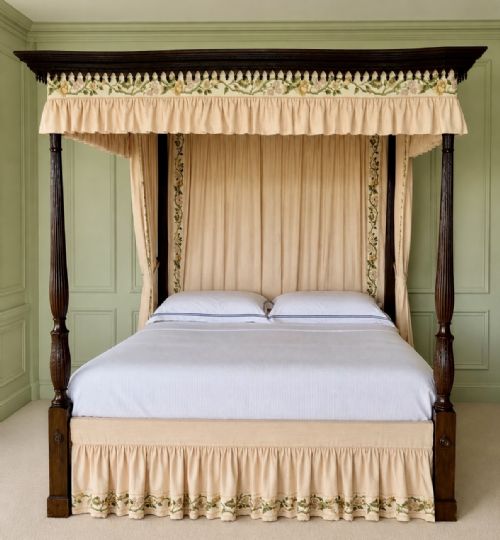
Traditional mahogany beds bring warmth and architectural presence to a room, offering substantial timber frames designed to anchor a traditional interior.
Traditional Mahogany Beds
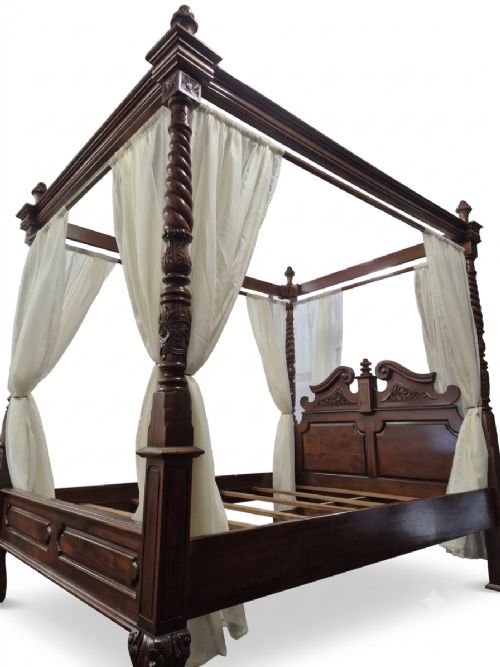
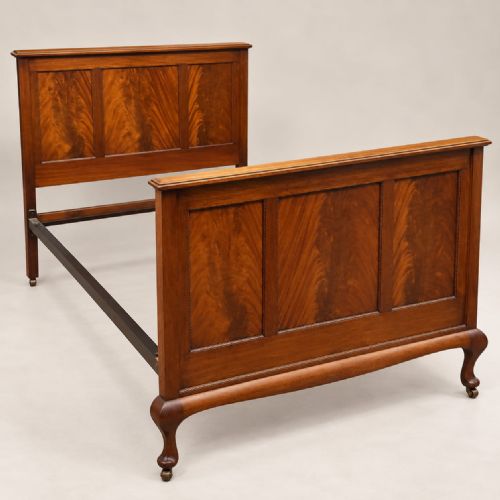
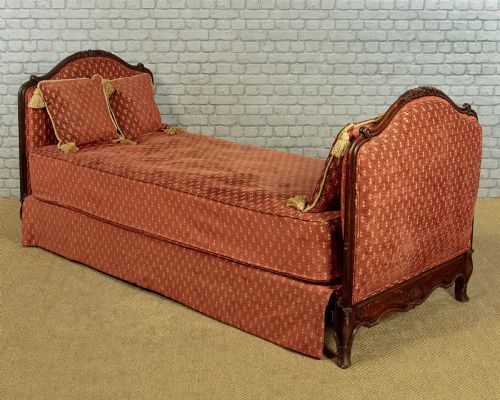
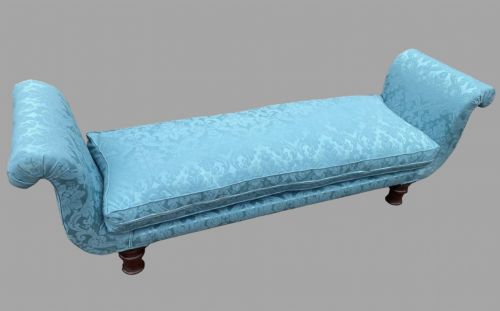
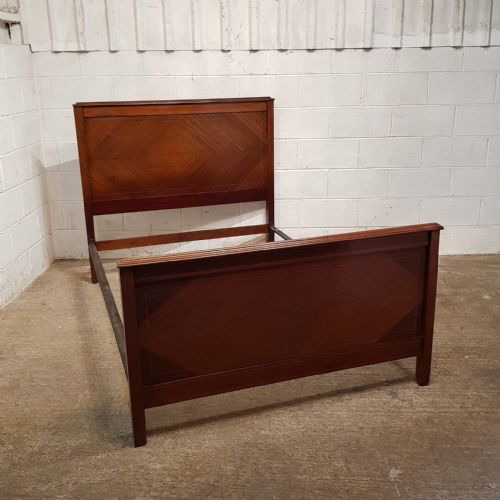
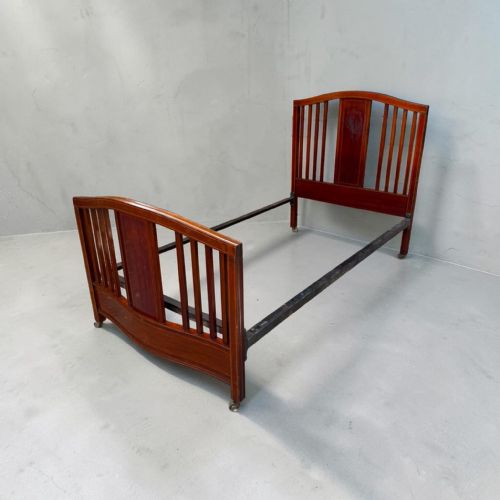
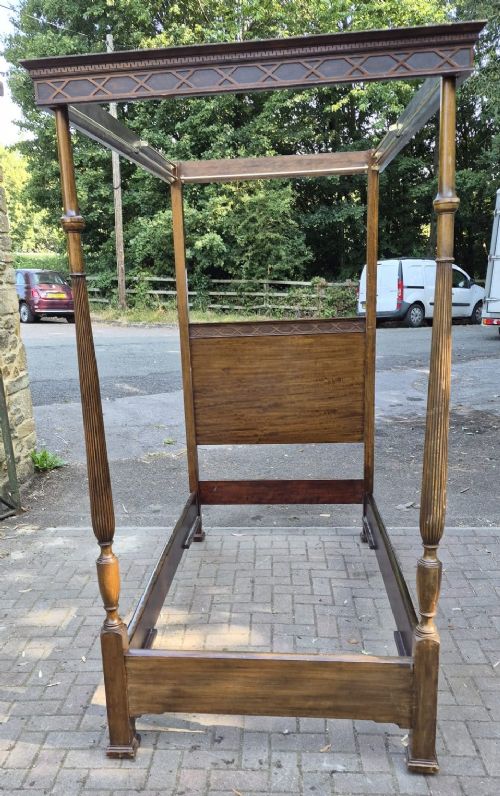
Traditional mahogany beds encompass grand four poster structures, panelled double bedsteads, and daybeds originating from periods ranging through the eighteenth, nineteenth, and early twentieth centuries. When searching for traditional mahogany beds, buyers frequently encounter Edwardian double bedsteads and nineteenth-century tester frames alongside occasional daybeds and benches.
The selection ranges from simple panelled rails to elaborate four poster frames carved in historical styles such as Georgian, Regency, and Edwardian. Makers and workshops from these eras utilised rich timbers, often incorporating inlay, brass detail, or upholstery to finish the designs.
Materials and construction methods
Makers built traditional mahogany beds using solid timber, burr and fruitwood accents, and structural elements of iron and brass. Hand carving shaped the substantial posts and headboards, while marquetry and inlay added surface decoration to panels and rails.
Upholstery fabric and secondary woods supported the main frames, creating sturdy constructions designed to last for generations. Artisans joined components securely, combining structural timber with decorative veneers and porcelain or brass mounts where specified by the style.
Listings span periods from the 18th Century through the Regency, Victorian, and Edwardian eras up to the 1920s.
Factors influencing quality
Quality in these beds rests upon the depth and crispness of the hand carving, the choice of figured timber, and the integrity of the original frame construction. Superior examples display balanced proportions, finely executed joinery, and well-preserved decorative details such as inlay or brass fittings.
Lesser pieces may exhibit simplified moulding, replaced structural timbers, or less articulate carving on the posts and headboards. The selection of dense, richly coloured mahogany grain elevates the presence of the bed significantly.
Heals of London·Gillows·Howard and Sons·Hampton and Sons Pall Mall
The Traditional Mahogany Beds Glossary
- Mahogany
- A durable, reddish-brown tropical hardwood prized for its rich grain and stability in furniture making. It forms the primary structural and visual material for these frames.
- Four poster bed
- A bed with four vertical columns supporting an upper tester or canopy frame. These substantial pieces define grand historic sleeping chambers.
- Daybed
- A long seat or couch designed for reclining, functioning similarly to a bed or chaise longue. They appear frequently in various nineteenth-century and Edwardian forms.
- Marquetry
- Decorative veneer work forming pictures or patterns using different woods and materials. It adds intricate surface detail to bed footboards and panels.
Traditional Mahogany Beds: Frequently Asked Questions
How do I date a traditional mahogany bed?
Dating relies on observing the stylistic characteristics, construction methods, and materials matched against historical periods from the eighteenth to the twentieth century. Details such as Edwardian inlay or Georgian Revival proportions provide clear chronological markers.
Examining the secondary timbers and joining techniques further helps to distinguish an eighteenth-century piece from a later revival model.
Will a standard modern mattress fit an antique mahogany bed?
Many older beds were built to historical dimensions which often differ slightly from modern standard mattress sizes. It is essential to check the internal dimensions of the specific bed frame before purchasing.
Custom mattress makers can usually supply a mattress tailored to fit historic frames accurately.
How should I care for a mahogany bed frame?
Maintain the timber by keeping the bed away from direct heat sources and strong sunlight to prevent the mahogany from drying out or fading. Regular dusting with a soft, dry cloth preserves the finish.
Avoid silicone-based polishes, opting instead for traditional beeswax applied sparingly when the wood requires nourishment.
What is the difference between a four poster bed and a tester bed?
In practice, the terms often describe the same grand bed structure featuring four vertical posts supporting an overhead canopy. The tester specifically refers to the upper wooden canopy or ceiling panel.
Both forms create an imposing architectural presence within a traditional bedroom setting.