



Matching Pair Beds
Matching pair beds offer dual sleeping frames scaled in unison, originating from periods spanning the nineteenth and twentieth centuries.
Matching Pair Beds
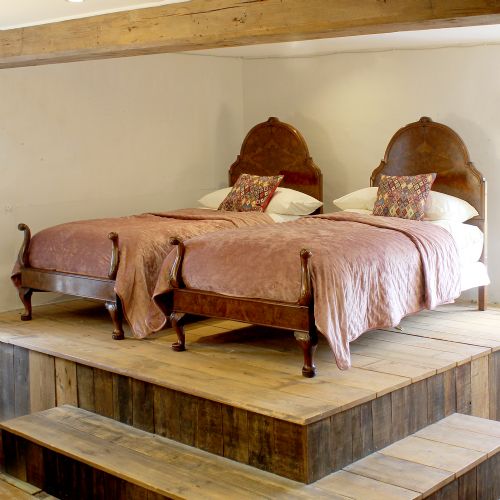
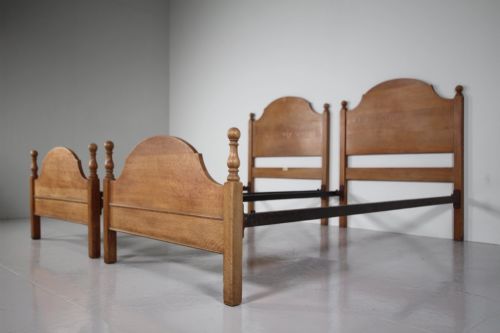
When searching for matching pair beds, buyers encounter twin sleeping frames designed to complement each other within a shared bedroom scheme. These pieces emerge predominantly as single beds and bedframes originating from Edwardian, Victorian, and Art Deco periods.
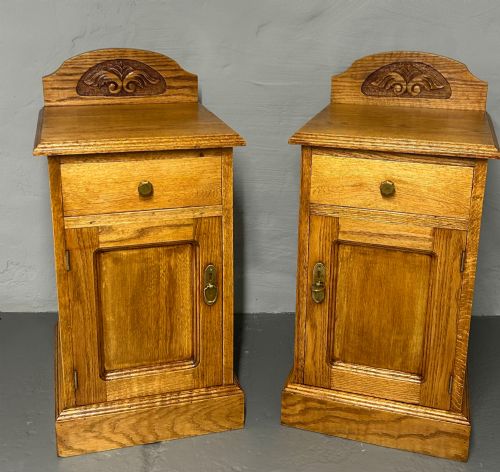
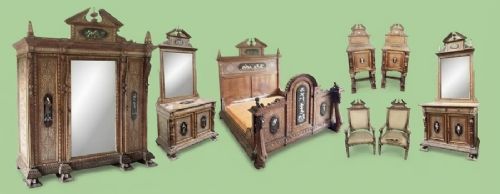
The selection includes wooden panelled bedsteads, iron frameworks, and complete bedroom suites incorporating matching bedside tables or chests. Walnut, oak, and mahogany form the primary wood selections across these historical designations.
Makers such as Heal & Son and Waring & Gillows appear alongside French provincial designs and British stylistic revivals. Buyers find configurations ranging from plain timber frames to inlaid mahogany and lacquered chinoiserie finishes.
Materials and construction
Cabinetmakers utilised dense timbers like walnut, oak, and mahogany for structural stability and decorative grain patterns. Satinwood and blonde maple veneers provided lighter contrasting tones during the Art Deco era.
Iron frameworks relied on cast iron elements paired with brass decoration for decorative contrast. Joinery methods involved traditional panel construction and carved wooden detailing applied to headboards and footboards.
Matching Pair Beds Retail Price Guide 2026
Typical asking prices for matching pair beds among the pieces listed under this phrase on Sellingantiques today, from the lower quarter to the upper quarter. They describe what is for sale here now, not the wider market.
Listings feature walnut, oak, mahogany, and cast iron across Victorian, Edwardian, and Art Deco eras.
Markers of quality
Quality rests in the selection of timber veneers, such as burr walnut or blonde maple, and the precision of inlaid woodwork. Maker labels from established workshops provide definitive proof of origin.
Carved details and structural hardware, including brass mounts and iron durability, separate standard commercial output from workshop-produced items.
Heals·Heal & Son·Waring & Gillows
The Matching Pair Beds Glossary
- Bedstead
- A framework of a bed consisting of headboard, footboard, and side rails. This term often designates antique timber or metal structures designed to hold a mattress base.
- Chinoiserie
- European decorative style employing imitation Chinese motifs. This aesthetic appears on painted or lacquered Edwardian wooden furniture.
- Inlaid
- Woodwork decorated by embedding pieces of contrasting timber into a solid ground. This technique creates ornamental patterns across headboards and bedside cabinets.
- Burr Walnut
- Timber taken from a walnut tree growth, showing intricate swirling grain patterns. It was favoured by cabinetmakers for high-status Victorian and Art Deco bedroom furniture.
Matching Pair Beds: Frequently Asked Questions
What periods do these beds come from?
The pieces span from the nineteenth century through the Edwardian era and into the Art Deco period of the nineteen-thirties.
Victorian and Edwardian examples sit alongside modernist designs in walnut and blonde maple.
Are mattresses included with these bed frames?
Listings typically specify whether bed bases are included with the antique wooden or iron frames.
Buyers should verify internal dimensions to ensure standard modern mattresses fit historical bed lengths.
How do I care for antique wood beds?
Polishing timber surfaces with appropriate wax maintains the condition of nineteenth and twentieth-century polishes.
Avoiding direct sunlight prevents fading on delicate veneers like satinwood and burr walnut.