
Traditional Leather Seating
Traditional leather seating brings together sturdy timber frames and hard-wearing hides across centuries of craftsmanship.
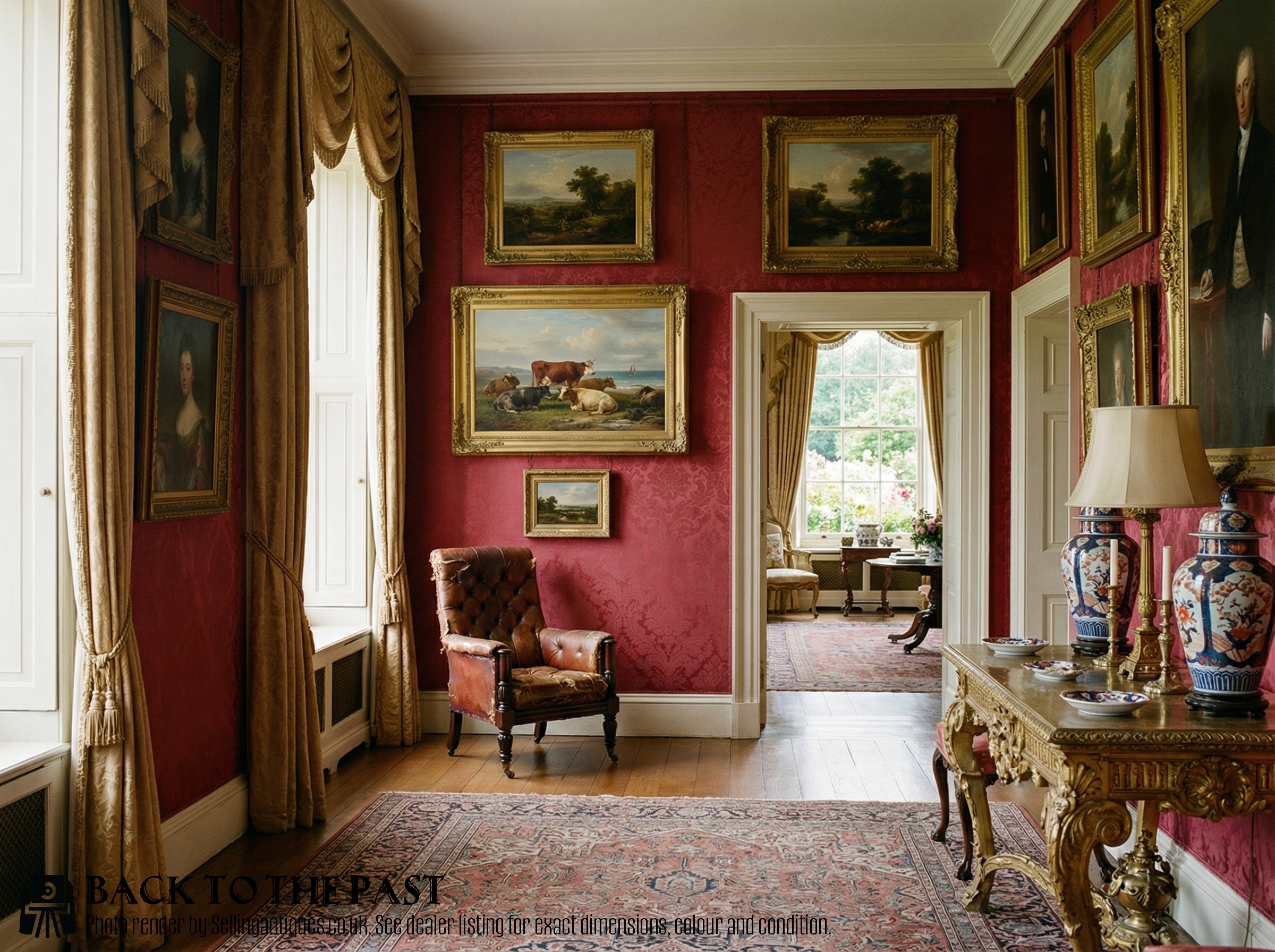
Traditional Leather Seating
Traditional leather seating encompasses a wide variety of forms designed for comfort, utility, and formal rooms. When exploring traditional leather seating, buyers commonly encounter dining chairs, library armchairs, desks chairs, and club fenders spanning the Georgian, Victorian, Edwardian, and Art Deco periods.
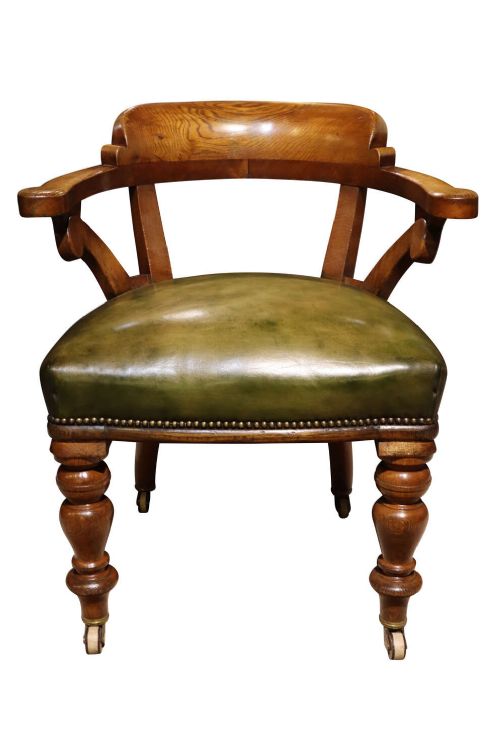
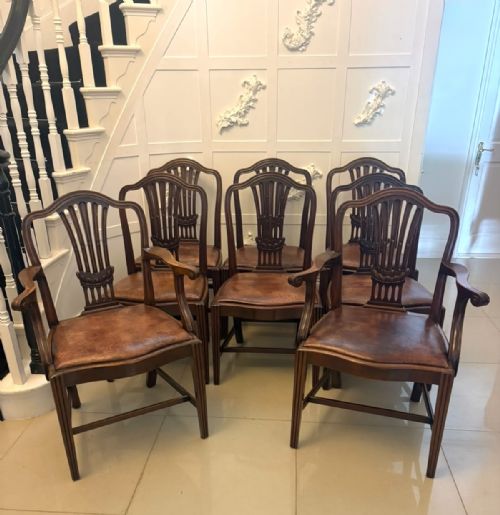
The selection ranges from single swivel desk chairs and revolving piano stools to complete sets of dining chairs and matching pairs of club armchairs. Oak and mahogany serve as the primary timber structures, whilst various shades of green, brown, and tan leather form the upholstered seats and backrests.
Materials and construction methods
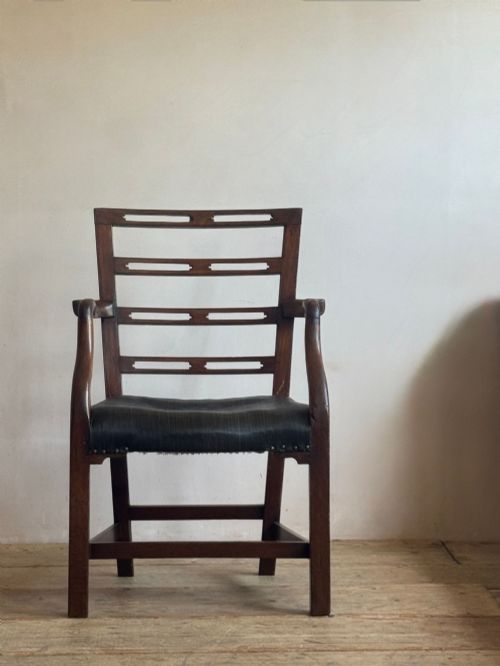
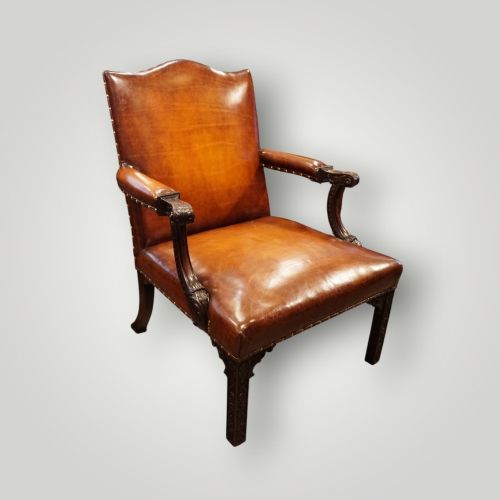
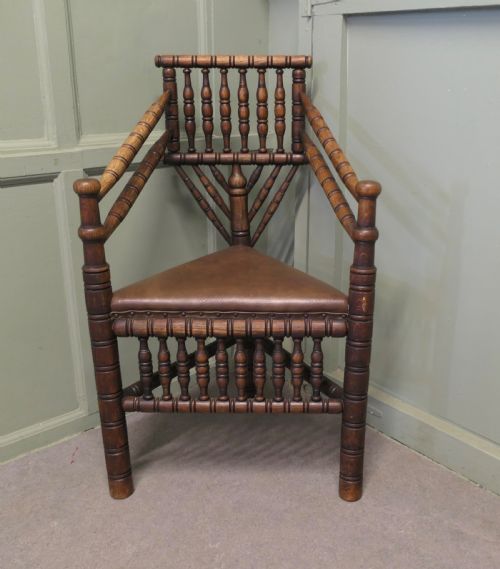
Makers built these pieces utilising solid hardwoods such as oak, mahogany, and rosewood to ensure lasting structural integrity. Frames often display period-specific details like carved mahogany, ladder-backs, and shield backs.
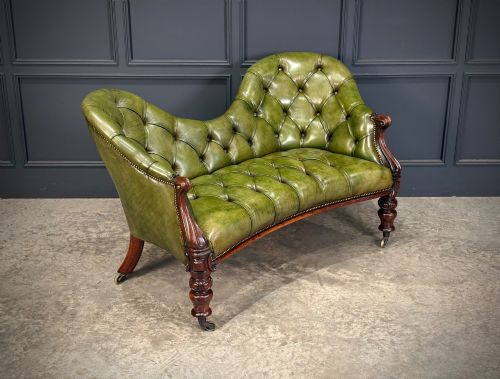
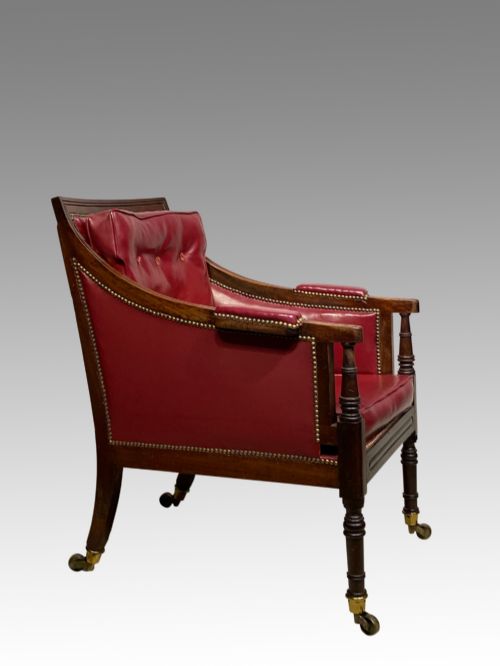
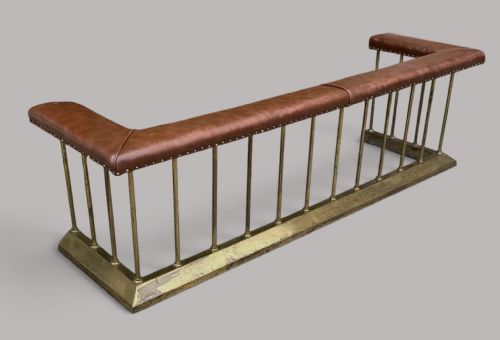
Upholstery relies on traditional leather hides fixed to frames with metal studs, buttoning, or tight padding. Brass also appears frequently in the construction of club fenders and decorative hardware.
Listings feature multiple periods including Georgian, Victorian, Edwardian, and Art Deco, utilising oak, mahogany, brass, and leather.
Factors that distinguish the range
The distinction between standard examples and the finest pieces often lies in the depth of timber carving and the sophistication of the frame silhouette. Pieces featuring elaborate details such as blind carving or substantial brass bases demonstrate greater workshop ambition.
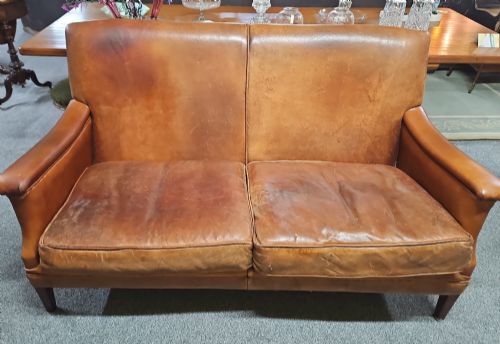
The maturity and condition of the hide also separate categories, with hand-dyed English hides and mature patinated leathers offering a different visual weight compared to standard upholstery.
The Traditional Leather Seating Glossary
- Club fender
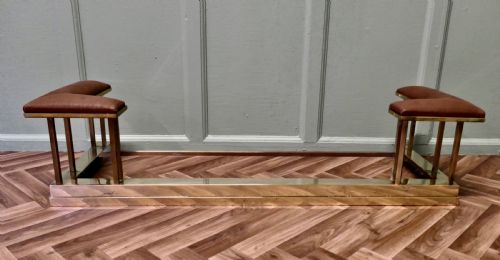
- A low, U-shaped hearth seat constructed with a brass frame and leather-upholstered top pads. These pieces originally provided fireside seating in large country houses.
- Bergère
- An enclosed armchair with stuffed or caned sides and a loose seat cushion. These seats often appear in mahogany frames adhering to Regency or later revival styles.
- Spoon-back
- A padded chair or sofa back curved to resemble the bowl of a spoon. This silhouette is particularly characteristic of Victorian seating.
- Revolving office chair
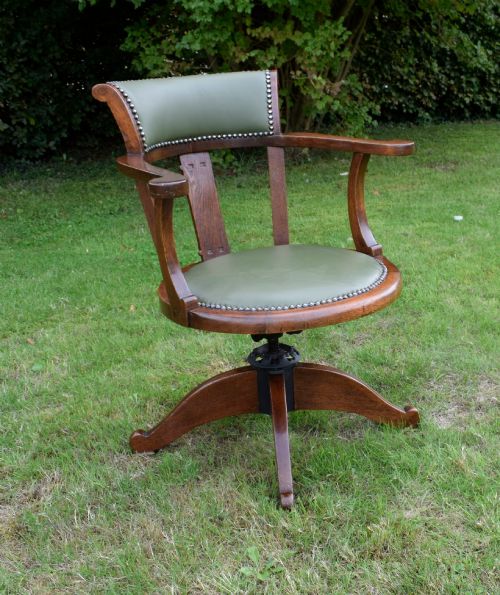
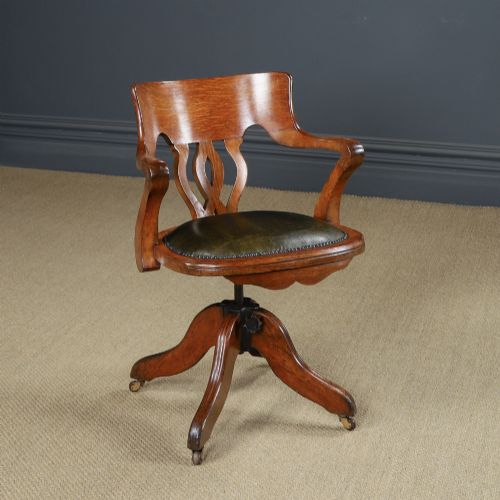
- A desk chair featuring a swivel mechanism and often tilt capabilities, commonly manufactured in oak during the Edwardian and early twentieth-century periods.
Traditional Leather Seating: Frequently Asked Questions
What is a club fender used for?
A club fender provides low seating around a fireplace hearth while keeping feet warm and protected from open flames. The padded leather tops offer a comfortable perch separate from the main room furniture.
Historically placed in large reception rooms, these brass and leather structures also served as a decorative boundary for the hearth.
How do I identify a Georgian armchair?
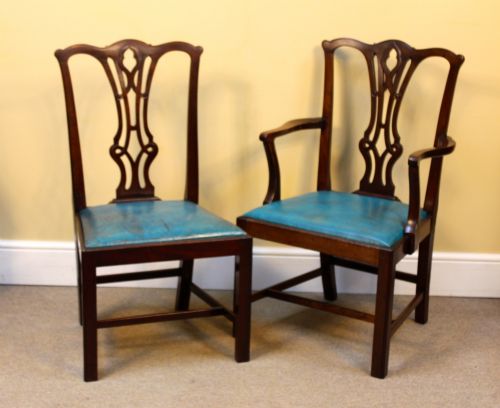
Georgian armchairs typically display substantial mahogany frames with characteristic details such as ladder-backs, shield backs, or blind carvings. The proportions remain formal and architectural.
These pieces often house hand-dyed English hide upholstery secured with individual metal studs along the wooden borders.
Are desk chairs adjustable?
Many early twentieth-century desk chairs incorporate mechanical swivel and tilt functions mounted on wooden or metal bases. Edwardian and oak swivel models allowed occupants to turn easily while working.
Piano stools similarly offered revolving movement to assist musicians at keyboard instruments.
What timber was used for dining chairs?
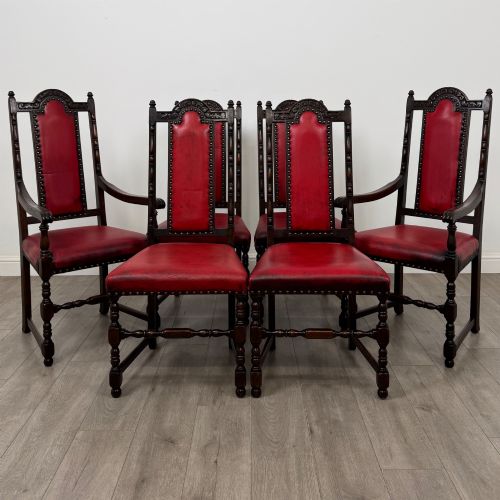
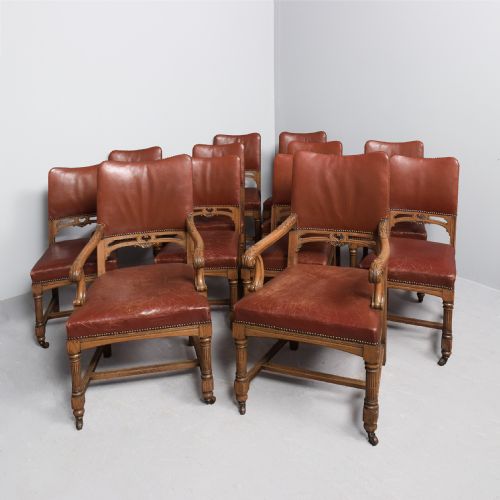
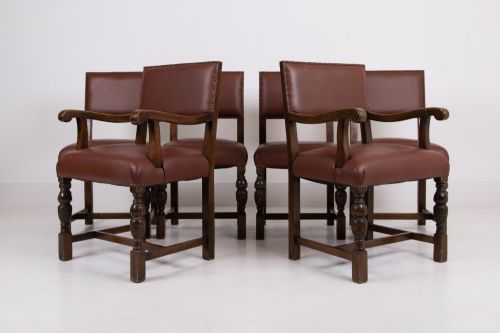
Dining chairs from these periods were constructed predominantly from oak and mahogany. Sets range from small groupings to large collections of twelve.
Sturdier timbers supported heavy daily use in formal dining rooms across the Victorian and Edwardian eras.