
Traditional Leather Library Chair
A traditional leather library chair brings sturdy timber framing and rich hide upholstery together for long hours at a desk or hearth.
Traditional Leather Library Chair
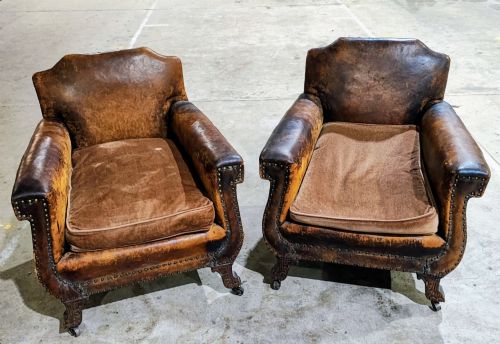
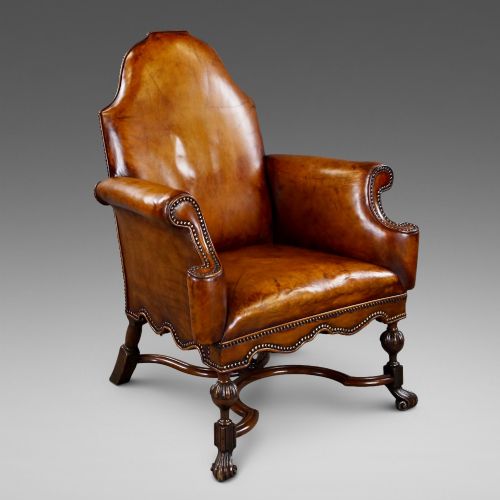
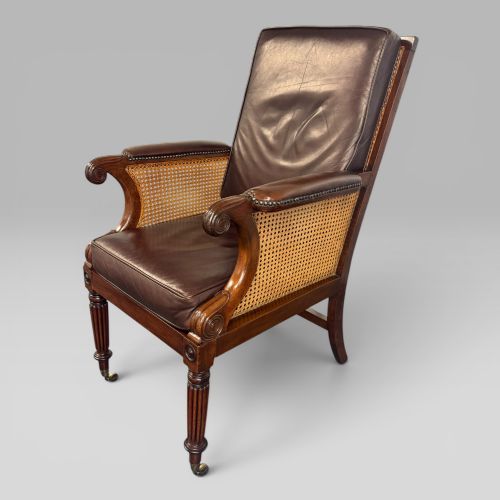
A traditional leather library chair serves as a substantial seating option designed for studies, offices, and reading rooms. The selections found here span from the nineteenth century through to the early twentieth century, encompassing Victorian, Edwardian, and Regency periods alongside later revivals.
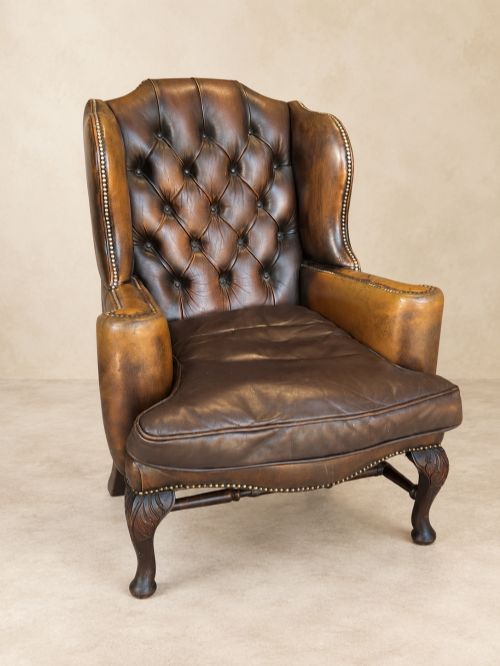
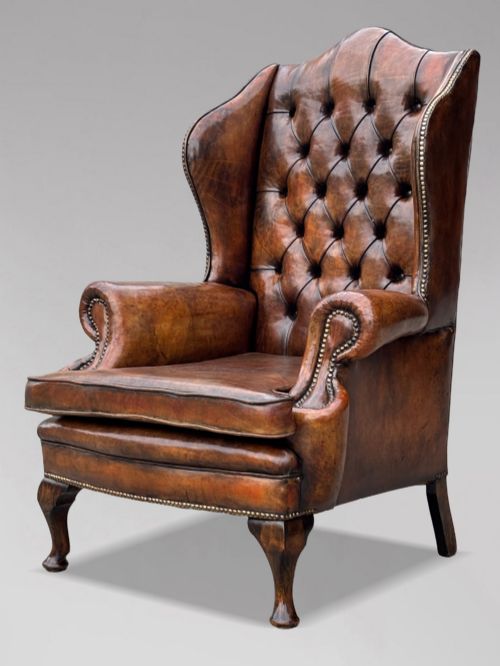
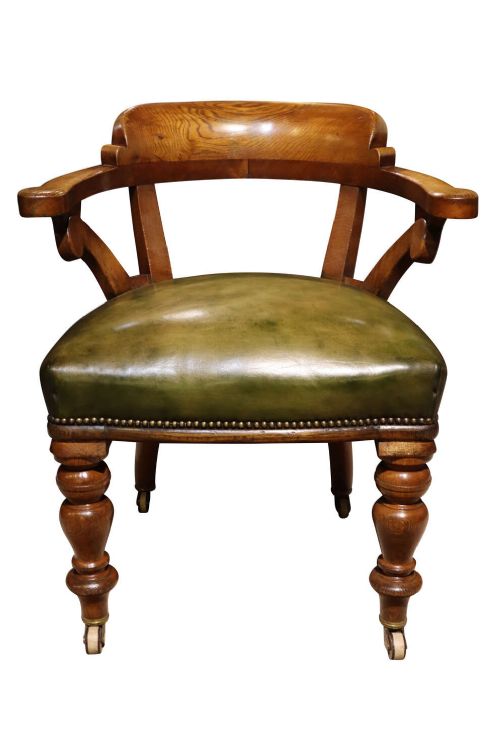
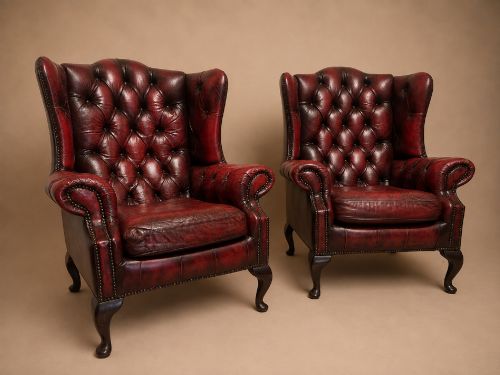
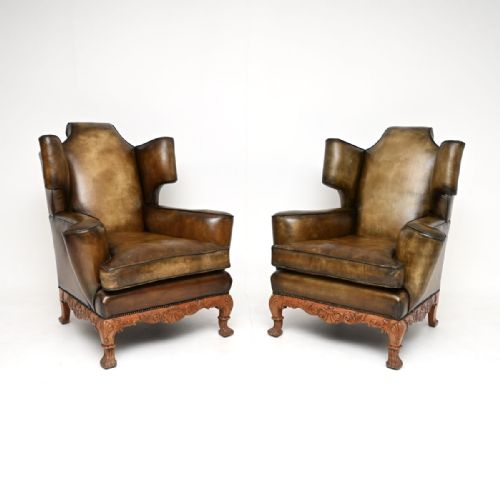
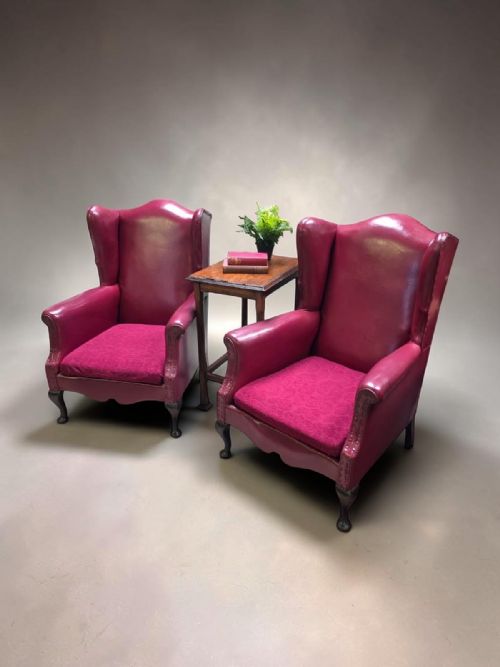
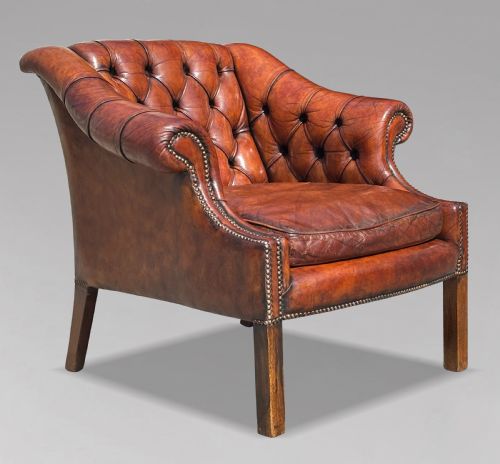
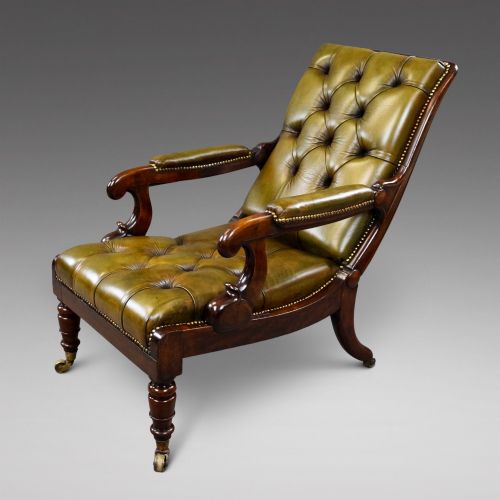
Armchairs, desk chairs, and club chairs dominate the forms available on this page. Buyers frequently encounter wingbacks, Gainsborough shapes, and open armchairs upholstered in buttoned or hand-dyed hide.
How They Were Made
Cabinetmakers constructed the supportive frames using hardwoods such as mahogany, oak, walnut, and beech. Joinery techniques relied on traditional mortise and tenon methods to ensure structural longevity under daily use.
Upholsterers stretched leather over stuffed padding, securing the edges with brass tacks or studs. Buttoning techniques created the characteristic tufted patterns seen on many nineteenth and twentieth-century examples.
Listings feature woods such as mahogany, oak, walnut, and beech paired with leather and brass elements across multiple periods.
What Varies in Quality
The integrity of the timber frame and the depth of hand-carving dictate the primary tier of craftsmanship. Pieces featuring blind fretwork, scroll arms, or solid mahogany structures demand closer attention for their refined execution.
The grade and condition of the leather upholstery establish the visual character of each piece. Hand-dyed English hide and well-preserved buttoning reflect the higher standards upheld by period makers.
The Traditional Leather Library Chair Glossary
- Wingback
- An armchair featuring protective side panels designed to shield the sitter from draughts. These panels extend upwards from the armrests.
- Gainsborough chair
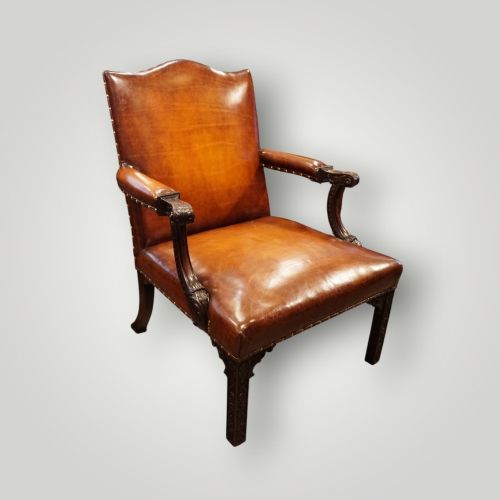
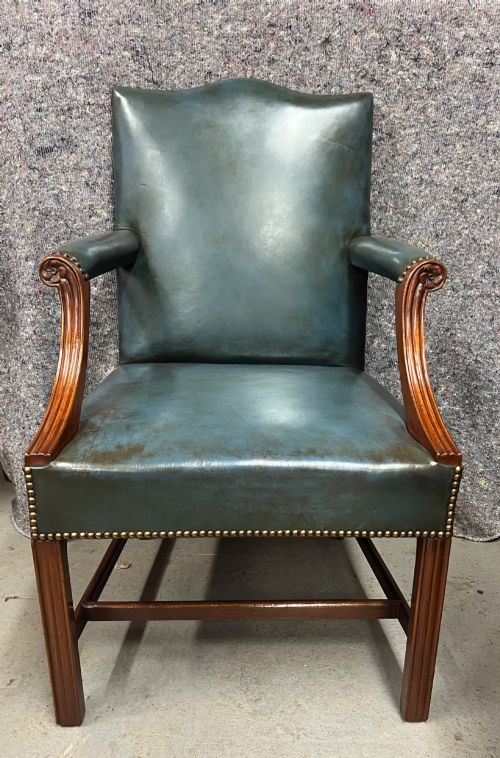
- A wide, open-armed armchair with a padded back and seat, typically standing on straight wooden legs. They originated during the mid-eighteenth century.
- Bergère
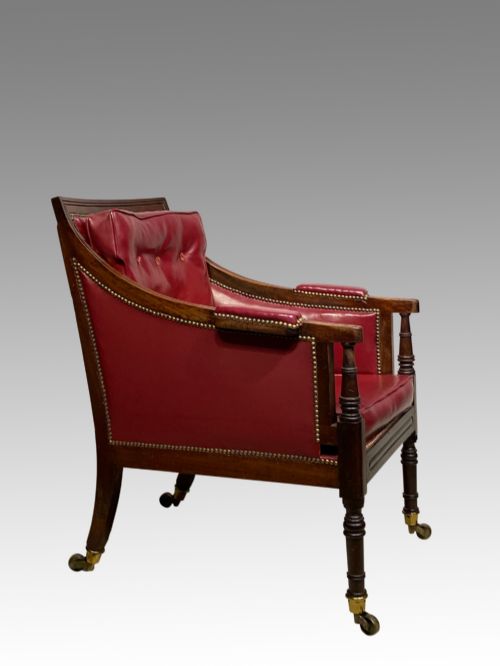
- An enclosed armchair with cane or upholstered sides and a loose seat cushion. The wooden frame is often exposed and polished.
- Club chair
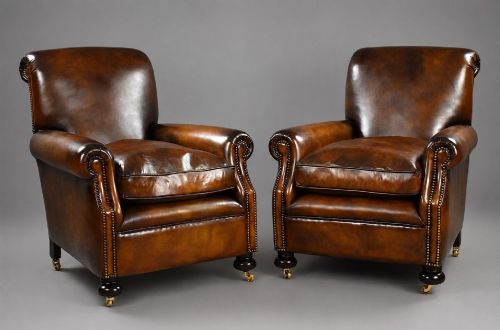
- A deep, comfortable armchair with low arms and upholstered padding. They gained popularity for their relaxed proportions.
- Buttoning
- An upholstery method where tufts are pulled tight and secured with buttons to create a diamond pattern. This technique adds structural tension and visual texture.
Traditional Leather Library Chair: Frequently Asked Questions
How do I identify a Victorian library chair?
Victorian library chairs typically utilise heavy mahogany or oak frames combined with buttoned leather upholstery. Carved wooden details and sturdy proportions are common traits of this era.
Later Edwardian versions often display lighter frames and simpler lines, whilst Regency examples lean towards classical scroll arms and reeded legs.
Where should I place a leather armchair?
These armchairs suit studies, home offices, libraries, and living rooms where reading or desk work takes place. Their robust wooden frames and durable hide surfaces handle daily placement well.
Keep them away from direct heat sources and strong sunlight to prevent the leather from drying out or fading over time.
What is a Gainsborough chair?
A Gainsborough chair is a wide desk or reading armchair featuring an open wooden frame and upholstered armrests. They provide an upright seating position suited for writing tables.
Maker styles from the Georgian and Regency periods frequently inform these designs, often incorporating mahogany and brass castors.
How do I care for antique leather?
Maintain antique leather by dusting regularly with a soft, dry cloth and applying appropriate leather balms periodically. This helps preserve suppleness and prevents cracking across the hide.
Avoid using modern chemical cleaners or excessive water, which can damage the original finish and dry out the natural fibres.