
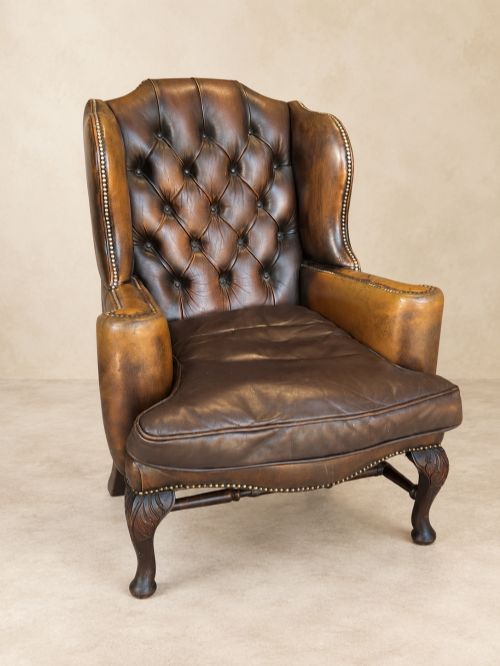
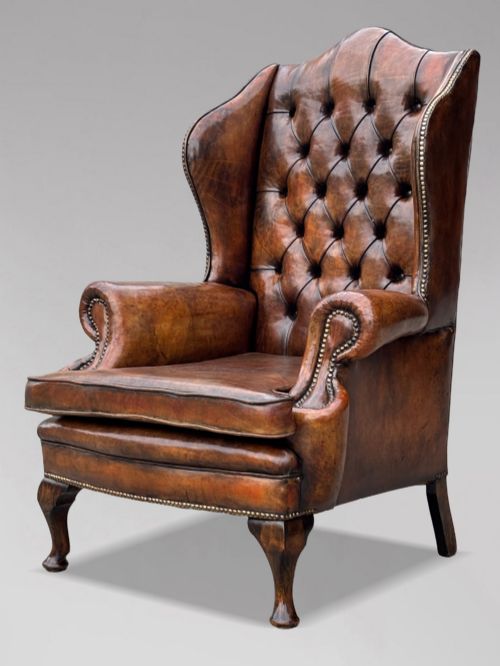
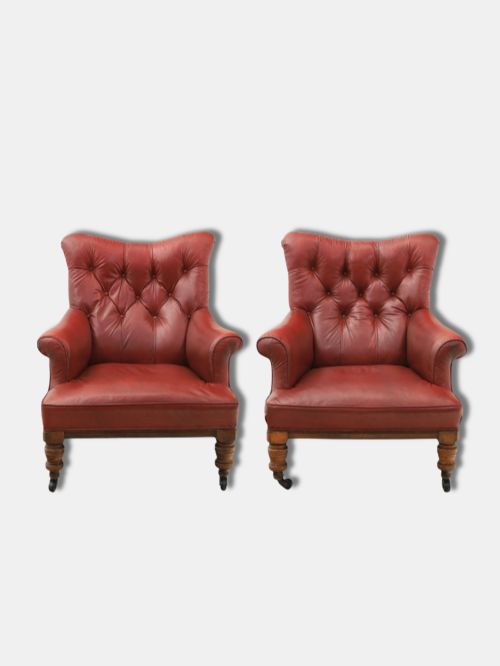
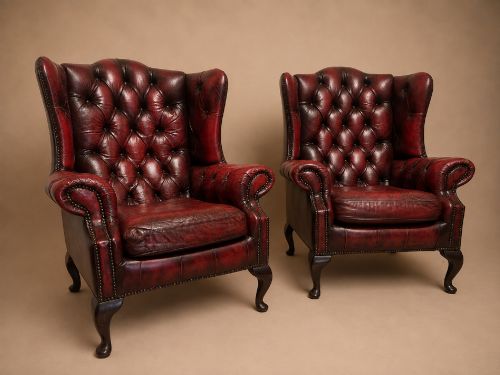
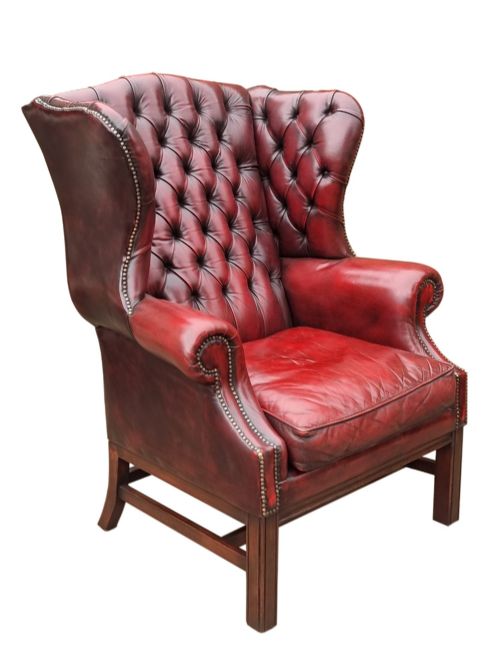
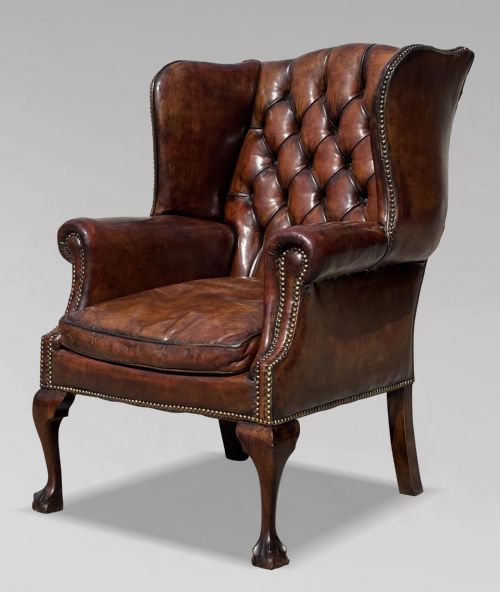
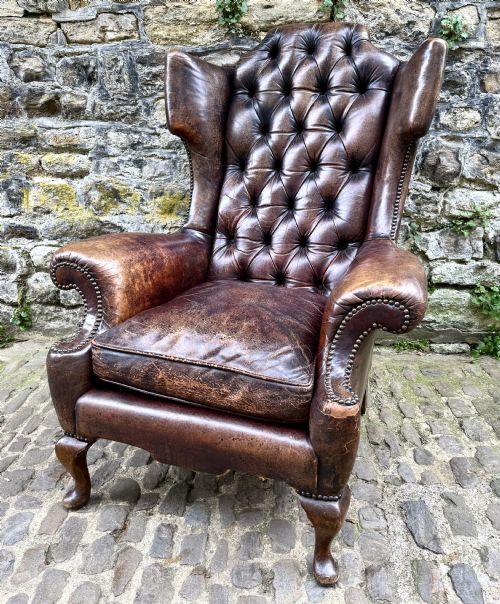


Buttoned Leather Wingback Chair
A buttoned leather wingback chair brings deep buttoning, high protective sides and substantial upholstery into a study or drawing room.
Buttoned Leather Wingback Chair
A buttoned leather wingback chair provides deep seating enclosed by characteristic high side panels designed originally to deflect draughts. The pieces seen here span centuries of British domestic seating, encompassing formal Georgian iterations through to Victorian examples and later revival pieces from the early twentieth century.
Most examples encountered on this page belong to the Victorian and Edwardian eras, alongside pieces built in the Georgian style during the nineteen-twenties and nineteen-thirties. Formats vary from standard armchairs to expansive Chesterfield wing chairs and library armchairs upholstered in leather or rexine.
How they were made
Construction relies upon robust framing timbers including mahogany, oak and general hardwood, providing a rigid structural skeleton for the upholstery. Brass studwork frequently secures the leather edges along the arms and wings.
Upholstery techniques involve deep buttoning across the backrests and seat pads, utilising hand-dyed or coloured leathers alongside alternate materials such as rexine on specific twentieth-century pieces.
The furniture forms include standard armchairs, wingback sofas, invalid chairs and porters chairs.
What varies in quality
Quality differentiates through the integrity of the timber frame and the depth of hand-carving applied to components such as mahogany legs and arm supports. Examples featuring generous proportions and detailed craftsmanship distinguish themselves from standard production.
The condition and treatment of the leather upholstery dictate the character of each piece, with hand-dyed finishes and full buttoning displaying distinct patination developed over decades of use.
The Buttoned Leather Wingback Chair Glossary
- Wingback
- An armchair featuring high side panels attached to the arms to shield the sitter from draughts. This form dates back centuries in British seating design.
- Deep buttoning
- An upholstery method where tufting pulls the leather inwards and secures it with buttons in a geometric pattern. It creates distinct padding indentations.
- Rexine
- A branded artificial leather fabric introduced as a durable upholstery alternative. It appears on certain twentieth-century seating pieces.
- Chesterfield
- A style of upholstered seating characterised by rolled arms and uniform back height. Versions often incorporate deep buttoning and leather coverings.
Buttoned Leather Wingback Chair: Frequently Asked Questions
Where should I place a wingback chair?
These armchairs suit studies, libraries and living spaces where high backs and side wings create a private seating enclave.
Their substantial presence anchors a room, particularly when positioned near a fireplace or within a reading corner.
How do I care for antique leather?
Maintaining vintage leather requires gentle dusting and periodic application of suitable conditioners to keep the material supple.
Avoiding direct sunlight and excessive heat prevents the leather from drying out or cracking over time.
What defines George III style furniture?
George III style pieces draw design characteristics from the late eighteenth century, focusing on classical proportions and mahogany frames.
Revival versions produced in the twentieth century emulate these earlier aesthetics using traditional cabinet-making methods.
Are these chairs comfortable for daily use?
The deep cushioning and supportive high backs make these armchairs suitable for extended periods of sitting.
Generous proportions provide ample room, while the enclosed wings offer natural head and shoulder support.