


Tufted Leather Accent Chairs
Tufted leather accent chairs bring deep buttoning and rich hides into a room, offering both traditional seating and tactile presence.
Tufted Leather Accent Chairs
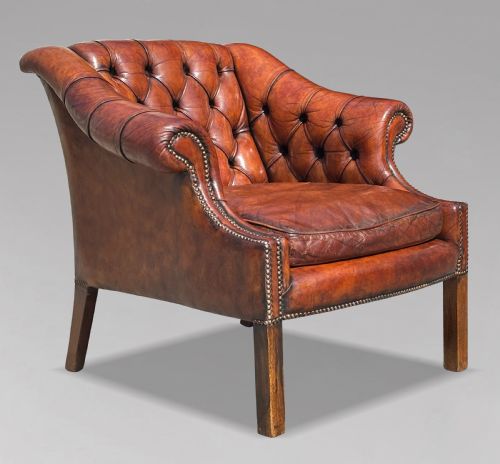
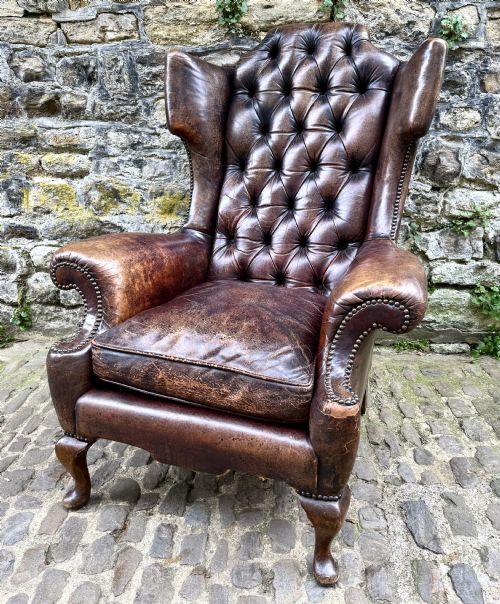
When searching for tufted leather accent chairs, buyers encounter sturdy seating primarily originating from the nineteenth and early twentieth centuries, including the Victorian and Edwardian eras. These pieces typically take the form of club armchairs, library chairs, wingback armchairs, and side chairs constructed during periods like 1850, 1860, and 1910.
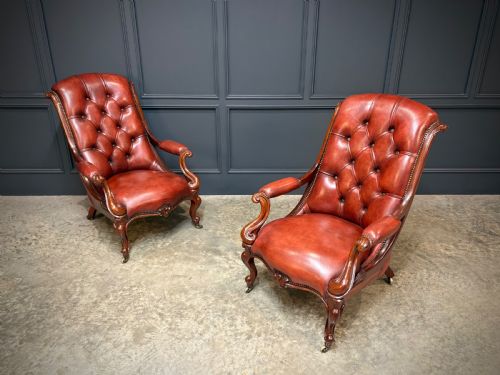
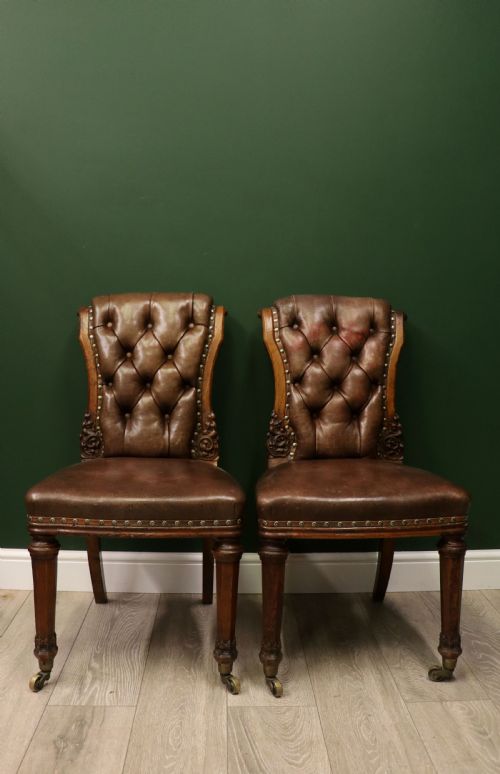
The selections available here showcase significant variation in frame timbers and structural styles, ranging from simple oak side chairs after designs by A.W. N. Pugin to mahogany and rosewood framed easy chairs. Buttoned leather upholstery remains a unifying characteristic across the club armchairs, wingbacks, and smaller childs chairs present in the inventory.
How they were made
The construction of these chairs relies on solid hardwood frames utilising materials such as mahogany, oak, rosewood, and general hardwood to support heavy daily use. Frame elements often feature carved and turned woodwork, alongside Gothic Revival or Rococo Revival styling.
Upholstery techniques centre on deep buttoning, securing leather over padding to create the distinctive tufted surface. Brass detailing sometimes appears on these pieces as part of the decorative or structural assembly.
Listings feature pieces spanning the nineteenth and early twentieth centuries, utilising materials such as mahogany, oak, rosewood, brass, and leather.
What varies in quality
Quality differences emerge in the execution of the timber framing, distinguishing simple side chairs from heavily carved rosewood or mahogany library chairs. The precision of the woodwork and the architectural ambition of the design, such as Gothic Revival details attributed to A.W. N. Pugin, dictate the tier of the piece.
The treatment of the leather and the regularity of the buttoning also separate standard production from superior examples. Deeper tufting work and richer brown hides indicate higher workshop standards during manufacture.
The Tufted Leather Accent Chairs Glossary
- Buttoned leather
- Upholstery technique where leather is pulled deep into the padding with buttons to create a diamond pattern. This method secures the filling and defines the traditional look of club and library chairs.
- Wingback armchair
- Seating featuring protective side panels designed to shield the occupant from drafts. These chairs frequently utilise leather upholstery and heavy wooden frames.
- Gothic Revival
- Nineteenth-century design movement drawing inspiration from medieval architecture. Pieces in this style often incorporate pointed arches and heavy oak construction.
- Library chair
- Comfortable armchair built for reading rooms and studies. These examples generally prioritise sturdy arm supports and deep leather seating.
- Rosewood
- Dense tropical hardwood utilised for fine furniture frames. Its dark grain provides a robust and decorative structure for Victorian seating.
Tufted Leather Accent Chairs: Frequently Asked Questions
What is a tufted leather accent chair?
These pieces are nineteenth and early twentieth-century seating options featuring buttoned leather upholstery over solid timber frames. They encompass club armchairs, wingbacks, and library chairs designed for domestic and study spaces.
Buyers select them to introduce traditional materials and deep buttoning into a room. The category spans diverse forms from heavy mahogany library chairs to smaller rosewood childs chairs.
How do I identify Victorian leather chairs?
Victorian examples typically display period timber frames such as mahogany, oak, or rosewood paired with buttoned leather. Stylistic clues like Gothic Revival or Rococo Revival detailing often point to this era.
Examining the construction methods and wood turning helps distinguish mid-to-late nineteenth-century pieces from later reproductions. The presence of specific historical design influences also assists in dating.
Where were these chairs used historically?
Historically, these chairs served in studies, libraries, and formal reception rooms where comfort and durability were essential. Library chairs and club armchairs provided sturdy seating for reading and conversation.
Smaller side chairs and childs chairs functioned in secondary rooms or parlours. Their solid hardwood construction ensured they endured heavy daily use.
How do I style a tufted leather chair?
Integrating these chairs into a space involves balancing the dark tones of brown leather and heavy timber frames with surrounding room decor. They function well as statement pieces in studies, living rooms, or reading corners.
Parks of Victorian or Edwardian seating add tactile depth through their buttoned hides and carved rosewood or oak structures. They complement both traditional interiors and more eclectic settings.