




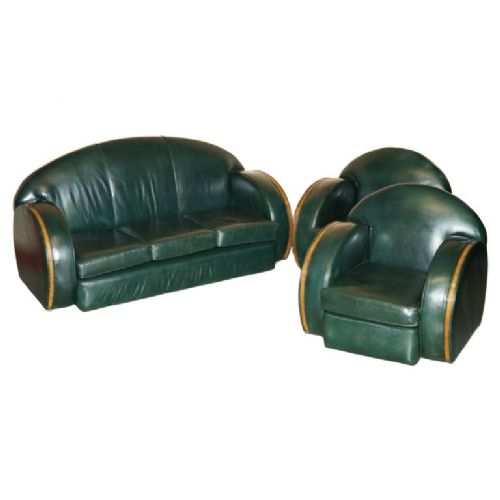


Pair Green Leather Chairs
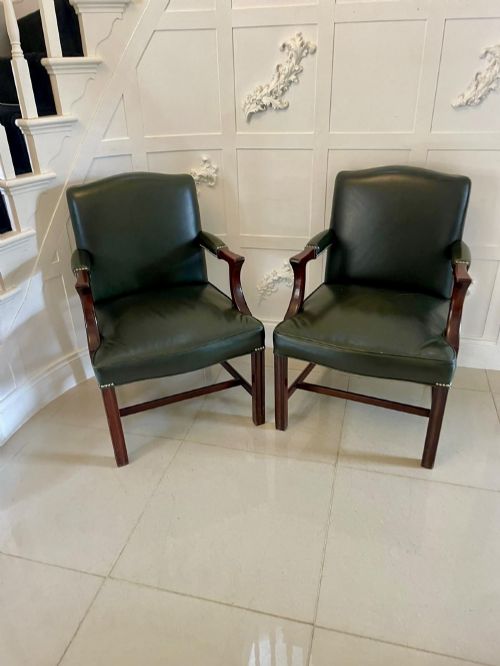
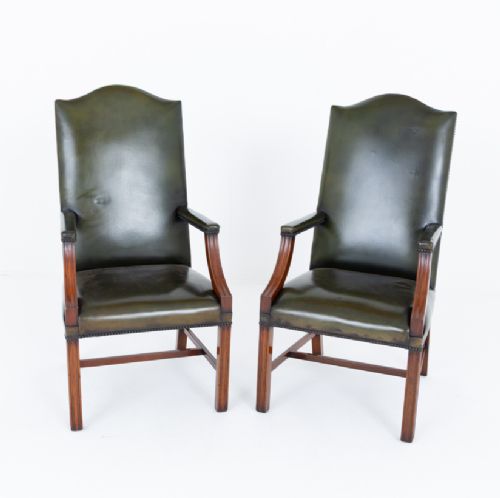
Pair green leather chairs bring rich hide and strong frames together, offering both commanding presence and reliable comfort for a study or library.
Pair Green Leather Chairs
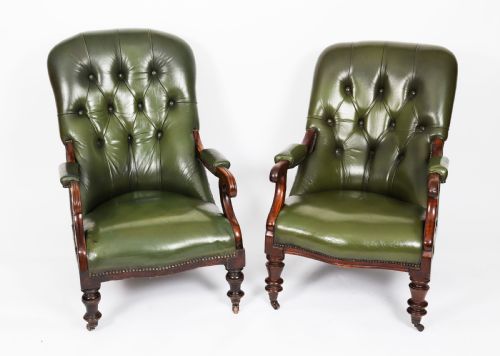
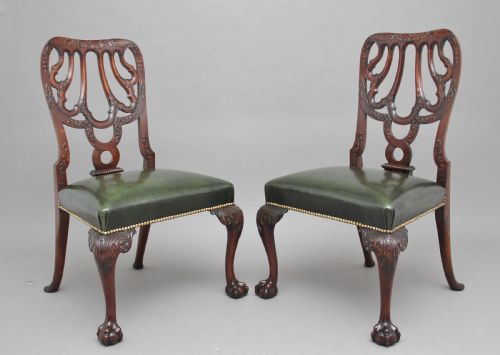
When searching for pair green leather chairs, buyers encounter a diverse range of seating, from compact desk armchairs to deep-buttoned library tub chairs. The most frequent examples appearing here span the Victorian and Regency periods, alongside later revival pieces.
The assortment includes mahogany library armchairs, oak desk chairs, and walnut models, often upholstered in distinctive green hide. Forms vary from open armchairs to substantial Gainsborough and Chesterfield styles suitable for traditional interiors.
Origins stretch from English workshops to French studios, encompassing styles from Chippendale Revival to Victorian Gothic. Buyers regularly find matched pairs and nineteenth-century copies alongside genuine period seating.
Construction and materials
Frames rely on durable timber species such as mahogany, oak, walnut, and rosewood, frequently shaped with hand-carved details or turned supports. Joinery techniques from the eighteenth and nineteenth centuries ensure structural stability across decades of use.
Upholstery combines supple leather with supportive padding, occasionally featuring traditional deep buttoning or brass nailhead trim. Secondary materials like cane appear in bergère panels alongside exposed wooden armrests and legs.
RAF Bomber Command contributed to the inventory, leaving behind sturdy upholstered armchairs that traded wartime service for domestic studies.
Judging the standard
The distinction between standard and superior pieces rests on the crispness of the timber carving and the weight of the frame. Denser hardwoods and finely figured mahogany or walnut elevate the presence of a pair.
The grade of the leather and the execution of buttoning or hand-stitching determine the tactile appeal. Original frames retain a richer surface character compared to later replacements or assembled pairs.
The Pair Green Leather Chairs Glossary
- Bergere
- An enclosed upholstered armchair with wooden framing, often featuring woven cane panels on the back and sides. This French-influenced form became popular in English libraries during the Regency period.
- Gainsborough chair
- A wide, open-armed desk or reading chair with a padded back and seat, typically standing on square or cabriole legs. These seats date back to the mid-eighteenth century and saw frequent revival.
- Chesterfield
- A heavily upholstered seating style characterised by deep buttoning and rolled arms of equal height to the back. Versions in green leather provide a traditional library aesthetic.
- Tub chair
- A compact armchair featuring a rounded, enclosed back that curves continuously into the arms. These chairs often utilise brass detailing or deep leather upholstery.
- Regency
- A stylistic period spanning the early nineteenth century, noted for classical restraint and inspiration from ancient Greek and Roman designs. Furniture from this era often employs dark hardwoods like mahogany and rosewood.
Pair Green Leather Chairs: Frequently Asked Questions
How do I care for antique leather?
Keep leather away from direct sunlight and heat sources to prevent the hide from drying out or cracking over time. Apply a suitable nourishing wax or balm periodically to maintain suppleness and depth of colour.
Avoid using harsh chemical cleaners or excessive water during routine maintenance. A gentle dust with a dry cloth keeps the surface clean without disturbing the historic finish.
Are these chairs comfortable for daily use?
Many of these chairs were designed for prolonged seating in libraries, studies, or offices, offering sturdy back support and generous proportions. The internal padding and suspension vary depending on whether the piece is Georgian, Victorian, or early twentieth century.
Some models feature deep buttoning and sprung seats that provide a softer sit, while formal desk chairs offer a firmer, upright posture. Inspecting the individual form helps determine daily suitability.
What is a matched pair?
A matched pair consists of two chairs that are nearly identical in style, timber, and dimensions but were not originally manufactured together as a set. These pairings often occur when dealers unite two surviving single chairs from the same period.
Subtle differences in wood grain or minor variations in carving may exist between the two pieces. Despite these nuances, they present a balanced and symmetrical appearance in a room.
How can I tell a reproduction from an original?
Examine the timber construction, joinery methods, and the wear patterns on the frame and feet for signs of age. Eighteenth and nineteenth-century pieces exhibit hand-cut joints and patination that modern replicas cannot easily replicate.
Revival pieces from later eras, such as the early twentieth century, deliberately emulate earlier styles like Chippendale or Georgian. Checking for consistent period hardware and secondary woods helps clarify the date of manufacture.