


Brown Leather Gothic Chairs
Brown leather gothic chairs bring uncompromising architectural presence and rich, aged hides to domestic interiors.
Brown Leather Gothic Chairs
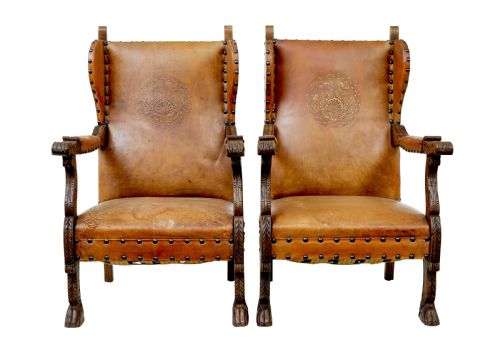
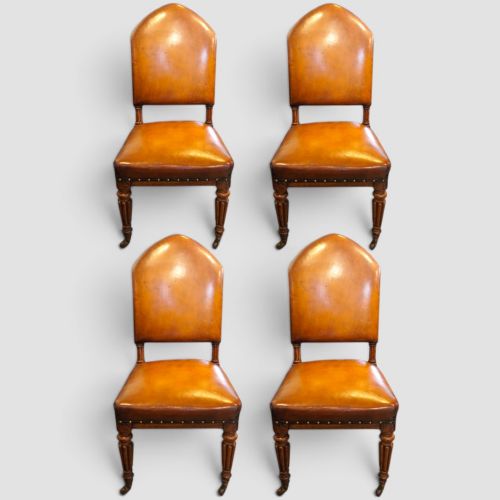
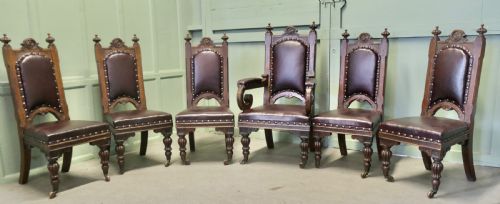
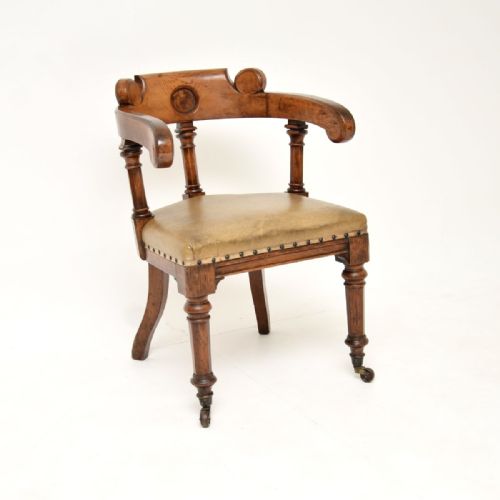
Brown leather gothic chairs encompass heavy seating pieces rooted in the Victorian Gothic Revival and related nineteenth-century design movements. The selection on this page relies heavily on solid oak structures paired with brown leather seats, pads, or buttoned upholstery.
Forms span from large library armchairs and high-backed dining sets to hall chairs, desk chairs, and unusual metamorphic library steps that fold into seats. Makers and designers of the period drew heavily on medieval architectural motifs, resulting in pointed arches, carved tracery, and imposing proportions.
Buyers seeking these pieces look for authenticity of period, which here extends from the early nineteenth century through to the nineteen-thirties, with a strong concentration of Victorian items. The prevailing formats are dining sets and individual library carvers designed for studies and principal rooms.
Materials and construction methods
The primary structural timber across these listings is oak, occasionally varied by walnut or mahogany, joined using traditional cabinet-making techniques to withstand heavy daily use. Wood surfaces frequently feature deep hand-carving, displaying quatrefoils, linenfold panels, and geometric strapwork.
Upholstery relies on durable brown leather, cowhide, or embossed and Spanish hides, secured to the frames using brass tacks or deep buttoning. Metal components appear as structural brass hardware, wrought iron reinforcement, and occasional rotating mechanisms.
Several armchairs incorporate fully rotating mechanisms, offering Victorian readers swivel seating decades before the modern office chair.
Distinctions in craftsmanship and design
Quality separates ordinary utilitarian seating from pieces bearing the specific design attribution of notable Victorian cabinet-makers or architects. Finer examples display crisper hand-carved architectural details, heavier proportions, and superior timber selection such as golden oak or figured walnut.
The integrity of the brown leather upholstery and the depth of the original joinery dictate the standing of each piece. Workshop attribution, such as work associated with Gillows or Lamb of Manchester, elevates individual pieces above standard anonymous production.
Gillows·Bruce James Talbert·Lamb Of Manchester·Charles Bevan·A.W.N. Pugin·Richard Hicks Bridgens
The Brown Leather Gothic Chairs Glossary
- Gothic Revival
- An architectural and decorative style drawing on medieval ecclesiastical forms, prominent during the nineteenth century. It manifests in pointed arches, heavy mouldings, and structural verticality.
- Carver
- An armchair, traditionally placed at the head of a dining table, featuring more elaborate arms and carving than the surrounding side chairs. These pieces often anchor a set of dining seats.
- Metamorphic
- Describing furniture designed to transform its function, such as a library armchair that unfolds into a set of steps. These ingenious mechanical pieces were popular in nineteenth-century studies.
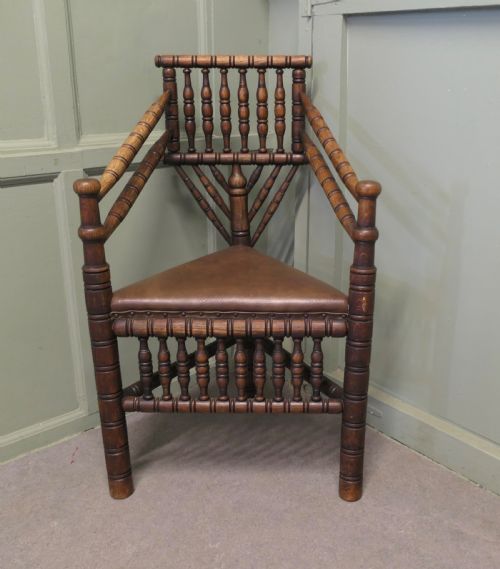
- Turners Chair
- A three-legged chair constructed from turned wooden spindles, following sixteenth-century vernacular traditions revived by Victorian makers. They offer a distinct geometric silhouette.
- X Framed Stool
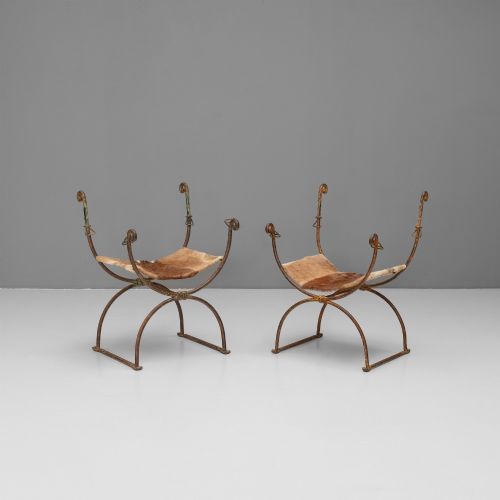
- A seating form supported by intersecting diagonal stretchers forming an X shape, frequently executed in walnut with upholstered tops during the nineteenth century.
Brown Leather Gothic Chairs: Frequently Asked Questions
How do I identify a true gothic revival chair?
Look for architectural motifs such as pointed arches, quatrefoils, and heavy structural framing executed in solid oak. These design elements directly mimic medieval stone and woodwork.
Check the timber and construction methods for nineteenth-century hand-tooling rather than twentieth-century machine production. Genuine pieces often display deep relief carving and period upholstery techniques.
Were these chairs used in dining rooms?
Many of these pieces were created as dining sets, ranging from single carvers to sets of six or eight matching chairs. They provided substantial seating for formal Victorian dining spaces.
Side chairs and high-backed dining chairs form a significant portion of the available oak seating. They were built for durability and visual weight around large wooden tables.
How should I care for antique brown leather?
Maintain antique leather by applying suitable conservation-grade balms or waxes to keep the hide supple. Avoid modern chemical cleaners that strip the aged patina.
Keep these chairs away from direct heat sources and strong sunlight to prevent the leather from drying and cracking. Gentle dusting with a dry cloth preserves the surface.
What is a metamorphic library chair?
A metamorphic library chair is a dual-purpose piece engineered to fold out into a short flight of steps. Nineteenth-century scholars used them to reach high bookshelves in private libraries.
These pieces feature concealed hinges and pivoting joints that allow the seat back to transform safely. They represent a high point in utilitarian domestic mechanics.