
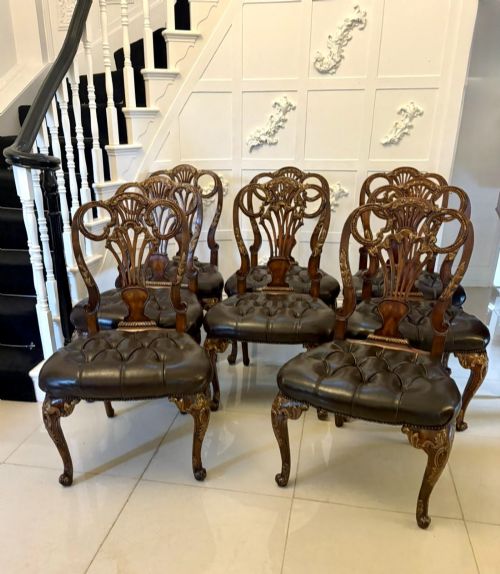
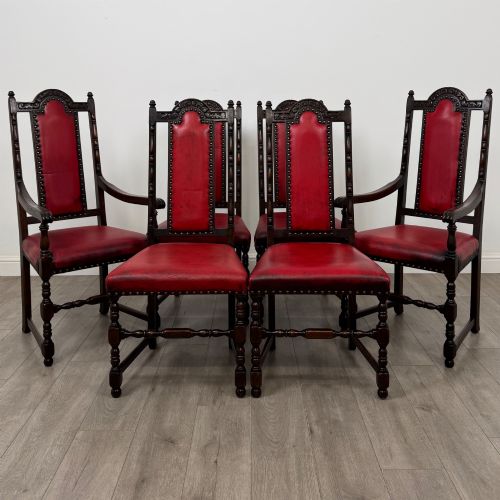
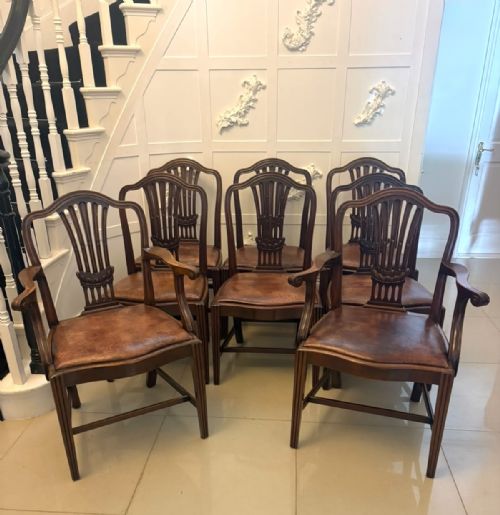
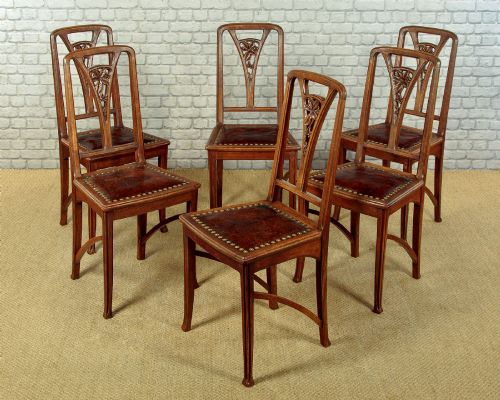


Edwardian Leather Dining Chairs
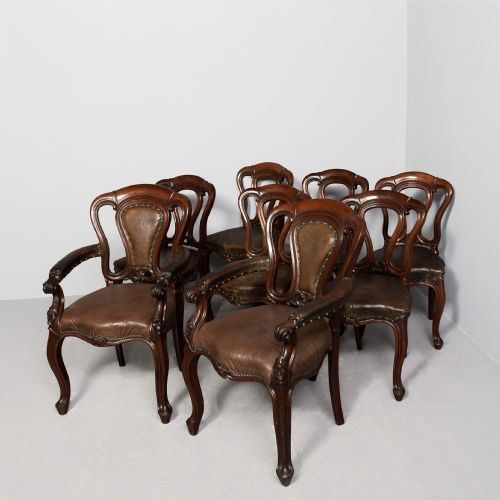
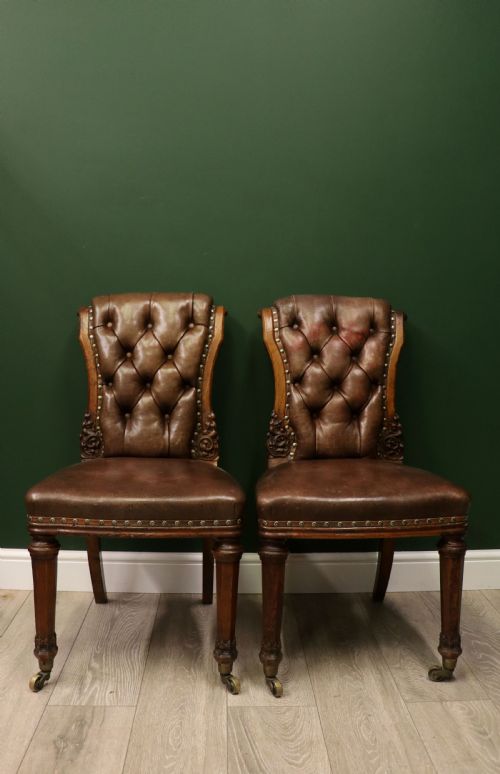
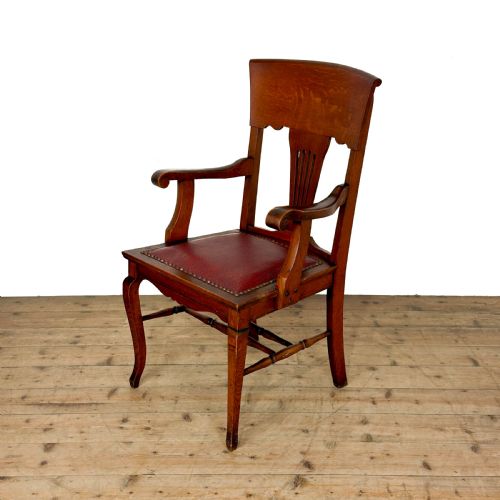
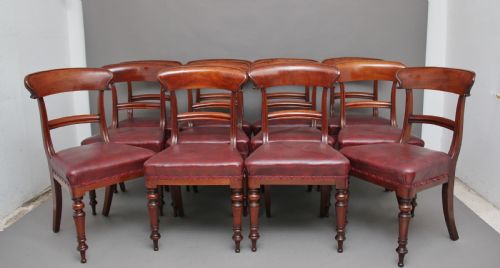
These edwardian leather dining chairs combine period craft with practical seating, offering sturdy timber frames and patinated hides that suit daily dining rooms.
Edwardian Leather Dining Chairs
When searching for edwardian leather dining chairs, buyers encounter seating rooted in the early twentieth century alongside adjacent Victorian and revival periods. The most frequent forms include oak or mahogany side chairs and carwers featuring upholstered leather seats fastened with traditional studs.
The selection ranges from simpler oak kitchen and dining models to grander suites reflecting Chippendale, Hepplewhite, and Arts and Crafts design influences. These pieces provide substantial dining room seating built around durable timber frames and hard-wearing animal hide.
Many examples emerge in matched sets of four, six, or eight, while pairs and single armchairs also appear frequently. The overarching appeal lies in combining period character with a functional surface that handles regular domestic use.
Materials and Construction
Cabinetmakers constructed the frames primarily using native and imported hardwoods, with oak and mahogany appearing most frequently alongside walnut and fruitwood. These timbers were joined using traditional mortise and tenon joints to ensure long-term stability under daily weight.
Upholstery involved stretching cattle leather over stuffed seat pads, often secured with brass or iron studs driven directly into the wooden rails. Some variants incorporated embossed patterns, carved backs, or gilded details to elevate the visual finish of the wood.
Winston Churchill once had an association with one recorded set of dining carvers, adding a notable historical footnote to everyday seating.
Assessing Quality and Build
The distinction between standard dining seats and top-tier pieces rests on timber selection, carving depth, and structural integrity. Finer examples display dense, well-figured mahogany or quarter-sawn oak with crisp, hand-carved details rather than shallow machine moulding.
Leather quality and upholstery technique also determine overall worth, with supple, patinated hides retaining their strength better than brittle surfaces. Original matching sets command greater attention than assembled groups sharing similar period characteristics.
Shoolbred·Lambs of Manchester·Charles Bevan·George Henry Walton·Howard and Sons·H. Samuel
The Edwardian Leather Dining Chairs Glossary
- Carver
- An armchair designed with armrests, traditionally placed at the head of a dining table. These match the smaller side chairs in a larger dining suite.
- Side chair
- An upright dining chair manufactured without armrests so it can slide neatly beneath a dining table. They form the majority of seating in standard dining sets.
- Mortise and tenon
- A traditional woodworking joint where a projecting tongue fits snugly into a corresponding cavity to lock timber pieces together firmly. This method underpins the durability of antique chair frames.
- Patina
- The surface sheen and softening of tone developed by leather and wood through decades of handling, light, and use. Collectors value this natural sign of age.
- Quarter-sawn
- A method of cutting logs that produces timber with a distinctive medullary ray grain pattern. This cut offers increased stability and resistance to warping in oak furniture.
Edwardian Leather Dining Chairs: Frequently Asked Questions
How many chairs come in a typical set?
Most surviving sets contain four, six, or eight chairs, which reflects standard dining arrangements of the early twentieth century. Larger dining rooms sometimes accommodated sets of ten or twelve.
Matching sets of six or eight in original condition remain particularly sought after for modern dining tables.
Are the leather seats original?
Many chairs retain their original cattle hide, which displays a natural grain and deep patination acquired over decades of use. Some pieces have undergone re-leathering using traditional tanning methods to match the antique aesthetic.
Close inspection of the underlying webbing and tacks helps determine whether the upholstery dates to the period of manufacture.
How do I care for antique leather?
Maintaining antique leather requires regular dusting with a dry cloth and occasional application of appropriate leather balms to prevent drying and cracking. Keeping the chairs away from direct heat sources and strong sunlight preserves the hide.
Gentle conditioning maintains the suppleness of the material without altering its historic patina.
What is the difference between Edwardian and Victorian chairs?
Victorian dining chairs often feature heavier proportions, darker finishes, and more ornate or exuberant carvings reflecting mid-to-late nineteenth-century tastes. Edwardian versions generally exhibit lighter frames, cleaner lines, and influences from earlier Georgian or Arts and Crafts revivals.
Both periods utilise robust timber construction, but Edwardian pieces frequently lean towards simpler domestic utility.