



Traditional Leather Chesterfield
A traditional leather chesterfield is an enduring piece of seating history, bringing deep buttoning, rolled arms, and rich hide into a room.
Traditional Leather Chesterfield
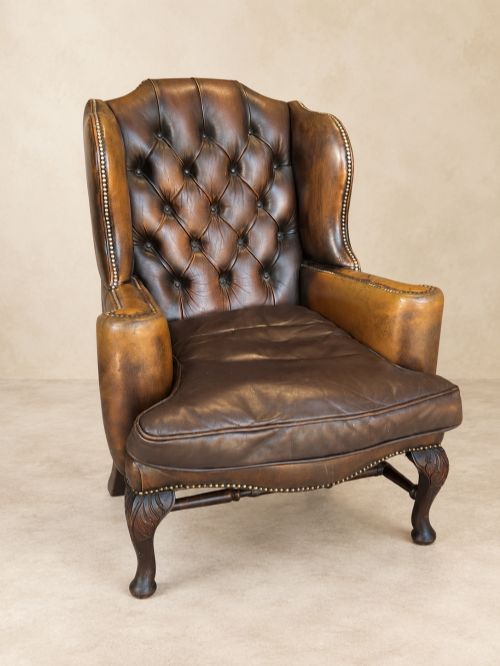
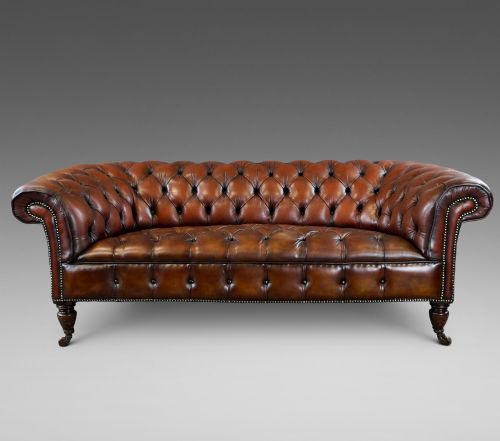
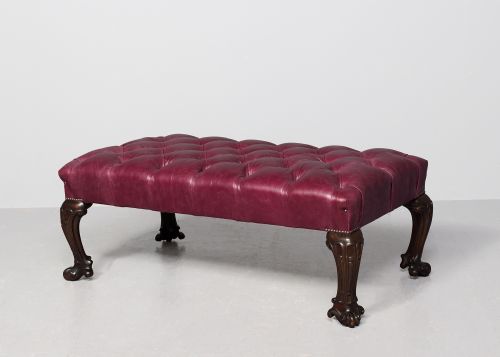
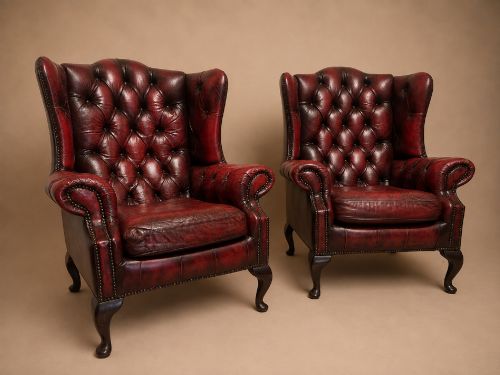
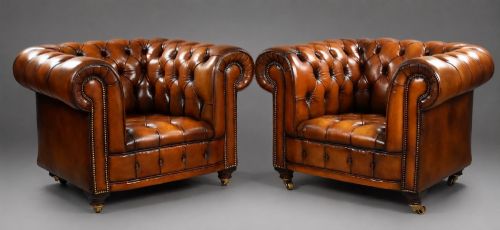
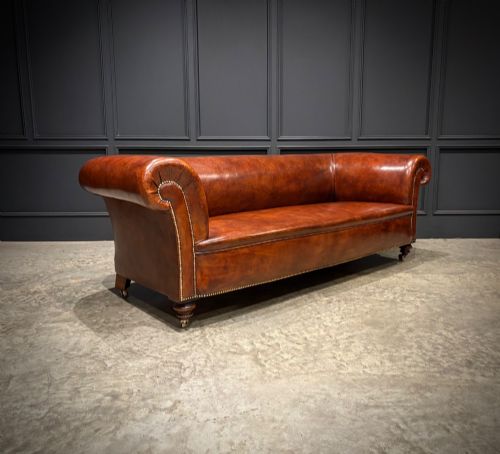
A traditional leather chesterfield takes many forms across this selection, from expansive three-seater sofas and deep club armchairs to wingbacks, footstools, ottomans, and club fenders. You will frequently encounter Victorian and Edwardian examples alongside pieces from the early twentieth century, spanning dates from eighteen-fifty up to nineteen-thirty.
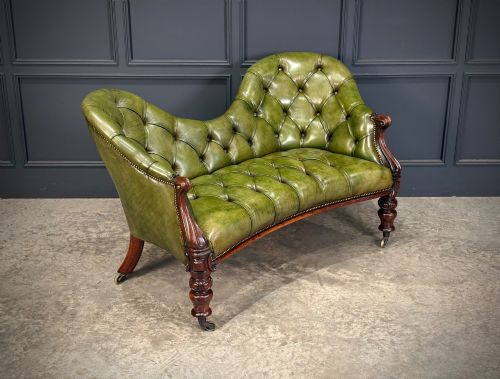
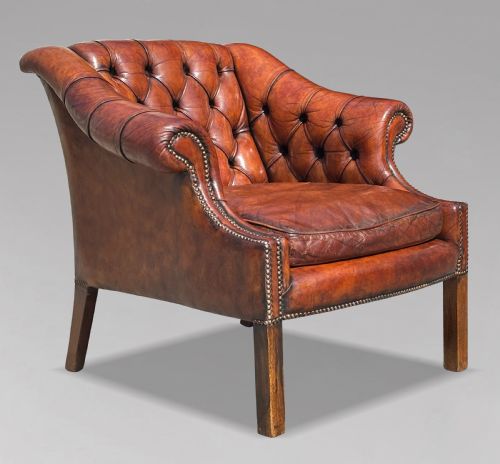
The seating arrangements vary from single library chairs and double spoon-back settees to grander two-seat and three-seat sofas. Alongside standard seating, you find specialised formats like desk chairs, porters armchairs, and brass-mounted club fenders fitted with leather chesterfield seats.
These items emerge in diverse styles including traditional English, Georgian style, and Regency influences, reflecting the tastes of the nineteenth and early twentieth centuries. The overarching form remains rooted in classic buttoned upholstery, low backs, and scrolled arms.
Construction and Materials
Makers built the foundational frames of these pieces using sturdy timbers such as mahogany, hardwood, and general wood. These robust skeletons support the complex internal padding necessary for deep buttoning and resilient seating.
Internal stuffing historically relied on traditional fillings like horsehair, paired with fully loose coil springing to give the seat its characteristic bounce and support. Upholsterers then applied high-grade leather hide over the frame, securing the distinct tufted pattern.
Metal components appear in structural and decorative roles, notably brass on club fenders and castors, alongside chrome in specific variations. Leathers arrive either in their original tones or processed through hand-dyeing techniques to achieve shades like oxblood, green, whiskey brown, and tan.
Listings feature pieces spanning from the mid nineteenth century through to the nineteen-thirties, incorporating woods like mahogany alongside brass and chrome hardware.
Judging Quality
Quality rests significantly on the integrity of the underlying woodwork and the resilience of the internal springing. Pieces built with dense hardwood frames and traditional horsehair stuffing maintain their structural support far better over decades of use.
The treatment and grade of the hide dictate much of the visual character and tactile appeal. Hand-dyed leathers and original un-restored hides display depth of colour and natural patination that distinguish superior examples from simpler modern treatments.
Howard and Sons·Hampton and Sons
The Traditional Leather Chesterfield Glossary
- Buttoning
- The technique of indenting upholstery with deep tufts secured by buttons, creating the classic diamond-patterned surface seen on these sofas and armchairs.
- Club Fender
- A low, padded seating structure traditionally placed around a fireplace, combining a metal frame with a leather-topped surface.
- Wingback
- An armchair featuring protective side panels attached to the arms and framing the back to deflect drafts.
- Spoon-Back
- A chair back shaped like the bowl of a spoon, typically associated with Victorian seating designs.
- Ottoman
- A piece of upholstered furniture without arms or a back, used as a seat or footrest and often incorporating internal storage.
Traditional Leather Chesterfield: Frequently Asked Questions
What defines a traditional leather chesterfield?
A traditional leather chesterfield is characterised by its distinctive deep-buttoned upholstery, low back, and equally rolled arms that sit at the same height as the backrest. These seating pieces combine dense internal padding with robust leather hides.
Originating in various forms through the Victorian and Edwardian eras, they served primarily as formal parlour or library seating. Today, buyers use them to anchor living spaces or studies with a sense of established history.
How do I care for antique leather?
Antique leather requires consistent maintenance to prevent the hide from drying out and cracking over time. Regular dusting and the sparing application of specialist leather balms help preserve the natural patination.
Keep these pieces away from direct heat sources and strong sunlight, which can fade hand-dyed colours like oxblood, green, or whiskey brown. Proper environmental control ensures the underlying timber frame and horsehair stuffing remain stable.
Are these sofas comfortable for daily use?
Many of these pieces utilise traditional fully loose coil springing and horsehair stuffing, which provide firm, supportive seating. The deep seats and supportive armrests make them well-suited for extended periods of reading or relaxing.
While older springs feel firmer than modern foam cushions, their construction offers lasting durability. Buyers often pair larger sofas with matching footstools or ottomans to enhance overall lounging comfort.