
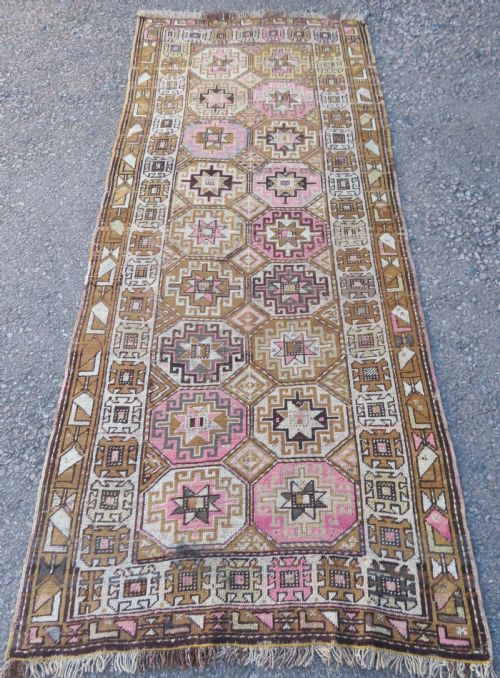

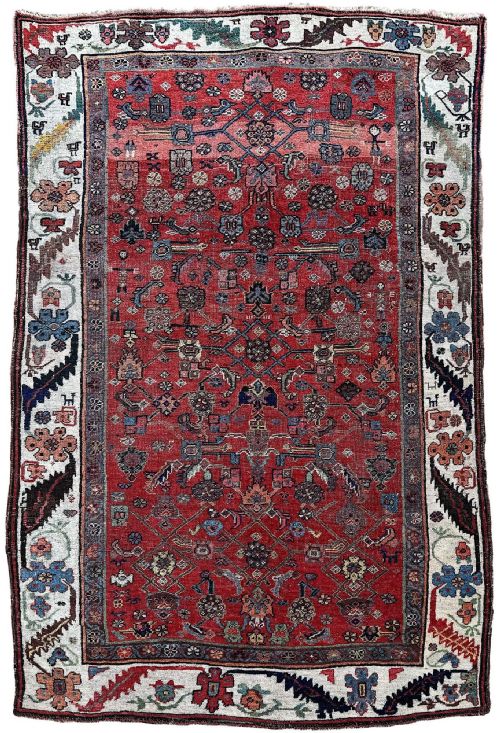
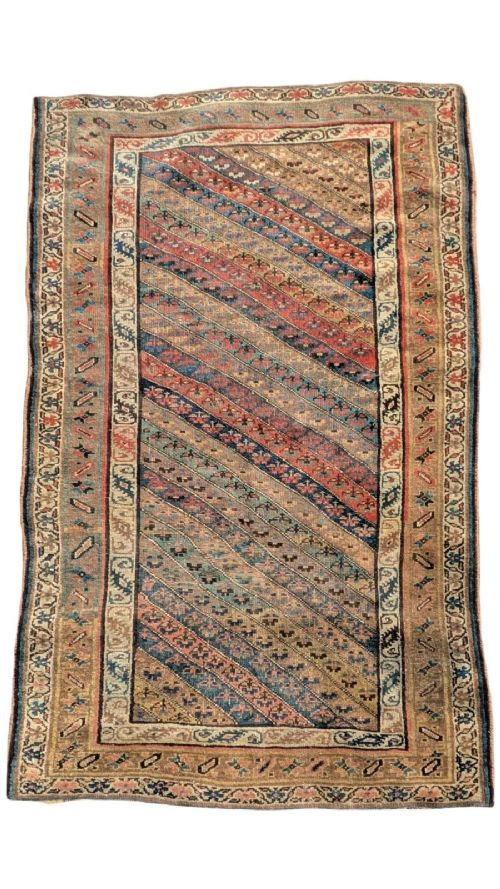
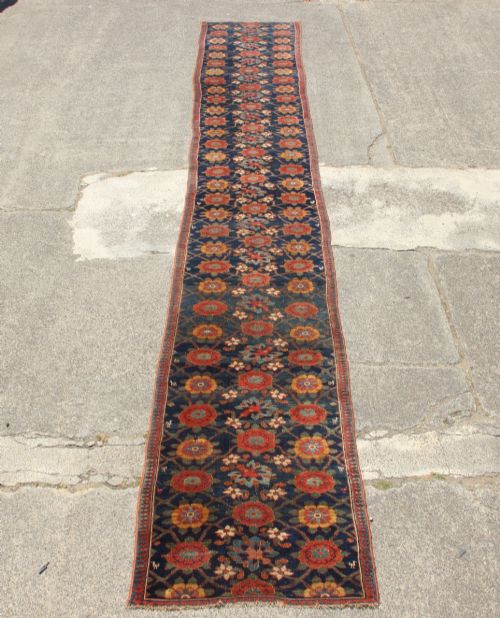
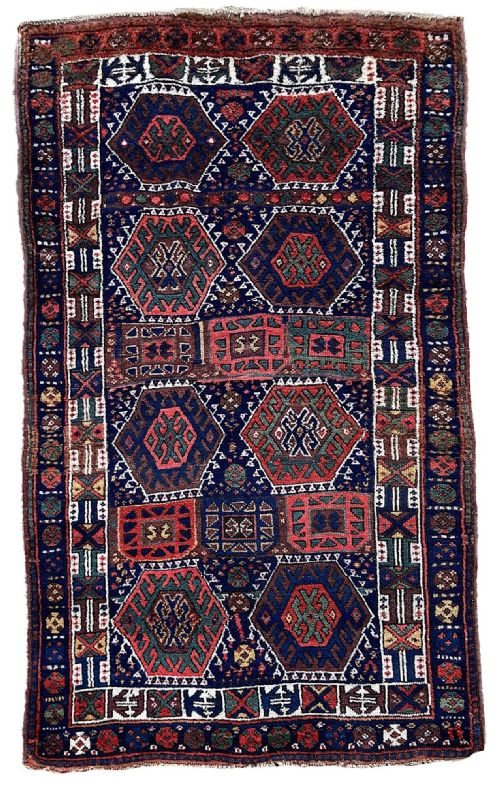


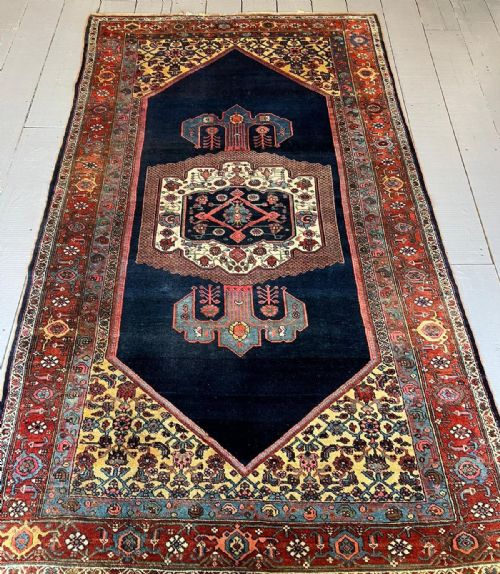


Traditional Kurdish Wool Rug
A traditional kurdish wool rug brings dense tribal character and heavy pile to a hallway or floor, formed by generations of nomadic and village weavers.
Traditional Kurdish Wool Rug
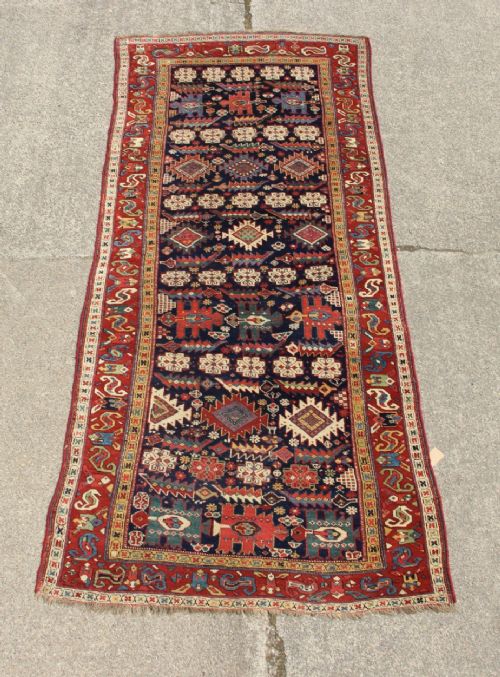
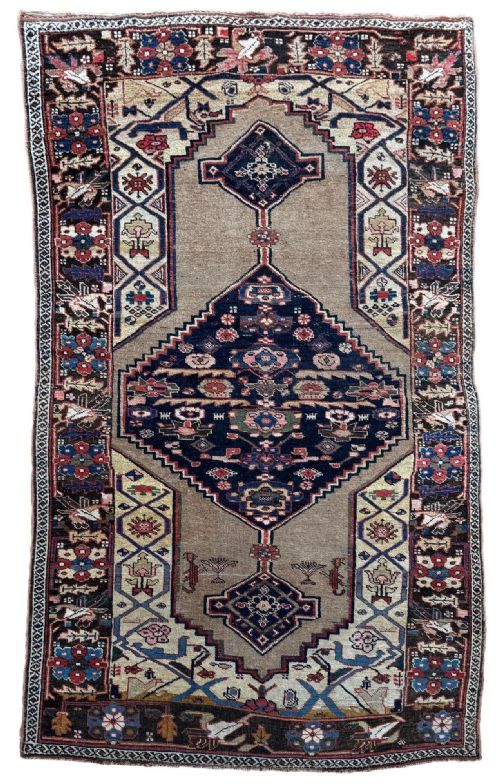
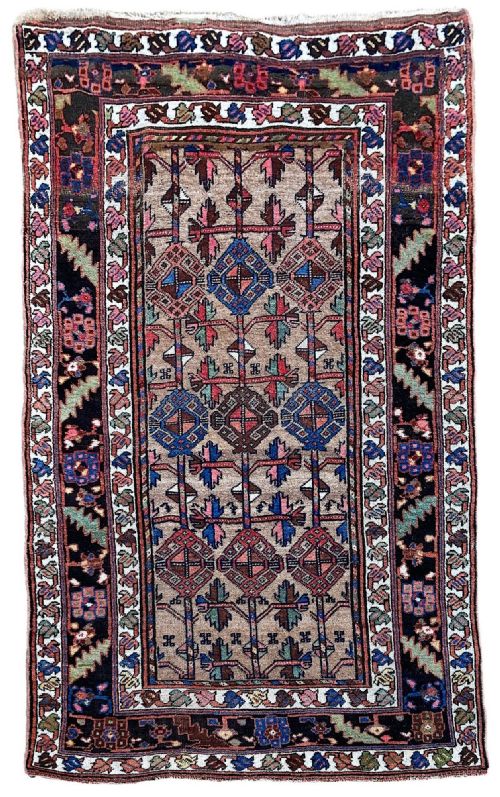
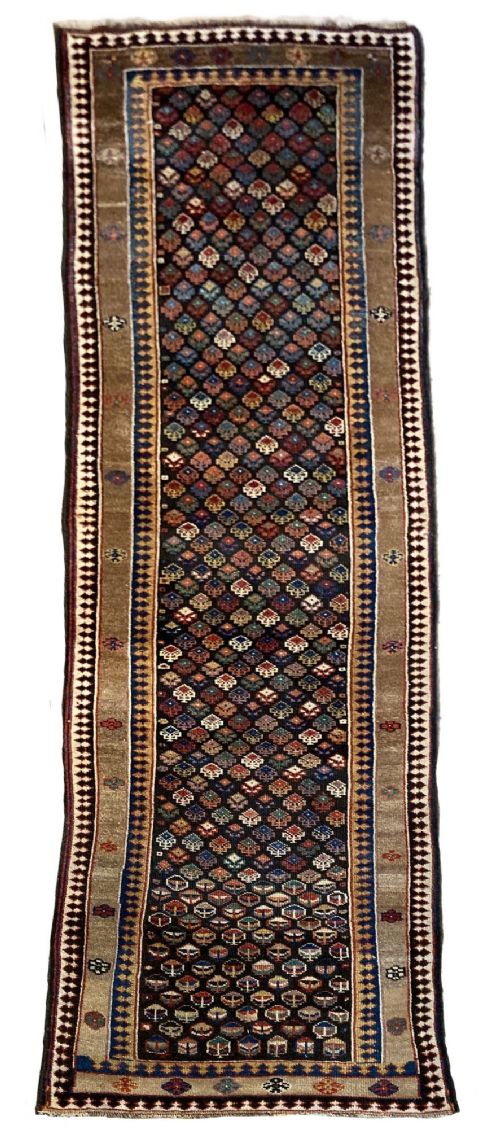
A traditional kurdish wool rug comprises hand-knotted floor coverings and long runners originating from the nineteenth and early twentieth centuries. These textiles emerge from village and tribal workshops across West Persia, Kurdistan, and surrounding regions, spanning periods from the 1860s through to the 1930s. Buyers frequently encounter regional variants such as Bidjar, Senneh, and Hamadan pieces, alongside specific formats like the long kelleh and narrow hallway runners.
The aesthetic bridges geometric tribal motifs and formal Persian field designs. Examples on this page range from small area formats to expansive carpets exceeding five metres in length. Pieces often display repeated field patterns, tribal medallions, or repeating guls on grounds of varying scale.
How they were made
Weavers construct these rugs using wool and hand-spun wool piles knotted onto cotton or wool foundations. The application of natural dyes produces deep, saturated tones across the field and borders, yielding varied patination over decades of use.
Structure relies on tight knotting techniques typical of Kurdish and Bidjar production, creating a dense, heavy textile designed for durability. Loom methods incorporate supplementary weft wrapping and sturdy selvedges to withstand heavy foot traffic.
Geographic attributions on this page encompass West Persia, East Anatolia, and the broader Kurdish tribal sphere.
What varies in quality
Quality rests on the integrity of the weave, the density of the knotting, and the handling of the natural dyes. Superior examples maintain crisp delineation in geometric motifs and balanced proportions across long runner formats.
The condition of the wool pile and the structural stability of the foundation dictate the durability of the piece. Subtle shifts in colour depth and the uniformity of the hand-spun wool distinguish finer village and tribal output from standard commercial production.
The Traditional Kurdish Wool Rug Glossary
- Kelleh
- A large rectangular carpet format, typically longer than a standard area rug but narrower than a full room-size carpet. These pieces function well in extended hallways and large reception spaces.
- Bidjar
- A town and surrounding region in West Persia known for dense, heavy construction and resilient wool piles. Bidjar pieces often employ a stiff foundation that maintains its shape over generations.
- Senneh
- A style associated with fine Kurdish weaving originating from Sanandaj, frequently featuring delicate Herati patterns or boteh motifs. These rugs utilise narrower profiles and precise knotting.
- Gul
- A repeating medallion or octagonal design element used across tribal carpets. This motif often indicates specific regional or tribal affiliations within the weaving tradition.
- Runner
- A long, narrow carpet format designed specifically for corridors, staircases, and narrow passageways. Runners require sturdy foundations to endure continuous foot traffic.
Traditional Kurdish Wool Rug: Frequently Asked Questions
Where were these rugs made?
These textiles originate primarily from villages and tribal regions in West Persia and Kurdistan. Production spans various local centres including Bidjar, Senneh, and Hamadan.
The weavers utilised regional motifs and local materials handed down through generations of traditional workshops.
How do I care for a wool rug?
Vacuum gently without using a rotating brush roll to protect the hand-spun wool pile and delicate foundation warps. Keep the textile out of direct, continuous sunlight to preserve the natural dye colours.
Professional cleaning tailored for antique carpets ensures the wool fibres remain stable and clean over time.
What is a Kelleh rug?
A kelleh is a specific long format that sits between a standard area rug and an expansive carpet. These proportions suit narrow rooms and extended gallery spaces.
Such pieces provide substantial floor coverage while maintaining a manageable width for domestic interiors.
How do I date an antique rug?
Dating relies on material analysis, including the presence of hand-spun wool and early natural dye palettes. Stylistic markers such as specific tribal guls and structural stiffness also indicate period origins.
Comparative study of nineteenth and early twentieth-century weaving techniques helps narrow the timeline of individual pieces.