



Striped Caucasian Rug
A striped caucasian rug brings vivid geometry and rich wool into a room, offering genuine tribal character from the nineteenth and early twentieth centuries.
Striped Caucasian Rug
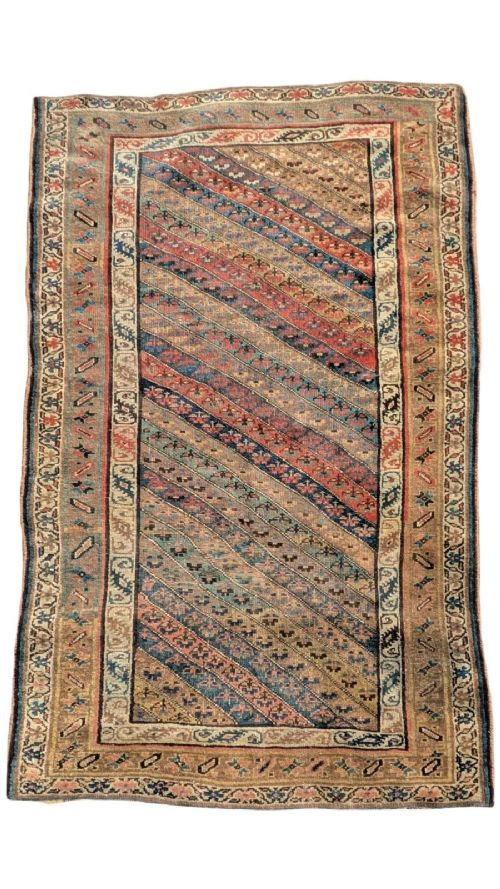
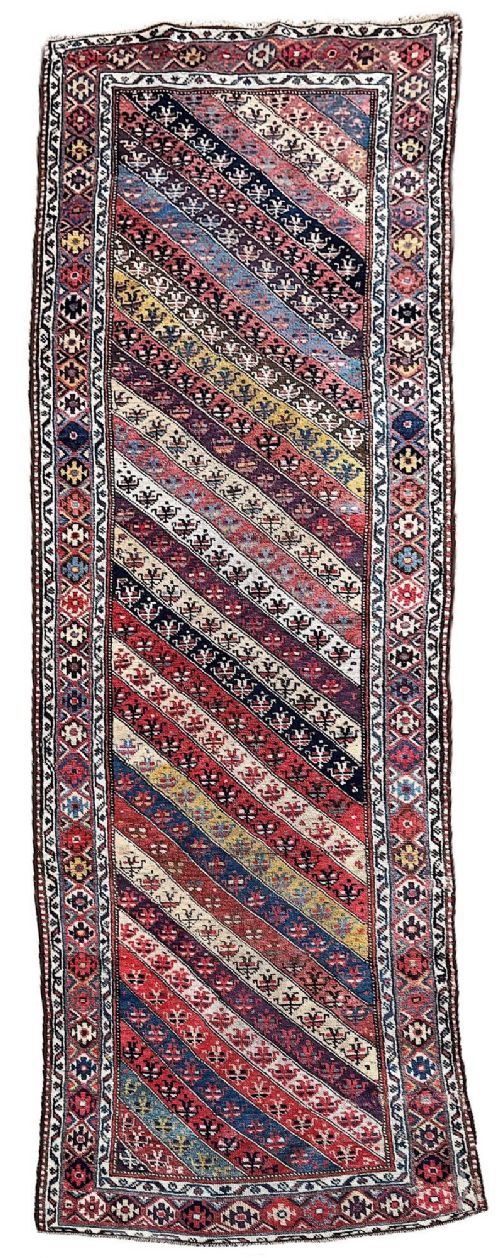
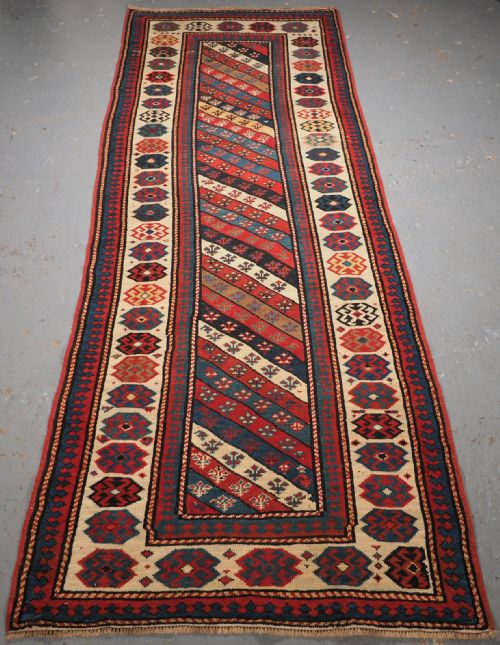
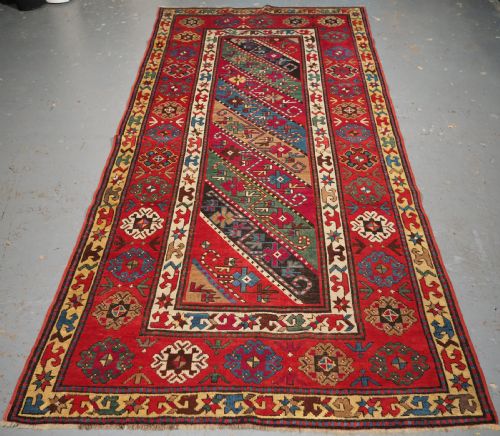
When you search for a striped caucasian rug, you encounter hand-woven textiles originating from the Caucasus region and surrounding tribal areas, dating primarily from the late nineteenth century up to 1910. These pieces display distinct linear patterns, including diagonal stripes and specific boteh motifs executed in regional styles such as Gendje, Karabagh, and Shirvan.
The selections on this page encompass various formats including runners, long rugs, prayer-rugs, saddle rugs, and mounted textile panels or kilims. Most common among these are runner rugs and village weaves featuring strong directional bands of colour.
Originating from tribal workshops and regional weavers, these textiles reflect the utilitarian yet artistic traditions of Caucasian and Persian tribal makers. Collectors prize them for their bold graphic impact and connection to historical weaving practices.
How they were made
These textiles are constructed using wool and occasional silk, paired with natural dyes that yield enduring colour depth across the linear designs. Artisans employed traditional knotting and flatweaving techniques to create durable carpets, runner rugs, and specialised items like horse saddle rugs.
The structural integrity relies on sturdy wool foundations and tight pile or flatweave construction, ensuring the diagonal stripes and geometric bands maintain their precision over generations of use.
Current listings feature pieces spanning the period from 1850 to 1910, incorporating wool, silk, wood, and natural dyes across Caucasian, Persian, and Turkmen styles.
What varies in quality
The visual strength of a piece depends on the crispness of the diagonal stripe design and the vibrancy of the natural dyes used by the weaver. Finer examples display meticulous control over geometric alignment and harmonious colour balance across the field.
Condition and completeness also separate standard examples from superior ones, particularly in textiles that have been adapted or mounted, such as mafrash panels transformed into small kilims. Original format integrity and wool density heavily influence the overall standard of the piece.
The Striped Caucasian Rug Glossary
- Boteh
- A stylised almond or pear-shaped motif common in oriental carpets and tribal weaving. This pattern often appears arranged in rows or diagonal bands.
- Kilim
- A flatwoven carpet or rug produced without a pile. These pieces rely on the interlacing of warp and weft threads to form sharp geometric designs.
- Runner
- A long, narrow carpet format designed for hallways, corridors, or narrow spaces. They frequently feature repeating patterns or linear stripe layouts.
- Natural Dyes
- Colourants derived from plants, insects, and minerals rather than synthetic compounds. They create nuanced tones that mellow gracefully over time.
- Mafrash
- A traditional storage bag or panel from nomadic groups, often disassembled and repurposed into flatweave rugs or decorative wall panels.
Striped Caucasian Rug: Frequently Asked Questions
Where were these rugs made?
These textiles originate from the Caucasus region, including specific areas like Shirvan, Gendje, and Karabagh, as well as neighbouring tribal territories.
The weavers were nomadic or village artisans who produced these pieces for local utility, ceremonial use, or trade.
How do I style a runner?
Runners fit naturally in hallways, narrow corridors, or alongside beds where their linear geometry can draw the eye down a space.
Their narrow proportions and strong diagonal stripes help elongate smaller rooms while adding historical warmth to modern interiors.
What are natural dyes?
Natural dyes are organic colourants sourced from plants, roots, and insects that were traditionally used by Caucasian and tribal weavers before synthetic alternatives.
These dyes interact with wool fibres to produce subtle variations in tone and a rich patina that develops gracefully with age.
How do I care for antique wool rugs?
Protect antique textiles by placing them in low-traffic areas or mounting them securely if they are delicate flatweaves or saddle rugs.
Regular gentle vacuuming without a rotating brush roll helps remove grit, while professional textile cleaners should handle any deeper maintenance.