




Traditional Kurdish Rug Weaving
Traditional kurdish rug weaving brings dense tribal geometry, saturated wool pile and storied village craftsmanship directly into contemporary interiors.
Traditional Kurdish Rug Weaving
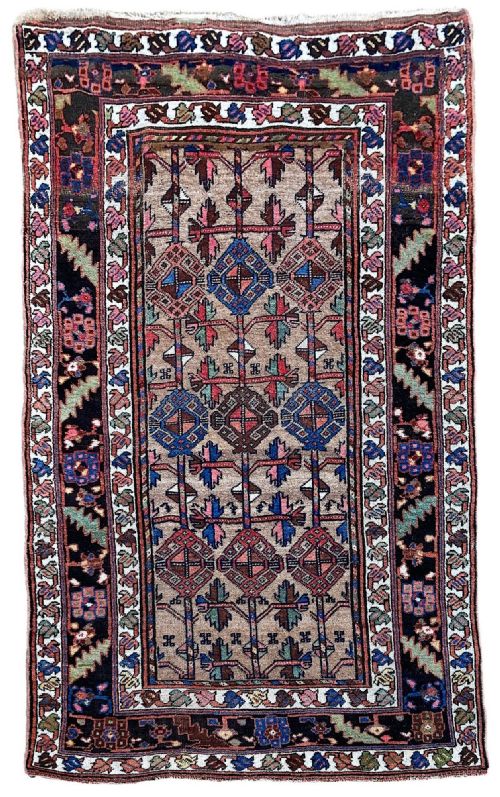
Traditional kurdish rug weaving encompasses durable village and tribal carpets produced across Persian, Caucasian and Anatolian regions during the nineteenth and early twentieth centuries. These textile formats range from compact bag faces and village rugs to elongated corridor runners and large kelleh carpets.
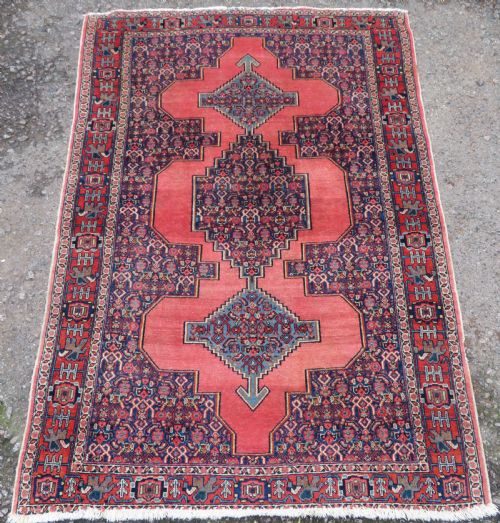
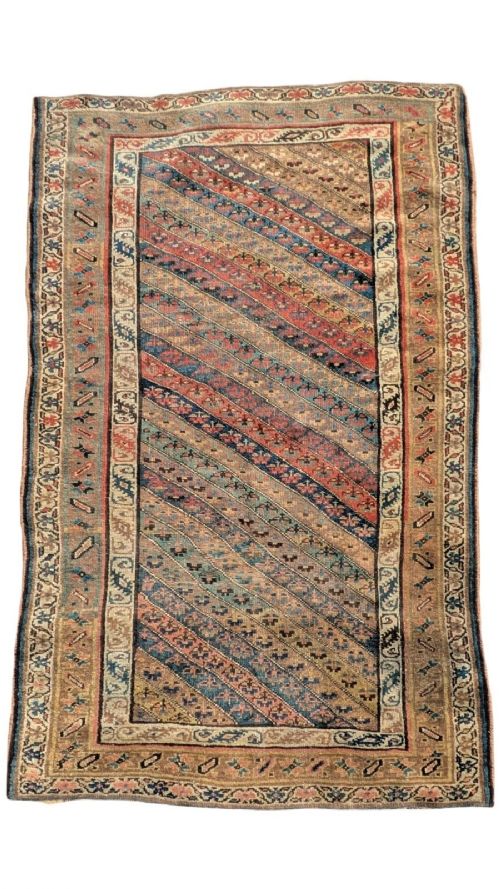
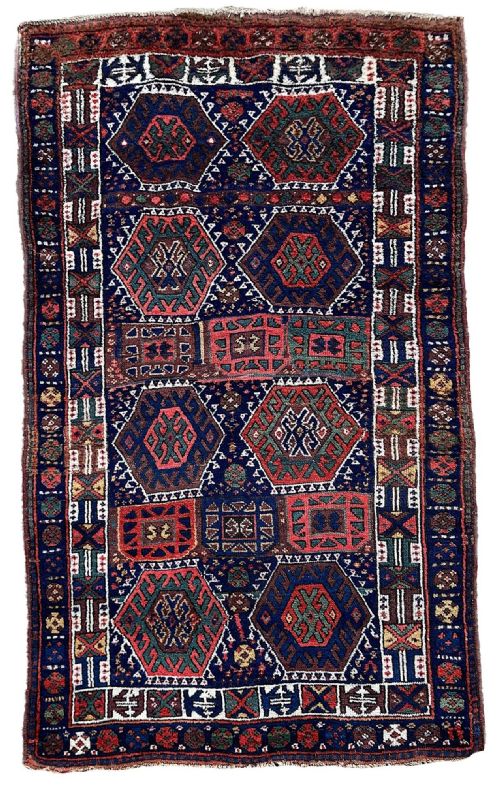
Buyers encountering this selection will find woven works attributed to specific tribal groups such as the Jaf, Kolyai and Quchan weavers, alongside town-influenced pieces from Bidjar, Senneh and Hamadan. The designs span from repetitive shrub motifs and Memlinc guls to bold geometric medallions and linked tribal patterns.
The material expression relies heavily on robust wool construction, often hand-spun, combined with natural dyes that yield enduring colour palettes on yellow, red or dark grounds. These rugs serve as functional floor coverings and decorative textile artefacts reflecting centuries of regional nomadic heritage.
Materials and construction methods
The primary structural material is wool, frequently hand-spun to create resilient pile foundations that withstand decades of heavy foot traffic. Cotton appears in foundations and warps, particularly in town-associated workshops, while wool remains dominant across tribal village output.
Weavers utilised natural dyes to achieve deep, varied hues that develop a rich patina over time. Flatweave techniques such as soumak also occur alongside knotted pile construction, offering versatile surface textures from heavy room carpets to lighter kilims.
Traditional Kurdish Rug Weaving Retail Price Guide 2026
Typical asking prices for traditional kurdish rug weaving among the pieces listed under this phrase on Sellingantiques today, from the lower quarter to the upper quarter. They describe what is for sale here now, not the wider market.
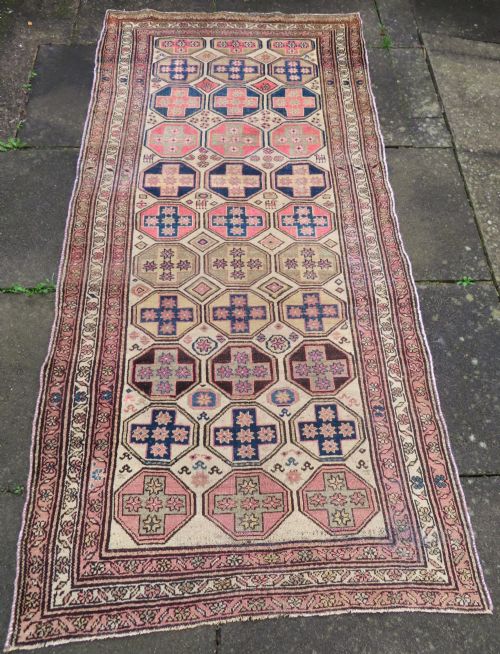
Several runners manage to incorporate unexpected lemon-yellow ground colours that completely defy dreary hallway expectations.
Factors determining quality
Quality variation rests upon the tightness of the weave, the clarity of the geometric drawing and the handling of the wool pile. Tighter knotting and precise execution of motifs like dragon borders or shrub designs separate finer village and workshop pieces from simpler tribal formats.
The vibrancy and depth of the natural dyes play a critical role, as skilled use of organic colorants yields rich grounds that age gracefully. Structural integrity, including the survival of original borders and secure selvages, also distinguishes superior examples.
The Traditional Kurdish Rug Weaving Glossary
- Kelleh
- A large rectangular format traditionally used as a long rug or room carpet. These pieces offer extended proportions suitable for hallways and substantial living spaces.
- Soumak
- A flatweave technique involving wrapping weft threads over warps to create a durable, textured surface without a cut pile. This method provides distinctive structural ridges.
- Gul
- A medallion or repeating octagonal motif commonly found in tribal rugs. These graphic symbols often carry specific regional and tribal identities.
- Bag face
- The functional front panel of a nomadic storage bag, preserved as a small-scale collector textile. These compact pieces display concentrated tribal weaving.
- Warp
- The vertical threads stretched across a loom that form the foundational skeleton of the rug. Wefts and knots are built upon this underlying grid.
Traditional Kurdish Rug Weaving: Frequently Asked Questions
Where were these rugs made?
These textiles originate from Kurdish tribal lands, spanning regions of northwest Persia, the Caucasus and East Anatolia. Weavers operated within nomadic camps, farming villages and larger market towns such as Bidjar and Senneh.
Production methods varied by geography, reflecting both isolated pastoral traditions and urban workshop influences shared across regional trade routes.
How do I care for an antique rug?
Protect the wool pile by placing a breathable, high-quality underlay beneath the rug to prevent slipping and reduce friction against hard floors. Vacuum gently without using a rotating brush bar to avoid pulling the hand-spun fibres.
Rotate the textile periodically to ensure even exposure to foot traffic and sunlight. Professional cleaning should be undertaken sparingly by specialists experienced in natural-dyed antique wool.
What is the difference between a runner and a kelleh?
Runners are narrow, elongated carpets specifically woven for corridors, hallways and narrow spaces. Their proportions prioritize linear movement and fit constrained architectural layouts.
Kelleh rugs are broader long carpets designed for wider rooms, offering a more substantial central field while maintaining an extended rectangular format.
How are different tribal types identified?
Attribution relies on a combination of specific colour palettes, border configurations and structural characteristics unique to particular weaving groups. For instance, pieces from Senneh often display fine geometric precision, whereas Jaf or Kolyai works showcase distinct repeating patterns.
Examining the handling of the wool, knotting density and secondary support materials helps distinguish between regional village workshops and nomadic output.