
Traditional Kitchen Carver Chair
A traditional kitchen carver chair brings sturdy vernacular craftsmanship into daily use, combining open armrests with honest domestic timbers.
Traditional Kitchen Carver Chair
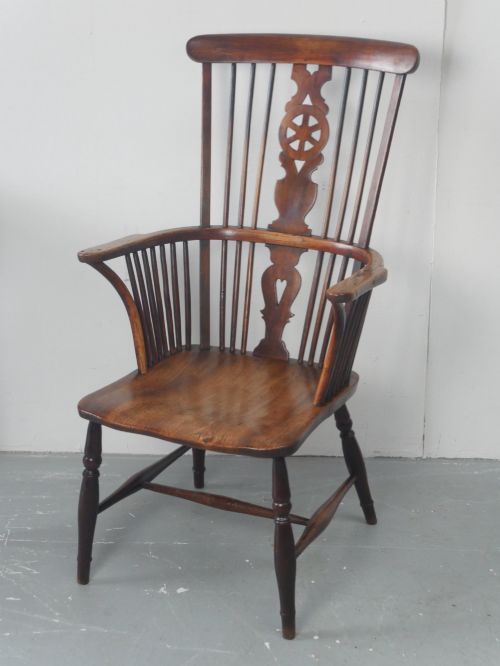
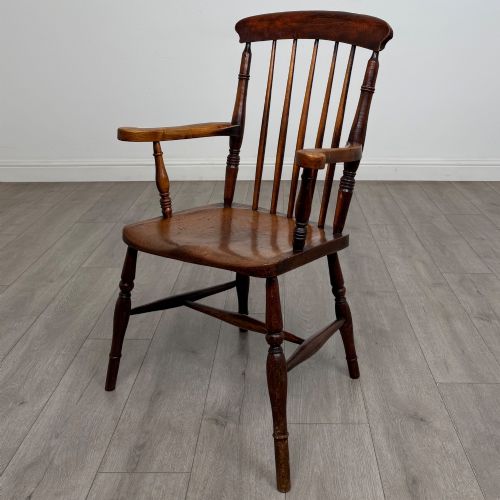
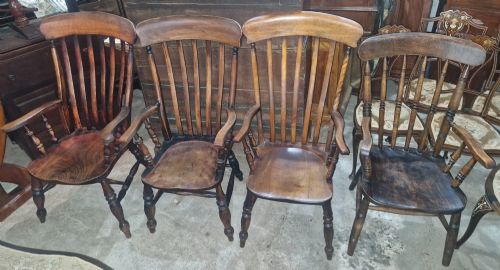
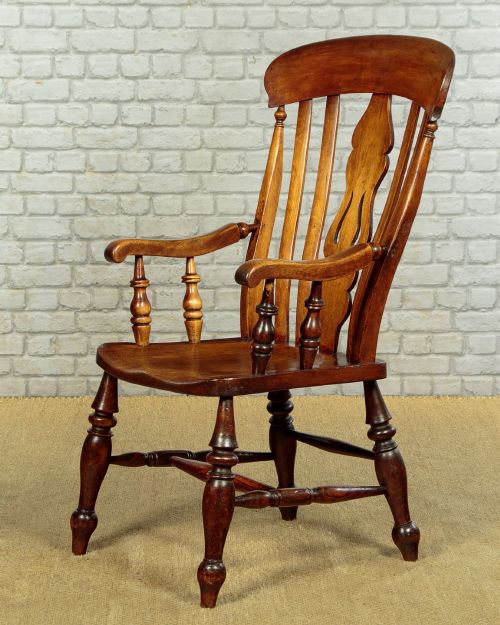
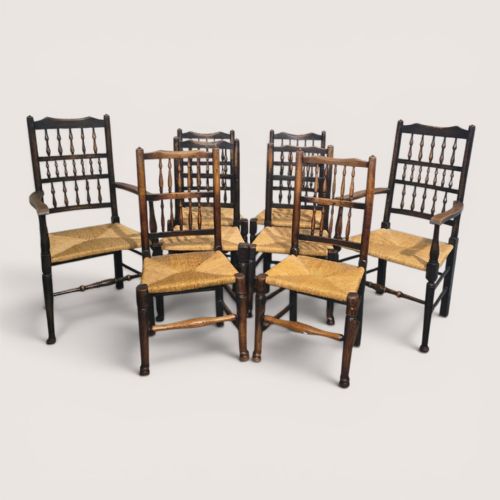
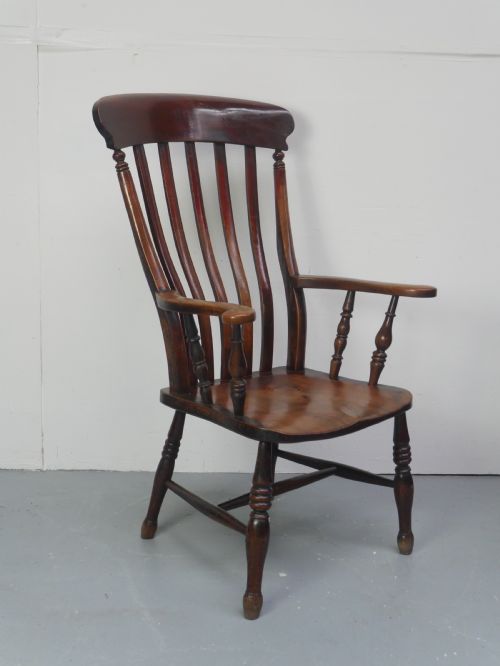
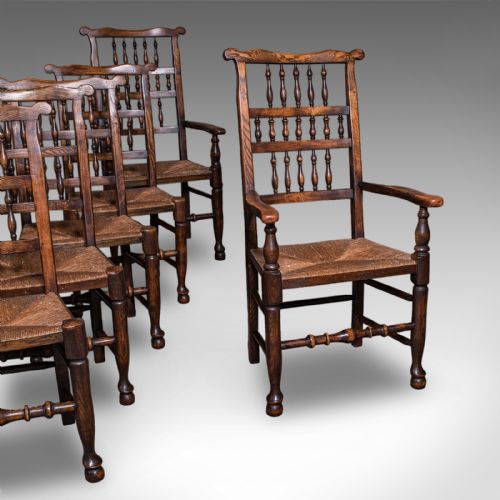
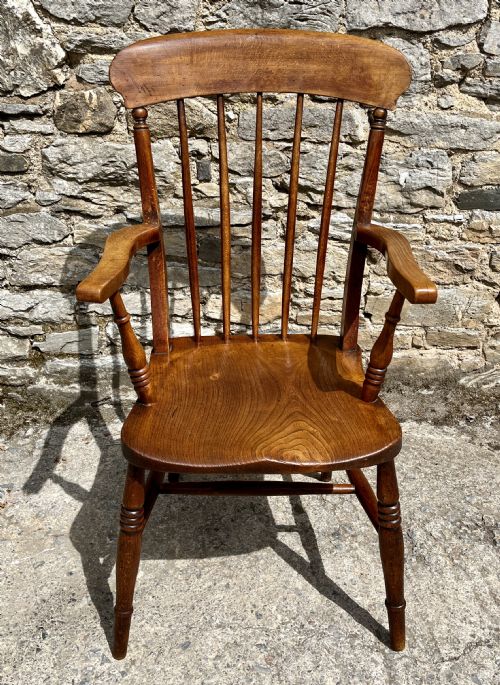
A traditional kitchen carver chair is a substantial seating form designed for domestic service, most frequently encountered here as a nineteenth century Windsor or ladderback armchair. These pieces originate from regional English workshops, spanning Victorian, Edwardian, and Arts and Crafts periods. They serve primarily as carvers at the head of a dining table or as standalone fireside seats.
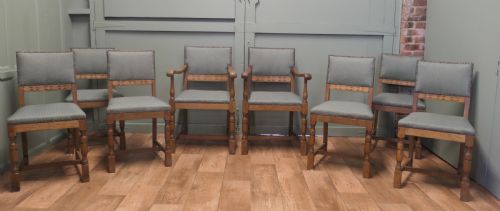
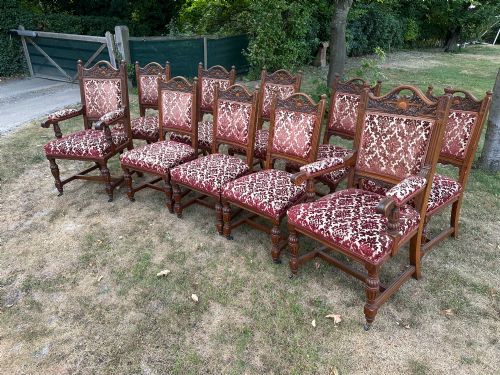
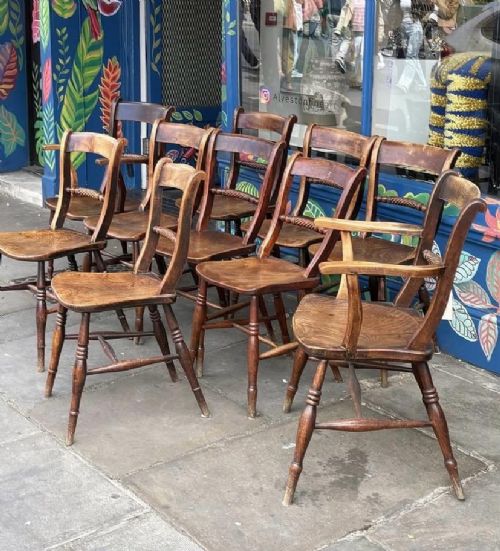
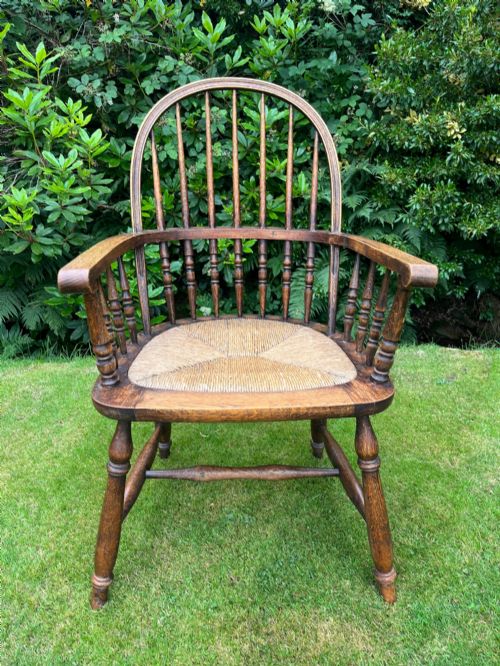
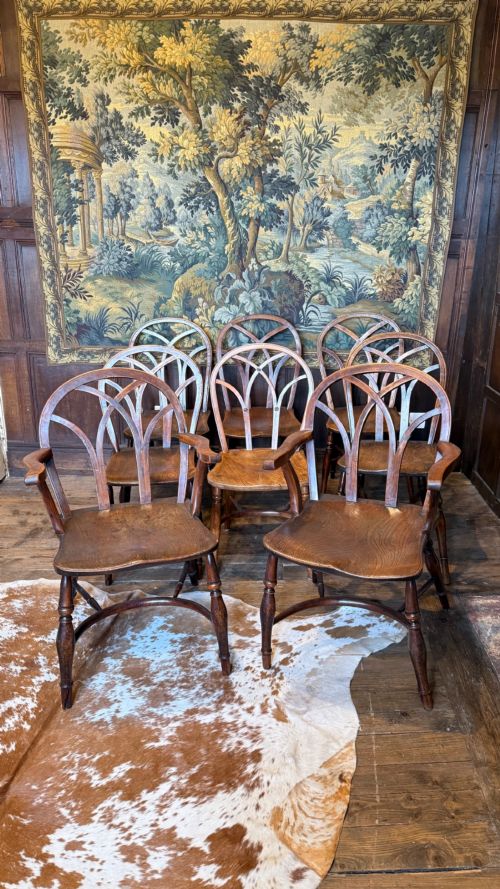
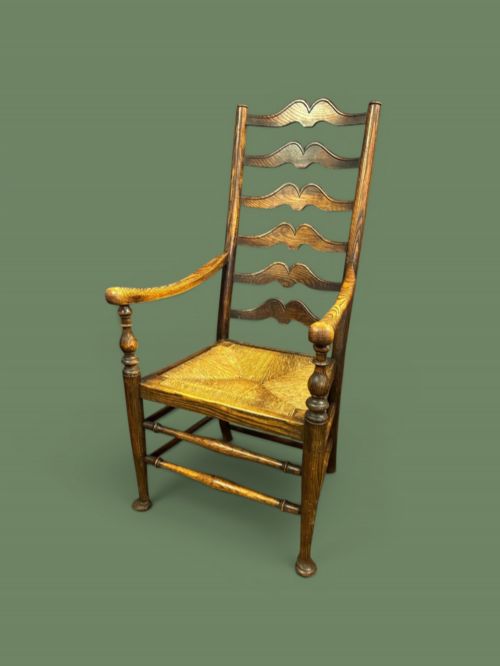
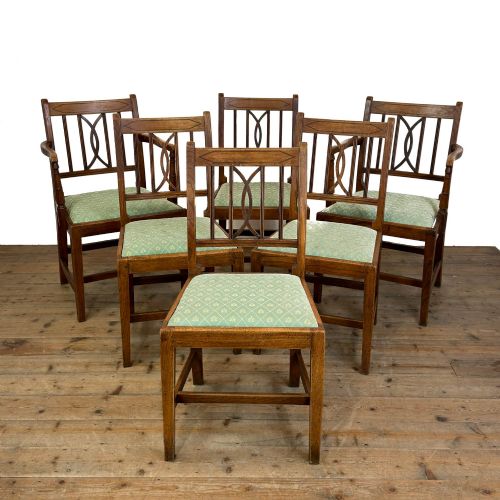
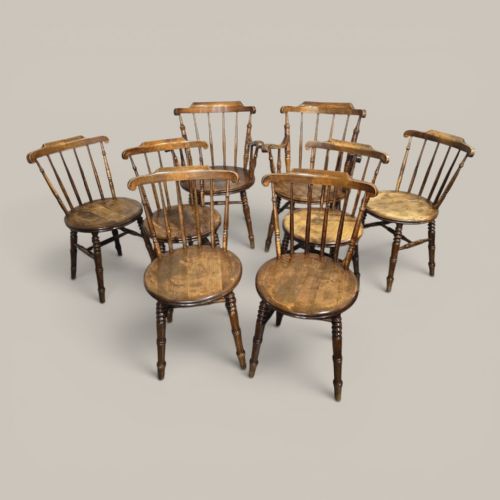
The selection ranges from robust ash and elm Windsors with turned spindle backs to rush seated ladderbacks in beech and oak. Regional variations include Lancashire spindle backs and Gothic influenced farmhouse forms. Buyers typically find single armchairs alongside matched or harlequin sets intended for kitchen and dining spaces.
Materials and construction
Construction relies on a combination of native hardwoods, utilising elm for solid shaped seats, ash or beech for turned spindles and legs, and occasional yew for superior examples. Windsor types employ steam bent bows and wedged tenon joints, while ladderbacks utilise mortise and tenon framing.
Seating surfaces are either carved solid wood planks or woven rush inserts. Joinery is secured with pegged stretchers, including crinoline supports on finer Windsor forms, ensuring rigid stability without metal fixings.
Many of these chairs carry the indentations of generations who sat by the kitchen fire long before electric light existed.
Quality differences
Quality rests in the integrity of the timber selection and the retention of original surface patination. Superior examples display thoughtful grain matching between the elm seat and the contrasting ash or beech superstructure. Lesser pieces show heavy replacement parts or unsympathetic sanding that strips away decades of honest wear.
The sophistication of the turning work on spindles and legs distinguishes workshop tiers. Well defined arm bow curves and crisp turning details separate standard utilitarian seating from superior country carvers.
The Traditional Kitchen Carver Chair Glossary
- Carver
- An armchair designed to match a set of dining chairs, traditionally used by the head of the household.
- Windsor
- A wooden chair built with a heavy solid wooden seat into which the legs and back spindles are directly tenoned.
- Crinoline stretcher
- A curved underframe reinforcement connecting the legs of a Windsor chair to provide lateral strength.
- Rush
- Dried marsh grass twisted into cord and woven to form a durable flexible seat base.
- Ladderback
- A chair style featuring horizontal arched slats between the upright back posts.
Traditional Kitchen Carver Chair: Frequently Asked Questions
How do I care for a rush seat?
Keep rush seated chairs in rooms with stable humidity to prevent the natural fibres from becoming brittle.
Clean gently with a dry brush and avoid placing them near direct heat sources or in damp environments.
Are these chairs suitable for daily dining?
These pieces were built for heavy domestic service and remain robust enough for regular sitting.
Their solid wood construction handles daily dining use comfortably when placed on level flooring.
How can I date an elm Windsor?
Dating relies on observing tool marks, the thickness of the elm seat plank, and the profile of the turnings.
Earlier nineteenth century examples generally exhibit more refined tapered spindles and hand shaped saddle seats.
What is a harlequin set?
A harlequin set is a matched group of chairs gathered together that share similar periods, styles, or materials rather than being made as one original batch.
This method allows buyers to acquire larger dining sets with harmonious country character.