
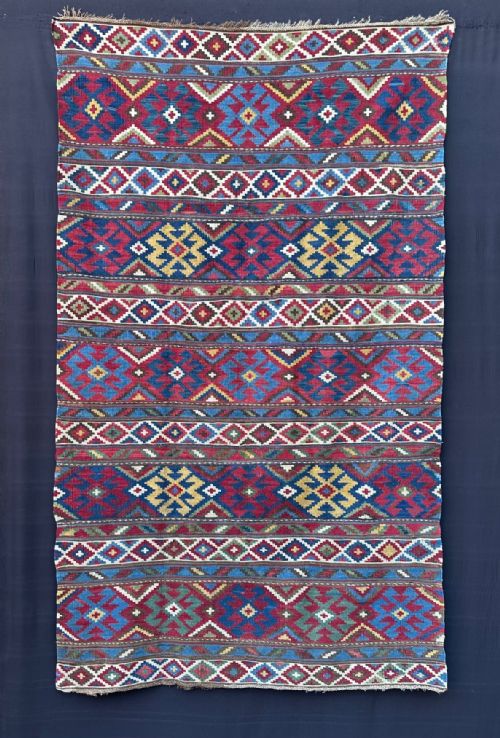
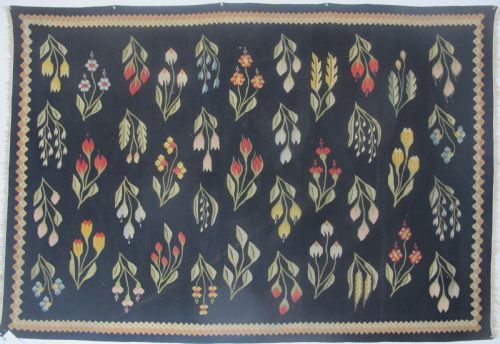
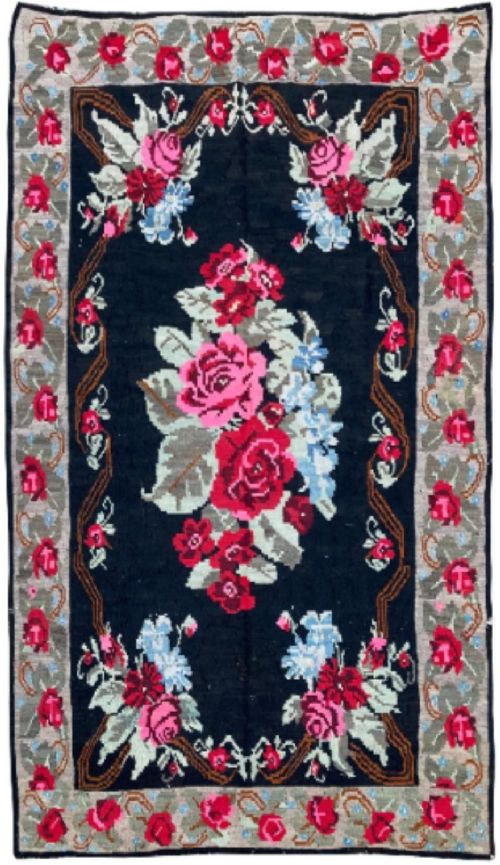
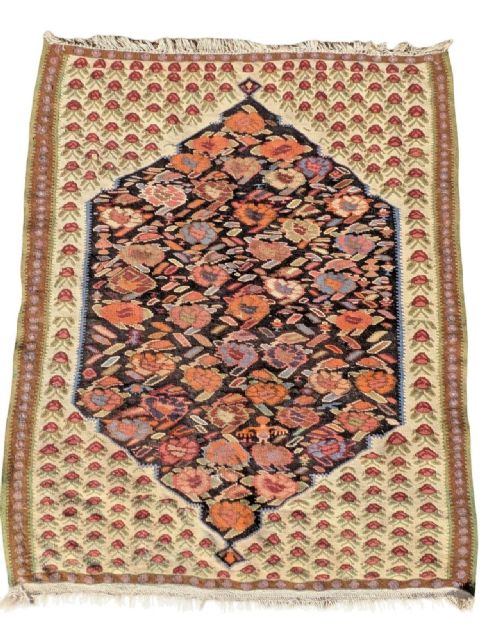




Traditional Kilim Rug
A traditional kilim rug brings rich flatweave texture and geometric village design into a room, offering durability and historical craft.
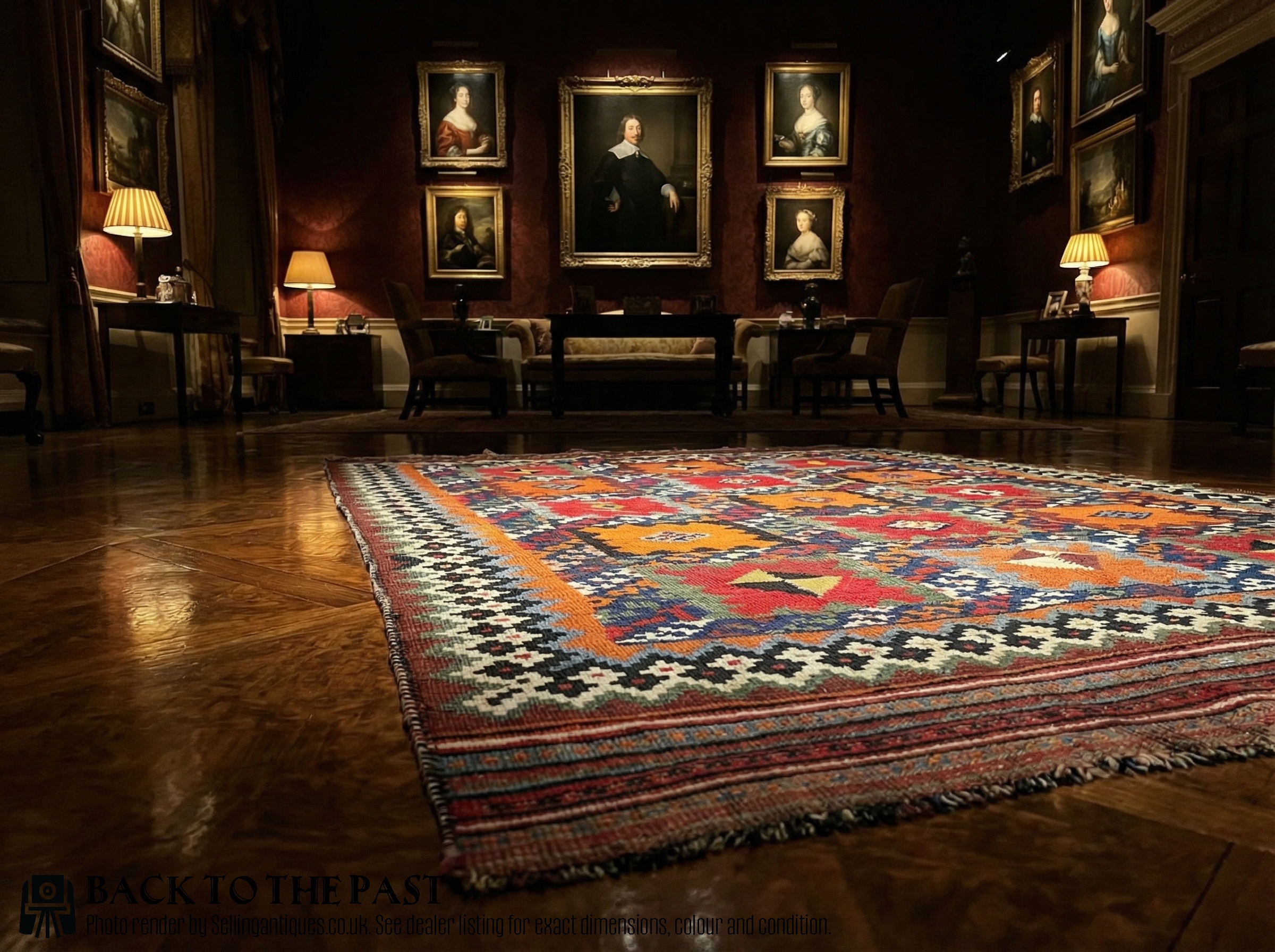
Traditional Kilim Rug
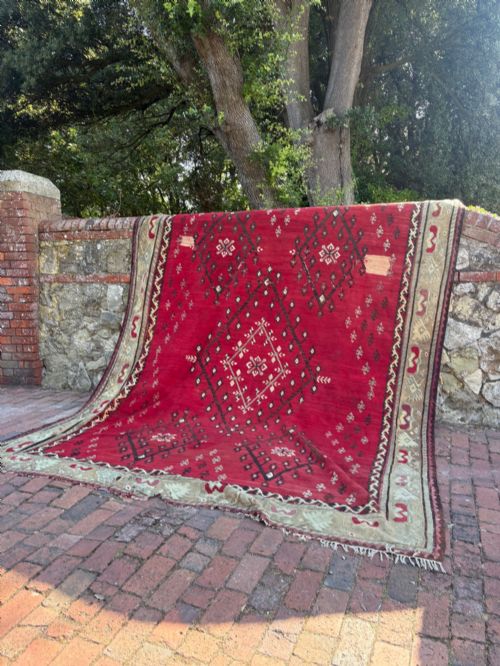
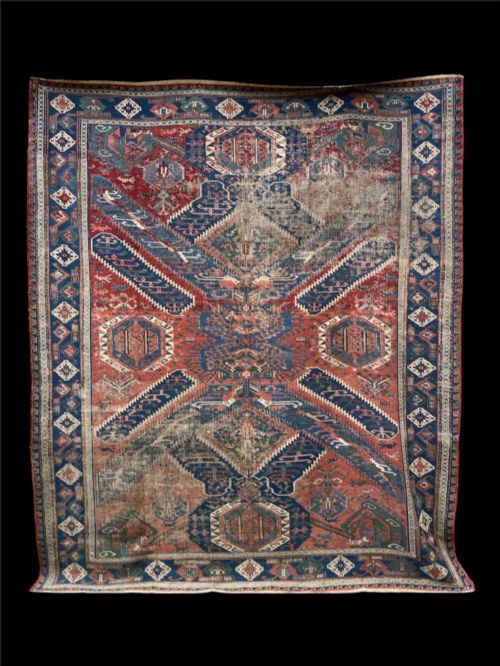
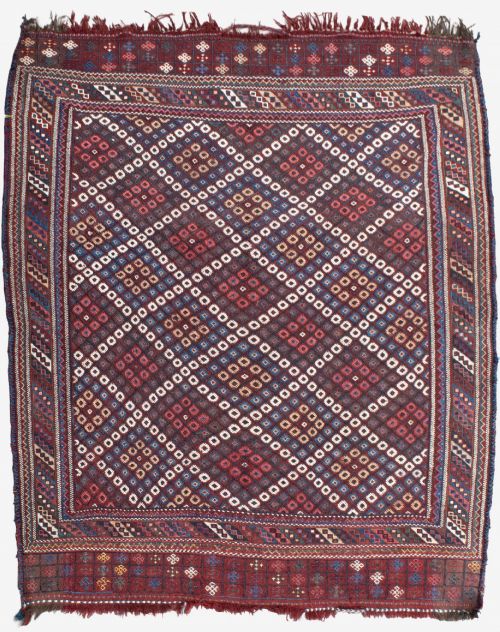
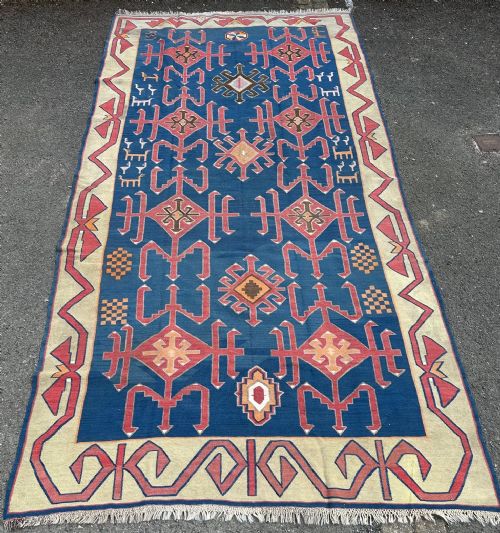
A traditional kilim rug comprises flat-woven textiles produced across Anatolia, the Caucasus, Persia, and Eastern Europe, designed without a pile. These pieces serve functional floor coverings, wall hangings, and household furnishings like cushions.
The versions most commonly met on this page include Turkish regional examples from Malatya, Konya, and Sarkoy, alongside Caucasian tribal pieces and Bessarabian tapestries. Formats range from runner rugs and area rugs to large room-size carpets.
What Varies in Quality
Quality rests upon the tightness of the weave and the precision of the flat-woven structure, where finer density yields a crisper rendering of geometric motifs. The integrity of the hand-spun wool and the depth achieved by natural dyes dictate the visual resonance of the piece.
Regional execution and design complexity also separate examples, with superior workshops producing balanced proportions and harmonious colour palettes that remain intact despite age. Historical repairs and structural alterations influence the overall character and preservation of the textile.
Traditional Kilim Rug Retail Price Guide 2026
Typical asking prices for traditional kilim rug among the pieces listed under this phrase on Sellingantiques today, from the lower quarter to the upper quarter. They describe what is for sale here now, not the wider market.
Several antique cushions owe their current incarnation to industrious nineteenth-century makers who recycled worn-out carpets into soft seating.
The Traditional Kilim Rug Glossary
- Flatweave
- A textile produced without a pile by tightly interlacing warp and weft threads together. This technique creates a lightweight, reversible rug suitable for both floors and walls.
- Warp
- The stationary vertical threads stretched across a loom that form the structural foundation of the textile. Weft threads are woven horizontally through these foundational strands.
- Weft
- The horizontal threads passed through the warp to build up the pattern and colour of the rug. In kilims, these threads are tightly packed to conceal the structural warp entirely.
- Sofreh
- A specialised flat-woven cloth traditionally used for serving meals or processing bread dough. These domestic textiles often display elongated formats and minimalist tribal geometry.
- Slit-weave
- A technique used in flatweaves where the weft thread turns back at the boundary of a colour area, leaving a small vertical slit between adjacent blocks of colour.
Traditional Kilim Rug: Frequently Asked Questions
How do I care for a kilim rug?
Vacuum the flatweave gently using suction alone without a rotating brush bar to protect the wool fibres. Periodic professional cleaning preserves the natural dyes and prevents dust accumulation within the tight weave.
Rotate the rug occasionally to ensure even wear across high-traffic areas. Placing a breathable underlay beneath the textile prevents slipping and reduces friction against the floor.
Can these rugs be used on heated floors?
Wool and cotton flatweaves tolerate underfloor heating well because natural fibres breathe effectively. Ensure the temperature remains moderate to prevent drying out the historic animal and plant materials.
A breathable natural underlay provides sufficient insulation and allows heat to circulate freely beneath the textile.
What is the difference between a kilim and a carpet?
Kilims are woven flat without any raised pile, resulting in a lightweight and reversible textile. Traditional carpets feature a knotted pile that creates a dense, plush surface texture.
Because they lack pile, flatweaves sit lower to the ground and often display sharper, more geometric pattern boundaries determined by the grid of the weave.
How do I distinguish regional styles?
Caucasian and Anatolian pieces typically feature bold geometric medallions, tribal symbols, and strong contrasting borders. European Bessarabian examples lean towards floral tapestry designs rendered in softer tonal gradations.
Examining the structural strip count, colour palette, and specific weaving traditions helps attribute pieces to particular regions such as Shirvan, Karabagh, or Sarkoy.