




Traditional Japanese Imari Plate
A traditional japanese imari plate brings vibrant cobalt and iron red colour to a table, combining hand-painted detail with centuries of kiln tradition.
Traditional Japanese Imari Plate
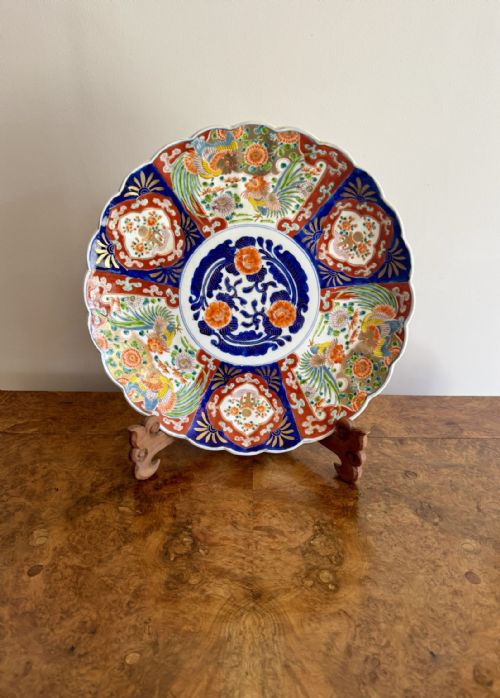
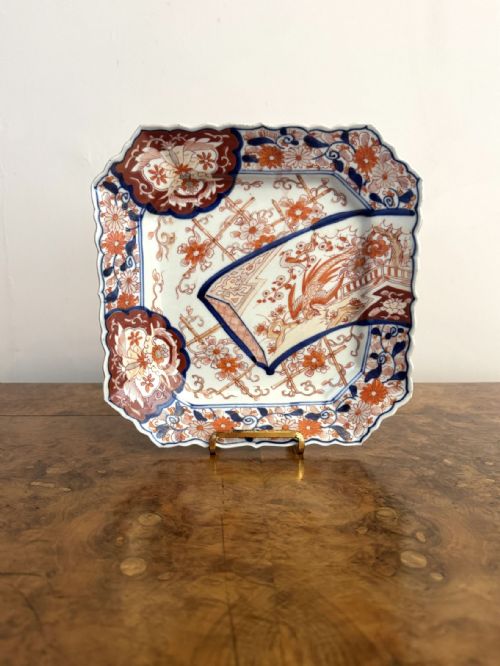
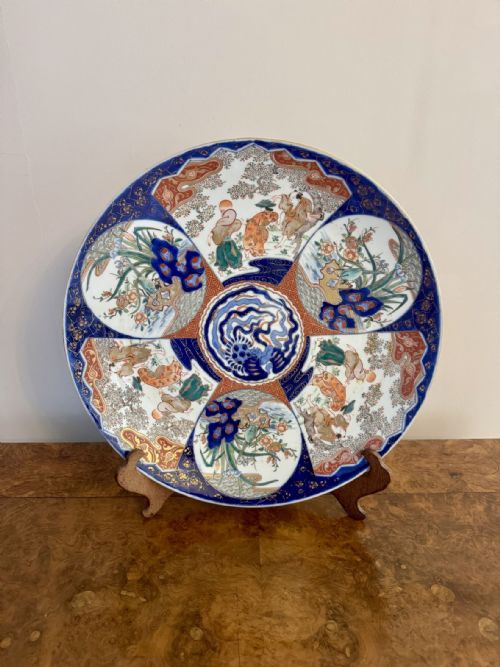
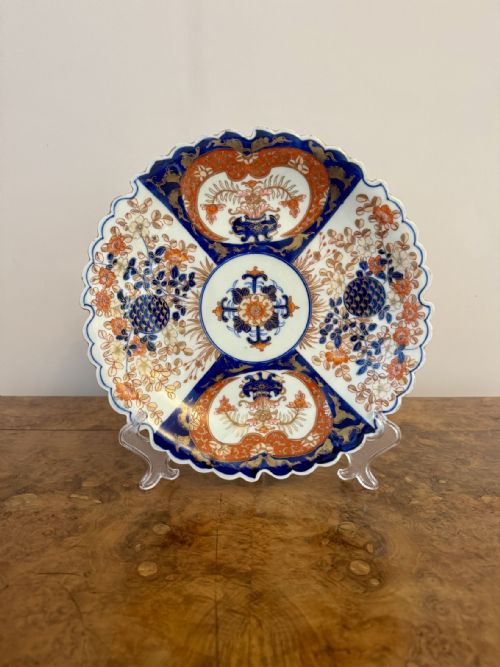
A traditional japanese imari plate is a decorative ceramic piece originating from Japan, often taking the form of a broad charger, a scalloped dish, or a square-shaped tray. The forms seen on this page span the Edo and Meiji periods, stretching through the nineteenth century and into the Edwardian era.
Buyers encounter larger chargers alongside standard plates and grouped collections, which were designed for display or serving. The style draws on centuries of regional porcelain production, most notably associated with Arita in the Hizen province.
How they were made
These pieces are constructed from porcelain and ceramic, painted using cobalt underglaze for deep blue tones before firing. Artisans then applied enamel colours, principally iron red, alongside details in gold leaf and gilt.
The combination of underglaze blue and overglaze enamel required multiple kiln firings to set the palette. Glaze coats seal the ceramic body, providing a smooth, vitreous surface that protects the hand-painted motifs.
Listings feature items spanning the 17th century through the Victorian and Edwardian eras, utilising porcelain, enamel, and gold leaf.
What varies in quality
The division between standard wares and exceptional examples rests on the crispness of the brushwork and the complexity of the composition. Finer pieces demonstrate precise control over cobalt underglaze and rich application of enamel and gilding.
Unusual shapes, such as scalloped edges or square formats, demand greater skill from the potter and painter than standard circular dishes. The depth of the colour saturation and the balance of the floral or geometric panels determine the visual impact of the piece.
The Traditional Japanese Imari Plate Glossary
- Charger
- A large decorative plate intended for display on a sideboard or wall rather than for daily dining use.
- Cobalt Underglaze
- A blue pigment applied to the raw ceramic body before glazing and firing, creating a permanent design beneath the glossy surface.
- Aka-e
- Red picture style, referring to Japanese ceramics decorated predominantly with iron-red enamel overglaze painting.
- Scalloped
- An edge shaped into a series of curves, common on decorative plates and dishes to add textural interest.
Traditional Japanese Imari Plate: Frequently Asked Questions
What is a traditional japanese imari plate?
A traditional japanese imari plate is a porcelain or ceramic dish decorated in characteristic cobalt blue, iron red, and gold leaf.
These pieces were produced in Japan for both domestic use and export, developing distinct styles across the Edo and Meiji periods.
How were these plates used historically?
Larger chargers and platters served as centrepieces or display items in wealthy households, while standard plates were utilised for dining and presentation.
Their striking palette made them popular items for display on walls and sideboards during the Victorian and Edwardian eras.
How do I date a traditional japanese imari plate?
Dating relies on examining the ceramic body, the richness of the enamel, and stylistic traits associated with the Meiji or Edo periods.
Nineteenth-century examples often exhibit dense hand-painted panels and heavier porcelain bodies compared to earlier wares.