



Traditional Harbour Scene Painting
A traditional harbour scene painting brings coastal life, fishing boats and tidal waters from past centuries directly onto a wall.
Traditional Harbour Scene Painting
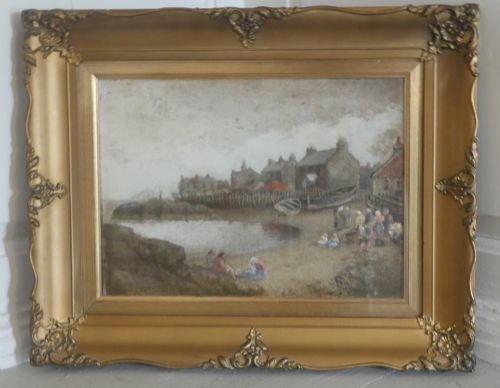
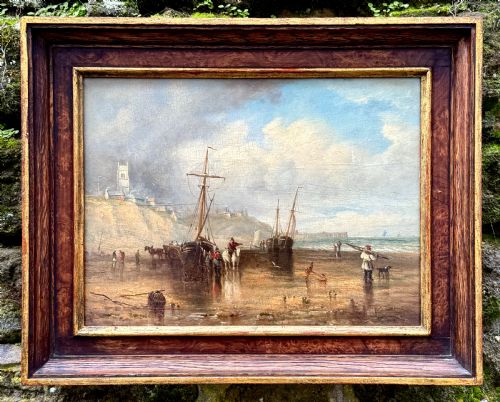
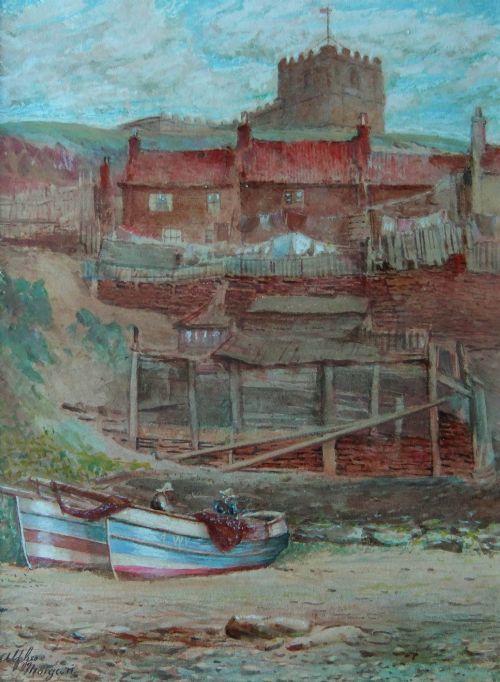
A traditional harbour scene painting captures coastal views, maritime activity and shipping ports primarily from the nineteenth and early twentieth centuries. These works record busy quays, fishing vessels and coastal villages across Cornwall, Yorkshire, Scotland and European waters.
You will encounter watercolours on paper and oil paintings on canvas, board or panel, often preserved in period gilt wood frames. The selection ranges from detailed Victorian marine watercolours to broader post-impressionist coastal views.
Makers and named artists represented here include figures such as William Banks Fortescue, Alfred G. Morgan, Arthur Tucker and Walter Henry Sweet. Many pieces locate the viewer in specific British and continental ports like St Ives, Whitby, Mousehole and Rotterdam.
Materials and technique
Artists produced these works using oil paint on canvas, panel and board, or watercolour pigment on paper. Oil pigments allowed for rich textures and layered depictions of choppy seas and evening skies, while watercolour offered translucent washes suited to coastal light.
Supports of wood panel and heavy paper were prepared to receive oil or water-based media, sometimes paired with hand-enamelled polychrome frames. Surviving works retain their original timber framing, which frequently incorporates gilt wood moulding.
Fishermen's daughters and bustling fish markets share these historic quays with quiet moonlight on the Medway.
Judging quality
Quality rests upon the handling of light, atmosphere and perspective within the marine setting. Stronger works demonstrate confident brushwork or watercolour washes that convey the movement of water and the detail of shipping craft without stiffness.
The integration of the frame with the painting elevates a piece. Original gilt wood frames or decorative borders appropriate to the period contribute significantly to the overall presence of the framed artwork.
Edward Mills·William Banks Fortescue·Thomas Creswick·Alfred G. Morgan·William Edward Webb·James Kyd·Arthur Tucker·John Bell·James Webb·John Callow·Ralph Todd·Walter Sweet·Jane Vivian·Walter Henry Sweet·Hubert Thornley·Charles France·Robert Leslie Howey·Edward Fletcher·William Dommersen
The Traditional Harbour Scene Painting Glossary
- Oil on Canvas
- A painting technique where oil paint is applied to a woven fabric stretched across a wooden frame. This method allows for deep colour saturation and visible brush texture.
- Watercolour
- A paint medium where coloured pigments are suspended in a water-based solution and applied to paper. It produces transparent effects ideal for capturing soft skies and coastal light.
- Marine Landscape
- A genre of art focusing primarily on the sea, ships, harbours and coastal architecture. These works document historical maritime trades and coastal topography.
Traditional Harbour Scene Painting: Frequently Asked Questions
What periods do these paintings come from?
The works span the nineteenth century through to the mid-twentieth century, with a strong representation of Victorian and Edwardian pieces.
Dated examples often sit between the eighteen-eighties and the nineteen-thirties, reflecting periods of intense maritime and coastal artistic production.
Where do these harbour scenes take place?
Locations include notable British fishing ports such as St Ives, Whitby, Mousehole, Staithes and Peel Harbour on the Isle of Man. Other works depict continental scenes including Rotterdam and Venetian townscapes.
Many listings record specific local waters, rivers and coastal inlets across England, Scotland and Europe.
How should I care for a watercolour painting?
Watercolour works on paper require protection from direct sunlight to prevent fading of the pigments. Glazing with glass helps shield the paper surface from airborne dust and moisture.
Displaying them in steady indoor conditions away from damp walls preserves both the paper support and the frame.
Are these paintings supplied with frames?
The selection includes works housed in period gilt wood frames, timber mouldings and hand-enamelled polychrome surrounds. Many retain their original framing from the time of creation.
Checking the listing details confirms whether a particular piece includes its historic frame.