

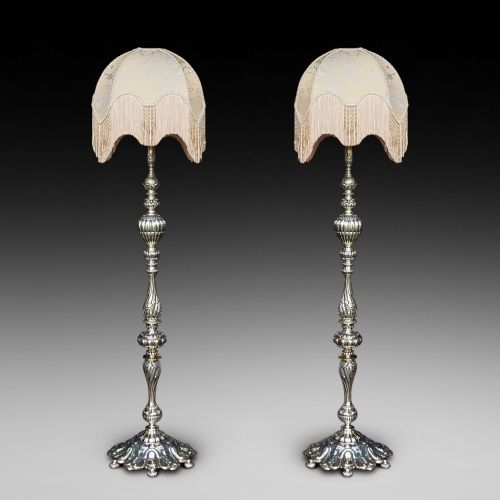

Traditional Floor Standing Lamp
A traditional floor standing lamp brings period weight and steady illumination to a corner, drawing on centuries of metalwork and cabinet-making.
Traditional Floor Standing Lamp
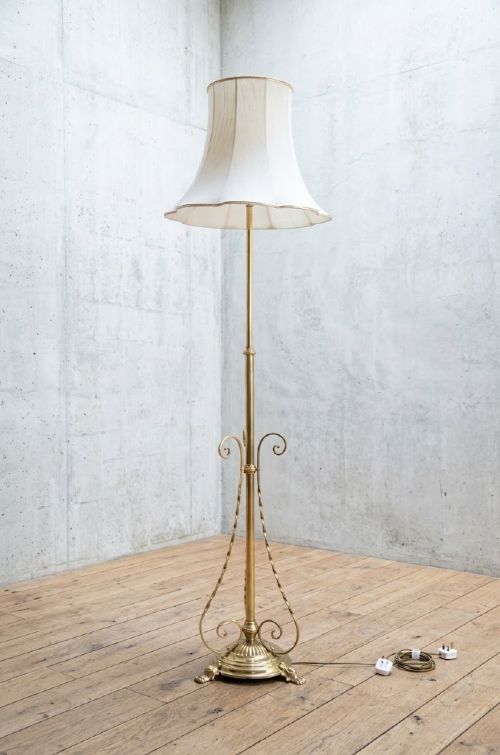
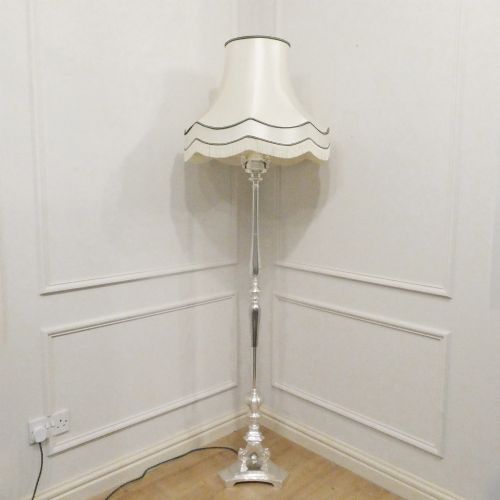
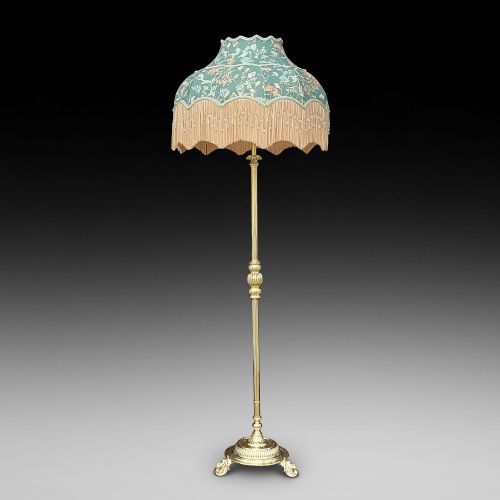
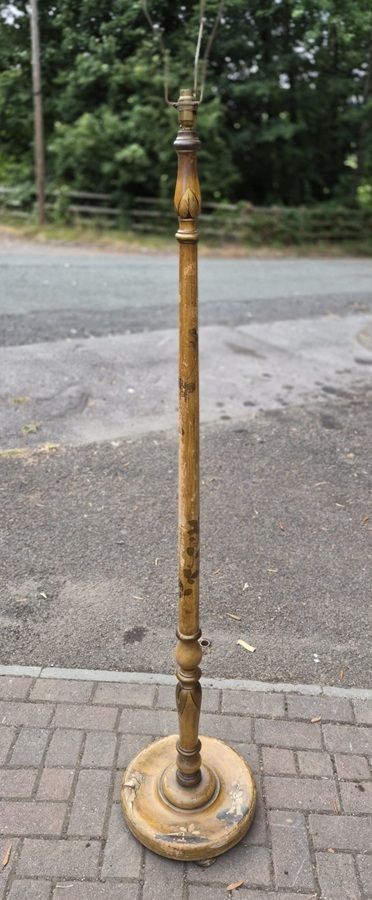
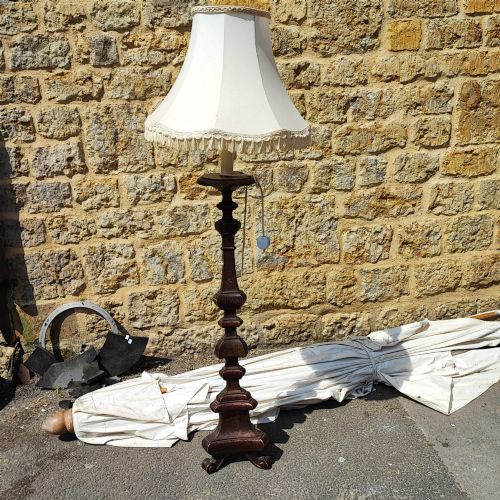
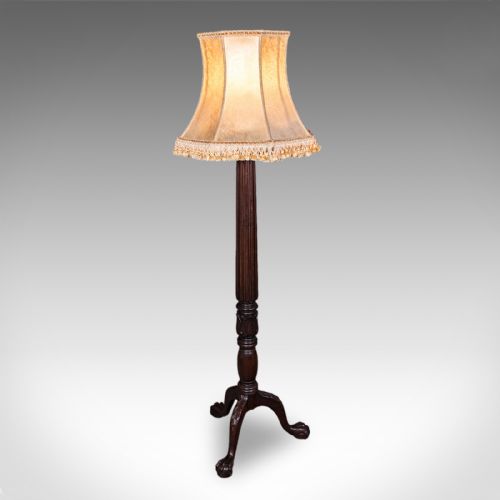
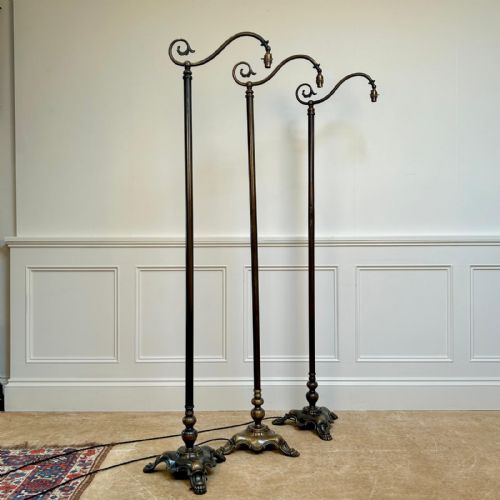
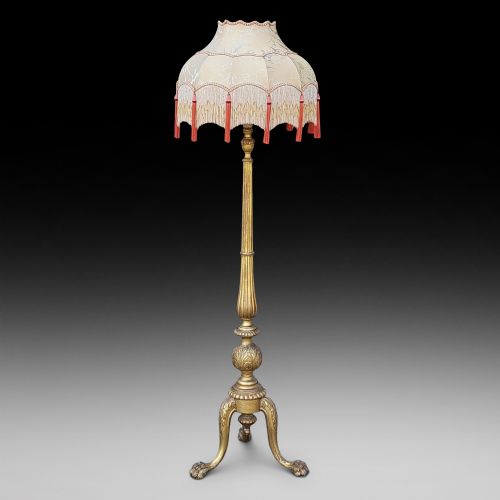
A traditional floor standing lamp is a tall illuminating fixture designed to stand directly on the floor, frequently encountered on this page in brass, oak, and mahogany variants from the Victorian, Edwardian, and early twentieth-century periods.
These pieces encompass standard lamps and adjustable floor lamps built in styles ranging from Arts and Crafts and Art Nouveau to Neoclassical and Chinoiserie.
Buyers seeking a traditional floor standing lamp will discover examples incorporating telescopic stems, heavy cast bases, and painted lacquer finishes suited to period interiors.
Materials and Manufacture
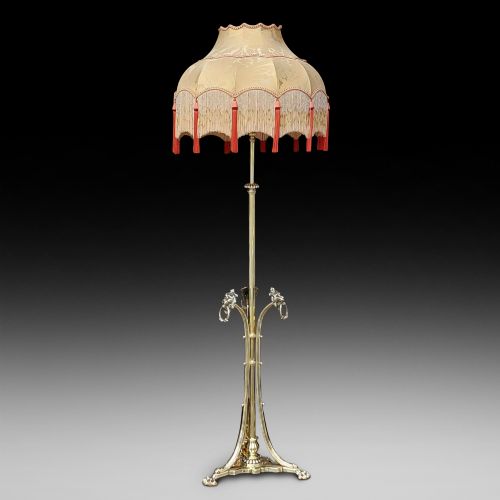
Makers utilised cast and patinated brass, wrought iron, and heavy cast iron to construct the upright standards and bases, often incorporating mechanical height-adjustment stems.
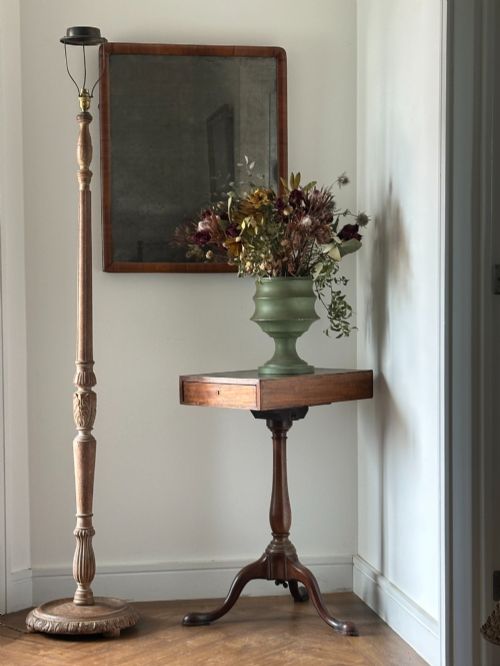
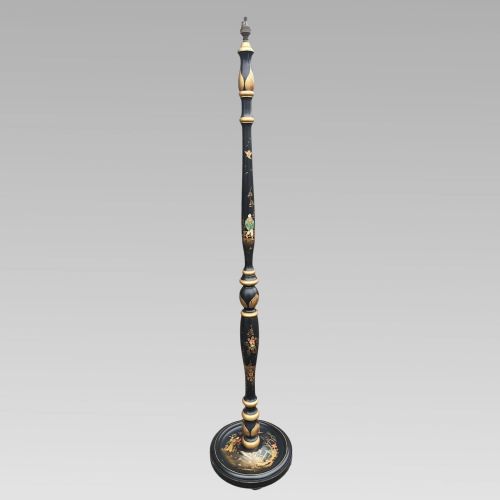
Timber examples rely on carved mahogany, limed oak, and parcel-gilt or giltwood, sometimes complemented by hand-decorated black and red lacquered Chinoiserie surfaces.
Wiring and fittings have frequently been updated to modern standards while retaining the original weighted metal bases and wooden columns.
Listings feature standard lamps spanning the Victorian, Edwardian, and 1920s periods, constructed from brass, oak, mahogany, and wrought iron.
Evaluating Quality
The distinction between standard execution and finer work lies in the heft of the metal and the crispness of the carving, where solid cast brass columns and deeply carved mahogany outlast lighter substitutes.
Mechanism precision defines superior adjustable floor lamps, ensuring that telescopic stems and swivel arms hold their position securely without slipping or requiring excessive tightening.
The Traditional Floor Standing Lamp Glossary
- Standard Lamp
- A traditional British term for a floor-standing lamp designed to support a fabric shade.
- Telescopic
- A shaft construction allowing the height of the lamp to be adjusted up and down by sliding an inner tube within an outer column.
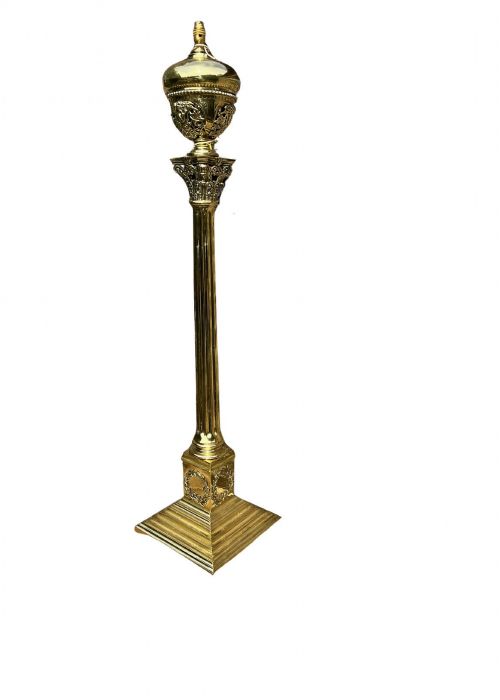
- Corinthian Column
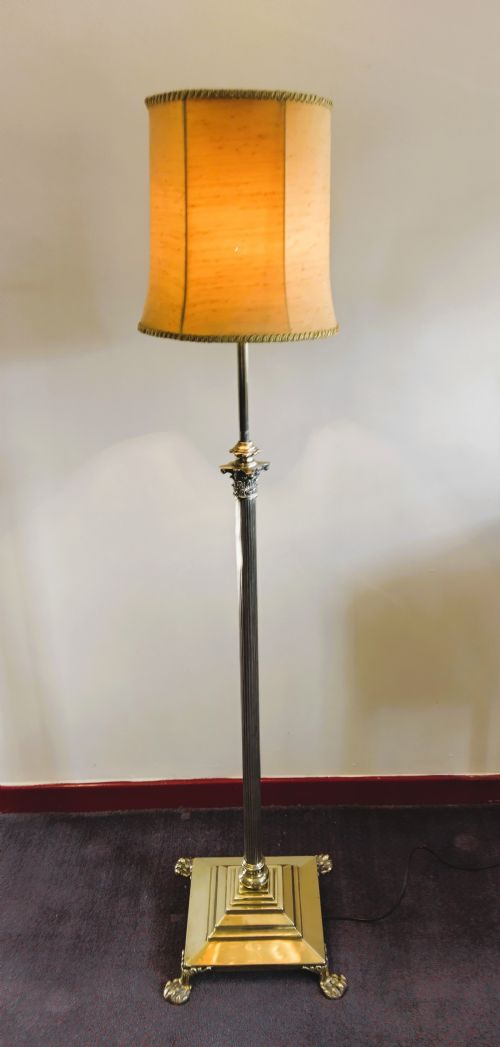
- A classical architectural column form frequently adapted for brass floor lamp standards, featuring ornate acanthus-leaf capitals.
- Chinoiserie
- European decorative style employing Chinese-inspired motifs, often seen on lacquered wooden floor lamp standards.
- Parcel Gilt
- Wood or metal partially gilded with gold leaf, highlighting carved details on standard lamp bases.
Traditional Floor Standing Lamp: Frequently Asked Questions
How do I adjust the height?
Many period examples utilise a telescopic mechanism or a thumb screw on the central column. This allows the inner stem to slide upward and lock securely at the desired elevation.
Care should be taken when adjusting older brass stems to avoid straining the internal wiring or thread components.
Are these lamps safe to use today?
Most surviving pieces have been rewired by dealers or specialists to meet current electrical standards. Solid brass and cast iron bases provide the necessary stability for daily use.
It remains sensible to have any antique lighting checked by a qualified electrician before installation in the home.
How do I identify a Victorian standard lamp?
Victorian pieces frequently feature heavy brass construction, Corinthian columns, or dark carved mahogany. Telescopic brass oil lamp conversions also date from this era.
Stylistic cues include ornate floral openwork bases and Neoclassical revival details.
Where should I place a standard lamp?
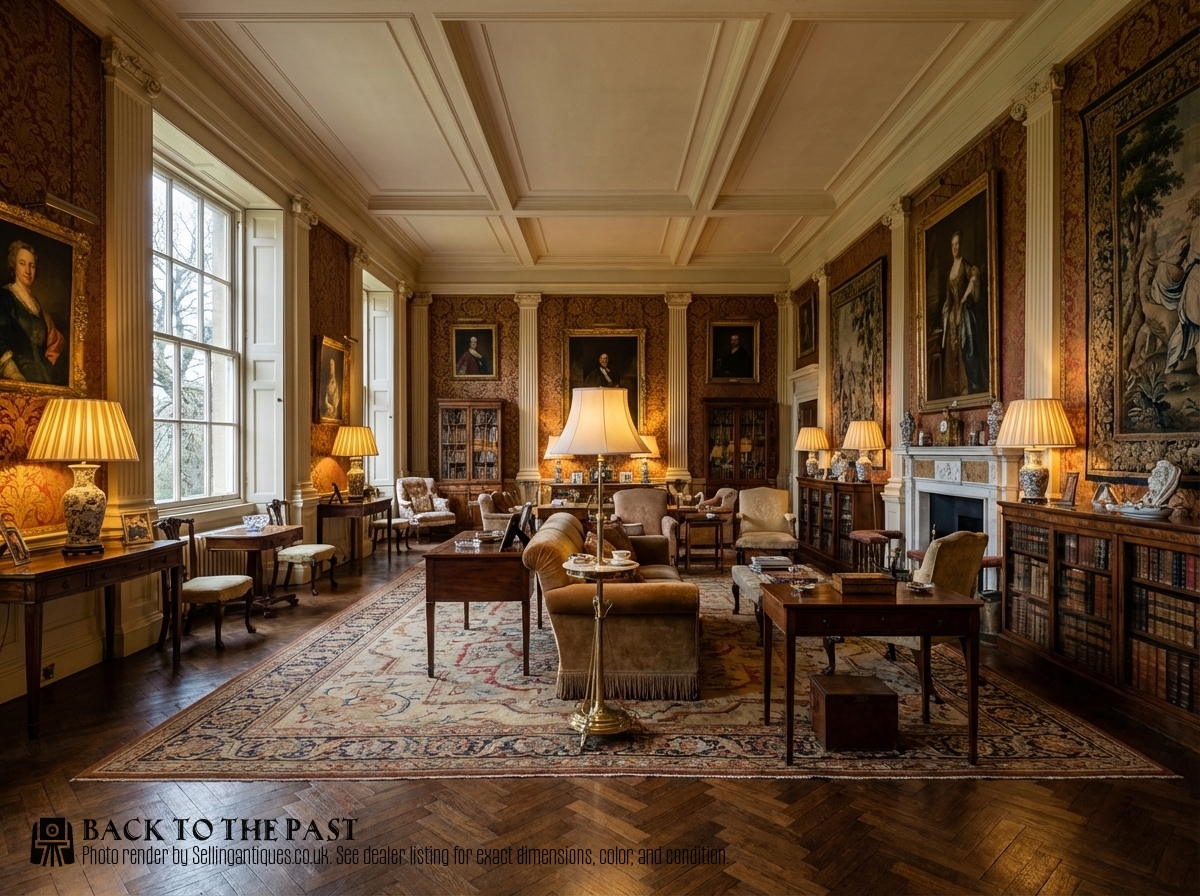
These tall fixtures suit dark corners, reading chairs, or flanking sideboards where overhead light is insufficient. Adjustable arms allow direct light placement for tasks.
Their substantial height and weight require a stable floor surface away from high-traffic walkways.