
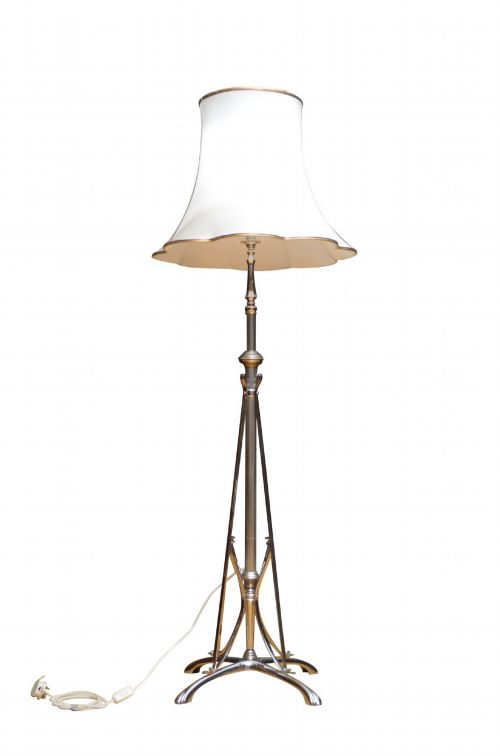


Silver Standard Lamp
A silver standard lamp brings height, poise, and targeted illumination to a corner, standing among the most striking vertical lighting options available.
Silver Standard Lamp
A silver standard lamp is a tall floor-standing light fixture designed to illuminate a room from an elevated position. When searching for a silver standard lamp, buyers encounter pieces spanning the Victorian, Edwardian, and Art Deco periods, alongside items from the 1920s and 1930s.
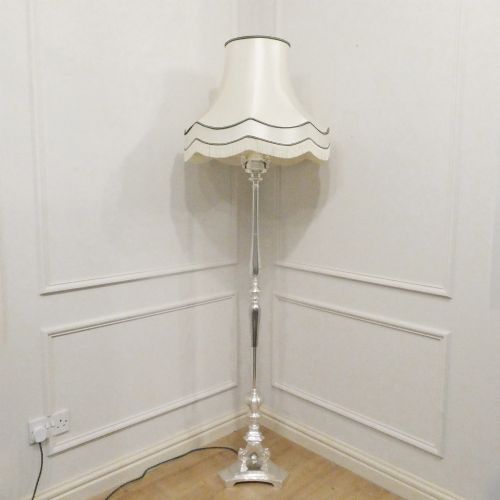
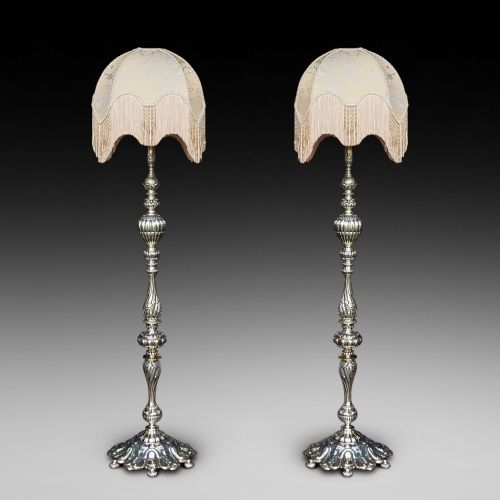
Edwardian and Victorian iterations frequently display classical revival details, whereas 1920s and 1930s pieces lean towards Art Deco forms, chrome, and streamlined steel. Buyers also find items paired with fabric shades and fringe elements.
Materials and construction
These lamps rely on metal cores and structures, utilising brass, bronze, steel, and chrome to build rigid vertical columns. Surfaces are frequently treated with silver plate, silver gilt, or silvered finishes applied to wood, brass, or base metals.
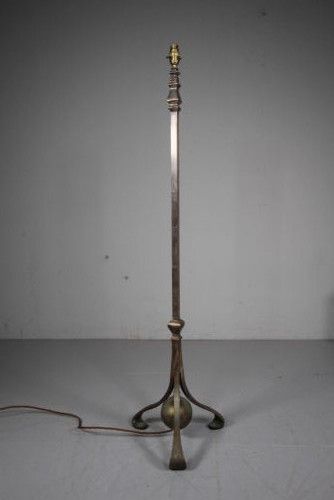
Makers integrated mechanical functionality through adjustable telescopic mechanisms, articulated reading arms, and screw fittings. Supporting components incorporate glass inserts, fabric shades, and decorative fringe to complete the assembly.
The inventory records silver standard lamps spanning the Victorian, Edwardian, 1920, and 1930 periods, utilising silver plate, chrome, brass, and glass.
Evaluating craftsmanship and design
Quality differentiates through the execution of surface treatments, such as the depth and evenness of silver plating or silvered finishes over brass and wood. Finer examples maintain smooth operation in adjustable telescopic mechanisms and solid structural weight in bases like heavy brass or cast metal.
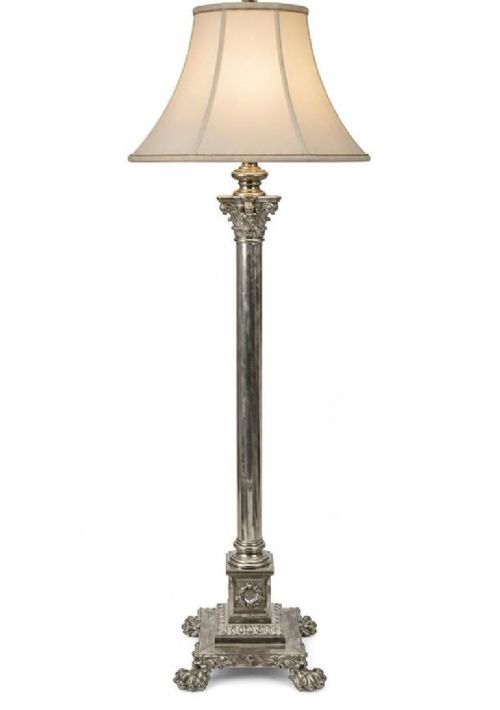
Stylistic coherence dictates the hierarchy of pieces, separating standard production models from elaborately detailed Corinthian column designs or sculptural Art Deco uplighters and torchieres. The integration of period-appropriate materials like glass inserts and original hardware further elevates a piece.
The Silver Standard Lamp Glossary
- Standard lamp
- A tall floor lamp designed to stand independently and hold a light source at height. It serves as both a primary room light and a decorative vertical element.
- Telescopic
- An adjustable shaft mechanism allowing the height of the lamp to extend or retract. This feature was popular in Victorian and Edwardian examples for modifying light reach.
- Torchiere
- An uplighting floor lamp designed to cast illumination upward towards the ceiling. Art Deco versions frequently utilise this form for ambient room lighting.
- Silver plate
- A thin layer of silver bonded to a base metal core such as brass or copper. It provides the visual appearance of solid silver while utilising more accessible structural materials.
- Corinthian column
- A classical architectural column style featuring ornate capital details at the top. This motif appears frequently in period standard lamp designs influenced by revival styles.
Silver Standard Lamp: Frequently Asked Questions
What is a standard lamp?
A standard lamp is simply a traditional British term for a tall floor lamp. These fixtures provide vertical lighting capacity without requiring table space.
They function as independent furniture pieces that anchor room corners or sit beside seating areas.
Are these lamps adjustable?
Many period examples include adjustable telescopic shafts or articulated reading arms. These mechanical elements allowed users to alter the height and angle of illumination.
Original adjustment screws and smooth sliding mechanisms indicate thoughtful period manufacturing.
What is an uplighter standard lamp?
An uplighter directs light straight up toward the ceiling rather than diffusing it outward through a standard side-facing shade. This style gained prominence during the Art Deco period of the 1920s and 1930s.
They create soft, indirect ambient illumination across a space.