


Silvered Floor Lamp
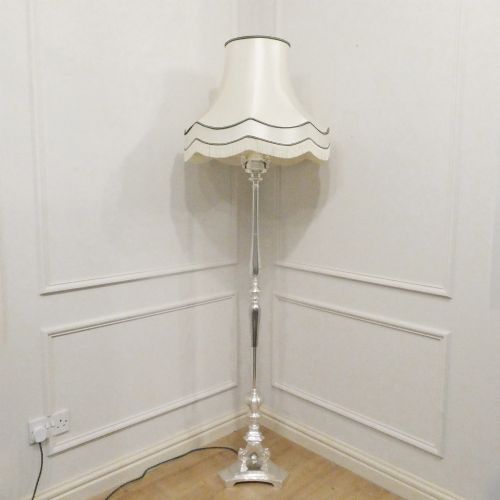
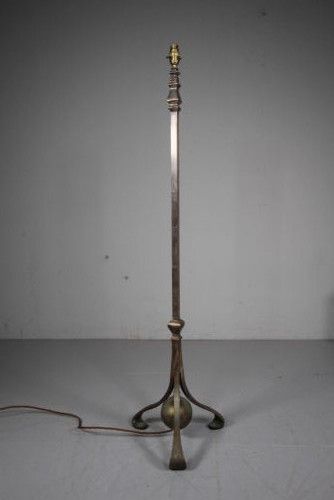
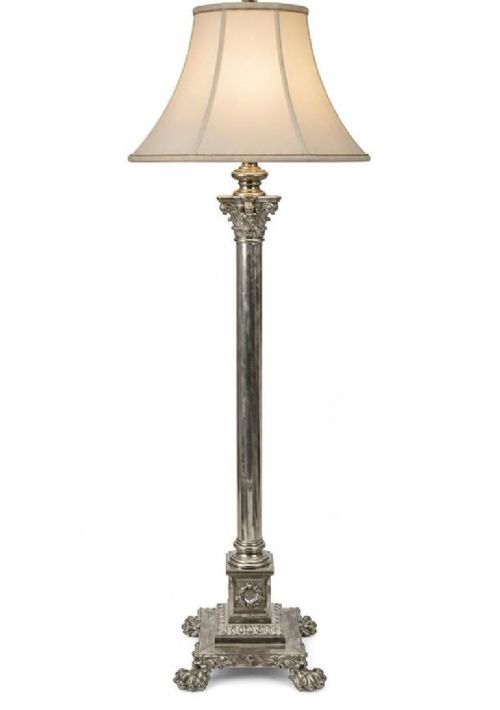
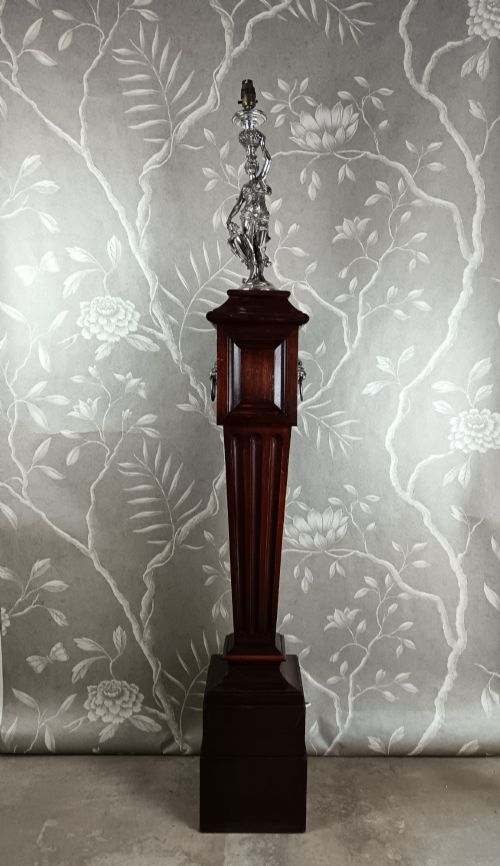
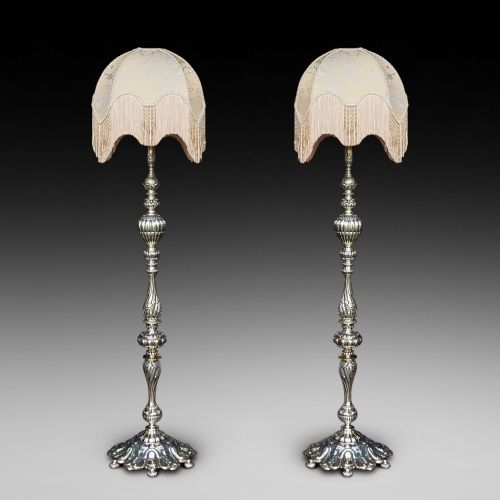
These silvered floor lamp examples combine practical illumination with early twentieth-century decorative metalwork, bringing period character and striking vertical presence to a room.
Silvered Floor Lamp
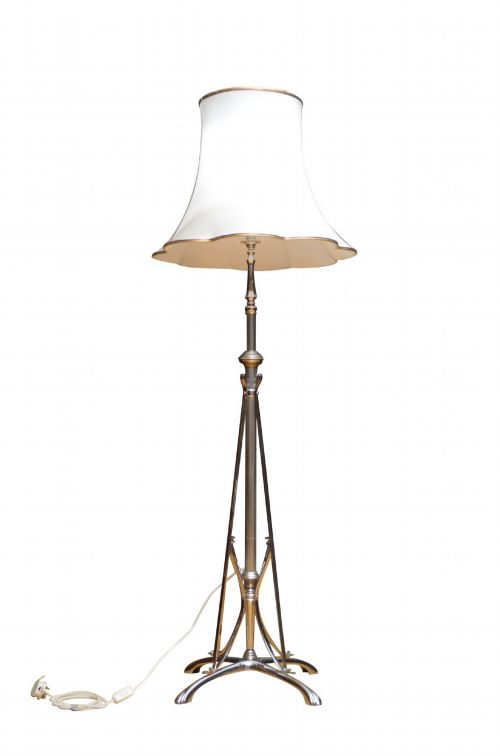
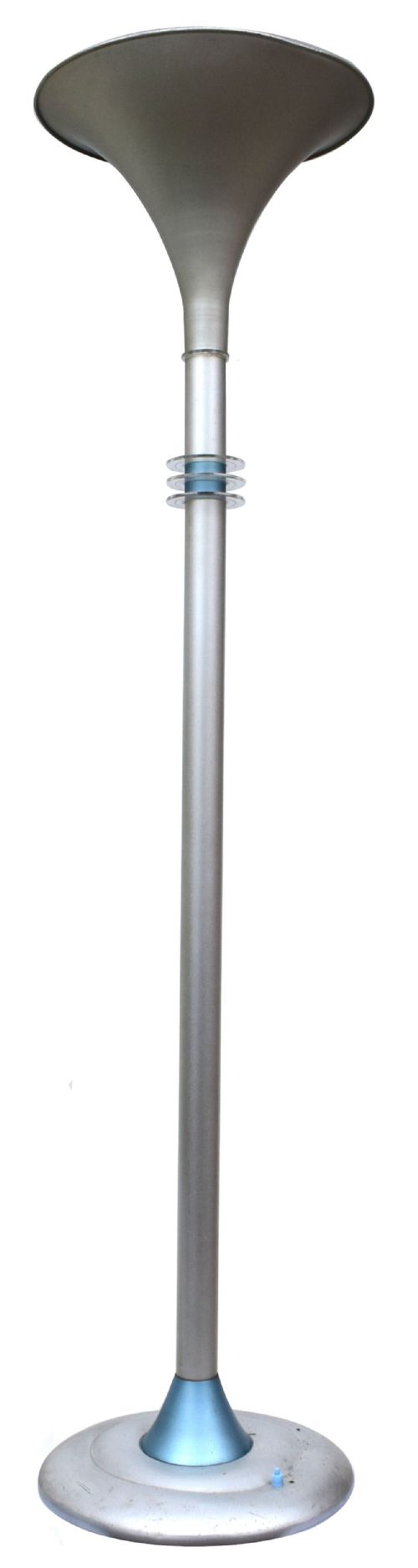
A silvered floor lamp provides height and ambient or directional light, standing as a substantial architectural element in an interior. The pieces gathered under the search phrase silvered floor lamp encompass standard lamps, torchiere designs, and adjustable uplighters from the early twentieth century.
Most examples date from the Edwardian era through the nineteen-thirties, spanning Victorian revivals, Art Deco geometries, and Jugendstil curves. Forms range from simple stepped pedestals to figural standards and adjustable brass or chrome columns.
Buyers will encounter variants with fabric shades, fringe details, and glass components atop metal bases. The finish typically involves silver plating over brass or copper, or polished chrome surfaces designed to catch the light.
Materials and construction
Construction relies heavily on metals such as brass, chrome, and silver plate, often paired with weighted iron bases for stability. Makers utilised turning, casting, and plating techniques to achieve durable metallic surfaces with reflective qualities.
Electrical wiring and adjustable mechanisms were integrated into standard lamps and torchiere designs during the early twentieth century, replacing earlier gas fittings. Shade elements incorporate woven fabric, fringe trimming, and pressed or blown glass bowls.
Listings for this phrase span the Edwardian era through the nineteen-thirties, featuring brass, chrome, and silver-plated metal.
Judging quality in silvered lighting
Quality rests on the integrity of the metalwork, the weight of the base, and the precision of any mechanical adjustment screw or riser. Heavy gauge brass or solid cast metal parts distinguish better pieces from lighter, mass-produced alternatives.
The preservation of the silver plating or chrome finish dictates visual appeal, as does the crispness of cast decorative details such as neoclassical revival motifs or Art Deco stepped terraces. Original proportions and unaltered wiring components retain historical integrity.
WMF
The Silvered Floor Lamp Glossary
- Torchiere
- A tall floor lamp designed to direct light upward toward the ceiling for indirect illumination. These fixtures often feature bowl-shaped shades or upturned diffusers.
- Standard lamp
- A traditional British term for a floor lamp designed to stand beside furniture and hold a shaded light bulb. They frequently incorporate wooden or metal support columns.
- Silver plate
- A thin layer of silver bonded to a base metal such as brass or copper. This technique provides the appearance of solid silver at a lower weight and cost.
- Art Deco
- A design style from the nineteen-twenties and nineteen-thirties characterised by geometric shapes, streamlined forms, and industrial materials. It succeeded the floral curves of Art Nouveau and Jugendstil.
- Edwardian
- Pertaining to the reign of King Edward VII, spanning from nineteen hundred to nineteen ten. Furniture and lighting from this period often revisited neoclassical or Victorian themes with lighter proportions.
Silvered Floor Lamp: Frequently Asked Questions
What is a torchiere floor lamp?
A torchiere is a tall floor lamp that directs light upward toward the ceiling, creating ambient room illumination rather than direct task lighting. These pieces often feature prominent bowls or diffusers.
They gained popularity during the Art Deco period as electrification allowed for more varied and sculptural interior lighting designs.
How do I date a standard lamp?
Dating relies on stylistic clues, manufacturing techniques, and materials such as heavy brass, silver plate, or chrome. Edwardian examples often show neoclassical revival details, while nineteen-thirties pieces favour geometric Art Deco lines.
Weighted bases and switches also provide clues to the era of manufacture and subsequent electrical updates.
Are these lamps adjustable?
Many Edwardian and early twentieth-century standard lamps feature telescopic mechanisms or sliding collars to alter the overall height. These functional elements allowed users to adapt the light source for reading or ambient glow.
When examining an adjustable lamp, check that the riser moves smoothly and holds its position securely.