

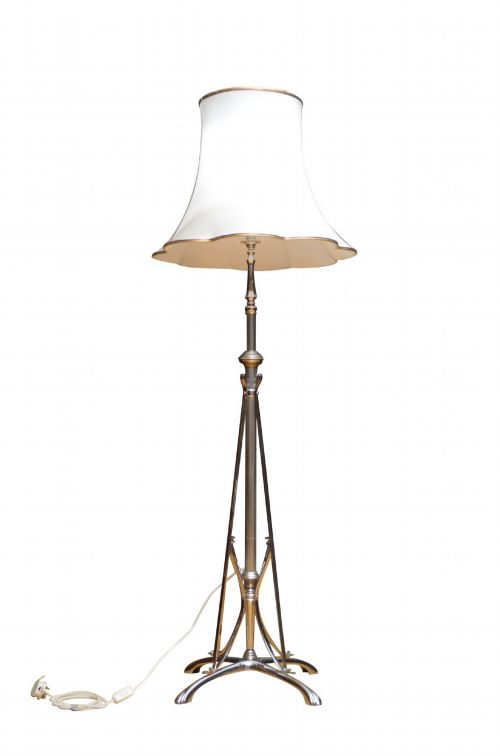


Metal Floor Light
A metal floor light brings useful height and character to a room, ranging from forged iron stands to polished brass standard lamps.
Metal Floor Light
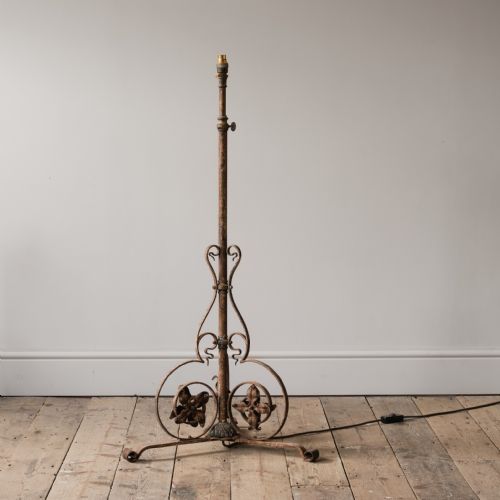
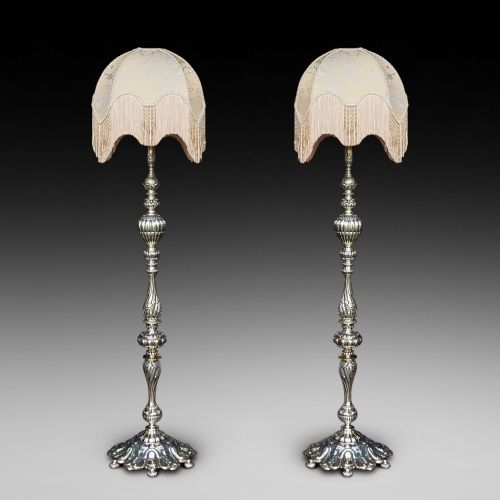
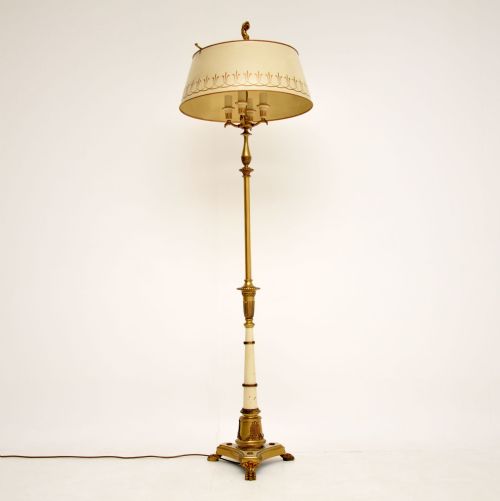
A metal floor light provides functional illumination or ambient candle display through tall vertical stands created from materials such as brass, wrought iron, and copper. When exploring a metal floor light, buyers encounter diverse forms ranging from Victorian telescopic oil lamps and Edwardian standards to Art Deco uplighters and searchlights.
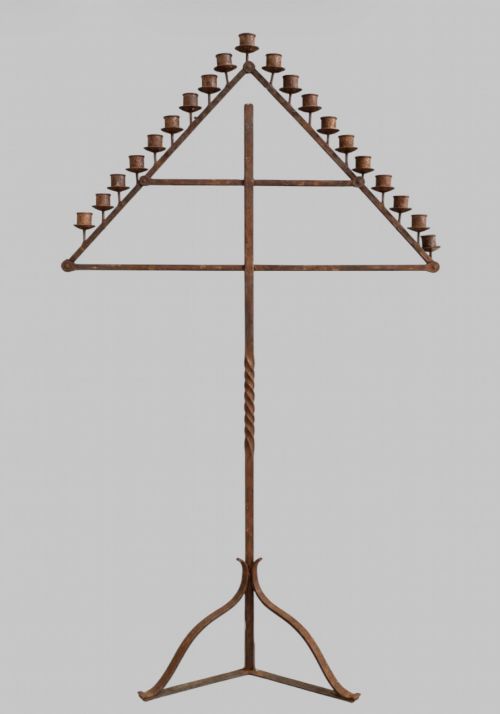
The selection includes adjustable standard lamps, torcheres, lantern stands, and multi-candle floor candelabras spanning periods from the nineteenth century through the 1960s. Many pieces reflect specific design movements like Art Nouveau, Gothic Revival, and French Neoclassical, showing how makers adapted utility to prevailing aesthetic tastes.
How they were made
Makers utilised durable metals including cast iron, wrought iron, brass, copper, and chrome to construct sturdy vertical shafts and weighted bases. Many pieces combine structural iron or brass with decorative elements in glass, fabric shades, or silvered finishes.
Techniques range from blacksmith forging on nineteenth-century wrought iron stands to precision casting on brass scroll arms and turned components. Adjustable mechanisms often rely on telescopic inner tubes and threaded screw keys to allow height regulation.
Listings feature metal floor lights spanning the nineteenth century through the 1960s, including works in brass, wrought iron, copper, and chrome.
What varies in quality
Quality depends on the integrity of the metalwork, the weight and stability of the base, and the sophistication of any mechanical adjustments. Finishes range from finely chased or gilded ormolu details to simpler utilitarian forged iron.
Superior examples demonstrate thoughtful proportion, integrated decorative motifs such as Art Nouveau floral copper work or Neoclassical mounts, and robust construction that supports heavy shades or multi-armed candelabra tops.
Bleriot·RENE MATHIEU·STRAND·W A S Benson
The Metal Floor Light Glossary
- Standard lamp
- A tall floor-standing lamp designed to hold a lightbulb and shade, often incorporating an adjustable height mechanism.
- Torchere
- A tall ornamental stand originally designed to hold a torch or candle, later adapted for electric lighting.
- Telescopic
- An adjustable shaft design where one tubular section slides inside another to alter the overall height of the light.
- Candelabra
- A branched candlestick or lamp holder designed to support multiple candles or light sources simultaneously.
- Uplighter
- A floor lamp directing light upwards toward the ceiling to create indirect ambient illumination, common in Art Deco designs.
Metal Floor Light: Frequently Asked Questions
How do I identify an Art Deco uplighter?
Art Deco uplighters typically date from the 1930s and use materials like chrome or brushed metal to direct illumination upward toward the ceiling.
They often feature clean geometric lines and stepped or streamlined bases characteristic of the period.
Were these lights originally electrified?
Many older floor standards began life as oil lamps or gas light candelabras before being converted to electricity at a later date.
Others started as candle stands, lanterns, or architectural candelabras that retained their original use or received wiring during subsequent decades.
What is the difference between a torchere and a standard lamp?
A torchere is traditionally a slender decorative stand meant for display or holding a single light source or candle, often with classical or ornate styling.
A standard lamp is generally heavier and built specifically to anchor a functional reading light or large fabric shade in a living space.