
Traditional Farmhouse Table
A traditional farmhouse table brings a sturdy, working history into a modern room, offering generous space for daily meals and gatherings.
Traditional Farmhouse Table
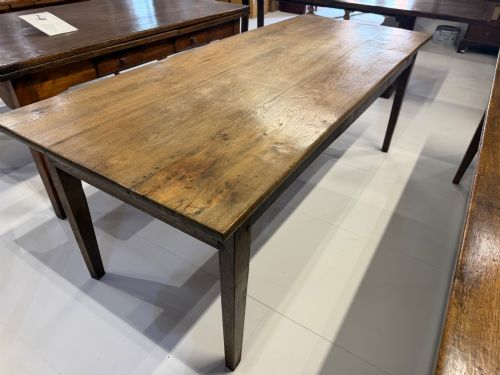
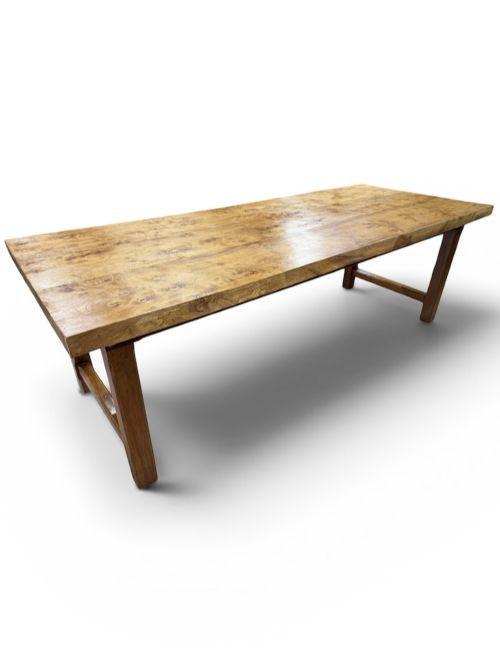
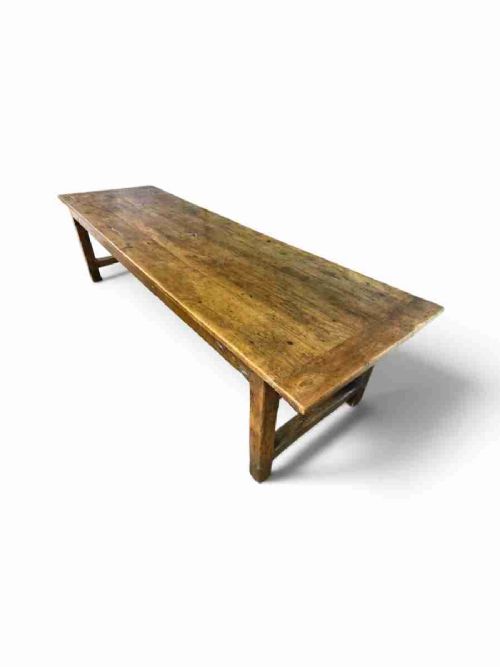
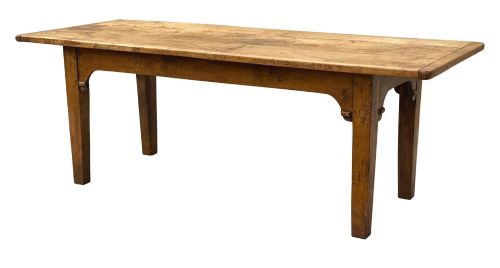
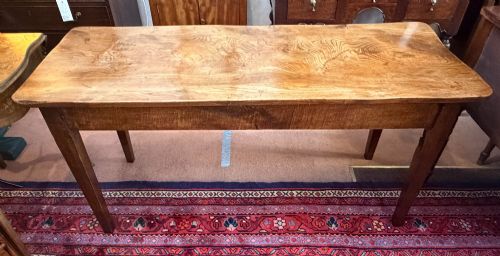
When you search for a traditional farmhouse table, you are looking at robust, utilitarian dining furniture designed for daily domestic or agrarian life. These pieces primarily function as dining tables, kitchen tables, or large prep surfaces intended for heavy use.
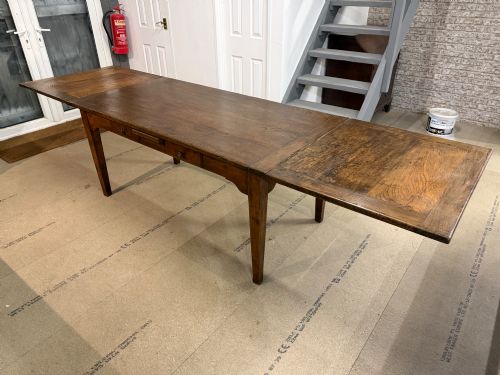
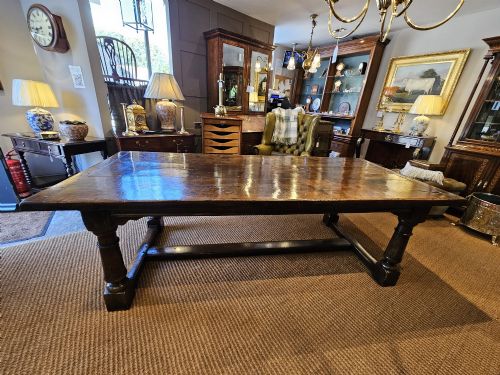
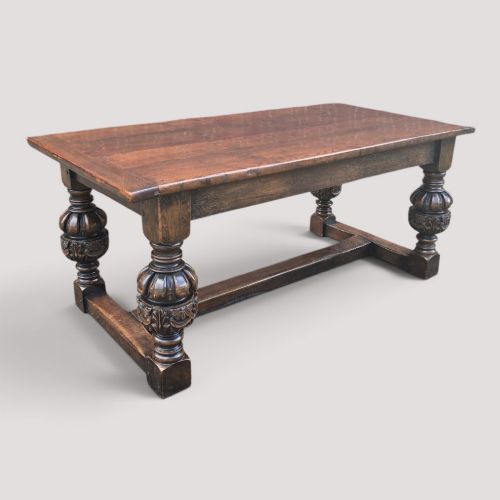
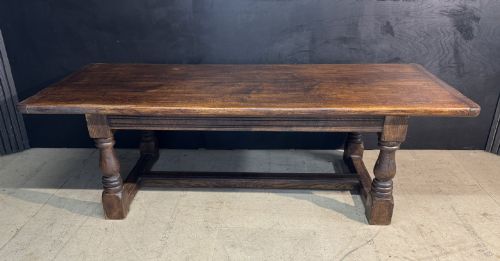
The versions you are most likely to meet on this page span the eighteenth and nineteenth centuries, alongside early twentieth-century interpretations. They frequently appear in formats like large refectory designs, extending tables, or compact kitchen formats.
Origins vary across English, French, and Scottish vernacular traditions, reflecting regional domestic habits. Woods range from golden oak and sturdy pine to fruitwood, sycamore, and beech.
How they were made
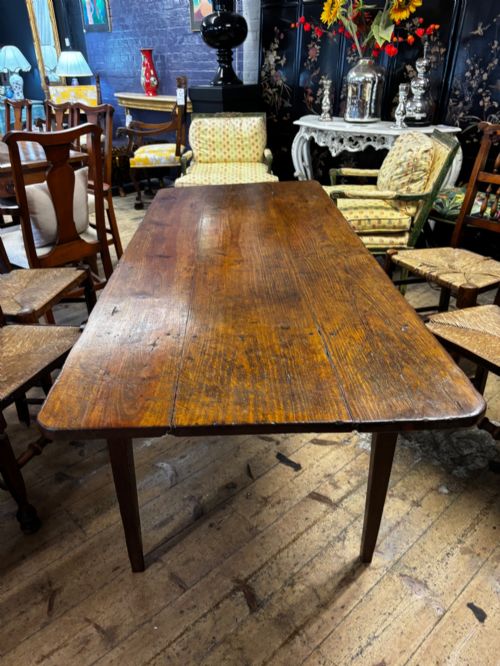
Construction relies heavily on solid timber construction, utilising dense hardwoods like oak and fruitwood alongside softer conifers such as pine. Carpenters joined thick plank tops to substantial underframes using traditional pegged joints and mortise and tenon techniques.
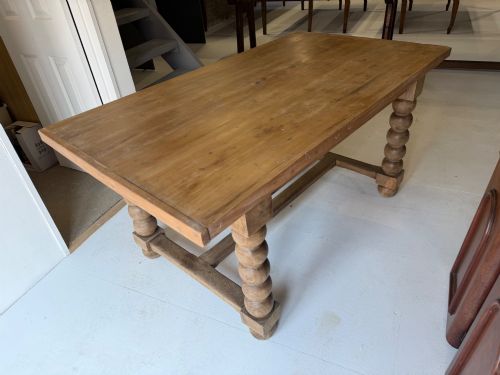
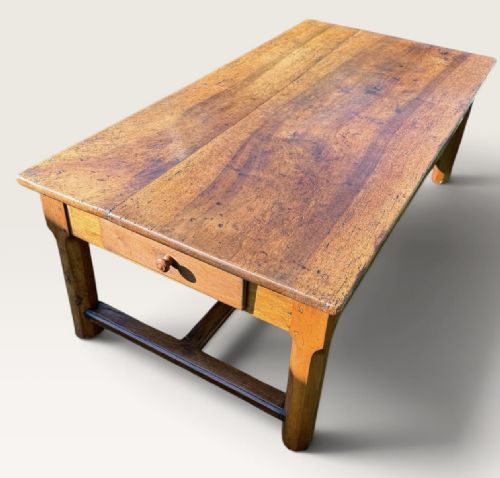
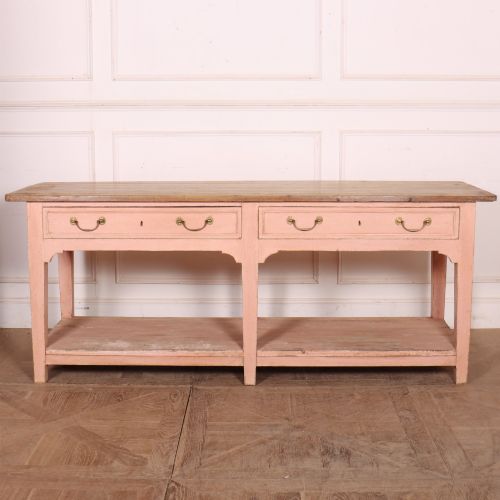
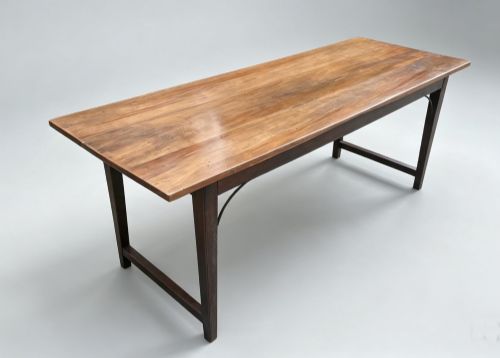
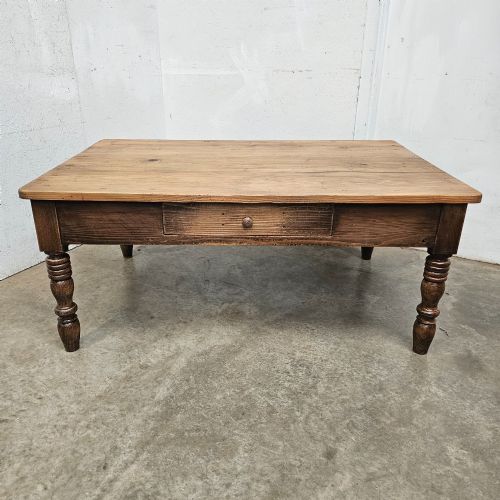
Leg structures vary from simple turned supports and bobbin legs to tapered profiles and heavy refectory trestles. Many incorporate functional additions like drawers for utensils or potboards underneath for storage.
Traditional Farmhouse Table Retail Price Guide 2026
Typical asking prices for traditional farmhouse table among the pieces listed under this phrase on Sellingantiques today, from the lower quarter to the upper quarter. They describe what is for sale here now, not the wider market.
Tables occasionally retain generations of flour dust and ink stains hidden deep within their old drawer joints.
What varies in quality
Quality rests upon the selection of timber and the integrity of the original construction. Dense, mature woods like 18th-century English oak or fruitwood command attention for their durability and depth of grain, whereas later pine versions offer a lighter domestic presence.
The harmony of proportions, the weight of the plank top, and the retention of original structural framing define the distinction between standard utility furniture and superior cabinet work.
The Traditional Farmhouse Table Glossary
- Refectory table
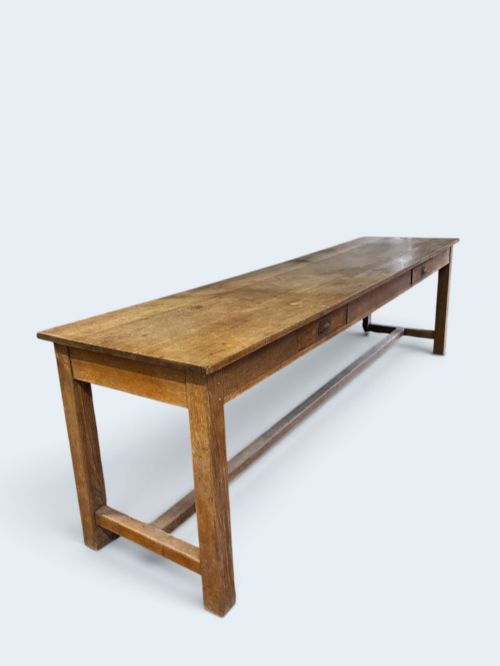
- A long, narrow dining table originally built for monastic or communal dining. These pieces often feature stretcher bases for added stability.
- Potboard
- A low slatted shelf fitted beneath a table or dresser base. It was traditionally used to store pots, pans, and heavy kitchen utensils.
- Fruitwood
- Timber sourced from fruit-bearing trees such as pear, apple, or cherry. Cabinet makers valued it for its fine grain and warm tone.
- Plank top
- A table surface constructed from individual parallel boards joined edge to edge. This method accommodates natural timber movement over decades of use.
Traditional Farmhouse Table: Frequently Asked Questions
How do I care for an old wooden top?
Maintain the surface by applying natural waxes periodically to nourish the dry timber and protect against everyday moisture. Avoid placing hot dishes directly onto the bare wood to preserve the historic finish.
Clean spills promptly using a slightly damp cloth rather than harsh chemical detergents. Regular gentle buffing enhances the natural patina built up over centuries of use.
Were these tables used only in kitchens?
These tables served as the central hub for domestic life, accommodating food preparation, dining, and daily household labour. Families gathered around them for every communal task, not just eating.
Over time, many transitioned from working farm kitchens into formal dining rooms or casual living spaces. Their durable construction allowed them to withstand continuous daily service.
How can I tell pine from oak?
Oak is a heavy hardwood displaying prominent growth rings and medullary rays that create a distinct speckled grain pattern. It generally ages to a deep, warm golden or dark brown hue.
Pine is a softer softwood with a lighter colour and more uniform, subtle grain lines interspersed with small knots. It feels lighter in weight and is softer to the touch than dense hardwoods.
What is a refectory base?
A refectory base typically consists of four legs connected by low horizontal wooden stretchers near the floor. This design provides exceptional rigidity for very long table tops.
The underframe supports heavy loads without wobbling, making it practical for large family dining. The central stretcher also served to keep diners' feet off cold flagstone floors.