

Traditional Extending Dining Table
A traditional extending dining table brings generous proportions and clever leaf mechanisms to family gatherings, offering timeless utility for large rooms.
Traditional Extending Dining Table
A traditional extending dining table serves large gatherings by increasing its surface area using removable leaves, draw mechanisms, or wind-out systems. When you search for this phrase, you find heavy timber furniture designed to adapt from daily family meals to banquets seating up to twenty-four people.
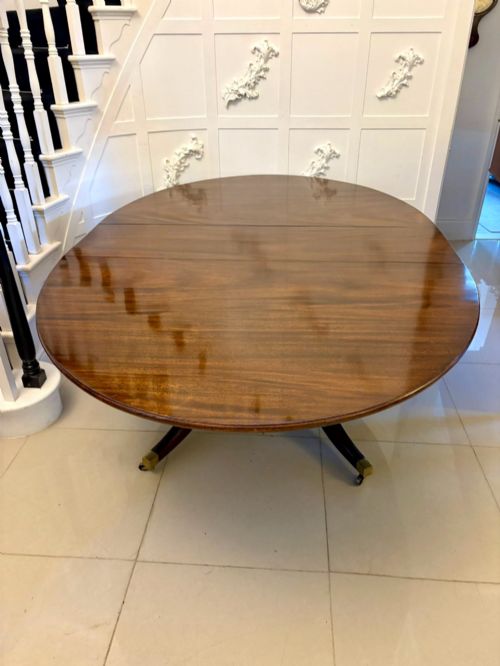
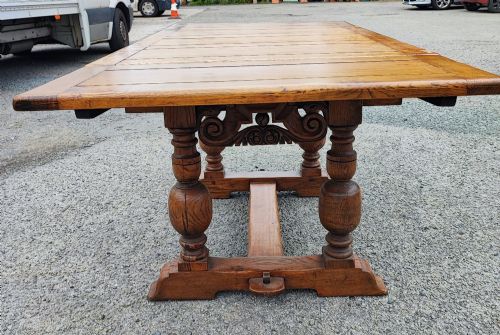
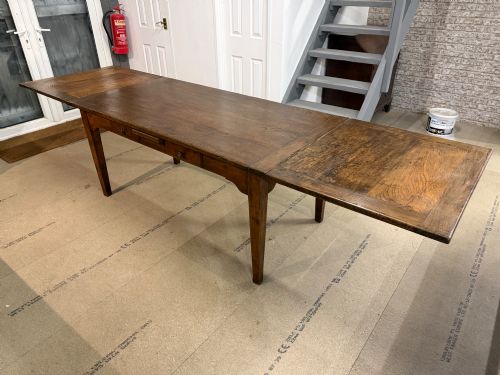
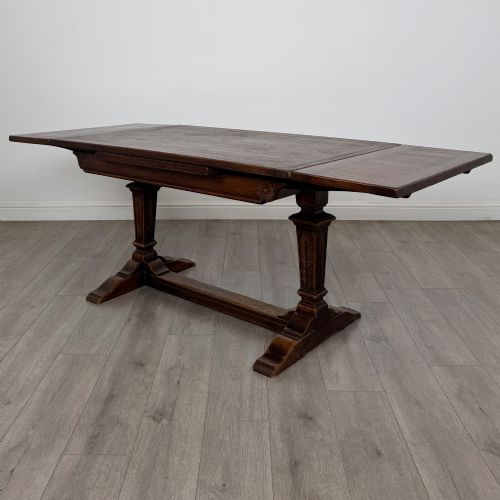
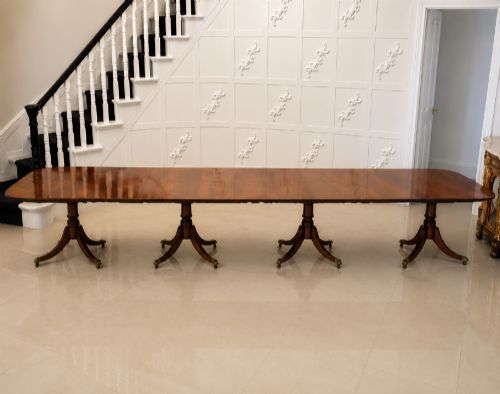
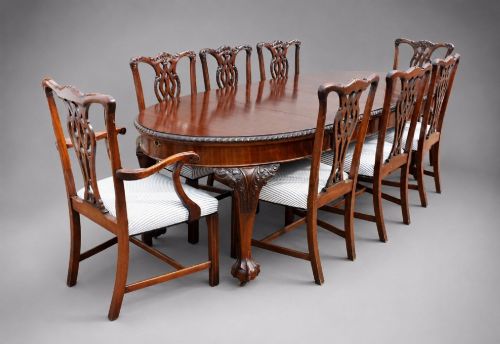
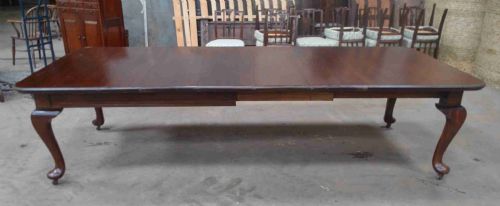
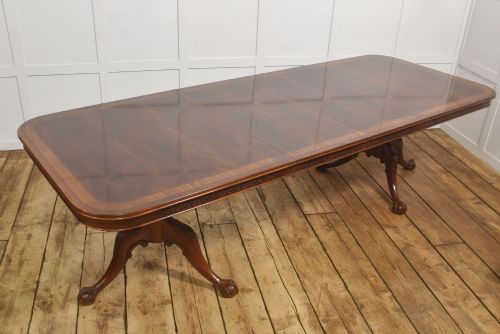
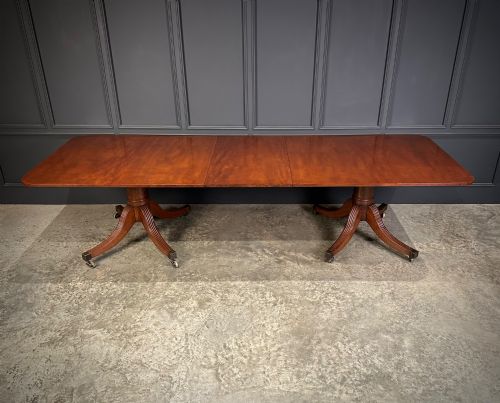
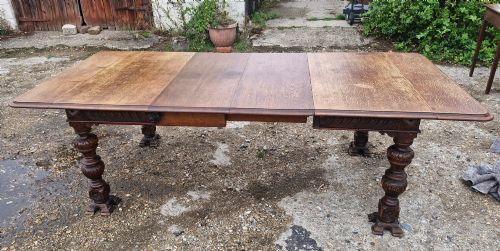
The pieces on this page span several periods, most commonly the nineteenth century, the Victorian era, and the Edwardian period, alongside later revivals. Mahogany and oak dominate the offerings, appearing in forms ranging from twin and triple pedestal layouts to refectory draw-leaf tables.
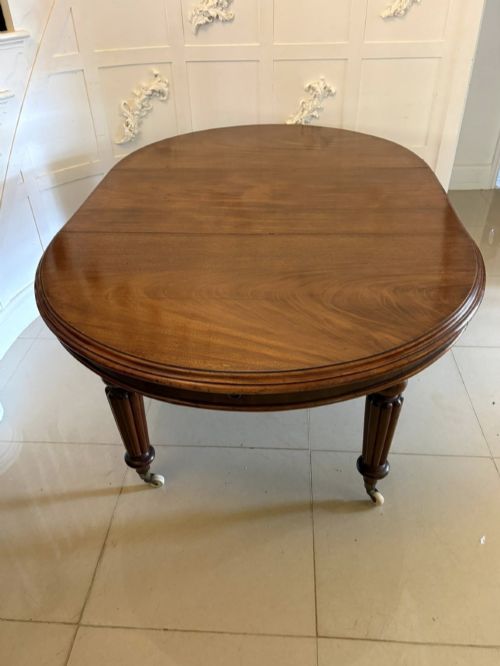
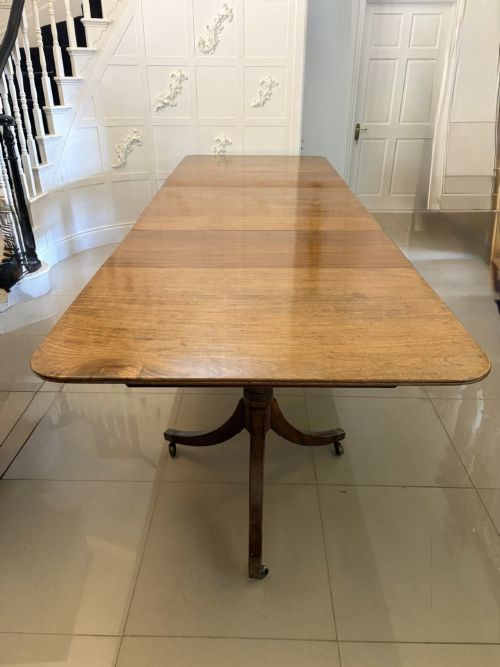
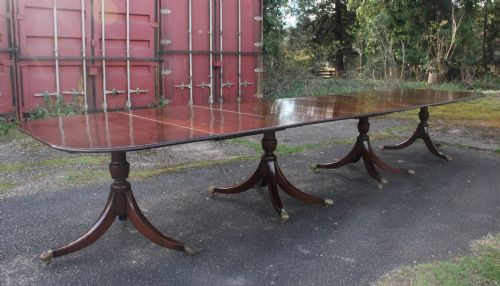
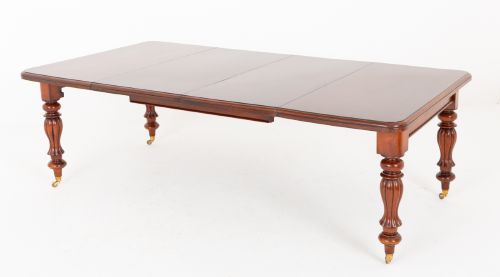
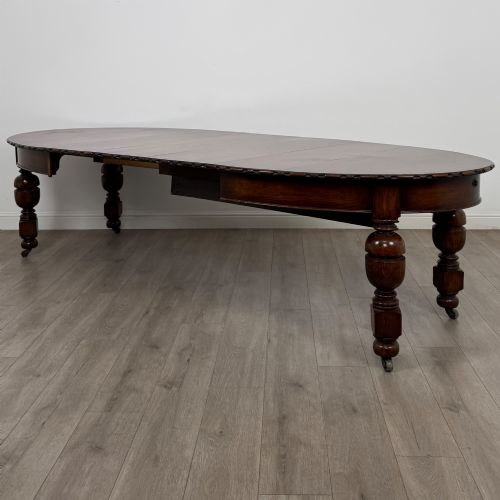
Buyers encounter different structural systems depending on the era and style. Victorian examples often utilise mechanical wind-out systems on brass castors, while earlier designs lean towards pillar-and-scroll supports or simple draw leaves.
Materials and construction
Makers built these tables primarily from dense hardwoods such as mahogany and solid oak, occasionally employing walnut for richer grain patterns. Timber selection dictated both the weight of the table and its capacity to support multiple extra leaves without sagging.
Joinery techniques included draw-leaf extensions, drop leaves, and mechanical winding screws paired with heavy pedestals or reeded legs. Brass components frequently appeared on castors and extension mechanisms to assist movement across heavy carpets and wooden floors.
The listings show mahogany and oak as the primary woods, spanning periods from the 19th century through the Edwardian era.
Assessing quality
Quality rests heavily on the choice of timber and the smoothness of the extension mechanism. Tables featuring figured mahogany veneers, substantial pillar supports, and well-fitted leaves represent the higher end of the range.
Simpler oak draw-leaf tables and later revival pieces display straightforward construction, prioritising utility over elaborate carving or complex brass-geared winding systems.
The Traditional Extending Dining Table Glossary
- Draw leaf
- A table equipped with self-contained extension leaves that slide out from beneath the main top. This mechanism allows quick adjustment without storing separate boards elsewhere.
- Wind out
- A mechanical system operated by a crank handle that separates the table halves to insert additional leaves. It allows heavy Victorian tables to expand smoothly.
- Refectory table
- A long, narrow dining table traditionally used in communal halls, often supported by stout legs and sturdy stretchers. Edwardian and Jacobean revival pieces adopt this heavy silhouette.
- Pedestal
- A central column supporting the table top, frequently branching into multiple carved legs with castors. Twin and triple pedestal variants appear often in grand dining formats.
Traditional Extending Dining Table: Frequently Asked Questions
How do extending tables work?
These tables expand using removable centre leaves, draw-leaf pull-outs, or mechanical wind-out screws operated by a handle.
Mechanisms vary by period, with Victorian examples favouring winding gears and Edwardian pieces using simple draw leaves.
How many people can they seat?
Seating capacity ranges from compact six-seater formats up to grand banquet tables accommodating twenty-four guests.
Adding multiple leaves alters the length significantly, making these tables suitable for both everyday dining and large dinner parties.
Which woods were used?
Makers relied predominantly on mahogany and oak, with occasional examples finished in walnut.
Solid timber and figured veneers defined the appearance, paired with brass fittings and castors on formal styles.
How do I identify the period?
Dating relies on stylistic clues like reeded legs, pillar supports, and specific revival motifs from Victorian or Edwardian eras.
Construction methods and timber choices also point directly to nineteenth-century or early twentieth-century origins.