
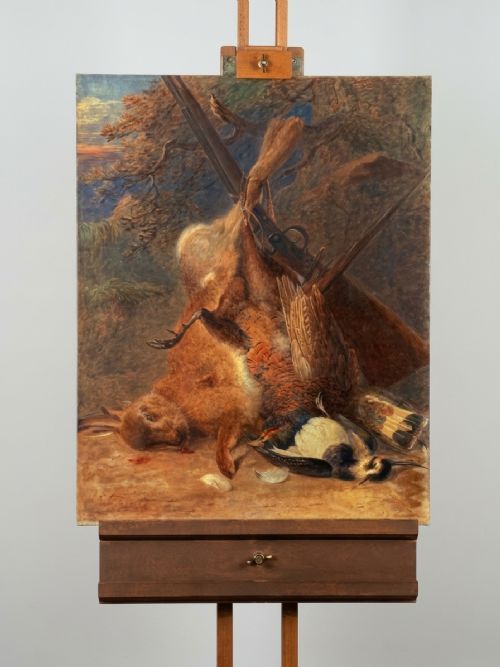

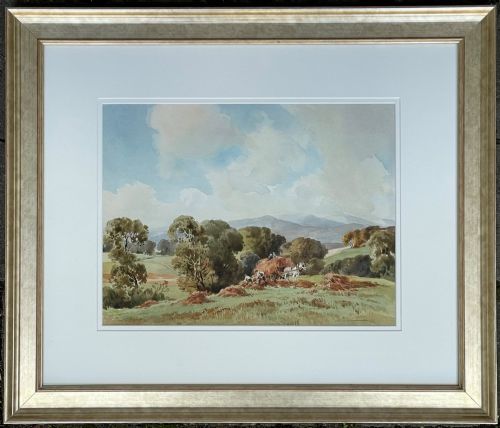
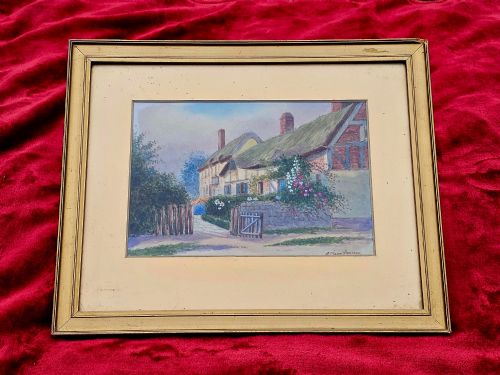

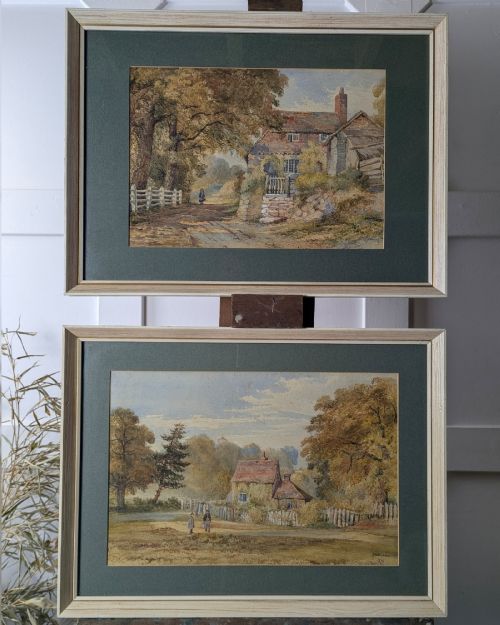


Traditional English Watercolour Painting
Traditional English watercolour painting captures rural scenes and landscapes on paper using pigment, dating primarily from the nineteenth and early twentieth centuries.

Traditional English Watercolour Painting
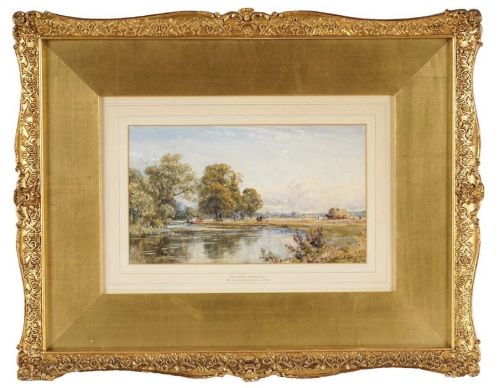
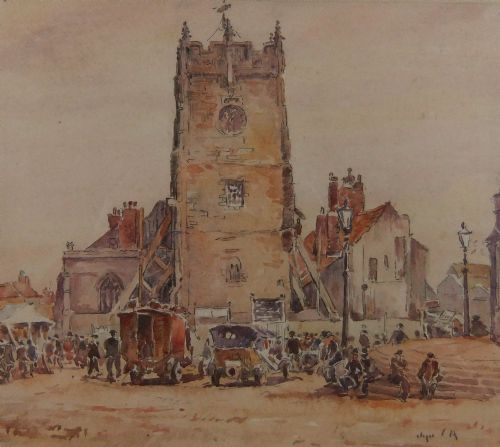
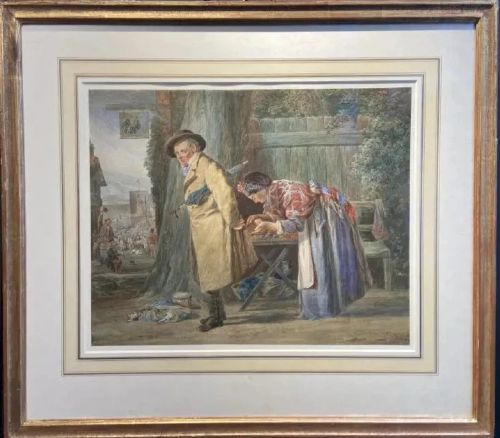
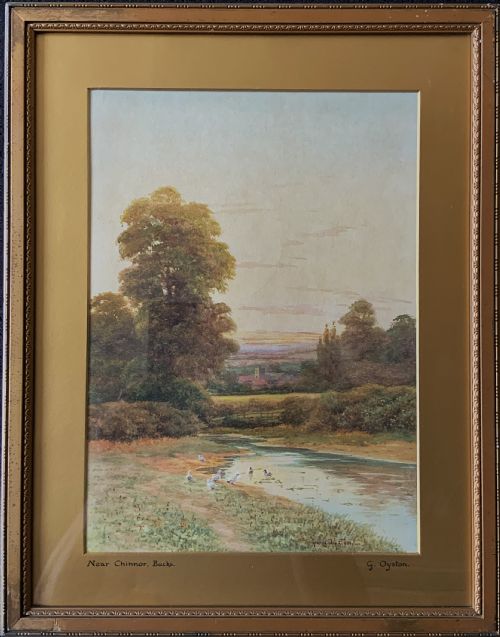
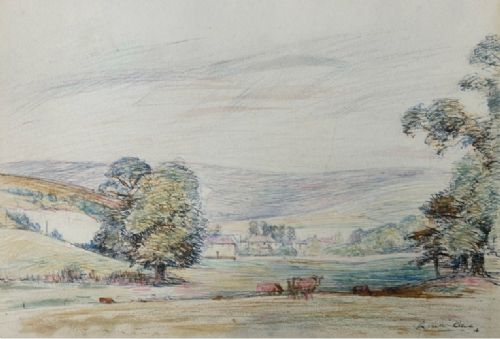
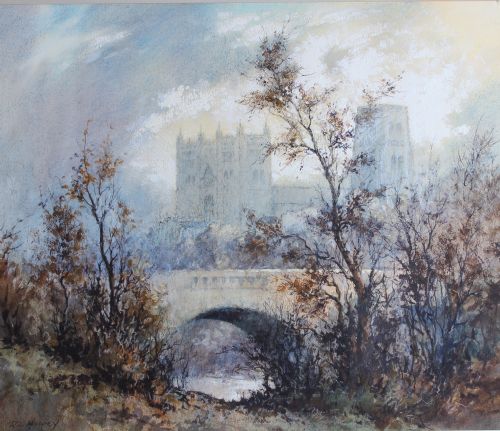
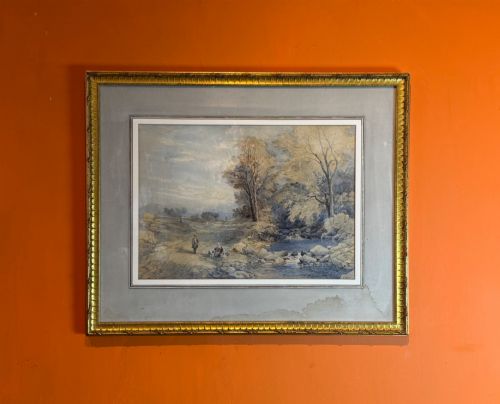
Traditional English watercolour painting encompasses framed artwork depicting rural landscapes, pastoral views, coastal harbours, and country cottages. These pieces reflect regional topography and rural life across Britain during the Victorian and Edwardian periods.
The works most commonly encountered on this page originate from the nineteenth century up through the nineteen-thirties, spanning Victorian, Edwardian, and British Impressionism styles. Subjects range from quiet river scenes in Berkshire and Dorset to northern townscapes in Yorkshire.
Compositions often feature watercolour pigment applied to paper, sometimes supplemented with bodycolour for opaque highlights. They arrive framed in wood or gilt wood, frequently protected behind glass to preserve the delicate pigment.
How they were made
Makers applied watercolour paint and pigment directly to absorbent paper surfaces, utilising washes to build translucent layers of colour and light. Some artists incorporated bodycolour to introduce solid white and dense highlights into the composition.
Finished works received framing in wood or gilt wood, often placed under glass to shield the paper from environmental moisture and airborne damage.
Traditional English Watercolour Painting Retail Price Guide 2026
Typical asking prices for traditional english watercolour painting among the pieces listed under this phrase on Sellingantiques today, from the lower quarter to the upper quarter. They describe what is for sale here now, not the wider market.
Materials recorded across the selection include watercolour pigment, bodycolour, paper, wood, gilt wood, and glass.
What varies in quality
Quality rests upon the artist's handling of light, atmospheric perspective, and the preservation of the delicate pigments on paper. Stronger compositions demonstrate confident brushwork and precise topographical detail rather than formulaic execution.
The preservation of the paper support and the vibrancy of the original watercolour pigment determine the enduring visual strength of the piece. Original period framing in wood or gilt wood also contributes to the integrity of the surviving artwork.
George Sydney Shepherd·Alfred Young Nutt·Percy Lancaster·Robert Thorne Waite·George Oyston
The Traditional English Watercolour Painting Glossary
- Watercolour
- A painting method in which the paints are made of pigments suspended in a water-based solution. The technique relies on translucent washes applied to paper.
- Bodycolour
- Watercolour paint rendered opaque by the addition of a white pigment such as china white. Artists utilise this to create highlights and dense areas within a composition.
- Gilt wood
- Wood frames coated with a thin layer of gold leaf or metallic gilt. These frequently encase Victorian and Edwardian works.
- British Impressionism
- A late nineteenth and early twentieth century painting style focused on light, loose brushwork, and everyday subjects. It heavily influences many landscape works from this period.
Traditional English Watercolour Painting: Frequently Asked Questions
How should I hang traditional English watercolours?
Keep these paintings away from direct sunlight to prevent the watercolour pigments from fading over time. Maintaining stable indoor humidity levels also protects the paper support and the wooden frame.
Ensure the glass is clean and secure without pressing directly against the painted surface of the paper.
What subjects appear most frequently?
Landscapes, rural cottages, river valleys, and coastal harbours dominate the available selection. Artists frequently depicted specific English regions including Yorkshire, the Thames Valley, and Dorset.
Pastoral scenes featuring livestock, figures, and farm carts also occur regularly across nineteenth and early twentieth century works.
Are these works usually signed?
Many examples feature signatures or monograms by the artist, often placed in the lower corner of the painting. Inscribed titles on the reverse or mount frequently identify the specific location depicted.
Attributions sometimes reference an artist's working period or style when explicit signatures are absent.
How do I identify Victorian watercolours?
Victorian pieces typically display detailed brushwork focused on naturalism, rural topography, or narrative pastoral scenes. The paper stock and framing materials often reflect nineteenth-century manufacturing methods.
Date inscriptions, artist records, and stylistic markers help establish the precise period of creation.