





British Topographical Art
British topographical art records specific locations across the country, offering a direct view of towns, rivers and buildings as artists once saw them.
British Topographical Art
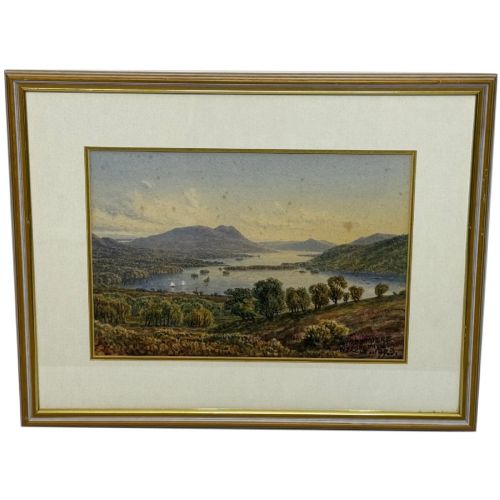
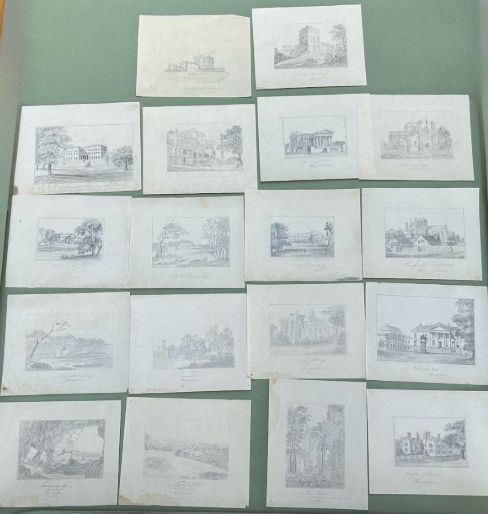
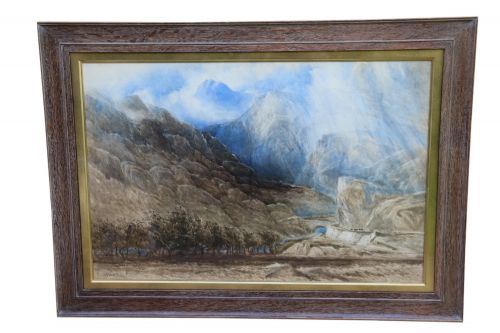
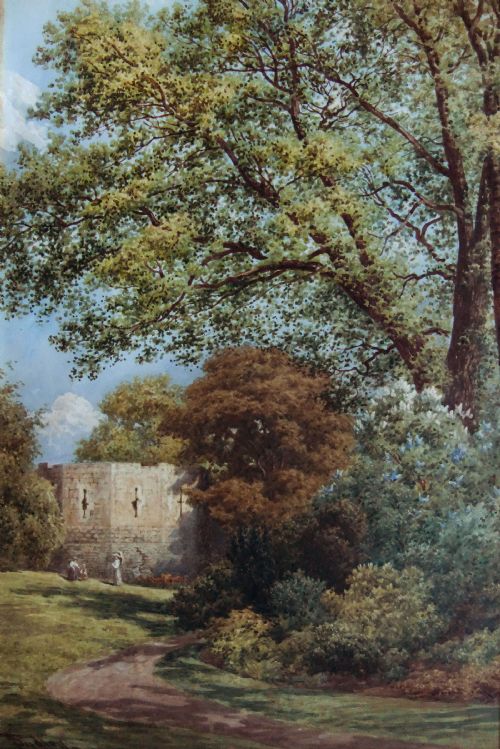
British topographical art captures identifiable locations ranging from Welsh mountain passes and Yorkshire towers to London bridges and college halls. These works serve as visual records of towns, rivers and coastal piers created by artists who documented the built and natural landscape.
The pieces on this page span several centuries, with examples originating from the Georgian and Victorian eras through to the mid-twentieth century. Buyers will encounter framed watercolours, pencil drawings, drypoint etchings, oil paintings and hand-coloured prints depicting specific views across England, Wales and Scotland.
Landscapes and cityscapes form the core of these offerings, featuring named sites such as the Houses of Parliament, Greenwich Park, York and the Lake District. Each piece presents a particular place at a specific moment in time, rendered with varying degrees of topographical precision.
Materials and Techniques
Artists relied primarily on paper and canvas as the foundational supports for their compositions, applying watercolour, graphite, oil paint and printing inks. Watercolour and pencil sketches capture delicate atmospheric conditions, while oil paintings on canvas or board offer deeper pigment saturation.
Techniques range from loose brushwork in watercolours and oils to fine lines in drypoint etchings and pencil drawings. Hand-coloured etchings combine printed outlines with subsequent washes of colour, and gilt frames frequently enclose the finished works.
Listings feature works executed on paper, canvas and board using watercolour, oil, graphite and drypoint etching.
Distinctions in Quality
Quality rests upon the artist's ability to render architectural and geographical details with convincing perspective and spatial depth. Works by trained painters and established draftsmen display superior control over line and tone compared to amateur or anonymous efforts.
The handling of light and atmosphere elevates a standard record of a place into a compelling visual statement. Stronger examples demonstrate deliberate composition and assured brushwork or pencil technique that bring the depicted scene to life.
William Taylor Longmire·Henry Martin Pope·Joseph Farrington·Amos Green·Tom Dudley·Edgar J Maybery·Claude Muncaster·William A Macdonald·Herbert John Finn·Henry Edridge·Joseph Murray Ince
The British Topographical Art Glossary
- Topographical art
- Artworks that accurately depict specific, identifiable real-world locations such as towns, buildings and landscapes. These pieces serve as historical visual documents of particular places.
- Drypoint etching
- A printmaking technique where an artist scratches a design directly into a metal plate using a sharp needle. This process raises a burr that holds ink, producing velvety lines when printed.
- Hand-coloured etching
- A printed line engraving or etching that has been painted over by hand with watercolours. This method adds vibrant hues to the underlying monochrome print.
- Gilt frame
- A decorative wooden picture frame covered in a thin layer of gold leaf or metallic paint. These frames provide a traditional border for finished paintings and works on paper.
- Watercolour
- A paint consisting of pigment suspended in a water-based solution, typically applied to paper. It allows for translucent washes and delicate layering.
British Topographical Art: Frequently Asked Questions
What is British topographical art?
British topographical art consists of paintings, drawings and prints that depict actual locations within Britain. These works focus on identifiable buildings, streets, rivers and countryside views.
Artists aimed to record the exact appearance of specific sites rather than purely imaginary scenes. Consequently, these pieces function as both artistic creations and historical records of changing landscapes.
How were these artworks created?
Creators utilised media such as watercolour, graphite, oil paint and etching inks applied to paper, canvas or board. Many artists worked on location to capture the direct appearance of a scene.
Printmakers produced etchings using metal plates before occasionally adding colour by hand. Finished pieces were then secured behind glass within wooden or gilt frames.
How do I display these pieces?
Works on paper require protection from direct sunlight to prevent fading of watercolours and graphite. Framing them behind glass with conservation-grade mounts keeps the paper safe from environmental damage.
Hang these pieces at eye level in rooms with stable humidity levels. Pairing them with traditional wooden furniture complements their historical aesthetic.
How can I tell the periods apart?
Early nineteenth-century works often feature precise architectural pencil sketches or delicate watercolours characteristic of the Georgian period. Victorian pieces frequently display heavier oil applications or detailed topographical watercolours of pleasure piers and expanding cities.
Twentieth-century examples introduce modernist influences, drypoint etching techniques and looser brushwork. Checking the costume of any figures depicted or the style of the framing can also offer clues to the era.