




Lake District Oil Painting
A lake district oil painting captures the dramatic topography and light of this northern landscape through the sustained vision of successive generations.

Identifying lake district oil painting
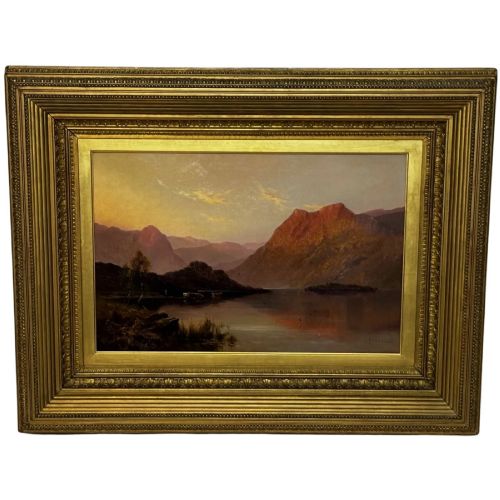
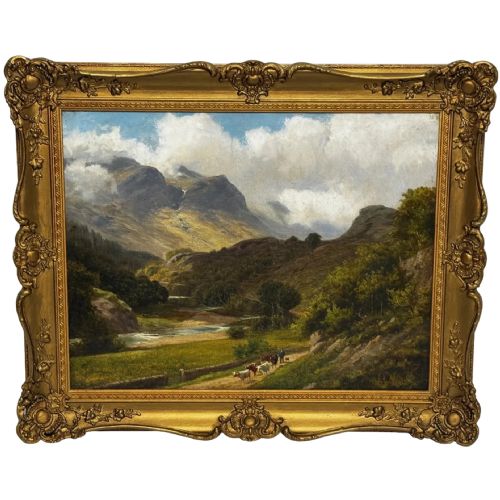
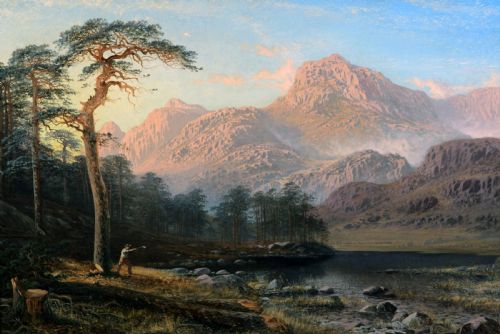
A lake district oil painting depicts specific bodies of water, fells and valleys across canvas and board supports. These works range from expansive eighteenth and nineteenth century vistas to mid-century modernist interpretations.
The subjects focus on recognisable locations such as Ulpha Kirk House, Patterdale, Borrowdale, Wastwater, Thirlmere, Blea Tarn, Easedale Tarn and the Langdale Pikes. Common compositional elements include grazing sheep, figures, winding rivers and stone bridges.
Works on this page span the seventeenth, nineteenth and twentieth centuries, reflecting changing aesthetic approaches to northern topography. Victorian landscapes and early twentieth century oils form the core of the available selection.
Materials and construction
Artists deployed oil paint applied to stretched canvas or wooden board, occasionally utilising impasto techniques to build surface texture. The physical support provides the stable base necessary for preserving pigment over centuries.
Many surviving examples retain their original wooden frames, often ornamented with gesso and gilt finishes. The combination of oil, canvas and giltwood frames defines the physical presence of these historic landscapes.
Retail Price Guide 2026
Typical UK retail prices for lake district oil painting, calculated from the Sellingantiques database of over a million retail prices indexed since 2003. This retail price guide relies exclusively on Sellingantiques data; no external sources or auction records are used, so the figures do not describe the wider market.
The listings span four distinct centuries, featuring traditional canvas supports alongside wooden boards.
Judging quality in landscape works
The distinction between standard works and exceptional examples rests upon the fidelity of topographical rendering and the handling of atmospheric light. Masterful brushwork captures the transient weather patterns characteristic of northern England.
Provenance and documentation elevate specific pieces, particularly when a painting carries a clear signature or identifies an exact Cumbrian locale. The integrity of the original frame further contributes to the overall standing of the work.
Alfred Fontville de Breanski Jr·James Gunson Atkinson·Joseph Farrington·Stephen Enoch Hogley·Helen Layfield Bradley·Augustus William Enness·Bob Tucker·Owen Bowen·John Arthur Dees·W H Rooke·Edward Henry Holder·William Mellor·William Lakin Turner·Sidney Yates Johnson
The Lake District Oil Painting Glossary
- Impasto
- Paint applied in thick layers that stand out from the surface. This technique creates a tangible sense of texture and relief.
- Giltwood
- Wood carved and covered with a thin layer of gold leaf. It provides a reflective border for traditional landscape paintings.
- Gesso
- A plaster-like mixture applied to wood frames before gilding. It creates a smooth base for decorative surface treatments.
- Board
- A rigid flat panel used as a painting support instead of woven fabric. Many early twentieth century artists favoured this medium for outdoor sketching.
Frequently Asked Questions
How do I date a lake district oil painting?
Dating relies on stylistic markers, framing techniques, and signatures linked to known active periods of recorded artists. Evidence from canvas stamps and inscriptions on the reverse often provides precise chronological clues.
Changes in clothing styles for painted figures also help narrow down the decade of creation.
Where should I hang an oil painting?
Choose a wall away from direct sunlight and strong artificial heat sources to protect the canvas and pigments. Stable indoor humidity prevents warping in both the wooden stretcher and the frame.
Ensure the hanging hardware is securely fixed to support the combined weight of the painting and frame.
How do I clean an antique frame?
Dust gently with a soft dry brush to remove surface particles without disturbing delicate gilt surfaces. Avoid liquid cleaners, water, or chemical solvents which can strip historic finishes.
Professional conservation is recommended for deep cleaning or repairing damaged gesso work.
Are all these paintings signed?
Signatures appear on many works, frequently placed in the lower corners by the artist. Some historical pieces remain unsigned yet retain strong stylistic attribution based on subject matter and technique.
Inscribed titles on the reverse often supply context when a direct signature is absent.