


Traditional English Side Chairs
Traditional English side chairs bring centuries of practical seating into modern dining rooms through sturdy timber frames and understated regional forms.
Traditional English Side Chairs
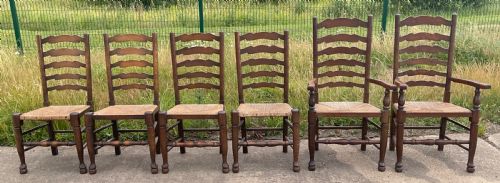
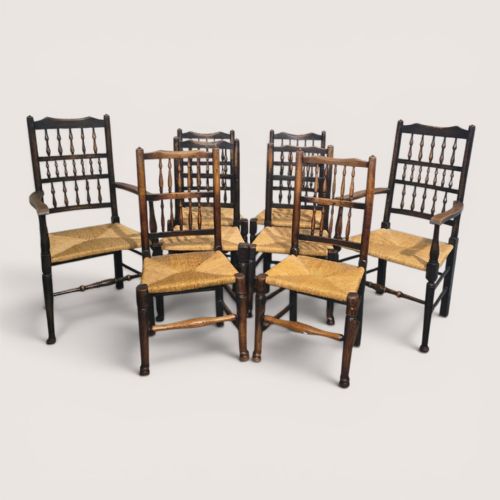
Traditional english side chairs encompass a wide array of seating forms built across the eighteenth, nineteenth, and early twentieth centuries. Buyers searching for traditional english side chairs encounter rural kitchen designs alongside formal mahogany dining sets from the Georgian and Victorian periods.
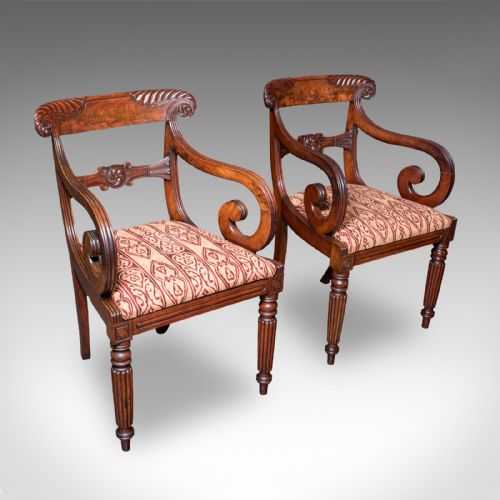
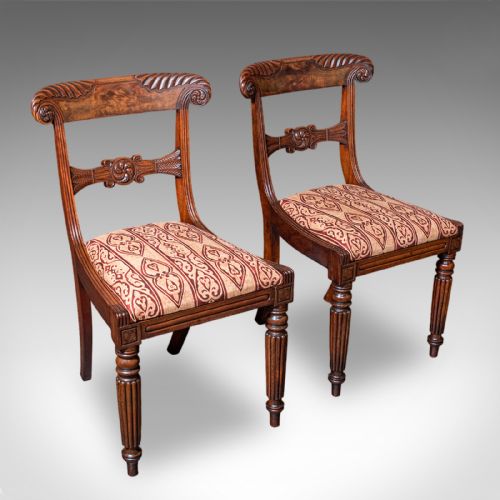
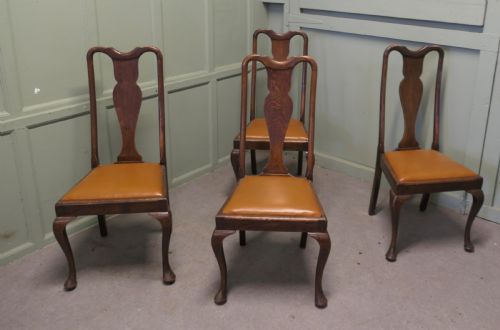
The selection ranges from sturdy elm and ash spindlebacks to finely carved walnut and mahogany side chairs bearing Queen Anne or Chinese Chippendale stylistic influences. Many examples survive as matched sets of four, six, or eight pieces, intended originally for domestic dining rooms and halls.
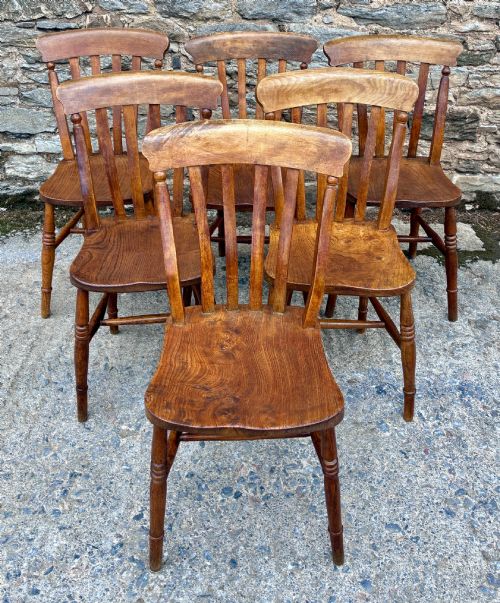
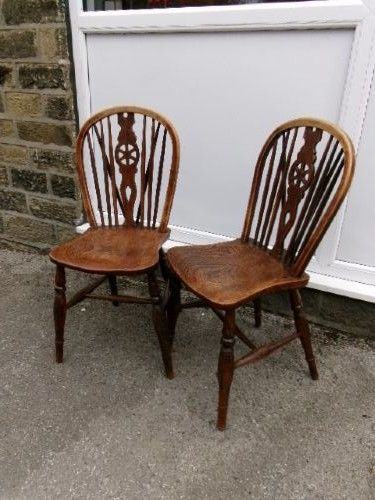
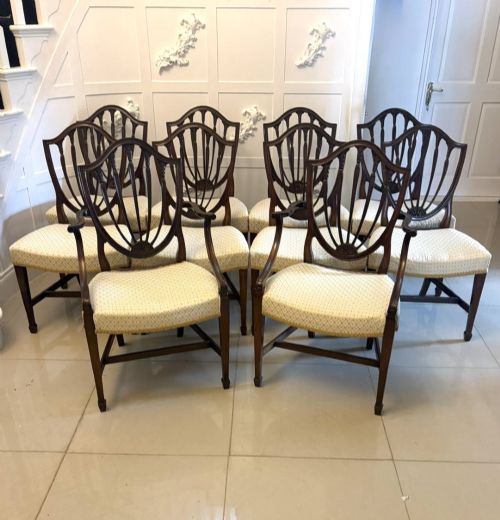
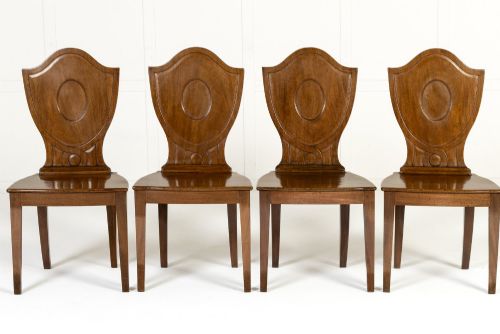
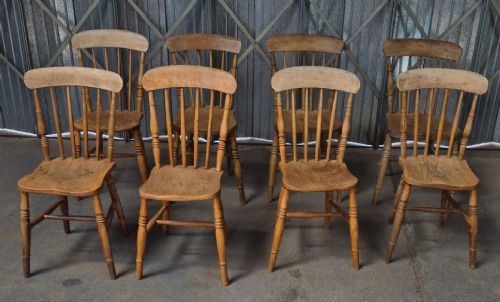
Regional vernacular styles sit alongside urban cabinet-maker productions on this page. Elm-seated Windsor wheelbacks and ladderbacks represent the country farmhouse tradition, while shield backs and barback forms represent formal parlour seating.
Materials and construction
Constructed primarily from native hardwoods such as oak, elm, beech, ash, and walnut, these chairs rely on honest timber selection suited to each component. Seat bases often utilise solid elm planks, while turned legs and spindles employ resilient ash or beech.
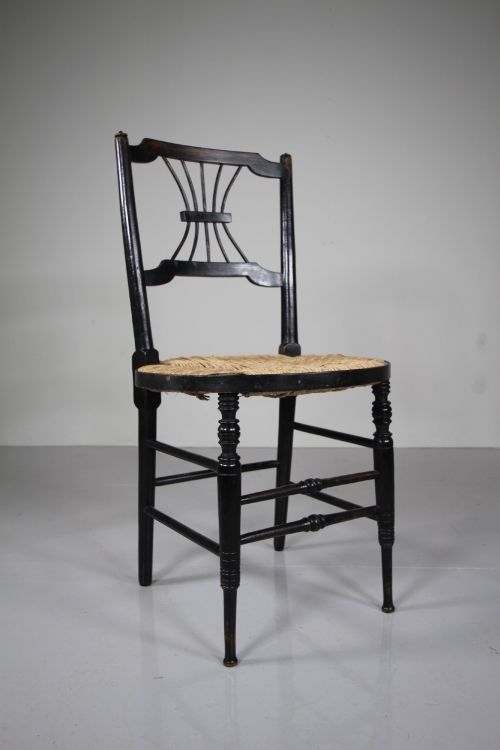
Joinery methods combine traditional mortise and tenon joints with steam-bent components for curved ladderbacks and Windsor bows. Rush seating and fabric or velvet upholstery provide comfortable pads on frames spanning from the 18th century to the 1930s.
Listings feature timbers including mahogany, elm, oak, rush, beech, walnut, and velvet across periods from the eighteenth century to the 1930s.
Assessing quality and character
Quality rests in the integrity of the timber and the crispness of turned or carved details. Chairs retaining deep natural patinas on native woods stand apart from heavily sanded or altered examples.
Uniformity across a matched set dictates much of the appeal, especially when timber grain and colour align harmoniously. Structural rigidity in the joints determines whether a chair remains fit for daily use.
Maple and Co·William Morris
The Traditional English Side Chairs Glossary
- Ladderback
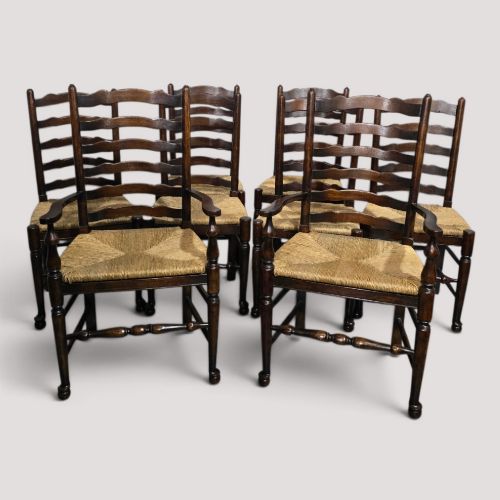
- A chair back featuring multiple horizontal wooden slats between the upright posts. This form is common in vernacular country seating.
- Spindleback
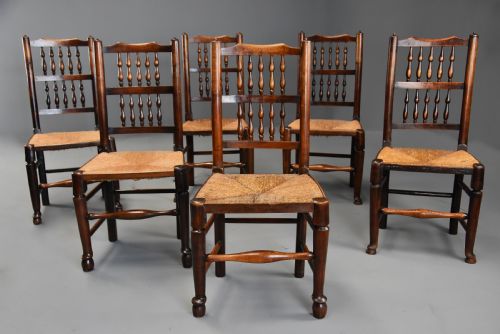
- A chair back constructed with numerous thin vertical turned wooden rods. These rods distribute weight effectively while keeping the frame light.
- Windsor
- A chair built with a solid wooden seat into which the legs, back sticks, and bow are separately inserted. This technique ensures high structural durability.
- Bobbin turned
- A style of furniture turning that creates a series of rounded spheres resembling bobbins along a wooden shaft. It appears frequently on seventeenth and eighteenth-century frames.
- Shield back
- A dining chair back shaped in the outline of a heraldic shield, popularised during the Georgian period by designers like Hepplewhite.
Traditional English Side Chairs: Frequently Asked Questions
How do I date a ladderback chair?
Dating relies upon timber species, construction wear, and the specific profile of the turnings on the posts. Earlier examples display hand-split components and deeper patination.
Later twentieth-century reproductions often show mechanical uniformity and machine-sawn timber marks that distinguish them from nineteenth-century originals.
Were these chairs used for dining?
Most formal mahogany and walnut variants served primarily around dining tables in Georgian and Victorian homes. Country vernacular chairs fulfilled multiple domestic duties in kitchens and farmhouses.
Side chairs lacked arms to fit compactly beneath dining tables and accommodate wide period clothing.
Can I mix different chair styles around a table?
Mixing various country elm and ash chairs creates a traditional harlequin dining arrangement that reflects how households accumulated seating over generations. This approach values complementary timber tones rather than strict uniformity.
Formal dining sets require matching timbers and consistent stylistic details to maintain visual balance.
How should I care for rush seats?
Rush seats require dry indoor environments and occasional cleaning with a soft brush to remove dust from the natural sedge fibres. Avoiding excess moisture prevents the organic material from becoming brittle.
Placing chairs away from direct heat sources protects the natural oils within the wooden frames and rush.