



Pair English Hall Chairs
Pair english hall chairs bring sculptural presence and period character to an entrance, crafted primarily in oak and mahogany across centuries of design.
Pair English Hall Chairs
When you search for pair english hall chairs, you encounter seating designed for the entranceways and reception rooms of substantial houses from the 18th, 19th, and early 20th centuries. These pieces were built to make a formal impression on visitors rather than to offer prolonged comfort.
The most common versions met on this page date from the Georgian, Regency, and Victorian eras, often constructed from heavy hardwoods with solid seats and carved or shaped backs. Alongside formal mahogany and walnut examples, country alternatives in elm, fruitwood, and rush appear frequently.
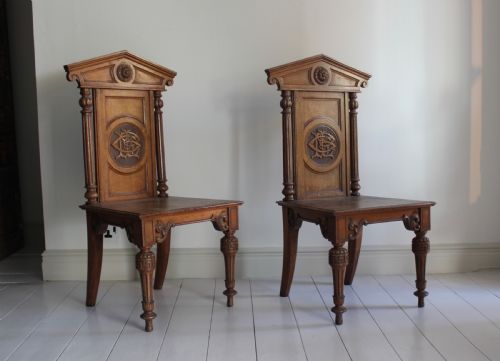
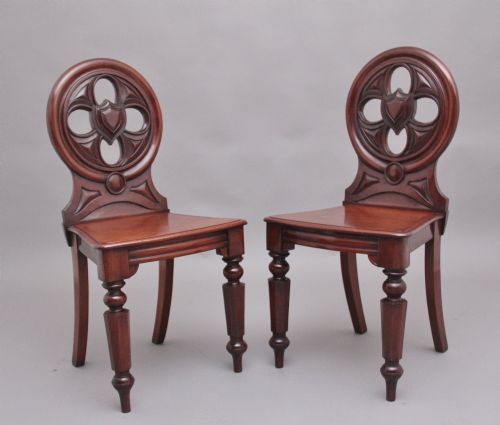
Makers often incorporated heraldic shields, crests, or Gothic tracery into the wooden back panels, signaling lineage and status. While originally intended for hallways, these sturdy seats now function equally well in reception spaces, bedrooms, and studies.
How they were made
Cabinetmakers constructed these seats using dense domestic timbers like oak, mahogany, walnut, and elm, relying on traditional mortise and tenon joinery to withstand daily use. Turning, carving, and steam-bending shaped the rigid frames, occasionally augmented by brass inlay or faux rosewood graining.
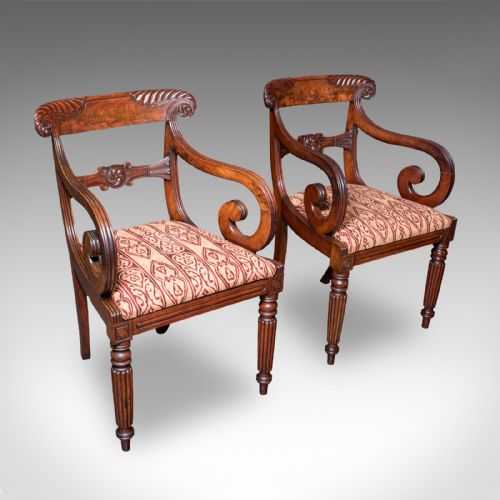
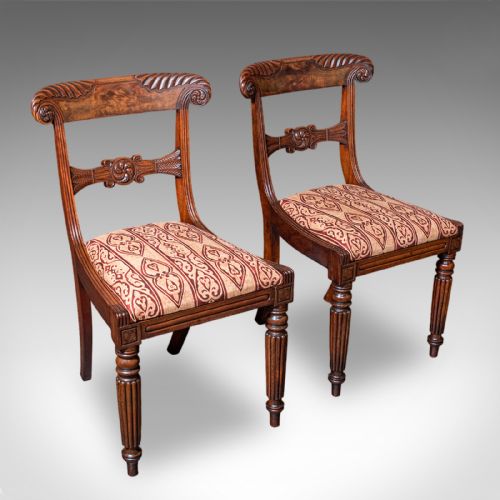
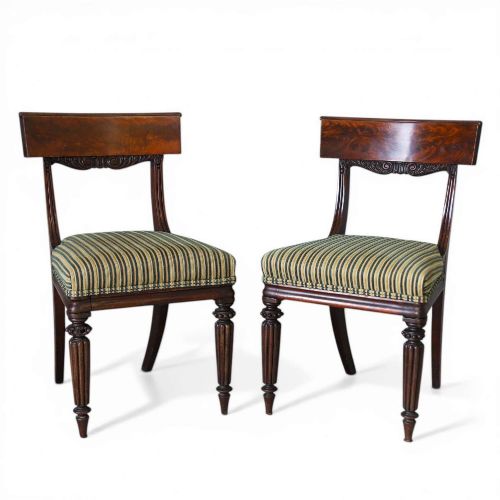
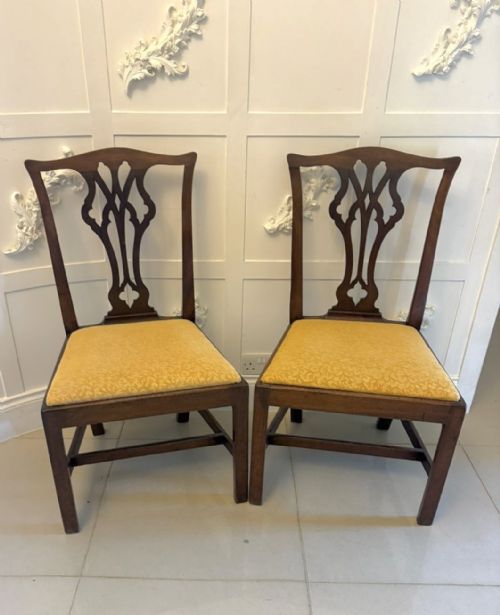
While many examples retain solid wooden seats designed for easy maintenance, others incorporate woven rush, fabric upholstery, or leather pads. Surface finishes range from hand-rubbed wax on early oak to polished French polish on Victorian mahogany.
Listings feature oak, mahogany, walnut, elm, and fruitwood spanning the 18th, 19th, and early 20th centuries.
What varies in quality
The distinction between standard utility seating and exceptional work lies in the depth and crispness of the timber carving, particularly on the back panels. Fine examples display sharp relief work, well-figured wood grain, and robust structural framing that remains rigid over centuries.
Proportion and architectural balance set finer pieces apart from plain production items. Superior pairs exhibit harmonious lines, careful timber selection matched across both chairs, and integrated decorative elements such as brass inlay or turned spindles.
Gillows
The Pair English Hall Chairs Glossary
- Gothic Revival
- An architectural and decorative style drawing on medieval forms, frequently seen in chairs with pointed arches and tracery. Victorian makers utilised these motifs heavily.
- Bobbin turned
- A style of furniture leg or stretcher shaped on a lathe to resemble a series of wooden bobbins or spools. Early oak pieces employ this technique extensively.
- Bar back
- A horizontal wooden slat or rail across a chair back, sometimes curved to fit the spine. Regency and Georgian variants often combine this with mahogany frames.
Pair English Hall Chairs: Frequently Asked Questions
Where did people place pair english hall chairs?
These chairs stood in grand entrance halls, corridors, and reception rooms where visitors waited before entering the main apartments of a house. They served primarily as architectural furniture rather than casual lounge seating.
In modern interiors, owners position them in narrow hallways, landings, or as decorative accent pieces against living room walls where floor space is limited.
How do I date a pair of oak hall chairs?
Dating relies on examining the timber grain, construction joints, and decorative style, such as early bobbin turning versus later Gothic Revival carving. Earlier 18th-century examples display pegged joints and heavier timber.
Victorian and later 19th-century versions often feature machine-sawn components, darker factory finishes, and more eclectic revival ornamentation.
Are these chairs comfortable for daily dining?
Most hall seating prioritises a rigid, upright posture over plush padding because they were designed for brief waits. Solid wooden seats and upright backs encourage an erect posture rather than relaxation.
Some models feature drop-in rush or upholstered pads, which offer slightly more give, though they remain firm compared to modern armchairs.
What is the difference between side chairs and hall chairs?
Hall chairs typically feature solid wooden seats designed to withstand heavy coats, damp weather, and outer garments in unheated entryways. Side chairs more often include upholstered pads or cane seats intended for dining and drawing rooms.
Both share a similar frame structure without arms, but hall chairs lean towards carved wooden backplates displaying family crests or monograms.