


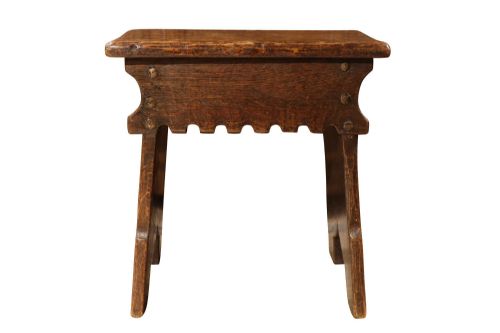


Traditional English Footstool
These traditional English footstools bring practical comfort and understated character to a room, offering sturdy seating and low support fashioned across the centuries.
Traditional English Footstool
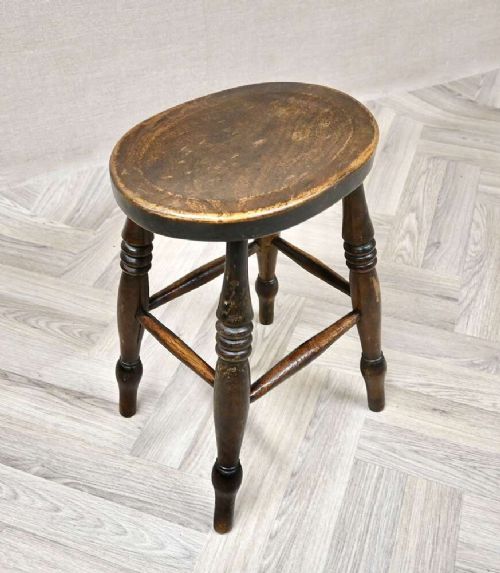
A traditional English footstool serves as a low support or secondary seat, taking forms such as simple joint stools, padded fireside ottomans, and Windsor country seats. Buyers seeking these pieces encounter a broad span of history, stretching from sturdy Georgian designs up through the Victorian era and into the twentieth century.
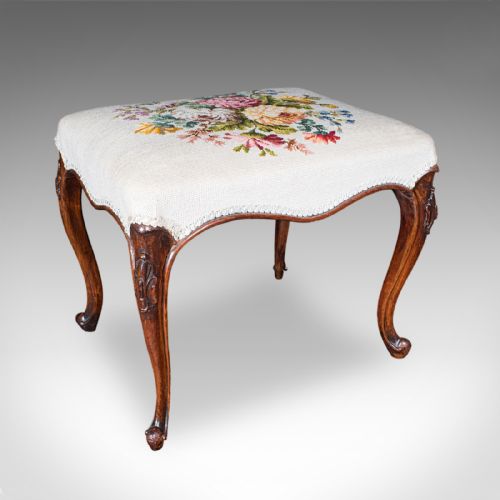
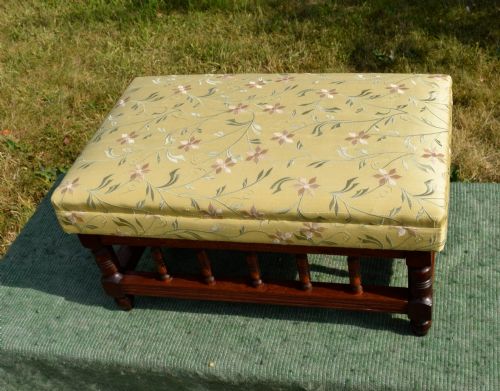
The selection ranges from utilitarian oak five-plank construction and peg-joined frames to upholstered Victorian pieces covered in needlepoint or buttoned leather. Country house styles and vernacular Windsor forms appear alongside formal mahogany shapes and revival pieces.
Makers and workshops utilised native timbers like oak, elm, walnut, and yew, often matching them to specific domestic interiors. Whether low and broad on brass castors or narrow and tall, these footstools reflect the changing domestic habits of English households.
Materials and construction methods
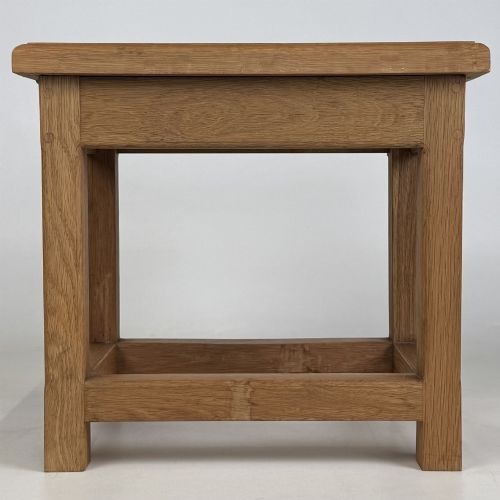
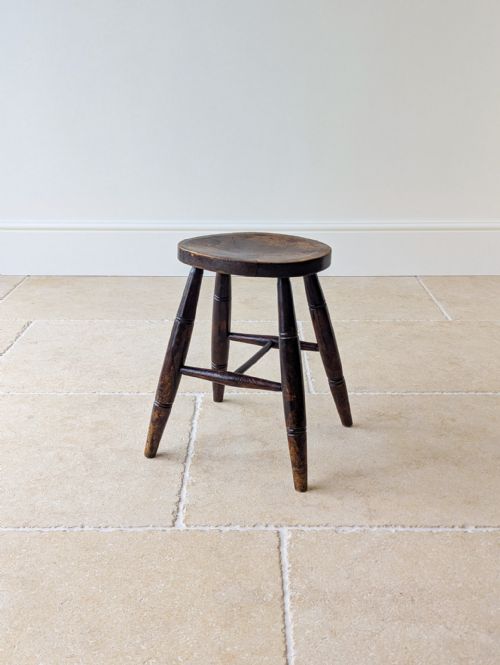
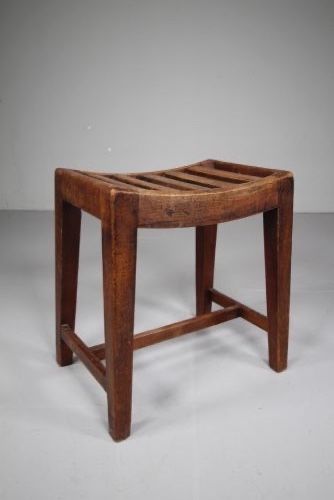
Woodworking forms the backbone of these pieces, utilising solid oak, mahogany, walnut, elm, and yew through pegged construction and traditional jointing methods. Carpenters shaped timbers into oval seats, slatted tops, and joint frames designed to bear heavy weight.
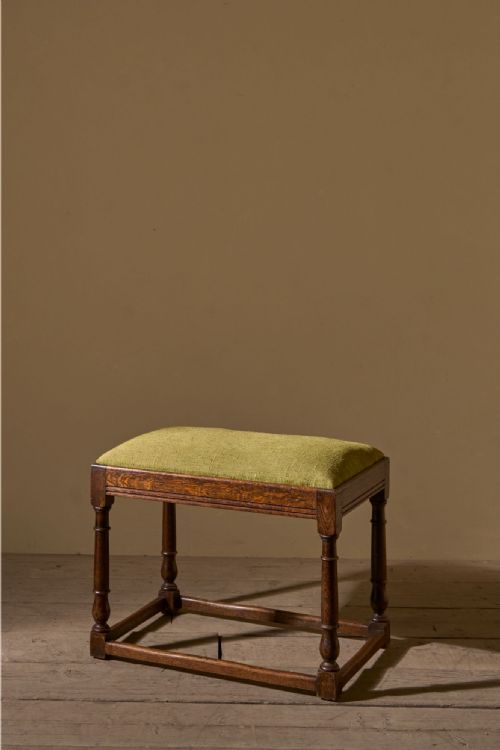
Upholstery brings soft textures to the timber frames, incorporating heavy green linen, cotton, needlepoint, and buttoned leather. Brass fittings such as castors appear on larger pieces to aid movement across floors.
Listings for traditional English footstools feature substantial oak joint frames alongside upholstered nineteenth-century pieces finished in leather and needlepoint.
Markers of quality and execution
The integrity of the timber joints and the weight of the wood set the foundation for a well-made stool, with pegged construction and dense hardwoods indicating careful carpentry. Finer examples display thoughtful proportions, such as shaped and slatted mahogany or carefully turned legs.
Upholstery execution separates standard pieces from exceptional ones, particularly where hand-stitched needlepoint or buttoned leather meets the wooden frame. The integration of maker details, such as specific upholstery stamps, elevates certain pieces above anonymous vernacular items.
Howard and Sons·David Oakleafman Langstaff
The Traditional English Footstool Glossary
- Joint stool
- A traditional wooden stool constructed with mortise and tenon joints, pinned with wooden pegs rather than glue or metal nails. These sturdy pieces date back to the sixteenth century and continued as vernacular furniture.
- Windsor stool
- A seat featuring turned legs and spindles inserted directly into a solid wooden seat, echoing the construction methods of Windsor chairs. Elm and yew frequently appear in these country pieces.
- Needlepoint
- A form of canvas work embroidery using wool or cotton yarn to create dense, patterned coverings for upholstered stools and chairs. It adds colour and texture to Victorian fireside furniture.
- Pegged construction
- A method of joining timber components using wooden dowels driven through pre-bored holes in the joints. This technique provides structural resilience without relying on metal fixings.
- Centre stool
- A large, freestanding upholstered stool designed to sit in the middle of a room or country house library rather than against a wall. They often feature buttoned leather or deep cushioning.
Traditional English Footstool: Frequently Asked Questions
How do I identify a joint stool?
A joint stool relies on pegged wooden construction rather than modern glues or metal fixings, resulting in a heavy, rigid frame with vertical legs joined by stretcher rails near the base. These pieces were built for heavy domestic use.
They commonly appear in oak from the seventeenth up to the early twentieth century, serving multiple household purposes from sitting to reaching high shelves.
What is a Howard and Sons footstool?
Howard and Sons was a prominent nineteenth-century London upholstery firm known for creating deeply comfortable, high-quality furniture with distinct upholstered frames. Their pieces often feature branded castors and stamped legs.
Items associated with this maker command attention for their superior upholstery techniques and enduring structural design within English interiors.
Where should I place a large centre stool?
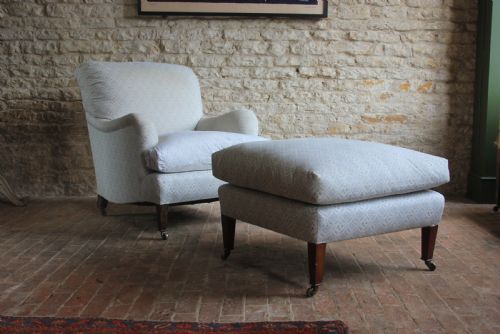
Large centre stools work well in the middle of a room, acting as a flexible surface for resting feet, holding trays, or providing extra seating during gatherings. Their finished sides allow them to be viewed from any angle.
Pairing a buttoned leather or upholstered centre stool with armchairs creates a cohesive seating arrangement in traditional living spaces.
How do I care for antique leather upholstery?
Antique leather requires gentle cleaning with a dry or slightly damp cloth, avoiding harsh chemical cleaners that strip natural oils. Conditioning helps maintain the suppleness of nineteenth-century buttoned leather.
Keep leather furniture away from direct heat sources and strong sunlight to prevent the material from drying out and cracking over time.
What distinguishes Victorian country stools from formal pieces?
Victorian country stools utilise native timbers like elm, yew, and oak with simpler, utilitarian turnings and visible grain. They reflect regional craftsmanship rather than strict adherence to London fashion.
Formal pieces tend to use imported mahogany or walnut with elaborate carvings, whereas country stools prioritize sturdy, functional design for everyday farmhouses and cottages.