


Antique English Footrest
An antique english footrest is a low support for tired feet, offering simple domestic comfort and traditional craftsmanship for the fireside.
Antique English Footrest
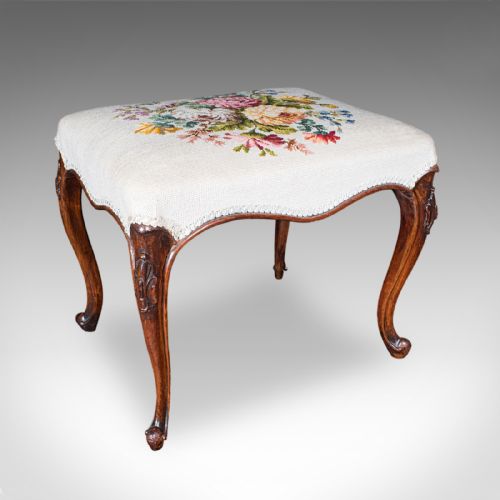
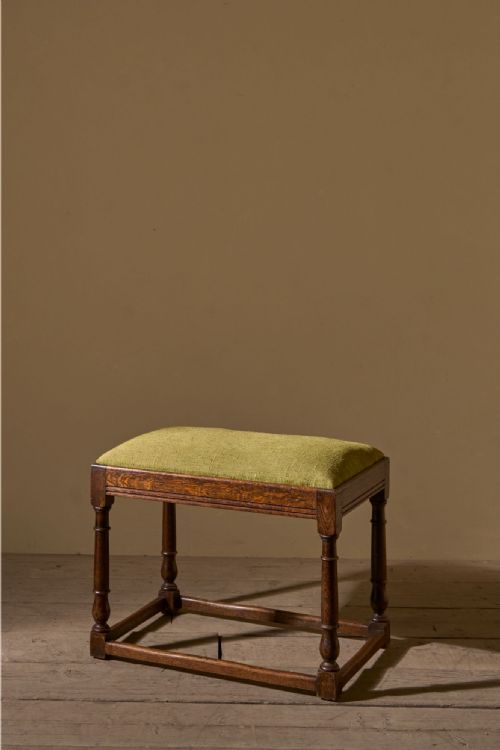
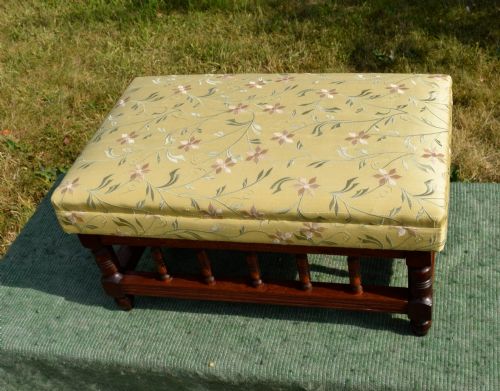
When you search for an antique english footrest, you encounter low domestic seating designed specifically to support the feet by a hearth or in a reception room. The pieces appearing here span from the eighteenth century through the Edwardian era, taking forms such as fireside stools, carriage stools, and gout stools.
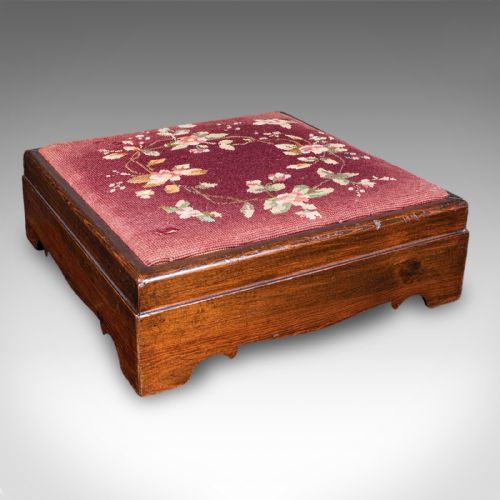
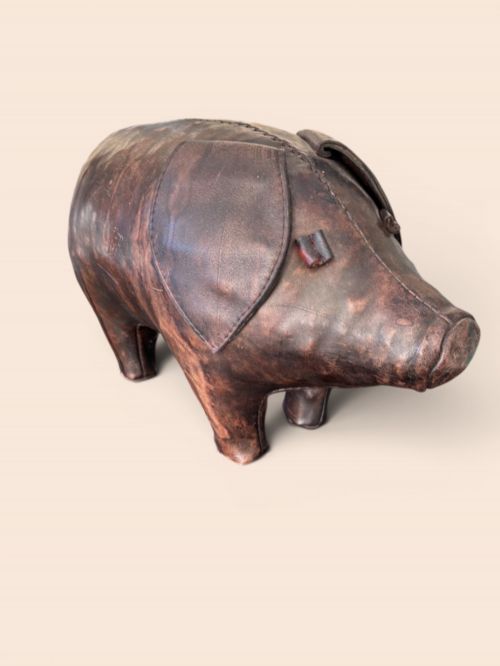
The most common versions met on this page belong to the Victorian period, often constructed from walnut or mahogany with upholstered tops. Alongside these standard fireside forms, occasional specialist examples appear, including needlepoint covers, leather upholstery, and curious novelty animal shapes.
Makers and styles reflect traditional English cabinet-making traditions, moving from early walnut frames to later oak, pitch pine, and burr yew wood. These low rests range from small low stools intended for specific seating arrangements to large upholstered lounges built for sustained comfort.
Materials and construction
Frames rely on sturdy timbers including walnut, mahogany, oak, pitch pine, and burr yew wood, shaped into solid joints and low legs sometimes mounted on brass castors. Woodworkers employed traditional joinery to ensure stability under constant pressure from resting feet.
Upholstery forms a major component of these pieces, utilising durable textiles such as wool, fabric, tapestry, needlepoint, tweed, and heavy green linen, as well as leather. Skilled upholsterers padded the surfaces to provide resilient support for fireside use.
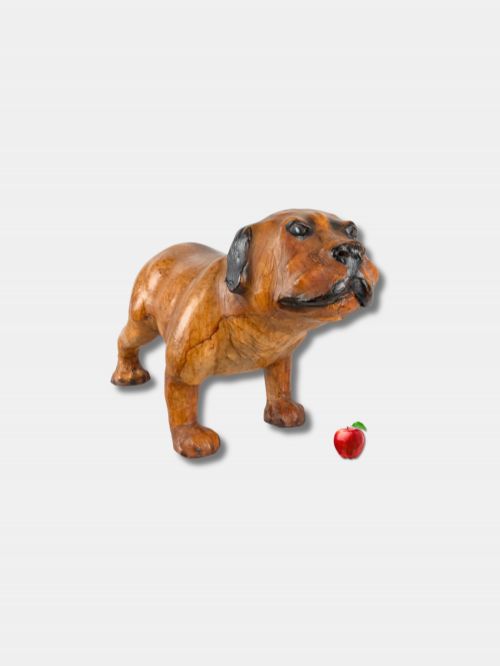
A leather dog footstool by Omersa for Liberty brings canine companionship directly to the fireside without the need for feeding.
Judging quality in footrests
Quality rests upon the selection of timber and the crispness of the woodwork, where figured walnut or mahogany frames display superior grain and careful turning. Plain secondary woods or simpler pine constructions represent more utilitarian domestic production.
The standard of upholstery and needlework defines the upper tier of these pieces, particularly where hand-stitched needlepoint or fine leather remains intact. Original castors, well-preserved frames, and balanced proportions separate distinguished examples from ordinary utility items.
Omersa For Liberty·Howard and Sons
The Antique English Footrest Glossary
- Gout stool
- A specialised footrest featuring an adjustable sloping top designed to elevate and support the foot of a sufferer. These pieces frequently date to the mid nineteenth century and utilise walnut frames.
- Carriage stool
- A portable low rest originally intended for use during travel in horse-drawn carriages or coaches. They tend to feature compact dimensions and durable upholstery like tweed.
- Needlepoint
- Hand-stitched canvas embroidery utilising wool yarn to create patterned decorative coverings. This technique appears frequently on Victorian fireside stools.
- Joint stool
- A sturdy wooden stool constructed with mortise and tenon joints rather than turned legs. Examples in oak represent traditional vernacular carpentry.
- Treen
- Small handmade wooden household objects and utilitarian items. Ash and elm variants sometimes serve auxiliary seating or table functions.
Antique English Footrest: Frequently Asked Questions
How were footrests used?
These low stools served primarily by the fireplace to keep feet elevated above drafty wooden floors. Wealthy households also used specialised carriage rests during travel and gout stools for medical comfort.
Over time, they became permanent fixtures in Victorian and Edwardian sitting rooms, providing casual seating or auxiliary resting surfaces near armchairs.
What woods are most common?
Walnut and mahogany dominate the better quality pieces, particularly from the Victorian and earlier periods. Oak, pitch pine, and burr yew also appear frequently across various nineteenth-century designs.
Secondary timbers were often utilised for internal framing, while decorative hardwoods defined the visible legs and rails.
Are the upholstery coverings original?
Upholstery survival depends heavily on use and storage, with some pieces retaining period needlepoint, leather, or linen. Many items have undergone reupholstery over the decades to maintain practical usability.
Examining the underlying webbing and tacks often reveals whether the fabric dates to the original period of manufacture.
How do I date a footstool?
Stylistic clues within the timber frame, such as Queen Anne walnut forms, heavy Victorian mahogany turnings, or Edwardian pitch pine construction, provide clear chronological markers. Castors, joinery methods, and fabric types further narrow down the decade of production.
Comparative examples from archived sales help confirm whether a piece belongs to the eighteenth, nineteenth, or early twentieth century.