

Traditional English Country Painting
Traditional English Country Painting brings rural scenes and domestic livestock of the British countryside directly into interior spaces through oil and watercolour.
Traditional English Country Painting
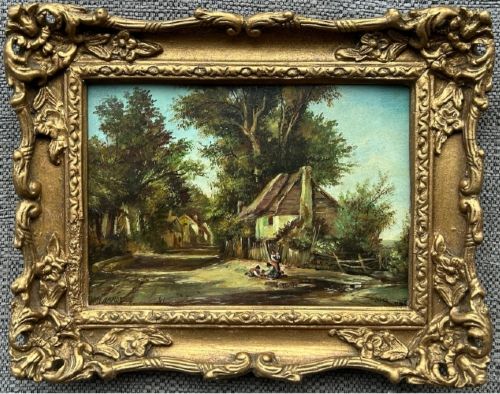
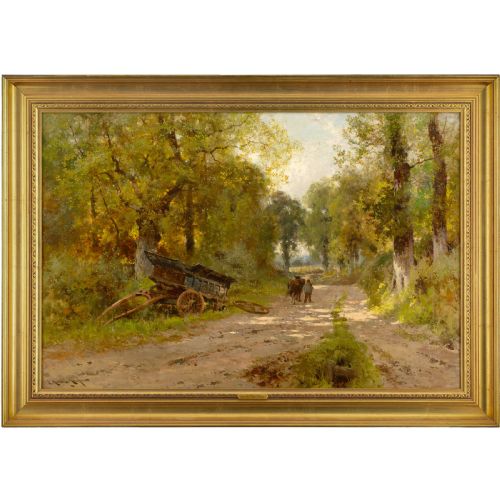
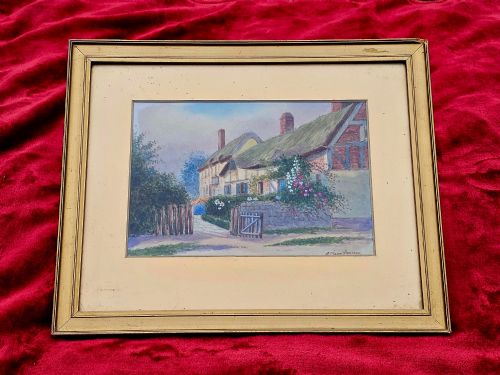
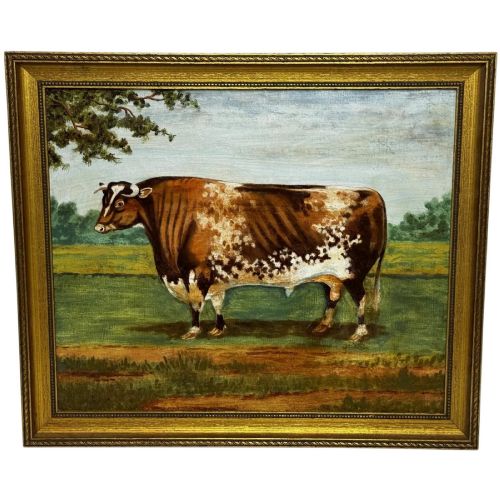
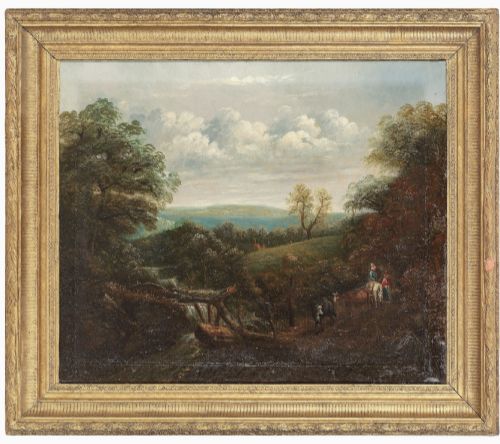
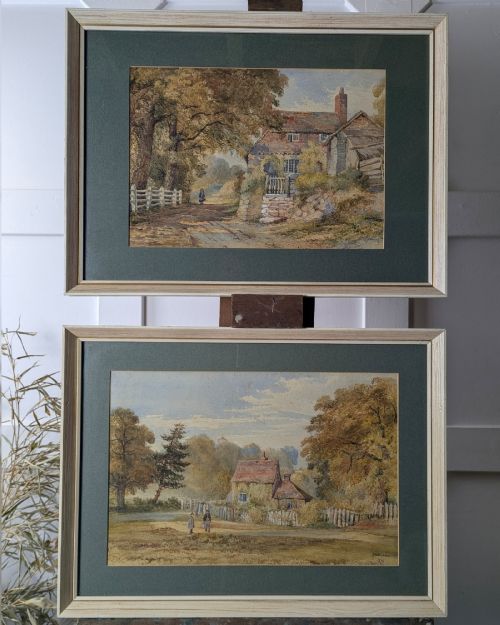
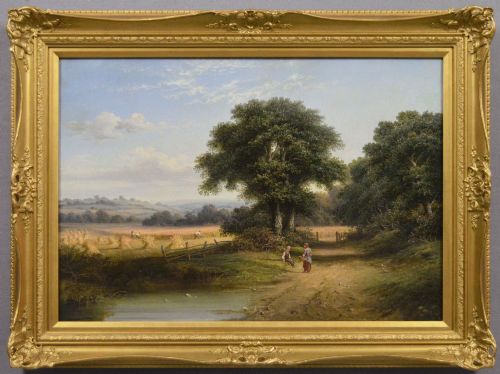
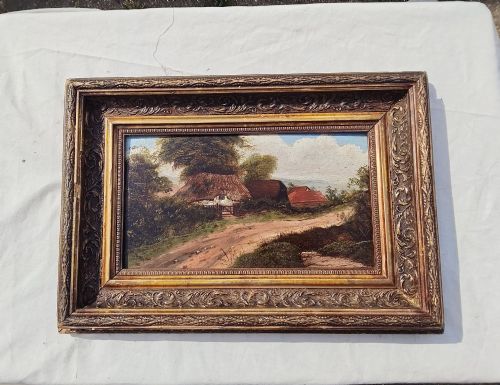
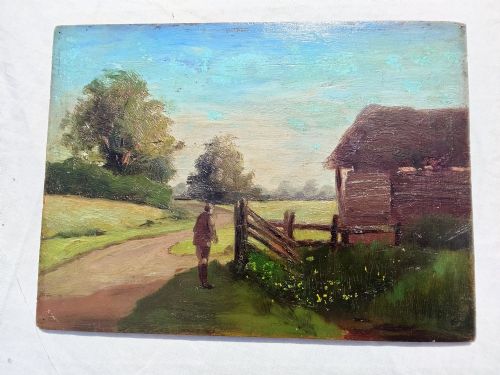
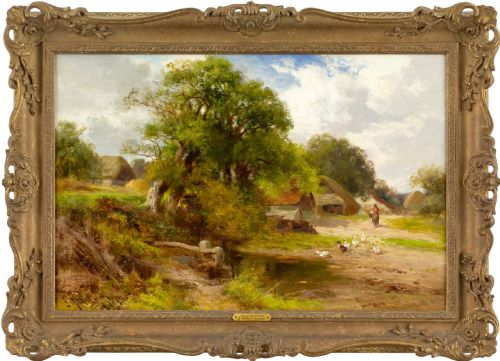
Traditional English country painting encompasses framed rural landscapes, agricultural animal portraits, and pastoral genre scenes produced during the eighteenth, nineteenth, and early twentieth centuries. These artworks capture river valleys, harvest fields, cottages, and local characters across various English counties.
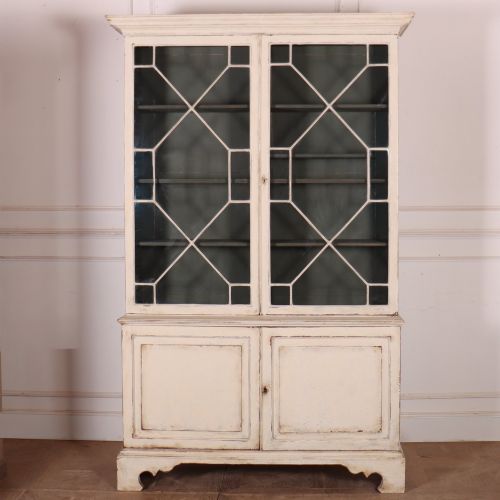
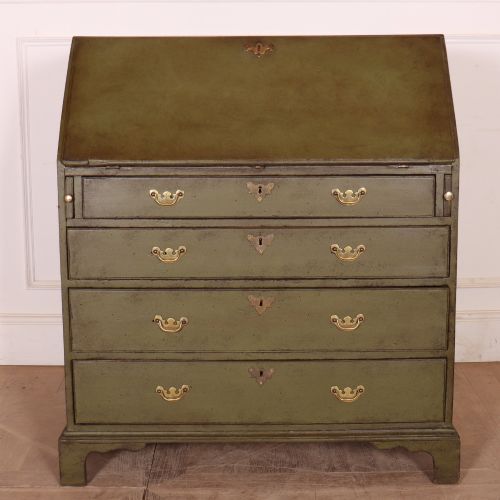
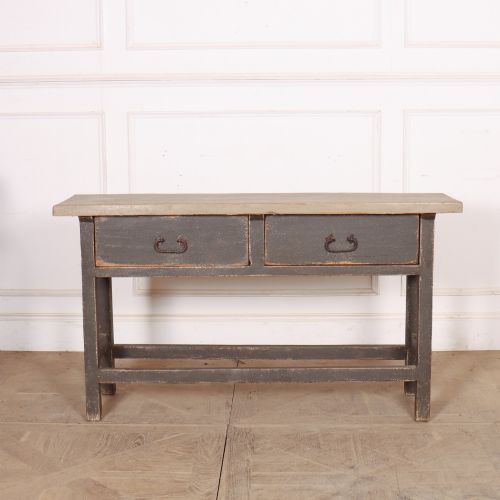
Buyers encounter oil paintings on canvas, board, and panel alongside delicate watercolours on paper. The selection also includes painted country furniture such as dressers, cabinets, and bookcases that share the same aesthetic world.
The prevailing styles range from the structured compositions of the Georgian period to the expressive brushwork of the Victorian Realism and Edwardian eras. Many pieces reflect regional British schools or remain attributed to named Victorian and Edwardian painters.
Materials and construction methods
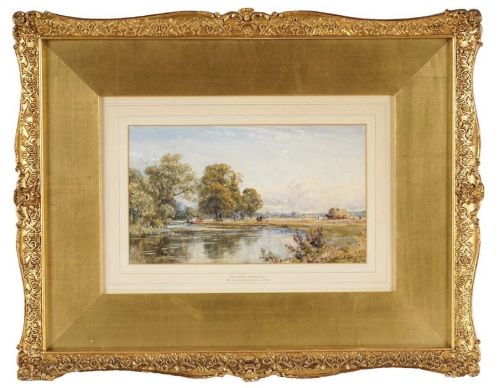
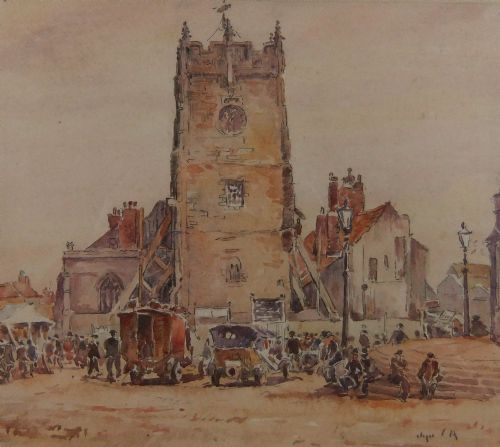
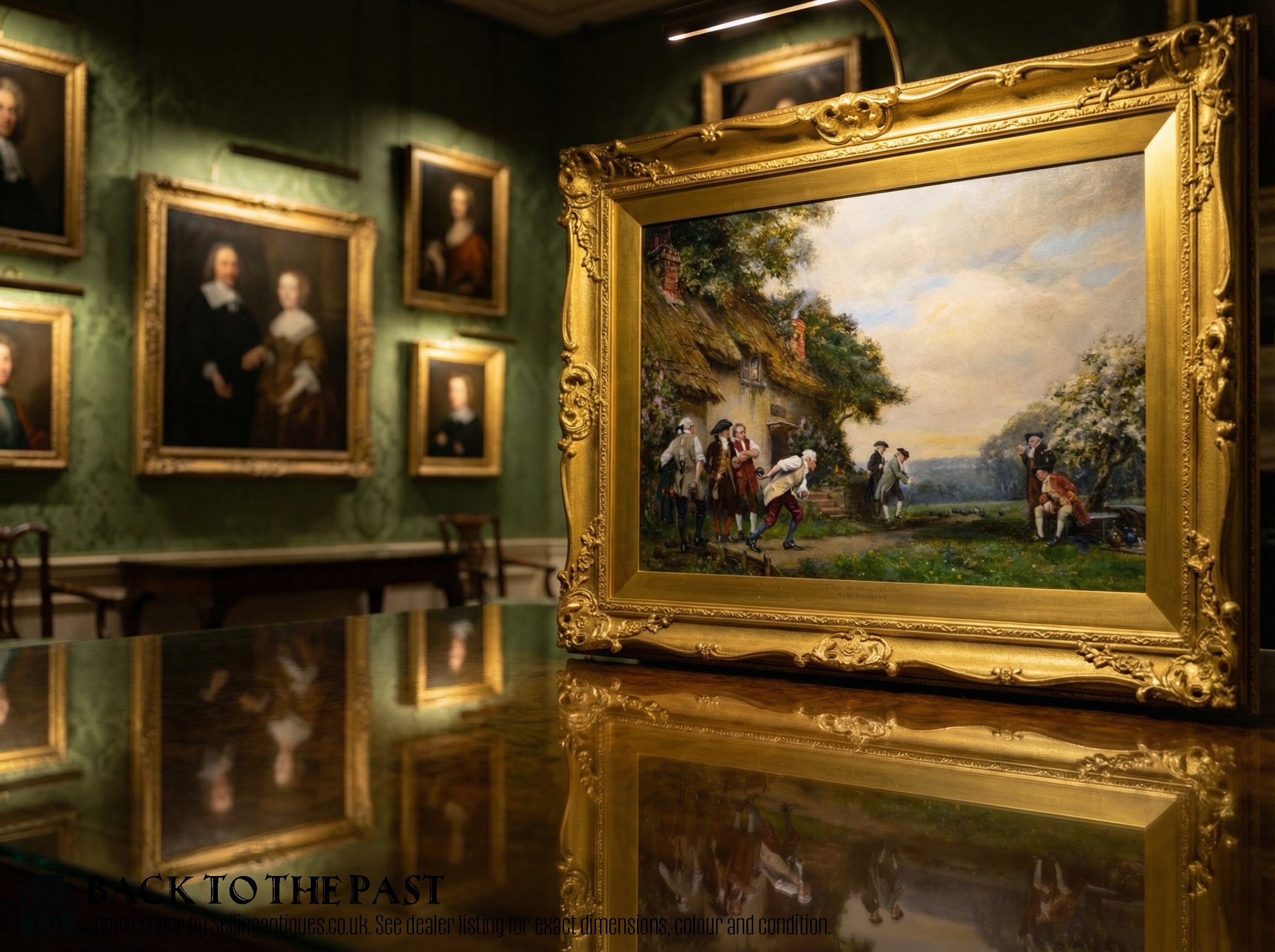
Artists built these works using oil paint applied to stretched canvas, wooden panels, or card, whilst watercolours utilised paper supports often protected behind glass. Wooden frames, frequently finished in gilt wood, completed the presentation of the canvas works.
Support materials varied according to the period, with eighteenth- and nineteenth-century pieces employing robust wooden boards or heavy woven canvas. Painted items utilised timber carcasses finished with traditional oil-based pigments and paint layers.
Traditional English Country Painting Retail Price Guide 2026
Typical asking prices for traditional english country painting among the pieces listed under this phrase on Sellingantiques today, from the lower quarter to the upper quarter. They describe what is for sale here now, not the wider market.
Listings feature works spanning the eighteenth century through to the Edwardian period, executed in oil and watercolour on canvas, wood panel, and paper.
Distinctions in quality and execution
Quality rests upon the artist's command of light, perspective, and naturalistic detail within the landscape or subject matter. Works by accomplished hands demonstrate confident brushwork and balanced composition, whereas lesser examples rely on formulaic repetition.
The preservation of the original paint surface and the integrity of the wooden panel or canvas dictate the structural standard of each piece. Superior examples retain their early or original framing and exhibit minimal intervention from later restoration.
Percy Lancaster·William Howard Hardy·John Horace Hooper·A. Marie Parsons·Robert A. Nottingham·Walter Heath Williams·Robert Thorne Waite·John Smith Atherton·Thomas Sidney Cooper·Joseph H Barnes·John Sargent Noble·Henry Yeen King·T C Hofland·Henry H Parker·Thomas Walker Bretland·Miles Birkett Foster·George Morland·Sydney Yates Johnson·Hubert Wellington·Benjamin Blake·Charles Walter Simpson
The Traditional English Country Painting Glossary
- Oil on Canvas
- Pigment mixed with drying oil applied to a woven fabric support stretched across a wooden frame. This method allowed artists to build rich layers of colour and texture.
- Watercolour Painting
- Pigments suspended in a water-soluble medium applied to paper. It creates luminous, transparent effects often employed for topographical and rural scenes.
- Gilt Wood
- Timber treated with a thin layer of gold leaf or metallic powder. It frequently surrounds canvas paintings to enhance their visual prominence.
- Potboard Dresser Base
- A heavy wooden kitchen or dining table featuring an open lower shelf for storing plates and provisions. These functional items form part of the broader country house aesthetic.
- Panel Painting
- Artwork executed on a flat piece of wood rather than fabric or paper. Oak and mahogany were common supports during earlier periods.
Traditional English Country Painting: Frequently Asked Questions
What subjects appear in these paintings?
These works typically depict pastoral landscapes, river valleys, agricultural scenes, and livestock such as pried shorthorn bulls and working horses. Domestic animals and figures near cottages or harvest fields also feature prominently.
Artists aimed to record the character of specific English regions, including Berkshire, Yorkshire, Devon, and Sussex. Each composition reflects the rural occupations and scenery of its period.
How do I date an antique oil painting?
Dating relies upon examining the preparation of the canvas or board, the style of the wooden stretcher, and the composition of the pigments. Historical costume, architectural details, and framing methods provide further chronological clues.
Signatures, exhibition labels, and attribution notes inscribed on the reverse help historians connect the artwork to a specific artist or regional school.
Where were these pieces originally displayed?
Landscapes and animal portraits hung primarily within country houses, rectories, and provincial homes across Britain. They served to document agricultural achievements, family estates, and favoured rural views.
Smaller watercolours and oil panels were often kept in private sitting rooms, while painted furniture occupied farmhouse kitchens and utility spaces.
How should I care for a framed oil painting?
Oil paintings require stable indoor humidity and protection from direct sunlight to prevent the canvas from slackening and the pigments from fading. Dust should be removed gently from the surface and frame using a soft, dry brush.
Avoid using liquid cleaners or household solvents on the paint layer, as these can cause permanent damage to the historical surface.