
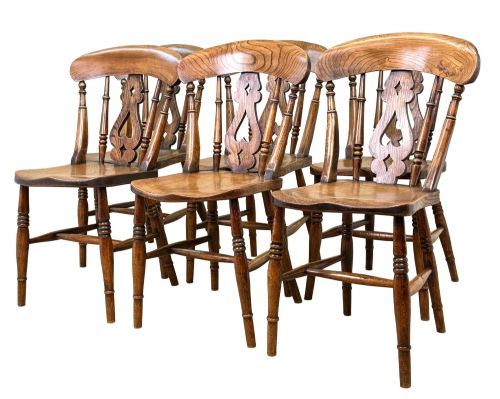
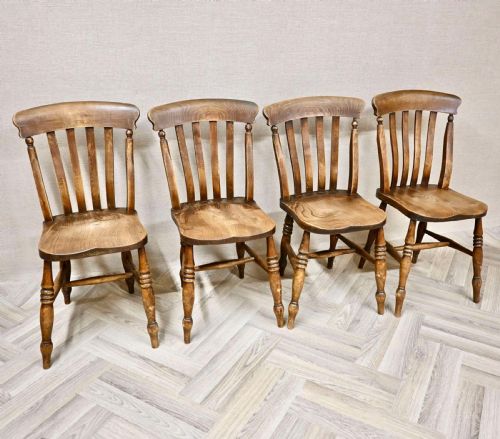
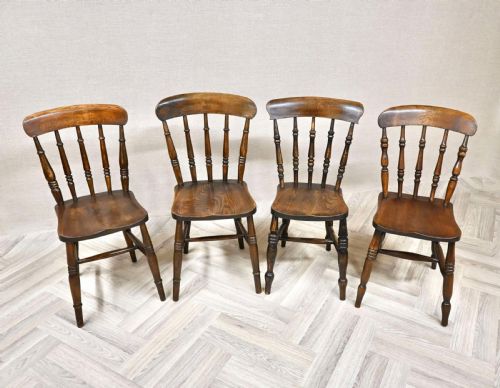
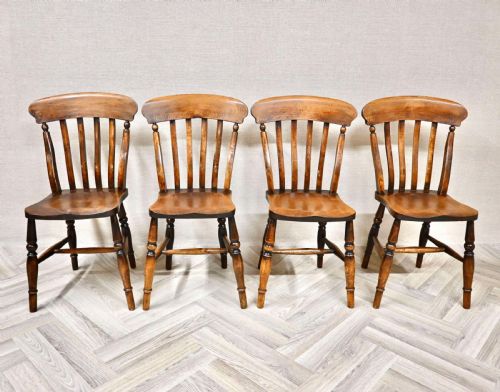

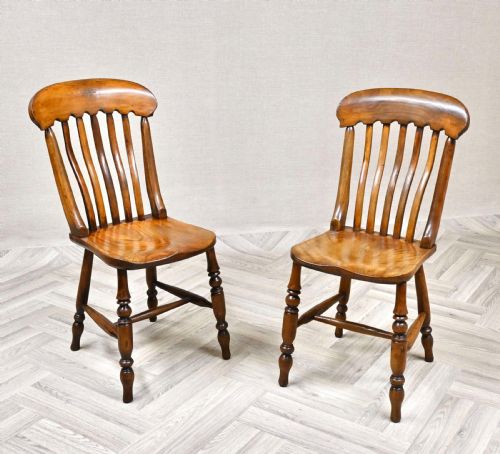
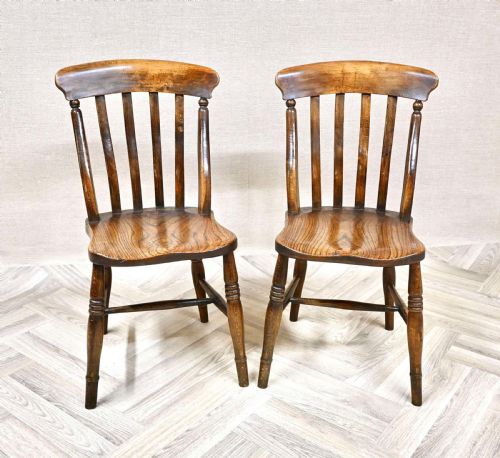
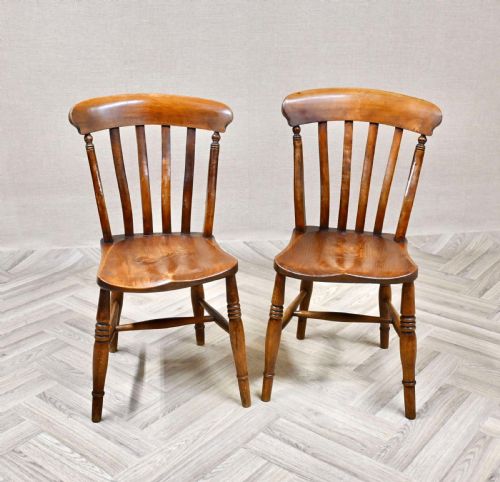
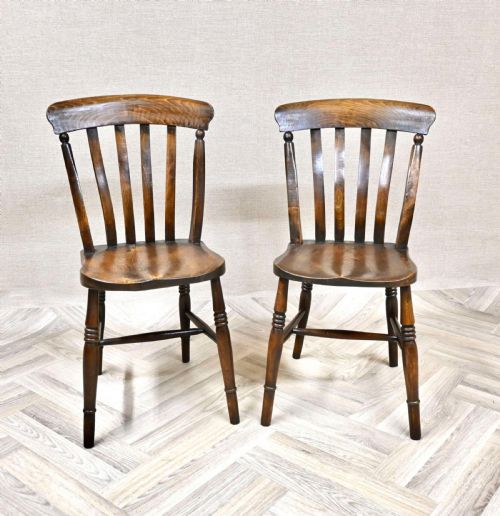
Traditional Elm Kitchen Chairs
Traditional elm kitchen chairs bring honest country craftsmanship into daily use, offering sturdy wooden seating built for farmhouse dining.
Traditional Elm Kitchen Chairs
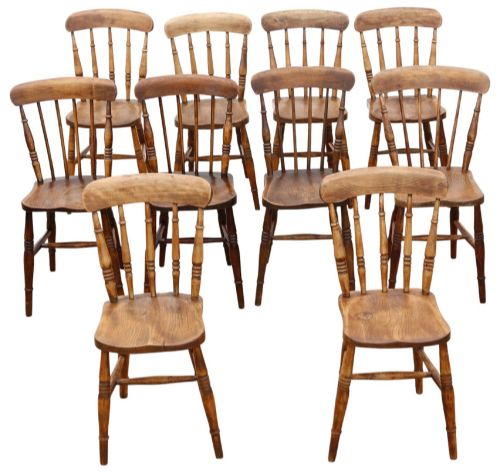
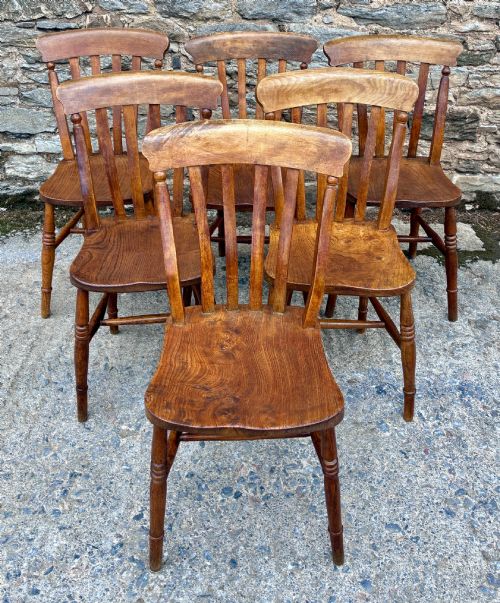
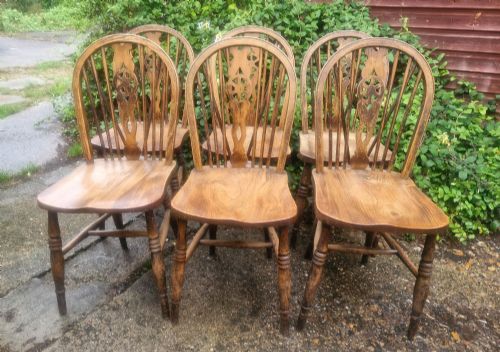
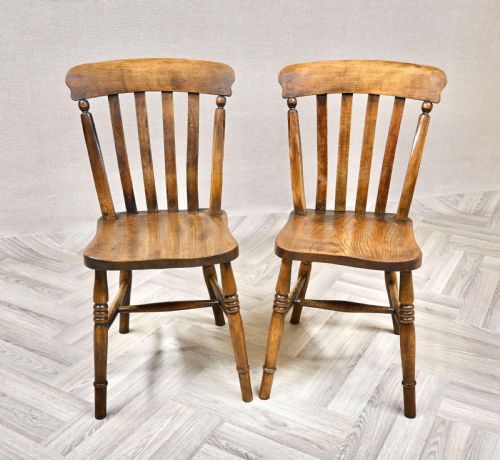
When searching for traditional elm kitchen chairs, buyers encounter sturdy wooden seating designed for everyday domestic use. These pieces appear primarily as dining chairs and armchairs spanning the nineteenth century through the early twentieth century.
The selection on this page centres on English country and Victorian vernacular styles, including Windsor variants. Forms range from single armchairs to matched and harlequin sets intended for practical dining.
Materials and construction
Traditional elm kitchen chairs rely on a combination of timbers chosen for specific structural roles. Elm provides strong, figured seats that resist splitting, while ash, beech, and oak form the turned legs, spindles, and bentwood hoops.
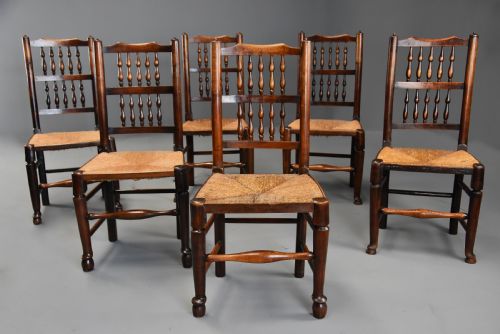
Makers utilised traditional bodging and Windsor techniques, turning components on pole lathes and steam-bending wood to form curved backs. Rush occasionally appears for seating material alongside solid timber.
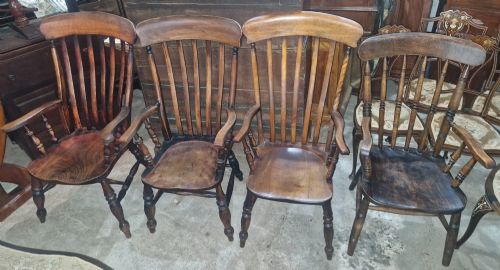
Some chairs carry the quiet scars of generations of elbows resting on the armbows.
Evaluating quality
Quality in traditional elm kitchen chairs rests upon the balance of timber selection and the integrity of the joinery. Well-chosen grain patterns in the elm seat and crisp turning on the spindles distinguish better examples.
The tightness of the wedged joints and the retention of an original surface patina indicate the standard of manufacture and subsequent care. Harlequin sets show variations in matching that reflect how country furniture accumulated over time.
Worksop
The Traditional Elm Kitchen Chairs Glossary
- Windsor chair
- A wooden chair built with a heavy solid timber seat into which the legs and back spindles are separately bored.
- Harlequin set
- A collection of dining chairs that match in general style and material but vary slightly in individual details.
- Crindoline stretcher
- A bentwood brace connecting the legs of a Windsor chair in a continuous curve, adding structural rigidity.
- Lathback
- A chair back featuring vertical wooden slats or laths tenoned into the seat and top rail.
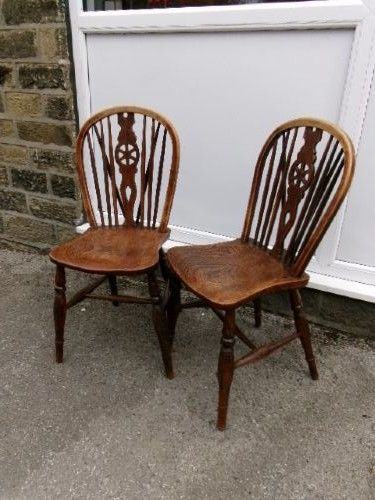
- Wheelback
- A chair back incorporating a pierced wooden splat carved in the shape of a spoked carriage wheel.
Traditional Elm Kitchen Chairs: Frequently Asked Questions
What defines a Windsor chair?
A Windsor chair is constructed by inserting legs and back spindles directly into a thick, solid wooden seat rather than using a standard frame.
This method creates a robust, unified structure typical of vernacular country seating.
How do I care for elm seats?
Elm seats respond well to occasional applications of beeswax to nourish the timber and maintain a soft sheen.
Keep these chairs away from direct heat sources and sudden temperature shifts to prevent the wood from splitting.
What is a harlequin set?
A harlequin set consists of dining chairs that share a similar period, material, and regional style without being identical twins.
Country households often gathered chairs this way over many years rather than purchasing a uniform factory set.
How can I date these chairs?
Dating relies on observing tool marks, timber combinations, and structural design details relative to known nineteenth and early twentieth-century vernacular styles.
Turned components and bendwood techniques evolved gradually across the Victorian era and into the twentieth century.