

18th Century Elm Chairs
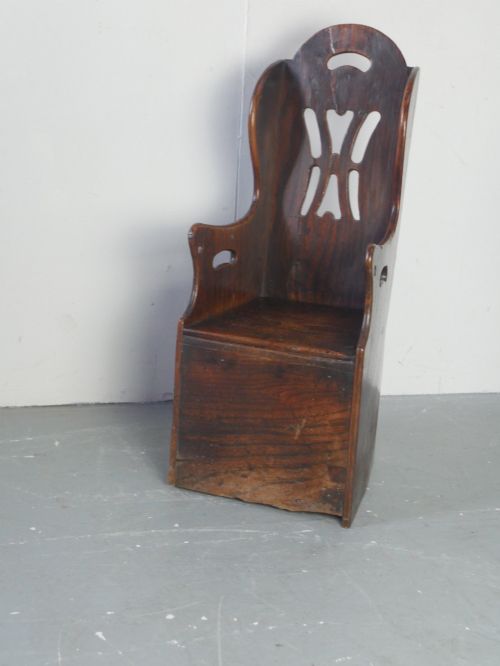
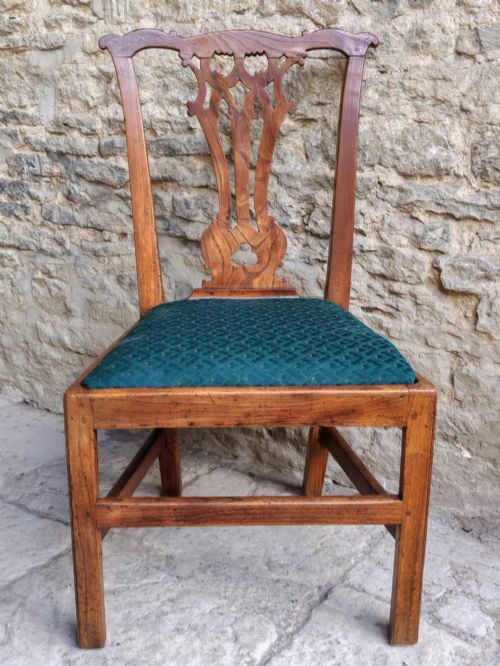
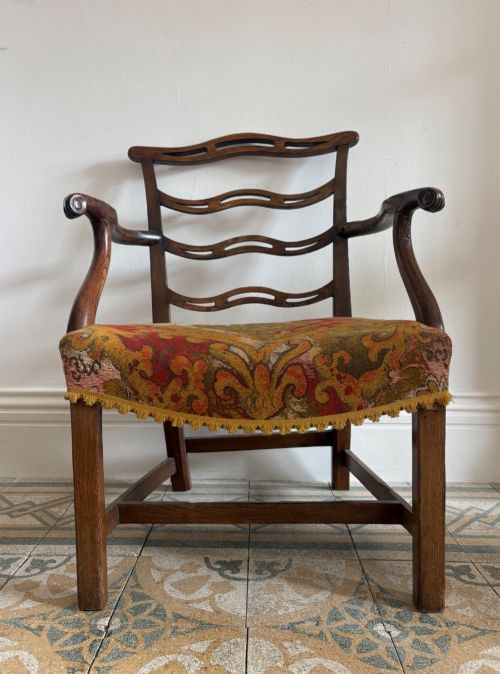
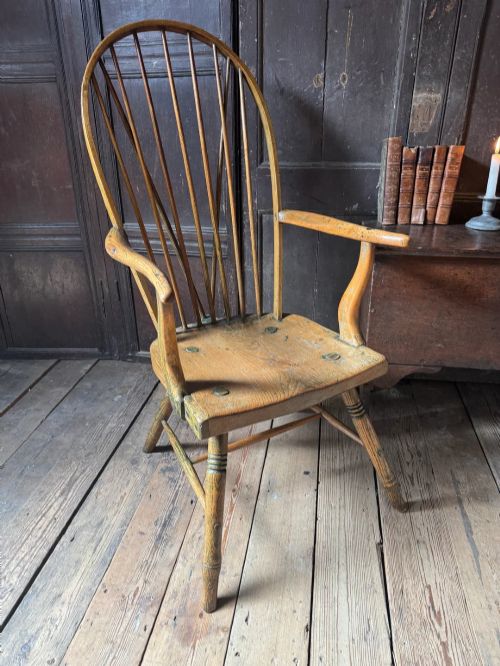
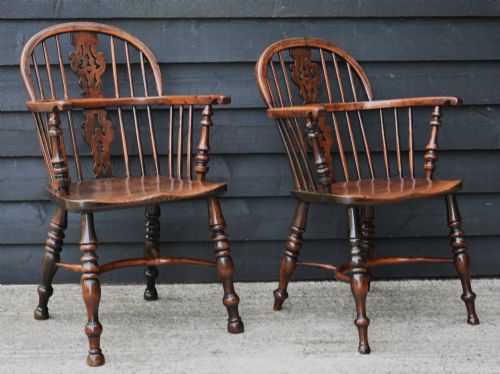
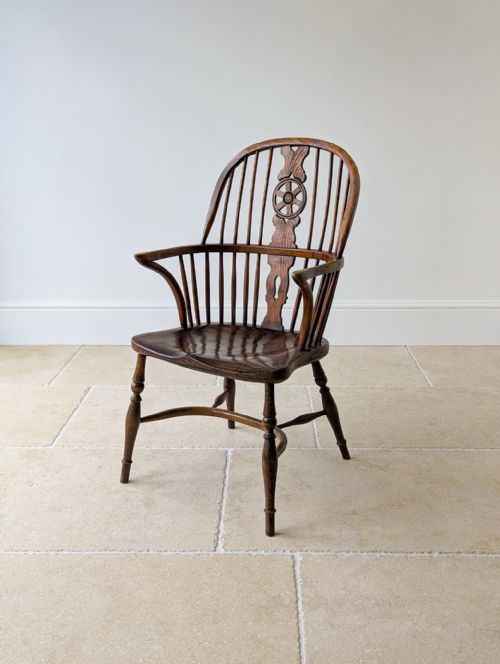
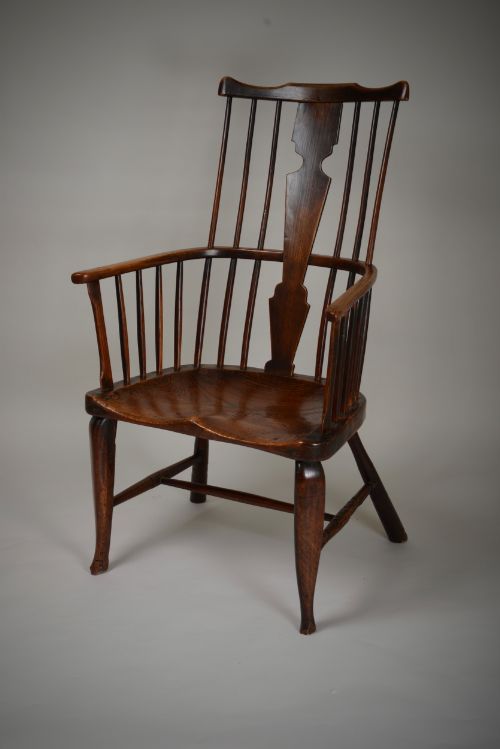
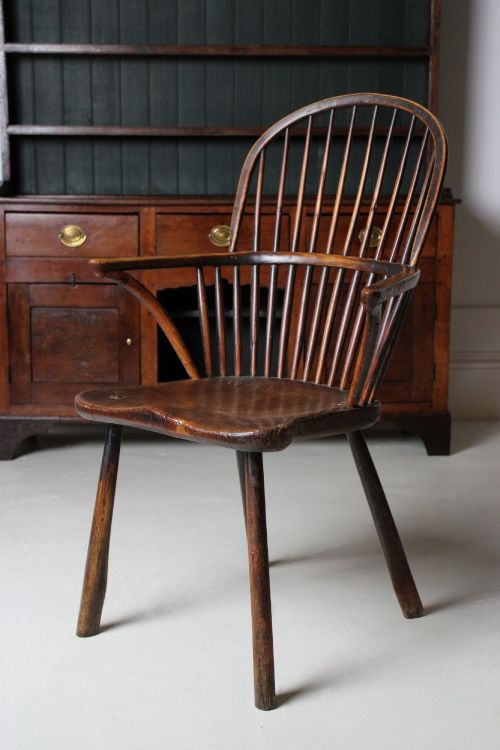
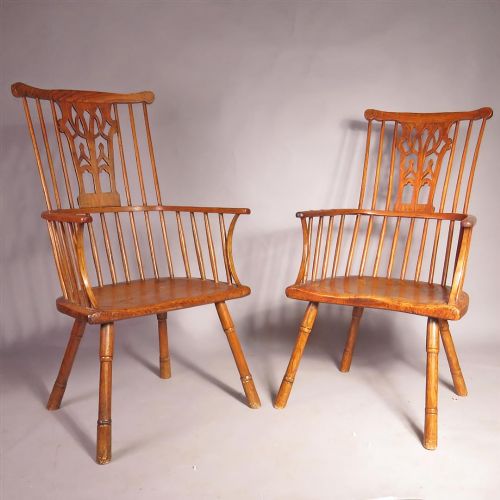
These 18th century elm chairs are robust vernacular seats shaped by country makers using local timber for everyday utility.
18th Century Elm Chairs
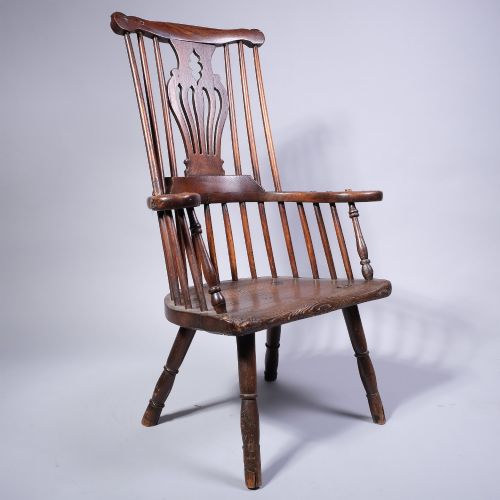
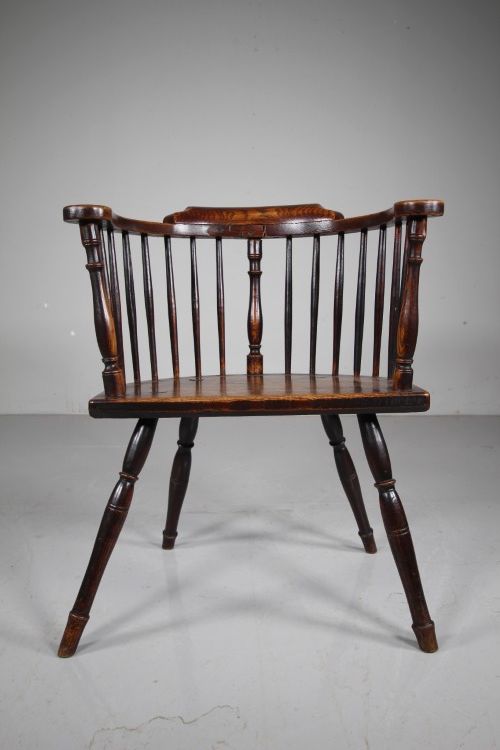
Most examples hail from the Georgian period, with specific pieces originating from the West Country, Wales, and the Thames Valley. Forms range from low fiddle-backs and grandfathers to children's chairs and rocking variants.
Makers utilised elm primarily for seats due to its interlocking grain, combining it with ash, yew, oak, and fruitwood for spindles, legs, and bentwood components.
How They Were Made
Joiners and bodgers constructed these chairs using a mix of solid timber planks and steam-bent components. Elm provided a tough, split-resistant seat board into which legs and back spindles were wedged and tenoned.
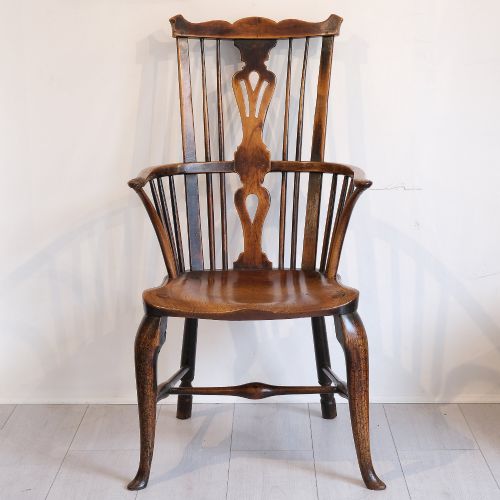
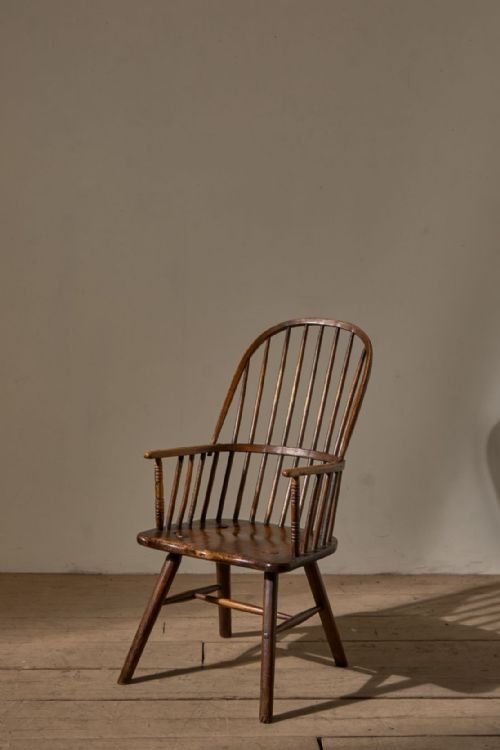
Ash and yew supplied flexible timbers for hoop backs, comb backs, and wheelbacks, while rush, tapestry, or plain wood served for the seating surface. Regional traditions dictated whether a chair received a simple stick back or a shaped splat.
Listings feature elm combined with ash, yew, fruitwood, and oak across Georgian and 19th century periods.
What Varies in Quality
Quality rests in the selection of timbers, particularly where burr elm or highly figured yew appears on the seat or backrest. The harmony of the mixed woods dictates visual success, alongside the grace of the spindle turnings and the rake of the legs.
Construction integrity separates standard utility seating from finer regional pieces. Well-balanced proportions in comb-back and wheelback designs, paired with retained original wedges and stretchers, elevate an individual chair or matched set.
The 18th Century Elm Chairs Glossary
- Windsor chair
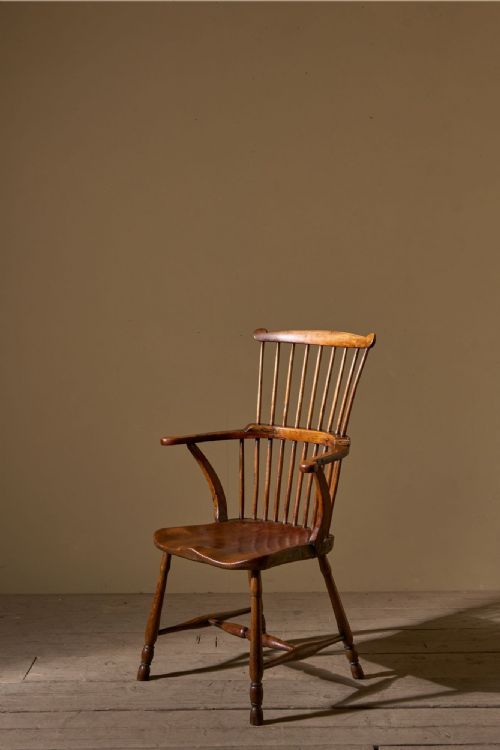
- A timber chair with a solid moulded wooden seat into which the legs and back-bow are separately inserted. They often feature comb-backs, hoop-backs, or wheelbacks.
- Comb-back
- A Windsor chair variation where the vertical spindles of the low back extend upward into a horizontal headrest resembling a hair comb. This style appears frequently in eighteenth-century country seating.
- Crinoline stretcher
- An arched wooden brace connecting the legs of a Windsor chair horizontally near the base. It strengthens the underframe and often provides a footrest.
- Vernacular
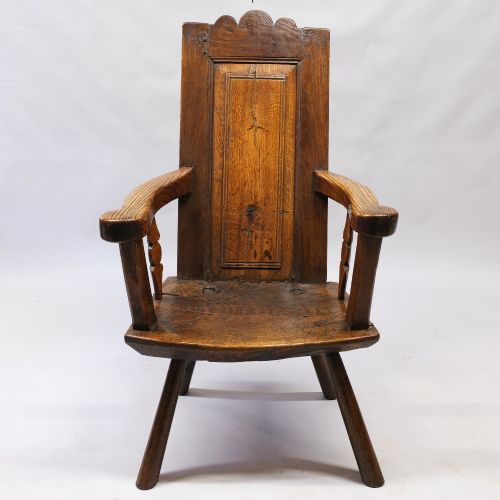
- Objects made by local craftsmen following regional traditions rather than strict urban academic styles. These pieces prioritise practical function and available local timber.
- Panel-backed
- A chair construction featuring a solid wooden panel set into the backrest frame. Early examples often utilise oak and elm for these sturdy panels.
18th Century Elm Chairs: Frequently Asked Questions
How do I identify a Windsor chair?
A Windsor chair is defined by its thick solid wooden seat slab that directly anchors the legs and back components. Unlike framed chairs, the structural parts are tenoned straight into the seat.
Look for turned legs and spindles radiating from this central plank. Regional variations include high hoops, low sticks, and comb-backs.
What woods were used in these chairs?
Country makers built these seats using a mixture of native British timbers suited to specific structural demands. Elm provided a tough, non-splitting seat.
Ash, yew, fruitwood, and oak supplied the flexible bentwood backs, turned legs, and arm bows. This multi-wood construction is typical of eighteenth-century vernacular workshop practice.
Are these chairs suitable for daily dining?
Many of these pieces served as kitchen, hall, or dining chairs originally and retain their robust construction. Solid elm seats and pegged joints offer dependable strength for regular sitting.
Care should be taken with primitive or child-sized variants which were built for lighter use. Standard side chairs and matched sets adapt well to contemporary dining tables.
How do regional styles differ?
Regional workshops developed distinct forms based on local timber availability and vernacular traditions. West Country and Thames Valley makers produced sophisticated Windsor chairs with characteristic bow shapes.
Welsh pieces frequently incorporate burr elm and ash with primitive stick backs. Examining the turning details and wood combinations helps reveal geographical origins.