


Traditional Dutch Scene Painting
Traditional dutch scene painting captures domestic life, frozen canals and tavern interiors through centuries of skilled observation.
Traditional Dutch Scene Painting
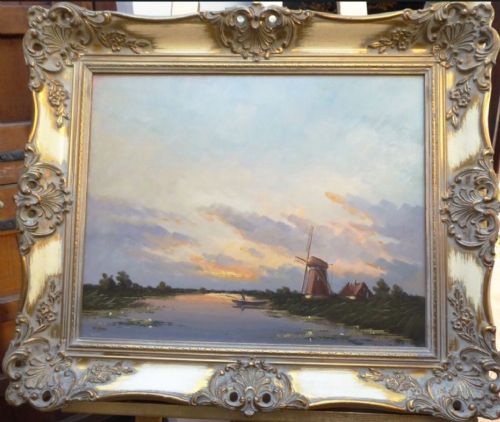
Traditional dutch scene painting encompasses works portraying everyday life, winter landscapes, and architectural views rooted in historical artistic practices. A buyer encounters pieces ranging from seventeenth-century masterworks to mid-twentieth-century interpretations of windmills and village streets.
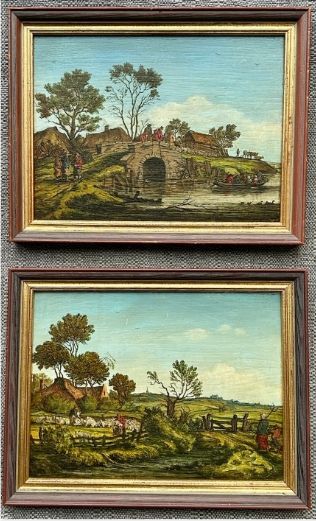
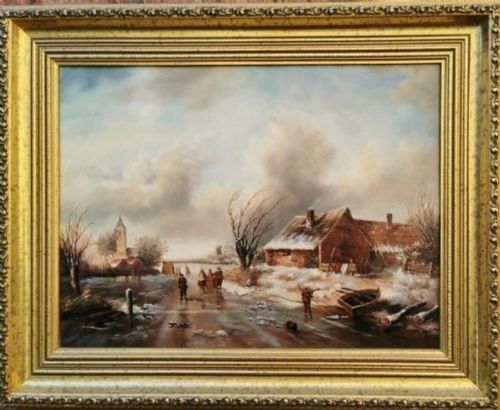
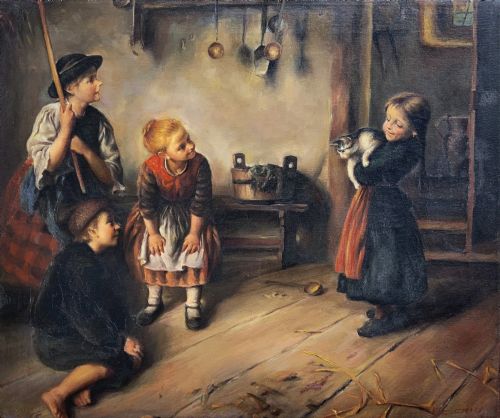
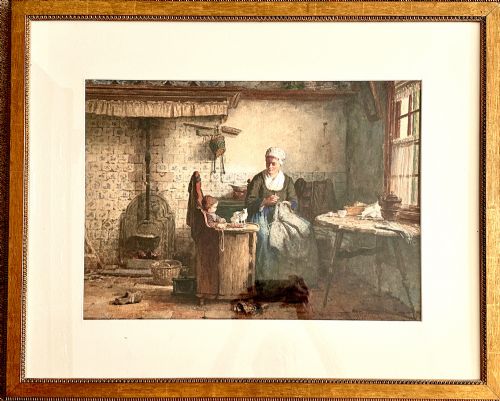
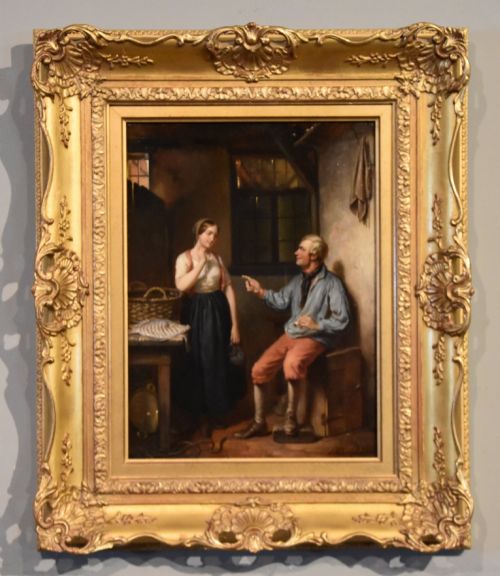
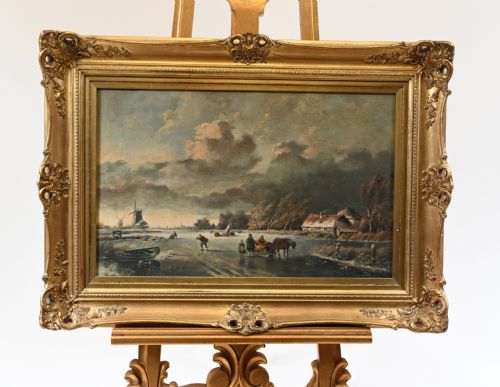
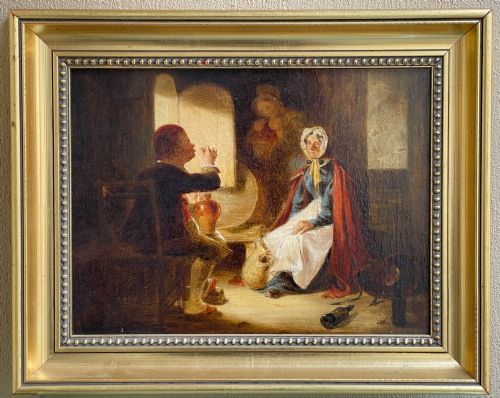
The selections on this page heavily feature nineteenth-century canvases and wood panels alongside twentieth-century watercolours. Common subjects include figures skating on frozen lakes, domestic hearth scenes, and coastal waterways.
Originating from long-standing regional traditions, these oil and watercolour paintings reflect both direct observation and stylistic revivals of golden age compositions.
Materials and construction methods
Artists painted primarily with oil paint on canvas, wood panels, copper panels, and paper boards. Prepared grounds of gesso often supported the application of rich pigments to achieve depth in dark interiors and bright winter skies.
Frames frequently utilise giltwood and moulded gesso, complementing the traditional subjects with ornate gold leaf detailing. Panel paintings required stable seasoned wood to prevent warping over centuries of changing humidity.
Dogs persistently steal food from baskets and children skate across frozen lakes while adults gather near tavern hearths.
Distinctions in craftsmanship and composition
Quality separates through the subtlety of light handling and the anatomical accuracy of figures within crowded tavern or domestic interiors. Finer pieces demonstrate confident brushwork that defines fabric textures and facial expressions without heavy reliance on dark glazes.
The integrity of the original support, whether canvas or wood panel, influences the longevity of the paint layer. Superior examples retain their original surface texture and framing without extensive overpainting or structural stabilisation.
Hendrik Valkenberg·Jacob Akkersdijk·Frans Snyders·David Teniers·Thomas Bush Hardy·Willem Anton Alexander Knip·Jan Evert Morel·Gudrun Sibbons·John D. Walker·Ludolf de Jongh·Pieter Cornelis Steenhouwer·Madeline Hughes·Louis Smets·Laurens Plas·E Van Drielst·Charles Martin Powell·Hermanus van Brussel·Christiaan Pieter Snyders·Jan Steen·Aelbert Cuyp
The Traditional Dutch Scene Painting Glossary
- Oil paint
- A slow-drying medium consisting of pigments suspended in a drying oil, typically linseed oil. This allowed artists to blend tones smoothly and build translucent layers called glazes.
- Gesso
- A paint mixture consisting of a neutral binder mixed with chalk, gypsum, or pigment. It served as a prepared base for painting on wood panels and canvases.
- Wood panel
- A flat wooden support used instead of canvas, common in earlier periods. Panels provided a rigid surface that preserved fine brushwork.
- Watercolour
- Paint consisting of colourants suspended in a water-soluble vehicle. It was frequently applied to paper for topographical views and landscape studies.
- Giltwood
- Wood carved and coated with gold leaf or gold paint. Frames finished in this manner were designed to enhance the visual weight of oil paintings.
Traditional Dutch Scene Painting: Frequently Asked Questions
What is a traditional dutch scene painting?
These artworks depict historical subjects such as winter landscapes, bustling tavern interiors, and coastal waterways inspired by regional European fine art traditions. They capture the daily activities and light effects characteristic of northern continental painting.
Most examples seen here utilise oil on canvas or wood panel, though watercolours on paper also appear frequently across the nineteenth and twentieth centuries.
How were these paintings originally displayed?
Owners typically hung these framed works in domestic parlours, dining rooms, and civic buildings to signal cultural appreciation and local pride. Giltwood frames enhanced the presence of the dark palettes common in historical interiors.
Many smaller panel paintings were suited for intimate wall spaces within townhouses and country residences.
How do I care for an oil painting on wood?
Wood panels require stable indoor humidity and temperature to prevent the natural wood from expanding, contracting, or splitting over time. Keep paintings away from direct sunlight, radiators, and damp exterior walls.
Dust the surface gently with a soft, dry brush and avoid using liquid cleaners or household solvents on the paint layer.
How can I tell a nineteenth-century work from a twentieth-century copy?
Nineteenth-century works often employ nineteenth-century realism techniques alongside period framing materials such as gesso and gold leaf. Pigment analysis and the ageing characteristics of the canvas or panel provide further clues to the date of creation.
Twentieth-century pieces frequently adopt golden age styles while exhibiting modern priming methods or stretcher construction.